
NEWS
Why Buying a Used iPhone Now Beats Waiting for the iPhone 18
Apple says iPhone prices will rise as memory chip costs quadruple. The used iPhone market is the cheaper play before the iPhone 18 arrives in September.

Apple has warned that iPhone prices will rise as memory chip costs quadruple, and the iPhone 18 lineup expected in September is widely tipped to carry the biggest sticker shock in years. For shoppers willing to skip the very newest release, the used iPhone market is now the cheaper bet.
The numbers behind CEO Tim Cook’s warning make the math obvious. Memory prices have quadrupled since 2025, according to TechInsights analysis cited by the Wall Street Journal. Apple paid about $39 for the 12GB of DRAM in the iPhone 17 Pro; the same module in an iPhone 18 Pro is projected to climb to about $145.
The Memory Crunch Driving Apple’s Move
Tim Cook used the word “unavoidable.” Speaking to the WSJ, he said Apple has been absorbing rising component costs and trying to “shield our customers from the increases,” but the situation around memory and storage has become “unsustainable.” He did not name specific devices or dates, beyond noting that more clarity will arrive with the next iPhone lineup in September.
Two forces are colliding in the memory market. The first is demand from AI data centers, which now competes directly with smartphones for the same DRAM and NAND flash chips. Samsung and Micron have shifted production toward higher-margin enterprise chips for AI servers, squeezing supply for consumer electronics. The second is supply disruption: helium, a gas critical to semiconductor manufacturing, has been constrained by the war in Iran, the BBC reports, adding another layer of cost pressure. Cook’s warning lands in the middle of both.
Apple is not the only device maker feeling the squeeze. Samsung has flagged memory chip shortages as a drag on consumer electronics pricing, Nintendo said it will raise the price of its Switch 2 from September, and Apple itself pulled the entry-level option from its Mac Mini earlier this year, raising that machine’s starting price by about $200.
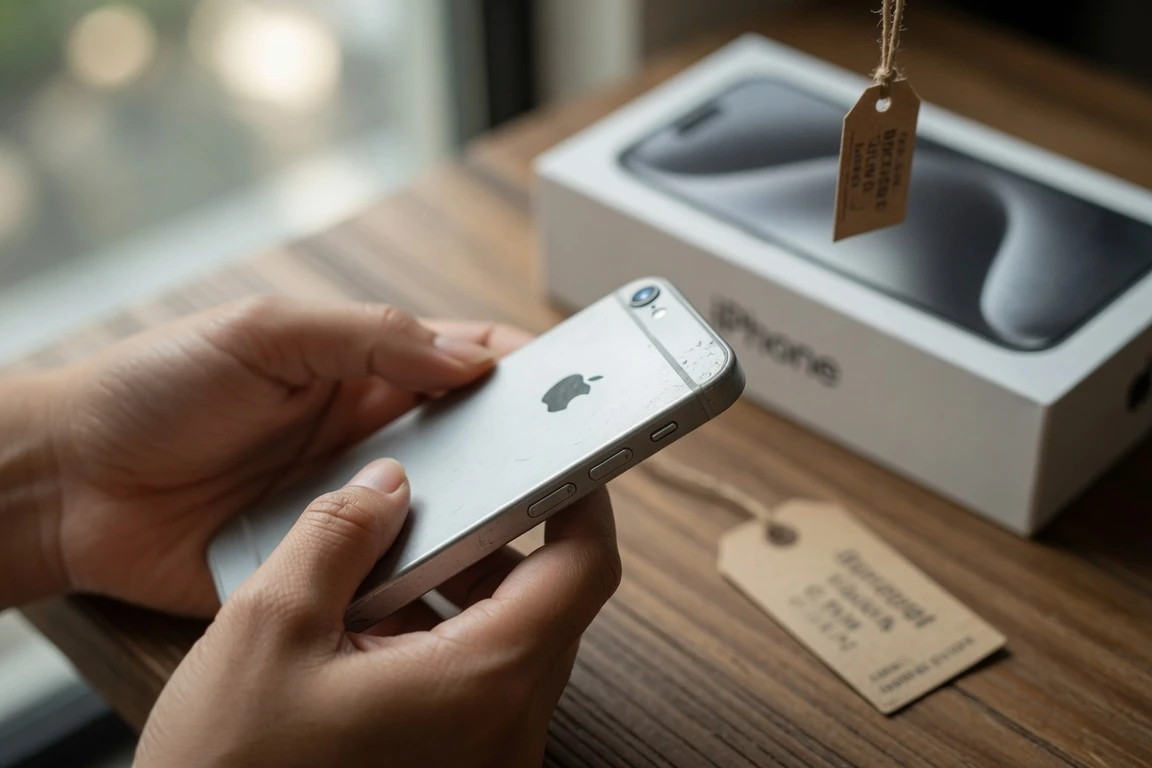
What a New iPhone Could Cost This Fall
The iPhone 18 lineup is expected to launch in September, and most pricing estimates point higher. TechInsights, a research firm that bills every generation of iPhone, estimates that Apple’s bill of materials for the iPhone 17 Pro was about $582, with roughly $39 of that going to the 12GB of DRAM and about $13 to 256GB of flash storage. The same phone built with iPhone 18 Pro components would cost Apple around $726, a 25% jump driven almost entirely by memory. Apple’s price hike confirmation and what changes walks through the same numbers in more detail.
To preserve the existing 47% gross margin on the iPhone 17 Pro, Apple would need to charge about $1,371, the WSJ’s own model puts the likely starting price at $1,299 to $1,399 once a more expensive new variable-aperture camera is included. The iPhone 18 Pro Max is expected to land about $100 above the Pro, mirroring the current gap between the two models. TechInsights also flags a rumored foldable “iPhone Ultra” that could carry a starting price of around $2,000.
For shoppers weighing the new lineup against the used shelf, the wider pricing context matters. Omdia, the research firm that tracks smartphone pricing globally, has said average smartphone selling prices are expected to rise by around 20% in 2026 to an all-time high. Apple’s new phones are likely to cost up to $150 more than the iPhone 17s, Omdia smartphone market analyst Chiew Le Xuan told the BBC. Cook told the WSJ the company is still working through which devices will see price increases and when.
Apple gave a small preview of how the increases will land earlier this year, when it pulled the entry-level option from the Mac Mini and raised that machine’s starting price by about $200. Storage-heavy iPhone configurations, where the memory bill is largest, are the most exposed if Apple chooses to act before September. The new lineup is also expected to include a foldable “iPhone Ultra” that analysts have pegged at around $2,000.
| Component | iPhone 17 Pro | iPhone 18 Pro (est.) |
|---|---|---|
| DRAM (12GB) | $39 | $145 |
| Flash (256GB) | $13 | $51 |
| Rest of bill of materials | $530 | $530 |
| Starting retail price | $1,099 | $1,299-$1,399 |
The Used Market’s Edge This Cycle
The preowned smartphone market has been outpacing new sales globally for some time, and the memory crunch is accelerating the shift. Counterpoint Research’s senior analyst Emily Herbert has been mapping the preowned market through the shortage, and her team’s recent Counterpoint’s preowned smartphone market overview shows the segment gaining structural share. Herbert told the WSJ that the secondary market is now attracting a wider mix of shoppers than it used to, including parents who do not want to spend close to $2,000 on a phone for a young teenager. The same calculation works for plenty of adults: a used iPhone that is one generation behind still handles daily use and still runs Apple’s latest software. Apple’s certified refurbished store and a few vetted marketplaces make it easy to find one.
The economic logic is straightforward. Used iPhones were priced under last year’s cost structure, and they will not see the memory-driven price hikes that new units will once the iPhone 18 ships. The spread between new and used is widening, and Counterpoint Research’s wider work on the preowned market shows the gap has been a structural feature of the smartphone business since at least the start of the decade.
There is a second, quieter advantage. Apple’s iOS software support window is long, and most recent iPhones are still receiving security updates. Apple Intelligence, Apple’s suite of on-device AI features, requires an iPhone 15 Pro or later, and the on-device models need at least 7 GB of free storage to download. That makes a used iPhone 15 Pro the practical sweet spot for shoppers who want today’s AI features at last year’s price; older non-Pro models remain perfectly capable phones for everyone who does not need Apple Intelligence.
Omdia’s framing matters here too. The research firm calls the current memory-driven pricing shift “the new pricing reality, not a temporary spike,” which means shoppers planning to keep an iPhone for two or three more years should plan around the higher floor going forward. Anyone holding a recent iPhone they were thinking of upgrading is now holding an asset that more shoppers want than they did six months ago. Demand is moving in the same direction: Counterpoint Research notes the secondary market is drawing shoppers who previously would have defaulted to a new mid-range phone.
There is also the matter of resale value. Once Apple confirms its new pricing in September, the value of last year’s iPhones on the secondary market tends to track the gap to new. A buyer who picks up a used iPhone 15 Pro today at a discount to last year’s new price still owns an asset that holds value relative to a more expensive new lineup. The wider the spread between new and used, the more attractive the used shelf becomes for the next buyer when the current owner eventually upgrades. Counterpoint Research’s Emily Herbert calls preowned a structural channel on that math.
Vetted Marketplaces for Used iPhones
Apple’s own refurbished storefront remains the safest starting point for buyers who want Apple-vetted hardware with a fresh warranty. Beyond that, a small handful of third-party marketplaces have built reputations worth trusting, each with its own approach to vetting inventory. Back Market’s 1-year warranty terms cover all hardware and software defects and exclude only lost, dropped, or liquid-damaged devices, while the platform’s 30-day return window lets a buyer walk away if the phone arrives in worse shape than advertised. Reebelo’s vetting and warranty terms run every device through 70+ quality checkpoints before listing and pair a 12-month warranty with a 30-day return policy. The platform, headquartered in San Mateo, California, vets each merchant with background checks before listing inventory.
Swappa, founded by developer Ben Edwards in 2010, runs a different model. Every listing on the marketplace is manually reviewed by staff before it goes live, and Swappa rejects devices with cracked glass, moisture indicators, non-functional buttons, altered ESN stickers, or iCloud locks, while founder Ben Edwards has been candid that scammers continue to find new ways in, including through AI-generated listing photos.
The three marketplaces handle risk differently. Back Market and Reebelo are managed platforms: the company vets the seller, audits the inventory, and absorbs the cost of a bad unit. Swappa is closer to peer-to-peer: the buyer deals directly with the seller, but Swappa staff manually approve every listing and step in if something goes wrong. Buying through Amazon, Facebook Marketplace, or eBay carries higher risk because those platforms do not run the same level of pre-listing review, and recourse against a bad actor is harder.
- Back Market: Only professional sellers, audited inventory, 30-day return window, 1-year limited warranty covering hardware and software defects.
- Reebelo: Background-checked merchants, 70+ quality checkpoints per device, up to 12-month warranty, 30-day returns, free shipping.
- Swappa: Every listing manually reviewed, no cracked glass or iCloud-locked devices allowed, devices must have working buttons and a functional battery.
Checks That Catch a Bad Buy
A used iPhone can be a smart buy or a fast mistake, depending on what you check before paying. The first check is software support, and the second is whether the phone is actually yours to use. Apple Intelligence device compatibility list makes clear that the AI features require an iPhone 15 Pro or later, with at least 7 GB of free storage for the on-device models.
The other pre-payment checks are mostly common sense, and skipping any of them is how buyers end up with a blacklisted phone or a near-dead battery. Confirm the device is unlocked for your carrier and not Activation Locked to a previous owner’s Apple ID. Check battery health in Settings under Battery; anything below 90% may need replacement soon. Run Apple’s built-in diagnostics mode, which tests the display, camera, speakers, and other components in a few minutes. Verify the IMEI or serial number through Apple’s coverage checker to confirm the phone is not reported lost or stolen, and inspect the device for physical damage that marketplaces like Swappa reject by policy, including cracked glass, moisture indicators, and non-functional buttons.
Refurbished iPhones also carry one quirk that buyers often miss. The manufacturer’s original waterproofing seal is rarely preserved after servicing, since refurbishers open the device to test it, and warranty coverage for liquid damage usually excludes that risk, so a refurbished phone caught in the rain is on the owner.
A small number of extra steps are worth taking once the phone arrives. Confirm that the listed storage capacity matches what the device reports in Settings, and that the previous owner has fully signed out of iCloud and Find My iPhone. Set up Face ID or Touch ID fresh, since a previous owner’s biometrics will still be registered until the device is erased properly. Run a screen burn-in check by displaying solid colors at full brightness, which exposes ghosting on OLED panels that a quick visual inspection can miss.
- Confirm carrier unlock and that Activation Lock is removed from the previous owner’s Apple ID.
- Check battery health in Settings under Battery; below 90% may need a replacement soon.
- Run Apple’s diagnostics mode to test the display, camera, speakers, and other components in a few minutes.
- Verify the IMEI or serial number through Apple’s coverage checker to confirm the phone is not reported lost or stolen.
- Inspect for physical damage including cracked glass, moisture indicators, and non-functional buttons.
- Confirm storage capacity matches the listing and that the previous owner has signed out of iCloud and Find My iPhone.
When the Used-Market Edge Shrinks
Cook told the WSJ the company is still working through which devices will see price increases and when, but the most likely landing point is September, alongside the iPhone 18 launch. Apple’s first price hike of this round was already a preview: the company pulled the entry-level Mac Mini earlier this year and raised its starting price by about $200. Storage-heavy iPhone configurations, where the memory bill is largest, are the most exposed if Apple chooses to act before September. Apple’s certified refurbished store is one channel that will reprice around the new floor within weeks. The longer a shopper waits past the iPhone 18 announcement, the more the secondary market reprices itself around the new floor.
For shoppers, the practical window runs through summer. Used iPhone prices have not yet absorbed the memory-cost wave, and Apple’s own certified refurbished stock is still sitting at last year’s numbers. Once the iPhone 18 ships and Apple confirms its new pricing, the secondary market tends to follow within weeks, especially for the generation being replaced.
Frequently Asked Questions
Will iPhone prices actually go up this year?
Yes. Apple CEO Tim Cook told the Wall Street Journal that price increases are unavoidable as memory and storage chip costs surge, with more clarity expected when the iPhone 18 lineup launches in September.
Is a refurbished iPhone safe to buy?
Through vetted marketplaces, yes. Back Market, Reebelo, and Swappa check inventory and back purchases with 30-day return windows, and Back Market and Reebelo add a one-year warranty. Buying through Amazon, eBay, or Facebook Marketplace carries higher risk and demands more scrutiny from the buyer.
Which iPhones support Apple Intelligence?
iOS 27 features that slipped past WWDC’s hype lays out the full set of Apple Intelligence tools, which require an iPhone 15 Pro, iPhone 15 Pro Max, or any iPhone 16 model or later. The on-device AI features also need at least 7 GB of free storage to download the models.
How much can I save by buying used?
It varies by model and condition, but the spread between new and used iPhones is widening as new prices rise. Counterpoint Research notes the secondary market is drawing a broader mix of buyers, including shoppers avoiding near-$2,000 price tags on new flagships.
Should I wait for the iPhone 18?
If you want the very newest camera, chip, or Apple Intelligence features, waiting makes sense. If you mainly need a fast, well-supported phone and want to avoid the memory-driven price increases, shopping the certified refurbished shelf before September is the cheaper move.


Redmi Note 17 Battery Wins by Leaving Power Behind

WeChat Moments AI Tools Hide a Bigger Skills Redesign

iOS 27 Beta 5 Locks Six iPhones and a Split Launch

Edge AI Forces Hybrid Data Centers Into a Split Reality

Qi2 25W Magnets Quietly Rewrite Desk and Car Charging

Spotify AI Persona Badges Wall Off Synthetic Discovery

GCCs Build AI Bullet Trains on Incomplete Data Tracks

Coreum Bridge Multisig Signed Off on Its Own 200k XRP Drain

AI Shrinks Solar Inspection Crews While Paying Hybrid Skills Far More

Intel Graphics Driver Fixes Still Fight Windows and OEMs

Fable 5 and Mythos 5 Return as US Lifts Anthropic Export Controls

Oracle Cuts 21,000 Jobs in a Year, Cites AI in 10-K Filing

SpaceX’s Google Deal Turns a Rocket Company Into a Cloud Landlord

CD Projekt Red Co-CEO: Redemption Arc Isn’t Done, Witcher 4 in 2027

XPL Rallies 30% Ahead of Plasma One Card Tier Launch

Google Search Profiles Build a Follow Graph Inside Discover

DGO App Brings Rs 549 Mobile Pass for FIFA World Cup 2026 in Nepal

Moonshot AI Targets $30 Billion in China’s Fastest AI Funding Sprint

Microsoft Xbox Layoffs Start in July as Sharma Slams 3% Margin

Oppo’s ColorOS 17 Eligibility List Leaves A-Series Buyers Behind
-
 AI1 month ago
Fable 5 and Mythos 5 Return as US Lifts Anthropic Export Controls
-
 AI2 months ago
Oracle Cuts 21,000 Jobs in a Year, Cites AI in 10-K Filing
-
 AI2 months ago
SpaceX’s Google Deal Turns a Rocket Company Into a Cloud Landlord
-
 GAMING2 months ago
CD Projekt Red Co-CEO: Redemption Arc Isn’t Done, Witcher 4 in 2027
-
 CRYPTO2 months ago
XPL Rallies 30% Ahead of Plasma One Card Tier Launch
-
 NEWS2 months ago
Google Search Profiles Build a Follow Graph Inside Discover
-
 APPS2 months ago
DGO App Brings Rs 549 Mobile Pass for FIFA World Cup 2026 in Nepal
-
 AI2 months ago
Moonshot AI Targets $30 Billion in China’s Fastest AI Funding Sprint