
NEWS
Apple Will Raise Prices as Memory Chip Costs Surge, Tim Cook Says
Apple CEO Tim Cook told the WSJ that price increases are unavoidable as memory chip costs surge and AI demand tightens supply. Here’s what changes for buyers.

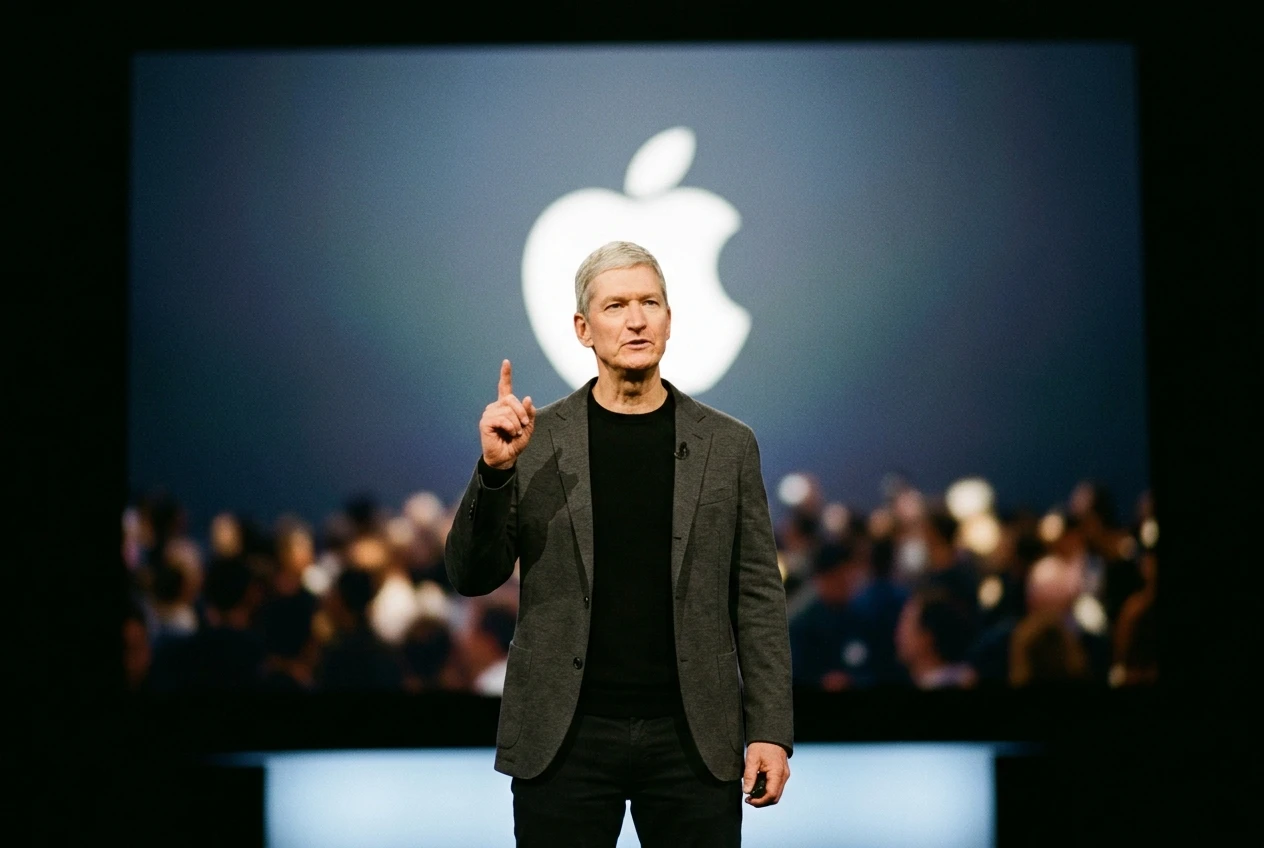
Apple will raise the prices of its products as the cost of the memory chips inside them has surged, the company’s outgoing chief executive said this week, framing the move as memory chip costs that the company can no longer absorb on its own. In an interview with The Wall Street Journal published Wednesday, Tim Cook said price increases are “unavoidable” as the situation around memory chips has become “unsustainable.” The warning lands weeks before Apple is expected to launch the iPhone 18 in September, and it puts a public price tag on a supply squeeze that has been building in the background of the consumer electronics industry since the AI build-out began.
Cook did not say when prices will rise or which products will be affected. It is also unclear whether the price hikes will reach the iPhone 18 line at all. What is clear is that the chip pressure on consumer electronics is now being acknowledged, by name, from the largest single buyer of memory in the world.
Cook Tells the WSJ the Increases Are ‘Unavoidable’
Cook sat down with The Wall Street Journal on Wednesday for an interview that has since rippled across Apple’s coverage. He told the paper that Apple has spent months trying to absorb the climbing cost of memory and storage chips to keep prices flat for customers, and that the position is no longer tenable. The interview, Cook’s interview in the Wall Street Journal, was the first time the outgoing CEO has put a public timeline on the cost problem.
Cook’s framing was blunt. He said Apple needs memory pricing and supply to return to reasonable levels for consumer products, describing that as “the bottom line.” The comments came two months before Cook is set to step down on September 1, 2026, with hardware chief John Ternus taking over as CEO.
Unfortunately, price increases are unavoidable. We’re doing our best to mitigate the huge increases that are being passed to us, and we’ve been trying to shield our customers from the increases, but the situation has become unsustainable.
Tim Cook, Apple CEO, to The Wall Street Journal, as reported June 17, 2026.
Apple Has Already Tested the Water
Apple has already moved once on price this year. The Mac mini compact desktop saw its entry price climb earlier in 2026, after Apple dropped the lowest tier of the lineup. MacRumors, citing the change, reported the entry Mac mini now starts at $799, up from $599. The BBC’s reporting on the shift pegged the increase at about $200 (£150). It was the first concrete test of the new memory-driven price floor for an Apple device.
The bigger test sits on the calendar for September. The iPhone 18 launch is widely expected to introduce the next round of Apple hardware, including a foldable iPhone, alongside the iPhone 18 Pro and iPhone 18 Pro Max. Cook would not confirm whether the iPhone 18 line will be among the products affected, and research firm TechInsights estimated, as the WSJ reported, that Apple would need to add roughly $270 to the next iPhone Pro to keep its existing profit margin. The iPhone 17 Pro starts at $1,099.
Cook told the WSJ Apple is willing to use its balance sheet to help bring more memory capacity online. He also drew a line at vertical integration, saying Apple will not build its own memory or storage factories. “We can’t do everything,” Cook said. “We know what we’re good at.” The price reset sits in the gap between those two statements. For a sense of how the squeeze is showing up further down the road, what 2027 flagship phones could cost as memory bills rise lays out the broader pricing trajectory.
| Product | Before | Now or projected |
|---|---|---|
| Mac mini entry model | $599 | $799 (early 2026, per MacRumors) |
| iPhone 17 Pro starting price | n/a | $1,099 |
| iPhone 18 Pro (TechInsights margin hold) | $1,099 base | ~$1,369 estimated |
Why AI Is Squeezing the Memory Market
The chain starts upstream of Apple. AI data centers are absorbing most of the world’s new DRAM and NAND output, and the memory makers have followed the money. IDC’s 2026 memory shortage market analysis lays out the reallocation plainly: Samsung, SK Hynix and Micron have shifted cleanroom space toward high-bandwidth memory (HBM) and high-capacity DDR5, the parts that go into AI servers, pulling capacity away from the LPDDR and NAND that go into phones, PCs and consumer devices.
TechCrunch, citing Cook’s WSJ interview, reported that memory costs have increased fourfold since last year at Apple. Cook told the WSJ he has “never seen anything like it in any area in over 40 years,” and likened the squeeze to a “hundred-year flood.” IDC expects 2026 DRAM supply growth of 16% year-on-year and NAND at 17%, both below historical norms.
Apple is the latest to confirm publicly. MacRumors lists Samsung, Microsoft, Sony and Dell among companies that have already raised prices in 2026 on the same pressures.
The wider device market is bending under the same force. Counterpoint Research expects global smartphone shipments to shrink in 2026, and IDC’s downside scenarios put the global smartphone market contracting between 2.9% and 5.2%, and the PC market between 4.9% and 8.9%. The same scenarios forecast smartphone average selling prices climbing 3% to 8% and PC average selling prices 4% to 8%.
- AI data centers are absorbing most of the new DRAM and NAND capacity
- Memory makers have shifted cleanroom space from consumer chips to HBM
- Memory costs are up fourfold since last year at Apple, per TechCrunch
- Samsung, Microsoft, Sony and Dell have already raised prices in 2026
Then Came the Helium Shock
Layered on top of the AI reallocation is a physical supply shock few consumers are tracking. The BBC’s reporting on Cook’s interview notes that the war in Iran has also disrupted the global supply of helium, a gas crucial in making semiconductors.
CBS News reported on March 31 that Qatar, which accounts for roughly one-third of the world’s helium supply, stopped producing helium this month after Iranian strikes on two state-run QatarEnergy liquefied natural gas facilities. QatarEnergy told Reuters the attacks wiped out 17% of the country’s LNG export capacity, with repairs expected to take three to five years. Helium is a byproduct of natural gas processing, and helium supply has no quick substitute.
Helium cools the silicon wafers that chips are printed on, and it is used during the etching process that defines transistor structures. Chipmakers typically hold no more than two months of helium in reserve, according to supply chain experts who spoke to CBS News. The squeeze hits consumer chips last because AI customers are still buying. For the broader picture of how the helium hit landed, how the Iran war disrupted the global helium supply is the most detailed single account.
The Chipmakers Are Saying the Same Thing
Apple is not the only one signaling price pressure. In an exclusive BBC interview this month, Taiwan Semiconductor Manufacturing Company (TSMC), which manufactures the most advanced chips designed by Apple, Nvidia and AMD, would not rule out price rises as inflation pushed up its costs. TSMC chairman and CEO CC Wei told shareholders at the company’s annual meeting that he would “like” to raise prices, as its competitors have done.
TSMC’s chief financial officer Wendell Huang drew a line at the kind of leap Apple is bracing for, telling the BBC the firm would not introduce sudden “fourfold, fivefold” price rises. He added, “We reflect our value.” TSMC has committed $165bn to its Arizona operations as part of a multi-year build-out, a sign the foundry sees no short-term relief in the capacity race. TSMC’s BBC interview on chip pricing carries Huang’s comments in full.
Inflation, yes, did cause our costs to increase.
Wendell Huang, TSMC chief financial officer, to the BBC.
For a sense of how the same squeeze is reshaping other consumer hardware categories, how console prices are moving as AI demand bites tracks the same pressure on PS5, Xbox and Switch 2 pricing.
Why the iPhone 18 Launch Matters Most
Apple is going into this conversation from a position of strength. The BBC reports that Apple device sales grew by 17% in the first three months of 2026 versus the same period a year ago, lifted by strong demand in China and the iPhone 17 lineup launched last September.
But the products driving that growth are also the ones most exposed to the memory bill. Apple’s on-device AI push, including the revamped Siri shown at WWDC 2026, requires more DRAM in every device that runs it. Cook has spent his 15-year tenure pushing Apple toward more on-device intelligence, and more on-device intelligence means more memory per device, which means each percentage increase in chip prices lands harder on Apple’s bill of materials than it would have a year ago.
The timing is also a leadership story. Cook steps down as CEO on September 1, 2026, with hardware engineering chief John Ternus taking over less than two weeks before the expected iPhone 18 launch. The price reset, if Apple announces one in September, lands on Ternus’s first weeks in the chair.
- Apple device sales grew 17% in Q1 2026 vs Q1 2025, per the BBC
- Memory costs are up roughly fourfold since 2025 at Apple, per TechCrunch
- iPhone 17 Pro starts at $1,099, per TechCrunch
- TechInsights estimates Apple needs to add ~$270 to the iPhone 18 Pro to hold margin
A New Pricing Floor
The consumer technology market has spent a decade defining itself by what it added per dollar. The 2026 reset, by Cook’s own framing, is defined by what AI has taken off the table. Cook told the WSJ that the resolution is structural: memory pricing and supply must return to reasonable levels for consumer products. IDC’s analysis notes the squeeze “could persist well into 2027,” and Counterpoint expects the memory crunch to last until late 2027.
Apple has not said which products move first, nor by how much. The WSJ has reported that price increases on Macs and iPads could arrive ahead of the iPhone 18 in September. The size of the move is the question every buyer of a high-end phone, laptop or console is now asking, and Cook’s WSJ interview is the first time the industry’s largest single buyer has answered it out loud.
Frequently Asked Questions
Why is Apple raising prices?
Apple CEO Tim Cook told The Wall Street Journal that the cost of the memory and storage chips inside its products has climbed to the point where the company cannot absorb it on its own. Cook described the situation as “unsustainable” and said the increases have come as AI data centers have absorbed most of the new memory supply and the war in Iran has disrupted helium, a gas used in chipmaking.
Which Apple products will get more expensive first?
Apple has not said. The Wall Street Journal has reported that Macs and iPads could see price increases ahead of the iPhone 18 launch in September. Apple already raised the entry price of the Mac mini earlier in 2026, from $599 to $799.
How much more expensive could the iPhone 18 Pro be?
Research firm TechInsights told The Wall Street Journal that Apple would need to add roughly $270 to the next iPhone Pro to keep its existing profit margin. The iPhone 17 Pro starts at $1,099. Apple has not confirmed any figure.
When will memory chip prices come back down?
Cook told the WSJ that memory pricing and supply need to return to “reasonable levels for consumer products” but gave no timeline. IDC’s market analysis says the squeeze could persist well into 2027, and Counterpoint Research expects the memory crunch to last until late 2027.


South Korea Retail Investors Face Reckoning After KOSPI AI Rally Collapses

Surrey AI Maps Three Heart Attack Paths and Their Molecular Roots

Germany Locks Neutral Apple ATT Prompts Across Most of Europe

Apple’s 5% EU Fee Quietly Rewrites Alternative App Store Math

Apple’s EU Fee Truce Cuts Complexity but Leaves Rivals Fuming

Pixel 11 Pro Fold Trades Thinness for Durability and Seven-Year Stay

Mayo AI Flags HCM Obstruction From Everyday Ultrasound Videos

Indian Brands Quietly Scale Landmark Screens and Home Tech

Navin Vatsa Turns Grief Into a Lifetime of Quiet Seeing

Google Bets Pixel 11 Agentic AI Will Redefine Phones

Oracle Cuts 21,000 Jobs in a Year, Cites AI in 10-K Filing

Fable 5 and Mythos 5 Return as US Lifts Anthropic Export Controls

SpaceX’s Google Deal Turns a Rocket Company Into a Cloud Landlord

CD Projekt Red Co-CEO: Redemption Arc Isn’t Done, Witcher 4 in 2027

XPL Rallies 30% Ahead of Plasma One Card Tier Launch

Google Search Profiles Build a Follow Graph Inside Discover

DGO App Brings Rs 549 Mobile Pass for FIFA World Cup 2026 in Nepal

Moonshot AI Targets $30 Billion in China’s Fastest AI Funding Sprint

Oppo’s ColorOS 17 Eligibility List Leaves A-Series Buyers Behind

Microsoft Xbox Layoffs Start in July as Sharma Slams 3% Margin
-
 AI2 months ago
Oracle Cuts 21,000 Jobs in a Year, Cites AI in 10-K Filing
-
 AI2 months ago
Fable 5 and Mythos 5 Return as US Lifts Anthropic Export Controls
-
 AI3 months ago
SpaceX’s Google Deal Turns a Rocket Company Into a Cloud Landlord
-
 GAMING2 months ago
CD Projekt Red Co-CEO: Redemption Arc Isn’t Done, Witcher 4 in 2027
-
 CRYPTO3 months ago
XPL Rallies 30% Ahead of Plasma One Card Tier Launch
-
 NEWS3 months ago
Google Search Profiles Build a Follow Graph Inside Discover
-
 APPS3 months ago
DGO App Brings Rs 549 Mobile Pass for FIFA World Cup 2026 in Nepal
-
 AI3 months ago
Moonshot AI Targets $30 Billion in China’s Fastest AI Funding Sprint