
NEWS
Why the Loudest Social Media Reaction Often Misleads Marketers
Cannes Lions 2026 panel found marketers misread consumer backlash. McDonald’s Big Arch launch, Sydney Sweeney’s American Eagle ads, and Harris Poll AI adoption stats show why.

A campaign can send a stock price up 25% on launch day and still be facing a full-blown social media backlash by the weekend. For marketers, that whiplash is becoming common, and it is forcing brands to ask whether the loudest reaction online is actually the one that matters.
A session at the Cannes Lions 2026 festival made the case that it usually is not. Titled ‘Our World of Contradictions: The Creative-Populace Divide’ and built around new global research from The Harris Poll, the panel paired Mark Penn, Chairman and CEO of Stagwell, with Craig Brommers, Chief Marketing Officer of American Eagle. Their hour together argued that the gap between what consumers actually think and what marketers assume they think has widened, and that social media is more often the cause of that widening than the cure.
What the Panel Set Out to Prove
The session sat in Cannes Lions’ Insights & Trends content stream. The official programme page framed the premise plainly: ‘Marketers pride themselves on understanding people, so why do brands keep getting surprised by consumers?’ The page added that the discussion would map ‘where marketers’ assumptions diverge from consumer reality’ and identify ‘the business opportunities for brands to close that gap.’
Penn opened by arguing that the consensus view of consumer behavior often misses what he called ‘a side of America that marketers don’t always see clearly,’ and that ideas which would have broken through ten or fifteen years ago now slide past unnoticed. Harris Poll, a Stagwell company, provided the research backbone. Brommers, drawing on a year of weathering his own storms, added that the panel’s examples were chosen precisely because they illustrated the same gap: ‘As someone who went through some social media storm myself, I don’t like to throw shade at other marketers and other executives, but this is a great example [of] maybe not reading the room before launching something.’
The Big Arch and the Bite That Broke the Internet
The McDonald’s case began in early February 2026, when CEO Chris Kempczinski posted a video to promote the chain’s new Big Arch burger, billed in launch materials as a ‘love letter’ to fans. Stacked with two patties and a 1,020-calorie count that Fortune noted amounted to roughly two-thirds of an adult’s daily intake, the burger was an easy visual target. On camera, Kempczinski took a small, hesitant bite, told viewers he would ‘enjoy the rest of [his] lunch’ off-screen, and signed off with ‘That’s a big bite for a Big Arch.’
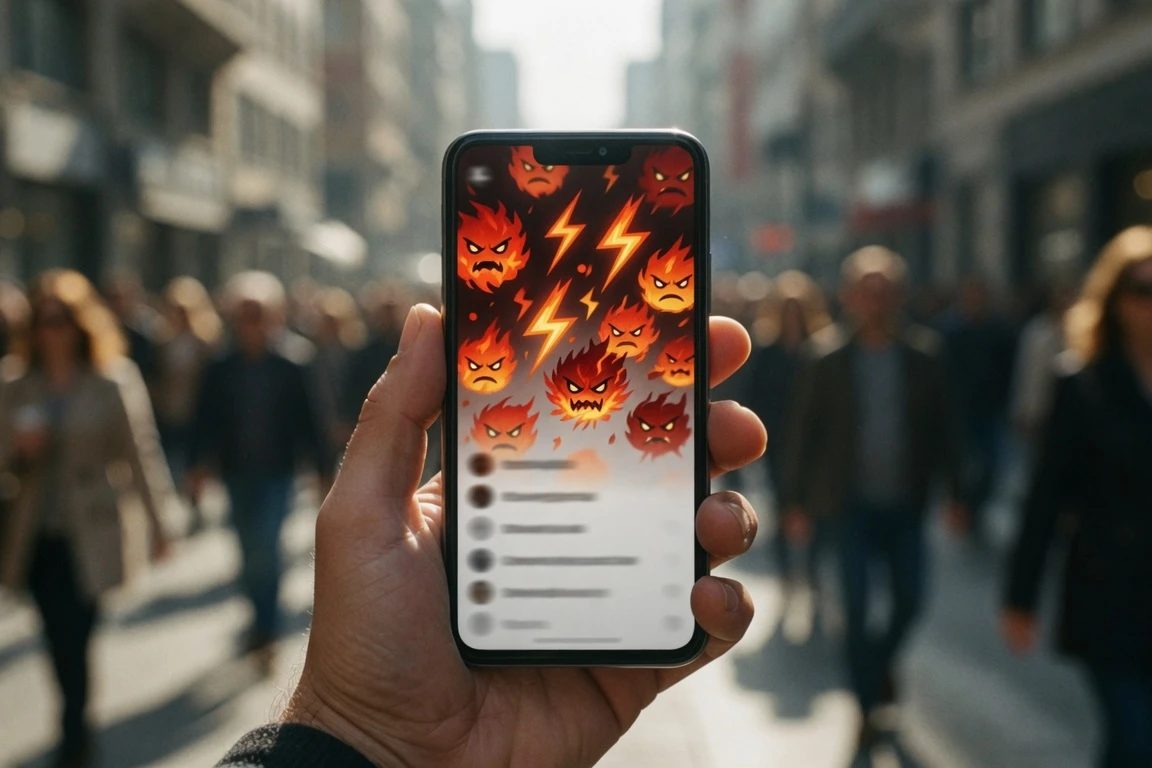
The clip sat largely unnoticed for weeks. Then creators began stitching their reactions and flooding feeds with memes. Comedian Garron Noone posted a TikTok response that, per Fortune, racked up more than ten million views. Burger King moved within days, releasing a 13-second video of its president, Tom Curtis, taking a large bite of a Whopper and captioning it ‘Thought we’d replay this.’ A Burger King spokesperson told NBC News: ‘We can confirm that this video was not created in reaction to anything.’ A&W and Wendy’s piled on next with their own taste-test spoofs, and Wendy’s went further, announcing a new chief tasting officer gig with a $100,000 salary for any applicant willing to film video reviews.
A McDonald’s spokesperson told Fortune the company was ‘glad the Big Arch has everyone’s attention,’ adding that early sales of the burger were ‘beating expectations.’ The viral clip earned Kempczinski close to eleven million views on Instagram and grew his overall follower count by 30%, per Fortune. The lesson Brommers took from the episode was the same one McDonald’s competitors had been demonstrating in real time. The loudest platform corner had spoken, and whether it was the largest audience was a separate question.
When Sydney Sweeney’s Jeans Became the Stress Test
The American Eagle story was the one Brommers lived through. He opened the panel’s telling of it from the launch day: ‘We launched this campaign on a Wednesday. Even the announcement that Sydney was part of the American Eagle team sent the stock up 25%, and for three or four days we were the heroes of the marketing community.’
Then the mood shifted. By the following Sunday, his daughter was coming down the stairs with news from her own feed. The exchange, as Brommers told the panel:
Then on Sunday, my high school daughter walks down the stairs and says, ‘Dad, you’re being cancelled on TikTok right now.’ And I said, ‘What?’
That Sunday, in Brommers’ words, ‘began the affair of Great Jeans that is still the most talked-about marketing campaign of this decade.’ Online critique sharpened quickly. The BBC reported that critics read Sweeney’s line that ‘genes are passed down from parents to offspring, often determining traits like hair colour, personality and even eye colour. My jeans are blue’ as a play on eugenics. American Eagle said the ad was about denim. President Donald Trump weighed in on Truth Social in August, calling Sweeney ‘a registered Republican’ with ‘the HOTTEST ad out there.’ The campaign did not come down.
What Real-Time Data Looked Like Behind the Decision
The decision to keep the campaign live was, in Brommers’ telling, data-driven from the first weekend. American Eagle commissioned Harris X to poll the broader public rather than rely on social media sentiment alone, and the results pointed in a different direction than the trending tab.
Sweeney campaign by the numbers:
- 25%: surge in American Eagle shares in after-hours trading after Q2 earnings
- 790,000: new customers acquired across every US county
- 40 billion: total impressions generated by the campaign
- ~320,000: new social followers gained during the run
- Sydney denim jacket sold out in one day; Sydney Jean sold out in one week
On the broader polling, Brommers told the panel:
A vast, vast, vast majority of Americans loved this campaign. Didn’t matter what gender you were, ethnicity, political party, geography, this was a campaign that they got, a campaign that they loved.
There was, he added, ‘never a single conversation about pulling the ad,’ because the real-time data was showing ‘that the business and the brand metrics were headed in the right direction.’
The AI Adoption Contradiction
The third contradiction the panel turned to was the one marketers are arguably most exposed to, the gap between what consumers say they want from AI and what they actually do with it. Penn cited Harris Poll figures showing 67% of consumers say they don’t want to hear about AI at all, even as adoption rates ran at 73% in the UK, 57% in the US, and 78% in parts of Asia. The ‘AI-powered’ label is already turning into a brand liability in the wider market, with consumer enthusiasm for AI features dropping from 50% to 19% in two years.
| Region | AI adoption rate |
|---|---|
| UK | 73% |
| US | 57% |
| Parts of Asia | 78% |
Brommers said AI now plays two roles inside American Eagle’s creative operation. ‘AI has become the best villain in our brand storytelling,’ he said, while also enabling collaboration that would have been impossible a year earlier. He pointed to a recent shoot involving a Spanish-speaking soccer star whose lines were real-time translated and refined with AI tools during the concepting stage. ‘We are in a new world where we can conceive a concept in real time, together and then go shoot this campaign the following week,’ he said.
Penn closed the data portion of the session with a single line. 95% of marketing professionals surveyed by Harris Poll now use AI in some form, even as skepticism about the technology persists in parallel.
Where the Loudest Voice Isn’t the Largest
The argument Penn and Brommers built across the hour pointed at a single conclusion. When an ad draws backlash online, the size and tone of that backlash is one data point, not the verdict. The verdict sits in the combination of broad-based polling and real-time business metrics, both of which can run sharply counter to what is trending on a platform.
That lesson, Brommers said on the Cannes Lions stage, was what marketers should take from both the Big Arch launch and the Sweeney campaign. Real-time business data and broad-based polling, not the loudest corner of a platform, are what should decide whether a campaign is actually working. Penn’s closing framing was that the gap between marketer assumptions and consumer reality is widening, and the brands that close it will be the ones that learn to read both at once. The full session programme listing is on the official Cannes Lions 2026 site for those who want the hour in full.


Redmi Note 17 Battery Wins by Leaving Power Behind

WeChat Moments AI Tools Hide a Bigger Skills Redesign

iOS 27 Beta 5 Locks Six iPhones and a Split Launch

Edge AI Forces Hybrid Data Centers Into a Split Reality

Qi2 25W Magnets Quietly Rewrite Desk and Car Charging

Spotify AI Persona Badges Wall Off Synthetic Discovery

GCCs Build AI Bullet Trains on Incomplete Data Tracks

Coreum Bridge Multisig Signed Off on Its Own 200k XRP Drain

AI Shrinks Solar Inspection Crews While Paying Hybrid Skills Far More

Intel Graphics Driver Fixes Still Fight Windows and OEMs

Fable 5 and Mythos 5 Return as US Lifts Anthropic Export Controls

Oracle Cuts 21,000 Jobs in a Year, Cites AI in 10-K Filing

SpaceX’s Google Deal Turns a Rocket Company Into a Cloud Landlord

CD Projekt Red Co-CEO: Redemption Arc Isn’t Done, Witcher 4 in 2027

XPL Rallies 30% Ahead of Plasma One Card Tier Launch

Google Search Profiles Build a Follow Graph Inside Discover

DGO App Brings Rs 549 Mobile Pass for FIFA World Cup 2026 in Nepal

Moonshot AI Targets $30 Billion in China’s Fastest AI Funding Sprint

Microsoft Xbox Layoffs Start in July as Sharma Slams 3% Margin

Oppo’s ColorOS 17 Eligibility List Leaves A-Series Buyers Behind
-
 AI1 month ago
Fable 5 and Mythos 5 Return as US Lifts Anthropic Export Controls
-
 AI2 months ago
Oracle Cuts 21,000 Jobs in a Year, Cites AI in 10-K Filing
-
 AI2 months ago
SpaceX’s Google Deal Turns a Rocket Company Into a Cloud Landlord
-
 GAMING2 months ago
CD Projekt Red Co-CEO: Redemption Arc Isn’t Done, Witcher 4 in 2027
-
 CRYPTO2 months ago
XPL Rallies 30% Ahead of Plasma One Card Tier Launch
-
 NEWS2 months ago
Google Search Profiles Build a Follow Graph Inside Discover
-
 APPS2 months ago
DGO App Brings Rs 549 Mobile Pass for FIFA World Cup 2026 in Nepal
-
 AI2 months ago
Moonshot AI Targets $30 Billion in China’s Fastest AI Funding Sprint