
NEWS
POCO’s Extra RAM Now Costs Flagship Money in Manila
POCO raised Philippine list prices by as much as PHP 12,000 after DRAM nearly doubled, turning the extra RAM pitch into a surcharge.

POCO raised the Philippine list price of the X8 Pro Max by PHP 11,000, with no public notice. The 12GB, 256GB kit launched on March 17, 2026 at PHP 25,999. By late June the official store asked PHP 36,999 for the same phone.
The extra RAM was the reason to skip a flagship. That memory is now the surcharge, because AI servers bought the wafers first.
The June List Prices Nobody Announced
Shoppers caught the rewrite on POCO’s official Lazada and Shopee pages in late June 2026. The company did not put out a statement. The 12GB models moved the most, which is the tell, because those kits carry the DRAM the shortage actually prices.
POCO LIST PRICES IN THE PHILIPPINES
| Model | Launch SRP | June 2026 list | Increase |
|---|---|---|---|
| X8 Pro Max (12GB/256GB) | PHP 25,999 | PHP 36,999 | PHP 11,000 |
| X8 Pro (8GB/256GB) | PHP 18,999 | PHP 25,999 | PHP 7,000 |
| F8 Ultra (12GB/256GB) | PHP 39,999 | PHP 51,999 | PHP 12,000 |
| F8 Pro (12GB/256GB) | PHP 29,999 | PHP 39,999 | PHP 10,000 |
| M8 5G | PHP 12,999 | PHP 15,999 | PHP 3,000 |
| M8 Pro 5G | PHP 16,999 | PHP 17,999 | PHP 1,000 |
The F8 Ultra’s PHP 12,000 jump is the largest peso move on the board. The M8 Pro 5G, a much smaller memory kit, moved PHP 1,000. Launch buyers who paid the X8 Pro Max early-bird price of PHP 18,999 between March 17 and March 26 now see the same 12GB phone listed at more than twice that promo ticket, a different comparison from the PHP 11,000 SRP-to-SRP hike.
Extra RAM Was the Whole Pitch
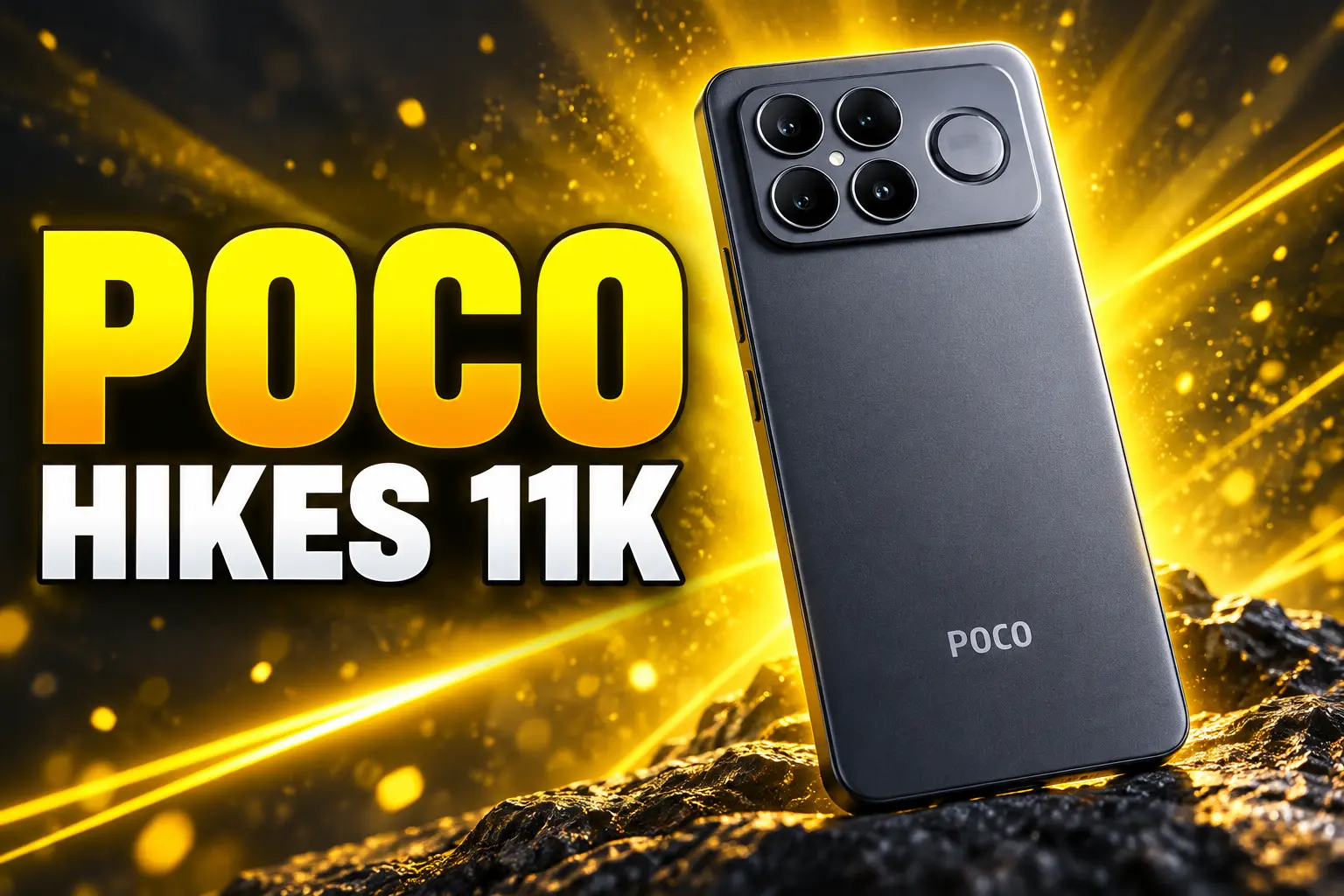
POCO, the Xiaomi sub-brand, sold itself on stuffing flagship memory into midrange money. The X8 Pro Max arrived with 12GB of LPDDR5X, UFS 4.1 storage, a 6.83-inch 1.5K AMOLED panel, an 8,500mAh battery, and MediaTek’s Dimensity 9500s. At PHP 25,999, that spec sheet was the argument.
The F8 Ultra made the same bet at the top of the line. It launched on November 26, 2025 with up to 16GB of RAM, a Snapdragon 8 Elite Gen 5 chip, and a PHP 39,999 starting SRP. Reviewers treated it as the cheap flagship. The June list of PHP 51,999 puts it in a different aisle.
That is the bind. The gigabytes were the product. Once those chips got scarce, the brand that bragged about them had the least room to hide the bill.
The Wafers That Used to Go Into Phones
Memory makers did not lose a factory. They pointed the factories at high-bandwidth memory for AI accelerators, which eats about three times the wafer capacity of ordinary DDR5 for each gigabyte produced. Samsung, SK hynix, and Micron describe their 2026 HBM output as effectively committed. Phone DRAM is what is left.
TrendForce said conventional DRAM contract prices rose 93% to 98% in the first quarter of 2026, and industry DRAM revenue hit 97 billion dollars, up 81% from the prior quarter. In the second quarter, contract prices rose another 59.5% and DRAM revenue reached 154.73 billion dollars. The phone-grade chips moved even faster: TrendForce estimated LPDDR5X contract prices jumped 78% to 83% in the second quarter, with LPDDR4X up 70% to 75%.
THE MEMORY MARKET IN 2026
- Q2 DRAM contracts: Prices rose 59.5% quarter on quarter after the first-quarter near-doubling.
- Phone memory: LPDDR5X ASP jumped 78% to 83% in the second quarter, the kit inside the X8 Pro Max and F8 Ultra.
- Q3 path: Conventional DRAM is still seen up 13% to 18%, with mobile DRAM up 8% to 13%, a slower climb off a much higher base.
- Supplier take: SK hynix posted 60.5426 trillion won in operating profit for the second quarter, a 76% operating margin, with revenue of 79.3187 trillion won.
SK hynix’s operating profit rose 557% from a year earlier. Xiaomi’s phone gross margin in the first quarter was 10.1%, down 2.3 points. One side of the wafer sale is printing record earnings. The other is reprinting SRPs in Manila.
PC vendors are in the same queue, which is why RAM-heavy laptops are being repriced as ordinary DDR5 follows HBM up the curve. A phone with 12GB of LPDDR5X is a small server on a bill of materials, and the bill is no longer small.
Xiaomi’s President Named a New Normal
Xiaomi president William Lu Weibing told investors after the first-quarter results that the industry had to adapt to a “new normal” of higher memory costs, and that the increase should narrow from the third quarter. The results showed why he said it. Adjusted net profit fell 43% to 6.07 billion yuan. Revenue fell 10.9% to 99.1 billion yuan. Smartphone sales were 44.3 billion yuan, down 12.5%.
Omdia counted 33.8 million Xiaomi smartphone shipments in the quarter, down 19%, the steepest drop among the top five brands. Lu said Xiaomi would push average selling prices higher and lean on the mix to offset weaker volume. The Philippine list changes are that mix strategy in pesos, applied to the sub-brand that used to refuse it.
Nvidia CEO Jensen Huang, speaking in Seoul in June, did not treat the squeeze as a one-quarter event.
The whole industry supply chain, everything from wafers to packaging to silicon photonics, everything’s in short supply because the demand is so high. It is going to persist for several years.
Jensen Huang, Nvidia CEO, speaking in Seoul
Counterpoint Research has said the memory crunch may last until late 2027. New HBM plants, including SK hynix projects in Indiana and Korea, are not due in volume until 2028 to 2029. Lu’s narrowing is about the rate of increase, not a return to 2025 phone bills.
12GB Becomes the Flagship Memory Spec
The other half of the irony is already in the spec sheets. After several quarters of steep mobile DRAM increases, TrendForce said brands would cut production and struggle to take the bit volumes they had promised suppliers. High-end phones are being redesigned around less RAM, not more.
HOW PHONE MEMORY IS BEING CUT BACK
- High-end kits: TrendForce said 12GB is becoming the mainstream configuration, with 16GB adoption falling.
- Midrange kits: Devices in that band are reverting to 8GB as the core spec.
- Entry kits: Most of those models settle around 4GB.
- The average: TrendForce still sees average smartphone DRAM at 8.5GB in 2026, up 10% from the prior year, even as the fattest configs get culled.
POCO’s catalog was built on the opposite idea, that 12GB and 16GB were how a cheap phone embarrassed an expensive one. Those SKUs are now the ones with PHP 10,000 to PHP 12,000 printed on top of last year’s SRP. The M8 Pro 5G, which never sold that story, barely moved.
Why the Same Phone Costs More in Manila
The Philippine lists are a full rewrite on the 12GB phones, not a rounding error. India’s latest POCO C-series changes in September 2026 were measured in hundreds of rupees on the cheapest models, a different scale from Manila’s five-figure jumps on the X8 Pro Max and F8 Ultra. Same brand, same shortage, much louder stickers on the official PH stores.
Part of that is timing. The X8 Pro Max had been on sale locally only since March, so there was little old inventory to hide behind when contract prices reset. Part of it is channel. POCO sells the line through Lazada, Shopee, and TikTok Shop, where the listed SRP is the price the internet sees, and a quiet edit is the whole announcement.
The rest of Android is not insulated. Xiaomi, Redmi, Vivo, Oppo, and Nothing have all lifted lists in other markets through 2026, and other Android lines already paying more show the same memory math on different badges. POCO’s problem is branding. A Samsung or Apple customer expects the bill to sting. A POCO customer was trained to treat 12GB as the discount.
Older Boxes Are the Remaining Discount
The June lists closed the window the X8 series opened in March. Anyone who still needs a phone is shopping leftovers, open-box units, and last-gen kits that were packed before the second-quarter LPDDR jump. The 8GB X8 Pro at PHP 25,999 is the same money the 12GB X8 Pro Max used to ask, which is a cleaner way to read the new shelf than waiting for 16GB to come back on sale.
Promos can still undercut the printed SRP, as they did at launch, but the floor has moved. Lu already said prices would keep climbing into the second half of 2026 even as the rate of increase slowed. Huang’s “several years” and Counterpoint’s late-2027 window both say the cheap-RAM version of POCO is not the 2027 plan.
The X8 Pro Max still has the 8,500mAh battery and the 12GB board it launched with. It just no longer has the price that made those specs a steal, and the chips that used to justify the badge are the reason the badge costs flagship money.

Instagram Plus Tests a Read-Only Mode That Cuts Stories

Altman Asks the Public to Accept Some AI Harm

Google Freezes OSS VRP Product Reports After AI Flood

AI Agents Make Payment Rails the Scarce Prize

Turkey’s Crypto Boom Now Runs Through Three Banks

Fable 5 Came Back Under a Commerce On-Off Switch

Google’s SpaceX GPU Lease Has a Sept. 30 Deadline

Plasma One’s XPL Locks Face a 1.81 Billion Cliff

DGO’s Rs 549 World Cup Pass Cost Fans Sleep and Data

Moonshot AI’s $30 Billion Ask Became a $35 Billion Close
-
 AI4 months ago
Fable 5 Came Back Under a Commerce On-Off Switch
-
 AI4 months ago
Google’s SpaceX GPU Lease Has a Sept. 30 Deadline
-
 CRYPTO4 months ago
Plasma One’s XPL Locks Face a 1.81 Billion Cliff
-
 APPS4 months ago
DGO’s Rs 549 World Cup Pass Cost Fans Sleep and Data
-
 AI4 months ago
Moonshot AI’s $30 Billion Ask Became a $35 Billion Close
-

 NEWS4 months ago
ColorOS 17 Device List Spans Oppo, OnePlus and Realme
-

 GAMING4 months ago
Xbox Cuts 3,200 Jobs After Five Years of Thin Returns
-
 GAMING4 months ago
The RTX 4050 Under Rs 70,000 Hides a Wattage Gap