
AI
Flex Spins Off Its AI Power Unit, but Not Its Biggest Risk
Flex plans to spin off its Cloud and Power Infrastructure unit into a standalone AI data center company by early 2027, separating growth from risk.

Flex is splitting its Cloud and Power Infrastructure business into a standalone public company built entirely around power and cooling for AI data centers, with a targeted close in the first quarter of 2027. The board approved the plan on May 5, 2026, the same day the company posted an earnings beat that sent shares soaring.
Wall Street has rewarded the move ever since, pushing the stock into the S&P 500 and a fresh round of price-target hikes. But the thin margins and hyperscaler concentration that worry analysts about Flex today do not vanish in the split. They simply move addresses, riding along with the new company instead of the old one.
Flex Splits In Two To Chase the AI Power Boom
The plan calls for Flex’s board-approved decision to spin off its Cloud and Power Infrastructure segment into an independent, publicly traded company, referred to for now as SpinCo. The Cloud and Power Infrastructure business, or CPI, is the Flex division that builds power delivery, liquid cooling and integrated compute systems for data centers.
SpinCo will build end-to-end power and thermal management systems for AI data centers, from grid connections down to individual chips. Flex will keep its advanced manufacturing business, serving industrial, healthcare, automotive and communications customers. The transaction is intended to be tax-free to shareholders.
Leadership splits along the same line. Revathi Advaithi, Flex’s current chief executive, will run SpinCo and serve as transitional chairman of Flex’s board through the separation. Michael Hartung, currently Flex’s chief commercial officer, becomes Flex’s next chief executive. Citi, PJT Partners and BofA Securities are advising on the deal.
By creating two focused, independent companies, we are giving SpinCo the platform to build and scale the products and digital infrastructure that the world’s most demanding AI workloads depend on, and Flex the focus to deliver advanced manufacturing solutions at global scale for diversified industries.
Advaithi said in the announcement, calling the split the next step in a transformation she has led for seven years.
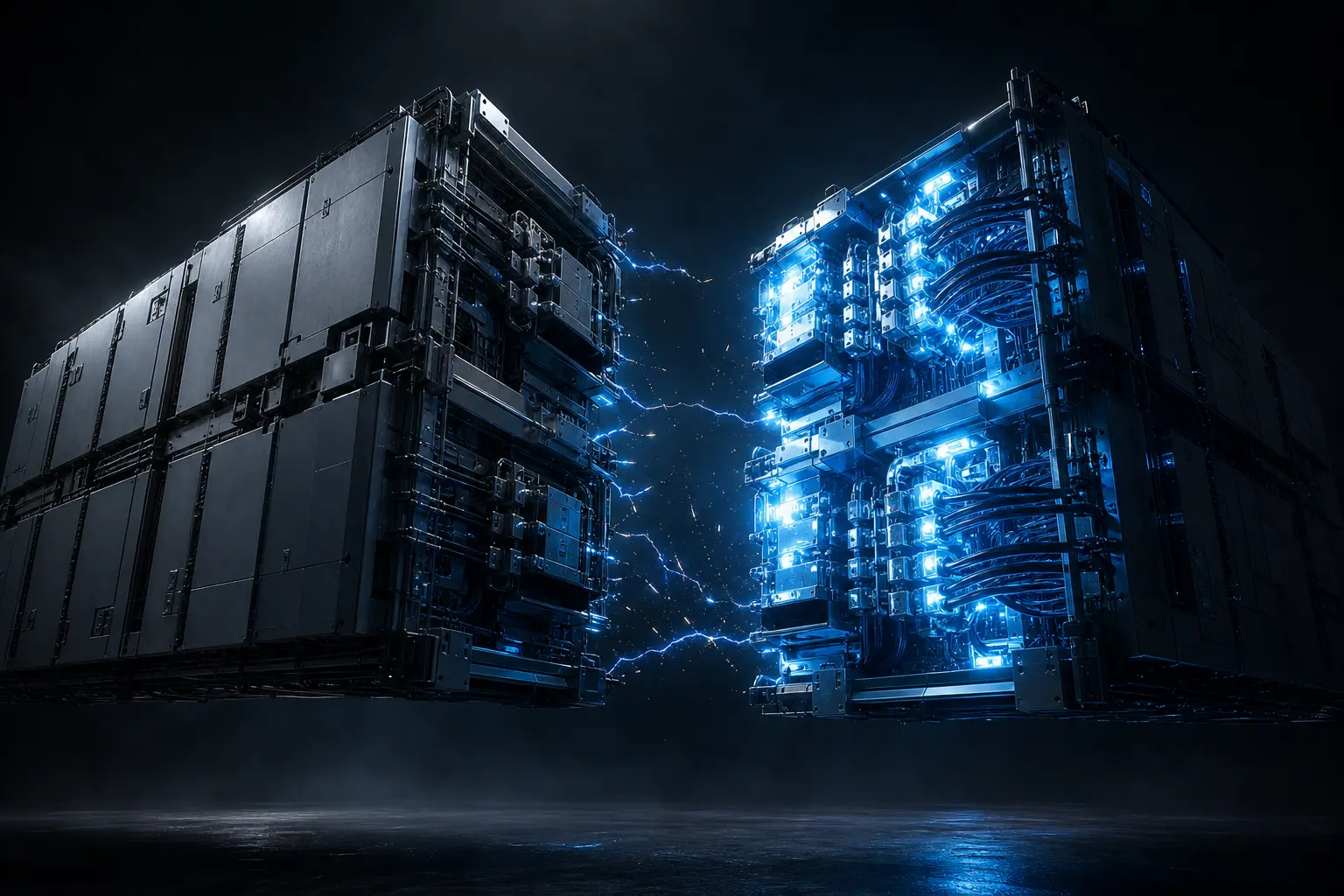
Wall Street Already Priced In a Winner
The market’s verdict arrived within a day. Shares jumped 5% on May 5 and another 40% on May 6, the day the spin-off news spread alongside Flex’s fiscal fourth-quarter results. By the end of that week, the stock had gained roughly 56% across five trading sessions.
The results underneath that rally were real. Flex posted adjusted earnings per share of $0.93 on revenue of $7.5 billion, ahead of Wall Street’s estimates of $0.87 and $6.95 billion, with adjusted operating margin hitting a record 6.7%, up 50 basis points.
- 144.7% – Flex’s year-to-date share price gain, with shares recently trading near $155.81.
- 592% – total return to Flex shareholders over the past three years, per Simply Wall St’s tracking.
- $203 – Barclays’ latest price target on Flex, raised twice this year as the spin-off story built.
- 11 analysts – currently rate Flex a Strong Buy, with an average 12-month price target of $160.40.
Flex also joined the S&P 500 Index on June 22, 2026, adding liquidity and visibility just weeks after the spin-off announcement. The climb has not been a straight line. Insider stock sales and macro jitters over Treasury yields and oil prices briefly knocked shares down more than 8% in late May before the rally resumed.
What Happens to the Manufacturing Business Flex Leaves Behind?
Flex without its power and cooling unit becomes a smaller, slower business. It keeps more than $22 billion in revenue across healthcare, industrial, automotive, communications and lifestyle manufacturing, organized into two segments, but it loses the unit that every recent headline about Flex has centered on.
Hartung describes the remaining company as a manufacturing and services platform serving diversified end markets, organized under the names Integrated Technology Solutions and Regulated Manufacturing Solutions. It is unglamorous next to an AI power pure play, and the market has started pricing it that way.
One Seeking Alpha analysis published after the announcement argued the split would separate Flex’s fastest-growing unit and push the remaining company’s share price down once it trades on its own, while the new company draws investors chasing AI infrastructure growth on its own merits. Separate estimates for the stub business point to low-to-mid-single-digit revenue growth, a profile that suits a manufacturing-focused investor rather than one chasing AI multiples.
SpinCo and RemainCo, Side by Side
Set next to each other, the two companies Flex is creating look like different businesses entirely, which is the point of splitting them apart.
| Entity | Core Business | CEO | FY2027 Growth Target |
|---|---|---|---|
| SpinCo (Cloud and Power Infrastructure) | Power delivery, cooling and thermal systems for AI data centers | Revathi Advaithi | 65% to 75% revenue growth |
| Flex (remaining company) | Advanced manufacturing across healthcare, industrial, automotive and communications | Michael Hartung | Low-to-mid-single-digit growth |
Flex expects to retain up to a 19.9% stake in SpinCo at the time of the spin, with the rest of SpinCo’s shares distributed directly to existing Flex shareholders. A Form 10 registration statement covering the new company is still being prepared for the SEC, and Flex has said it will share more detail on capital structure and leadership closer to the transaction date.
The Risk That Travels With the Spinoff
Splitting a company does not delete its problems. It just decides which shareholders inherit them.
CPI has thin margins for a business marketed as high growth. Flex executives told a J.P. Morgan investor conference that CPI margins ended fiscal 2026 at 9.2%, weighed down by roughly 100 basis points of investment costs the company expects to recover in fiscal 2027. Power products specifically are targeted at mid-teens margins over time, still below where the business hopes to land.
Customer concentration is the bigger issue. Flex has recently secured incremental business from several hyperscalers and data center customers, including Google, with those projects already moving into capital deployment. That is good news for near-term revenue and a long-term risk, since analysts have repeatedly flagged that hyperscalers could bring more power and cooling manufacturing in-house rather than keep buying it.
- Customer concentration – a handful of hyperscaler and colocation clients drive most of CPI’s growth, and any one of them could shift work in-house.
- Thin margins – CPI margins sit around 9.2%, below diversified industrial peers, even as the unit is asked to fund rapid expansion.
- Fresh leverage – Flex entered a new $1.45 billion senior term loan in June 2026, adding debt to a balance sheet that must now be divided between two companies.
- Crowded competition – Vertiv, Eaton and Schneider Electric all chase the same AI data center power and cooling contracts SpinCo is built around.
Flex is not slowing down while it prepares to split. At COMPUTEX 2026, the company unveiled a 110 kW power shelf built for NVIDIA’s Vera Rubin platforms, alongside a 30 kW energy storage system meant to stabilize AI workloads. Chris Butler, Flex’s president of embedded and critical power, said “the rapid growth of AI is driving new demands on data center power infrastructure, from rack-scale distribution to processor-level power delivery.”
A Timeline of Fast Moves
The spin-off has moved in quick, visible steps since the first announcement.
- March 30, 2026: Flex agrees to buy Electrical Power Products for about $1.1 billion in cash, adding engineered electrical control systems to its power portfolio.
- May 5, 2026: Flex’s board approves the Cloud and Power Infrastructure spin-off alongside fiscal fourth-quarter results that beat Wall Street estimates.
- May 6, 2026: Shares jump roughly 40% in a single session as the market digests the earnings beat and the spin-off plan together.
- June 2026: Flex enters a new $1.45 billion senior term loan and unveils new AI power hardware at COMPUTEX.
- June 22, 2026: Flex joins the S&P 500 Index.
- First quarter of calendar 2027: Flex targets completion of the spin-off, pending SEC review of the Form 10 registration statement.
The June term loan carries its own fine print. Flex’s loan covenants carve out the spin-off from its restrictions on asset sales, provided Flex still meets its financial covenants once the separation closes.
Where Analysts Split on the Price Target
Not everyone on Wall Street is chasing the same number, and the spread between price targets is wide enough to matter.
- Barclays raised its price target to $203 from $174, keeping an Overweight rating after the earnings beat and spin-off news.
- Freedom Capital initiated coverage with a Hold rating and a $144 price target, telling clients to wait for shares to pull back toward $120 to $130 before buying.
- Bearish cash-flow models circulating among Flex-focused investors put fair value as low as the $50s to $80s a share, far below where the stock trades today.
Both estimates rely on a company that, as of this year’s numbers, has never actually traded as two separate businesses.
Frequently Asked Questions
When will the Flex spin-off be complete?
Flex is targeting a close in the first quarter of calendar 2027. That date depends on SEC review of the Form 10 registration statement, along with the usual regulatory approvals and market conditions that can push spin-off timelines earlier or later.
What will the new AI power company be called?
Flex has not yet announced a name or ticker for the new company, referring to it only as SpinCo for now. Once separated, the business is expected to operate across 22 engineering and manufacturing centers worldwide, according to Flex’s own announcement.
Has Flex spun off a business before?
Yes. Advaithi has pointed to Flex’s earlier spin-off of Nextracker, its former solar tracker business, as part of a seven-year strategy of exiting consumer-facing manufacturing to concentrate on compute, power and data center work.
Will Flex shareholders automatically receive shares in the new company?
Shareholders would receive SpinCo shares directly once the separation closes, with no purchase or exchange required, since the deal is structured as a tax-free distribution. The exact distribution ratio and record date have not been set and will appear in future SEC filings.
Does the spin-off change any of Flex’s existing AI manufacturing deals?
Not so far. Flex has continued expanding its manufacturing partnership with Cerebras Systems to scale production of the CS-3 AI supercomputer at its facilities, a sign the company keeps signing new AI hardware work while the separation moves through regulatory review.


AMD’s Data Center Revenue Jumps 57% as Its Stock Bets on Execution

Microsoft Loses an Xbox Lawsuit Just as Sony Kills Physical Discs

Bethesda Union Says HR Tore Down Its Memorial for Laid-Off Staff

Google Pixel 11 Pro Fold Price Leaks Point Toward a $2,000 Foldable

Smart Scales Promise Lab-Grade Body Fat Numbers, and the Science Pushes Back

Amap’s Ride-Hailing Hits 1,000 Cities Amid Security Warnings

Ulys’s Automatic Toll Billing Draws Scammers to 7 Million Drivers

Google’s Veo AI Video Tools Threaten VFX Jobs Far Beyond Hollywood

Music Industry Unveils AI Labels, but Streaming Giants Haven’t Signed On

Apple Sues OpenAI and Two Ex-Employees Over Stolen Trade Secrets

Microsoft Xbox Layoffs Start in July as Sharma Slams 3% Margin

Google Search Profiles Build a Follow Graph Inside Discover

Oracle Cuts 21,000 Jobs in a Year, Cites AI in 10-K Filing

Oppo’s ColorOS 17 Eligibility List Leaves A-Series Buyers Behind

Google DeepMind and A24 Sign $75 Million AI Partnership Deal

OCC Issues AML Consent Order Against Wise and Crypto.com Sponsor Bank

DGO App Brings Rs 549 Mobile Pass for FIFA World Cup 2026 in Nepal

Anthropic Tells Senators Alibaba Ran the Largest Claude Distillation Attack

Meta’s Iris AI Chip Enters Production in September, Tests Clean

Apple Strikes Preliminary Deal For Intel To Make iPhone And Mac Chips
-
 GAMING1 month ago
Microsoft Xbox Layoffs Start in July as Sharma Slams 3% Margin
-
 NEWS1 month ago
Google Search Profiles Build a Follow Graph Inside Discover
-
 AI3 weeks ago
Oracle Cuts 21,000 Jobs in a Year, Cites AI in 10-K Filing
-
 NEWS1 month ago
Oppo’s ColorOS 17 Eligibility List Leaves A-Series Buyers Behind
-
 AI3 weeks ago
Google DeepMind and A24 Sign $75 Million AI Partnership Deal
-
 CRYPTO2 months ago
OCC Issues AML Consent Order Against Wise and Crypto.com Sponsor Bank
-
 APPS1 month ago
DGO App Brings Rs 549 Mobile Pass for FIFA World Cup 2026 in Nepal
-
 AI3 weeks ago
Anthropic Tells Senators Alibaba Ran the Largest Claude Distillation Attack