
AI
Apple Sues OpenAI and Two Ex-Employees Over Stolen Trade Secrets
Apple accuses OpenAI and two former employees of stealing hardware trade secrets, including a kept laptop and supplier tactics, in a new federal suit.

Apple sued OpenAI and two of its former employees on Friday, accusing the ChatGPT maker of raiding its trade secrets to speed up a secret push into consumer hardware. The complaint, filed in the U.S. District Court for the Northern District of California, names OpenAI’s chief hardware officer, a former senior Apple engineer, OpenAI itself and its hardware unit io Products as defendants.
Apple is seeking an injunction to stop OpenAI from using any of the disputed material, on top of an order forcing its return. Granted quickly, that kind of order could freeze OpenAI’s hardware program right as the company preps a marquee device launch and a closely watched initial public offering (IPO).
How Apple Says Two Insiders Took Its Secrets
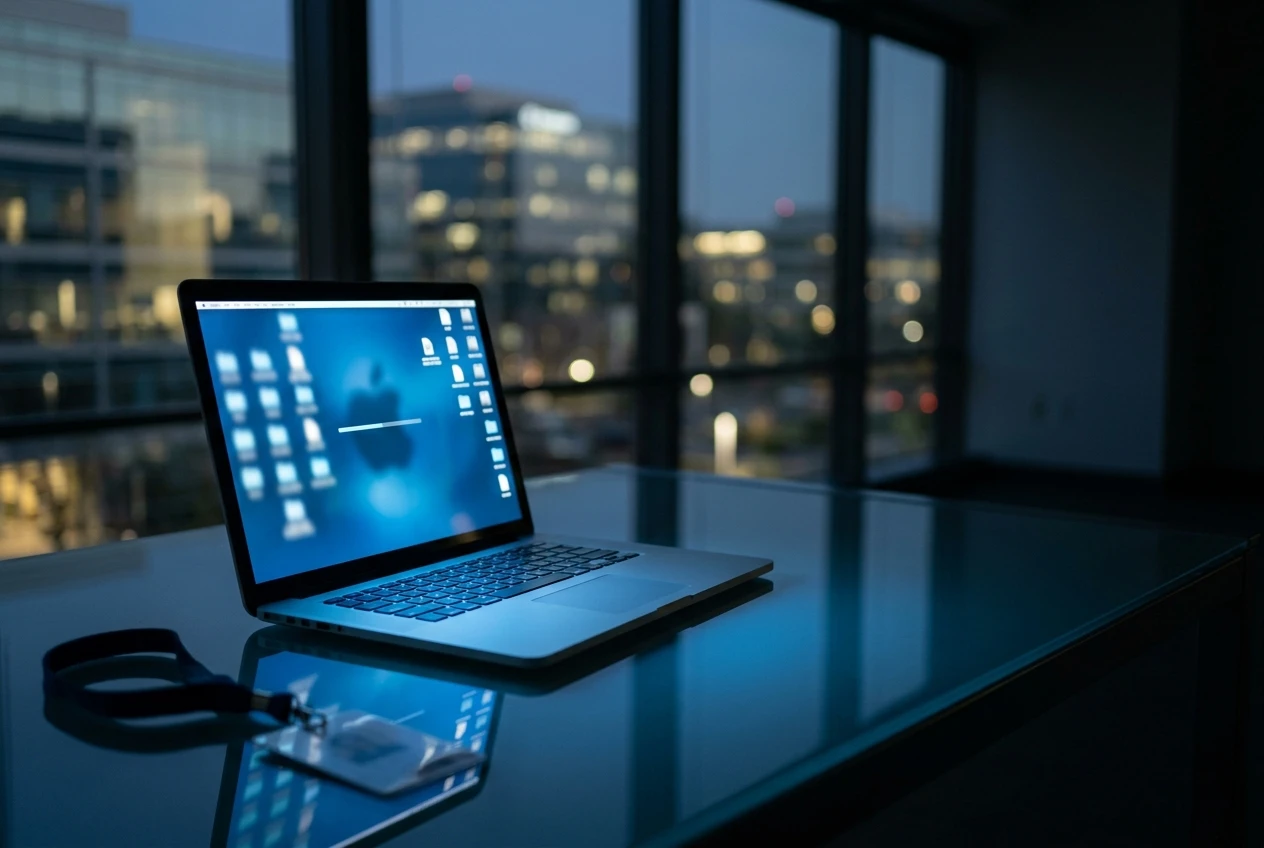
Chang Liu, a senior systems electrical engineer at Apple, left the company for OpenAI in January 2026. According to the complaint, he kept his Apple-issued laptop after departing and later found a previously undisclosed authentication bug that let him back into Apple’s internal file storage.
He did not seem worried about getting caught. “LOL, I found out I can access the [network storage], so funny,” he wrote to a former colleague still working at Apple, according to the filing.
Tang Yew Tan took a different route. He rose to vice president of product design for the iPhone and Apple Watch before leaving Apple to become OpenAI’s chief hardware officer. Apple says he emailed himself information about its suppliers and internal industry summaries before he departed, and that he told job candidates still employed at Apple to bring “actual parts” to their OpenAI interviews for “show and tell” sessions. One candidate seemed caught off guard, saying he “didn’t even know we could take those from the office.”
- Retained hardware – Liu kept his company laptop after leaving and used it to reach Apple’s internal servers months later.
- Security bypass – Apple says Liu exploited an access flaw nobody else knew about to pull confidential files.
- Interview tactics – Tan allegedly directed candidates to bring real Apple batteries, logic boards and back glass components to OpenAI job interviews.
- Supplier deception – OpenAI is accused of persuading an Apple manufacturing partner to run a proprietary metal finishing process by claiming, falsely, that Apple approved it.
Apple wrote to OpenAI in February laying out its concerns. Nobody wrote back, according to the complaint.
An Injunction Could Freeze OpenAI’s Device
OpenAI’s nascent hardware business now rests on the shakiest of foundations, rotten to its core by its illegal reliance on misappropriated trade secrets.
Apple wrote that directly into its complaint, filed in federal court on Friday.
The company is asking the court to bar OpenAI from possessing, using or disclosing its trade secrets, order the return of confidential materials, require preservation of evidence and award damages to be set at trial. That combination could bite well before any verdict, through discovery alone.
Filing suit gives Apple’s lawyers a formal path to dig through OpenAI’s internal communications and server logs, the same way Apple investigated the claims internally in the first place. An injunction, even a temporary one, could bar OpenAI from touching the disputed material while its hardware team races toward launch.
“Even if the allegations are not proven, the lawsuit could delay OpenAI’s hardware ambitions and further weaken what is already becoming an increasingly fragile partnership,” said Paolo Pescatore, an analyst at PP Foresight.
OpenAI is also preparing for what many expect to be one of the largest tech IPOs in years. A drawn-out fight over the provenance of its first hardware product is not the backdrop a company wants heading into that process.
The scale of what is riding on this becomes clearer with a few numbers.
- $6.5 billion – what OpenAI paid last year for io Products, the hardware startup Tan helped co-found with former Apple design chief Jony Ive.
- 400+ – former Apple employees the company says now work at OpenAI.
- $4.6 trillion – Apple’s market value, according to Fortune, dwarfing the AI lab it is now suing.
- 2 months – how recently OpenAI beat back a separate lawsuit from Elon Musk before Apple filed this one.
Apple has its own hardware pipeline to protect. The company is preparing its priciest, hardest to buy iPhone yet, exactly the kind of flagship device a rival gadget would be built to chip away at.
Liu and Tan, Side by Side
The two defendants held very different jobs at Apple, and the complaint treats them differently too.
| Detail | Chang Liu | Tang Yew Tan |
|---|---|---|
| Former Apple role | Senior systems electrical engineer | VP of product design, iPhone and Apple Watch |
| Years at Apple | More than 8 | 24 |
| Departure | January 2026 | Left to help co-found io Products |
| Core allegation | Kept a laptop, exploited an access bug, downloaded confidential files | Emailed himself supplier data, coached recruits to bring Apple parts to interviews |
| Current OpenAI role | OpenAI hardware team | Chief Hardware Officer |
Both men face breach of contract claims too, on top of the trade secret allegations, since both signed confidentiality agreements while employed at Apple.
Is It Illegal to Hire Apple’s Engineers?
No, not by itself. California bars companies from enforcing noncompete agreements, so hiring hundreds of engineers away from a rival counts as ordinary competition. Where the law bites, legal scholars say, is in what those hires allegedly carried out the door with them.
Mark Lemley, a Stanford Law School professor, said Apple’s complaint “has the potential to be a very big case.” He noted that OpenAI hiring hundreds of former Apple staff is not, on its own, against the law in a state built around employee mobility. Documents are a different matter. “That is a problem for OpenAI,” Lemley said, if Apple can show former employees actually took confidential files and that OpenAI used them.
- Mark Lemley, Stanford Law School – says recruiting hundreds of Apple staff is legal in California; the exposure sits in any documents those hires allegedly carried out with them.
- Camilla Hrdy, Rutgers Law School – expects the case to run more complicated than typical AI trade secret fights because it centers on physical hardware rather than software.
Hrdy expects discovery to stretch on. Hardware disputes tend to surface more physical evidence, like prototypes, tooling records and supplier emails, than the software cases that usually dominate AI litigation. She also pushed back on any idea that OpenAI would fold under pressure. “OpenAI is not a defendant that can’t afford to defend itself,” she said.
Two Years of Fraying Trust
Apple and OpenAI announced their partnership in 2024, with Sam Altman visiting Apple’s headquarters for the occasion. ChatGPT was folded into Siri and Apple Intelligence, and iPhone owners could sign up for ChatGPT subscriptions straight from their settings menu.
The goodwill did not last. OpenAI’s acquisition of io Products in May 2025 pulled Ive deeper into a rival’s consumer hardware bet, and Apple watched a steady stream of engineers follow him out the door. This is not the first time Tan’s name has surfaced in a trade secret dispute either. A separate startup called iyO sued Ive and Altman earlier this year over a naming clash, then later added trade secret claims against Tan to that same case.
By May, Bloomberg had reported that OpenAI was weighing its own legal action against Apple, over claims that Apple had not sufficiently promoted ChatGPT across its devices. Then in June, Apple confirmed its long-delayed rebuilt Siri would run on Google’s Gemini models instead of OpenAI’s technology.
The two companies are still co-defendants elsewhere, which makes the new fight stranger. Elon Musk’s X and xAI sued Apple and OpenAI last year, accusing them of an anticompetitive scheme to keep ChatGPT locked into the iPhone and squeeze out rivals like Grok. A federal judge ordered the case to stay in Fort Worth, Texas, despite the two companies’ thin ties to the city.
By summer, with the partnership already unraveling and its questions unanswered, Apple turned to court instead.
The Hardware Both Companies Are Racing to Build
OpenAI has not said publicly what its device will be. Reports differ. Supply chain analyst Ming-Chi Kuo has pointed to a phone-like device that could arrive as late as 2028. The Information has reported on a HomePod-style smart speaker. The Wall Street Journal described a device meant to stay aware of its surroundings.
Sam Altman said in November that his teams had already finished their first hardware prototypes. Whatever shape it takes, tech executives increasingly bet that AI agents will handle everyday tasks well enough that people stop needing apps or screens at all, and OpenAI’s device push is a wager on exactly that shift.
OpenAI is not slowing down anywhere else either. The company recently rolled out ChatGPT Work, its new office agent built on GPT-5.6, part of a broader effort to embed itself in both personal and professional life before a rival device even ships. Apple, meanwhile, is fighting on more than one legal front this year, having just lost three challenges to its gatekeeper status under European Union rules.
Apple has not said whether the lawsuit changes anything about its existing ChatGPT partnership. Whatever happens in court, Apple has already started building its future without OpenAI.
Frequently Asked Questions
Is ChatGPT Still Working on the iPhone Right Now?
Yes. Nothing changes immediately for users. Apple’s filing states that the ChatGPT-Siri integration agreement itself is not at issue in this case, and the company has not said it plans to pull ChatGPT out of Apple Intelligence while the lawsuit proceeds.
What Does Apple Want the Court To Do?
Apple is asking for an injunction barring OpenAI from using or disclosing its trade secrets, an order requiring the return of confidential materials, a requirement to preserve evidence, and damages to be determined at trial.
Is Jony Ive Named in the Lawsuit?
No. Despite co-founding io Products and now leading OpenAI’s device work, Ive is not named as a defendant and Apple’s complaint does not accuse him personally of wrongdoing. io Products itself, the corporate entity, is named.
What Is OpenAI’s Hardware Device Supposed To Be?
Nobody outside OpenAI knows for certain. Analyst Ming-Chi Kuo has floated a phone-like device that could launch as late as 2028, The Information has reported on a smart speaker, and the Wall Street Journal described a device aware of its surroundings. Sam Altman said in November that early prototypes were already finished.


South Korea Retail Investors Face Reckoning After KOSPI AI Rally Collapses

Surrey AI Maps Three Heart Attack Paths and Their Molecular Roots

Germany Locks Neutral Apple ATT Prompts Across Most of Europe

Apple’s 5% EU Fee Quietly Rewrites Alternative App Store Math

Apple’s EU Fee Truce Cuts Complexity but Leaves Rivals Fuming

Pixel 11 Pro Fold Trades Thinness for Durability and Seven-Year Stay

Mayo AI Flags HCM Obstruction From Everyday Ultrasound Videos

Indian Brands Quietly Scale Landmark Screens and Home Tech

Navin Vatsa Turns Grief Into a Lifetime of Quiet Seeing

Google Bets Pixel 11 Agentic AI Will Redefine Phones

Oracle Cuts 21,000 Jobs in a Year, Cites AI in 10-K Filing

Fable 5 and Mythos 5 Return as US Lifts Anthropic Export Controls

SpaceX’s Google Deal Turns a Rocket Company Into a Cloud Landlord

CD Projekt Red Co-CEO: Redemption Arc Isn’t Done, Witcher 4 in 2027

XPL Rallies 30% Ahead of Plasma One Card Tier Launch

Google Search Profiles Build a Follow Graph Inside Discover

DGO App Brings Rs 549 Mobile Pass for FIFA World Cup 2026 in Nepal

Moonshot AI Targets $30 Billion in China’s Fastest AI Funding Sprint

Oppo’s ColorOS 17 Eligibility List Leaves A-Series Buyers Behind

Microsoft Xbox Layoffs Start in July as Sharma Slams 3% Margin
-
 AI2 months ago
Oracle Cuts 21,000 Jobs in a Year, Cites AI in 10-K Filing
-
 AI2 months ago
Fable 5 and Mythos 5 Return as US Lifts Anthropic Export Controls
-
 AI3 months ago
SpaceX’s Google Deal Turns a Rocket Company Into a Cloud Landlord
-
 GAMING2 months ago
CD Projekt Red Co-CEO: Redemption Arc Isn’t Done, Witcher 4 in 2027
-
 CRYPTO2 months ago
XPL Rallies 30% Ahead of Plasma One Card Tier Launch
-
 NEWS3 months ago
Google Search Profiles Build a Follow Graph Inside Discover
-
 APPS2 months ago
DGO App Brings Rs 549 Mobile Pass for FIFA World Cup 2026 in Nepal
-
 AI3 months ago
Moonshot AI Targets $30 Billion in China’s Fastest AI Funding Sprint