
NEWS
Apple’s iPhone Ultra Is Set to Be Apple’s Priciest, Hardest-to-Buy iPhone
Apple’s first foldable iPhone Ultra is expected to launch in September 2026 at $2,300-$2,500, but staggered shipments and limited production mean most buyers will wait.

Apple has spent nearly a decade pushing back on a foldable iPhone. Now the wait is over, at least on paper. Apple’s first book-style foldable, reported to launch under the name iPhone Ultra, is expected to be announced alongside the iPhone 18 Pro and iPhone 18 Pro Max in September 2026, with a starting price between $2,300 and $2,500 and a 2026 production ceiling that has been raised, but only modestly, to around 10 million units. The catch is the gap between announcement and shipment, the same gap Apple has lived through before.
Multiple supply-chain sources and analyst notes drawn together over the past two months describe a launch that looks orderly from the outside and strained from within. The iPhone 18 Pro and Pro Max will still ship about a week after the keynote, as usual. The Ultra will not. And the constraint behind the delay is the same one Apple accepted the last time it tried to sell a phone that broke new ground in manufacturing.
A foldable launch Apple doesn’t yet control
Apple is preparing for the first split iPhone launch since 2017. The iPhone Ultra is expected to share the September stage with the iPhone 18 Pro models, then trail them into stores. The plan is one Macworld’s supply-chain sources call an explicit echo of the iPhone X playbook, with all three phones announced at the same event but only the Pro models shipping a week later, while the Ultra arrives at a later date. That staggered debut does not change Apple’s status as a foldable entrant. It just telegraphs how tight the supply will be at launch.
The historical parallel is the iPhone X in 2017. Apple unveiled it on September 12, 2017, opened pre-orders on Friday, October 27, and put it on sale on Friday, November 3, in more than 55 countries at a starting price of $999, per the 2017 iPhone X pre-order and availability dates. The iPhone 8 and 8 Plus, the simpler designs, shipped in September. The redesigned flagship did not. The cause then was the TrueDepth camera and the OLED panel ramp. The cause now, according to Macworld, is that mass production of the foldable is not expected to start until late July and the regular Pro models are further along in production. The foldable hinge that The Elec reports Apple has resolved is the new bottleneck on the same shop floor.
The software tells the same story. iOS 27 was previewed at Apple’s Platforms State of the Union this month, and the version that ships with the Ultra includes two interface features that have no obvious use on a flat phone. Per Mark Gurman at Bloomberg, iOS 27 on the Ultra adds side-by-side apps for multitasking and iPad-like app layouts, as the six iPhone Ultra features Apple is expected to announce. Apple used the same session to tell developers to stop designing apps for fixed orientations, the strongest public signal yet that a folding screen is coming.
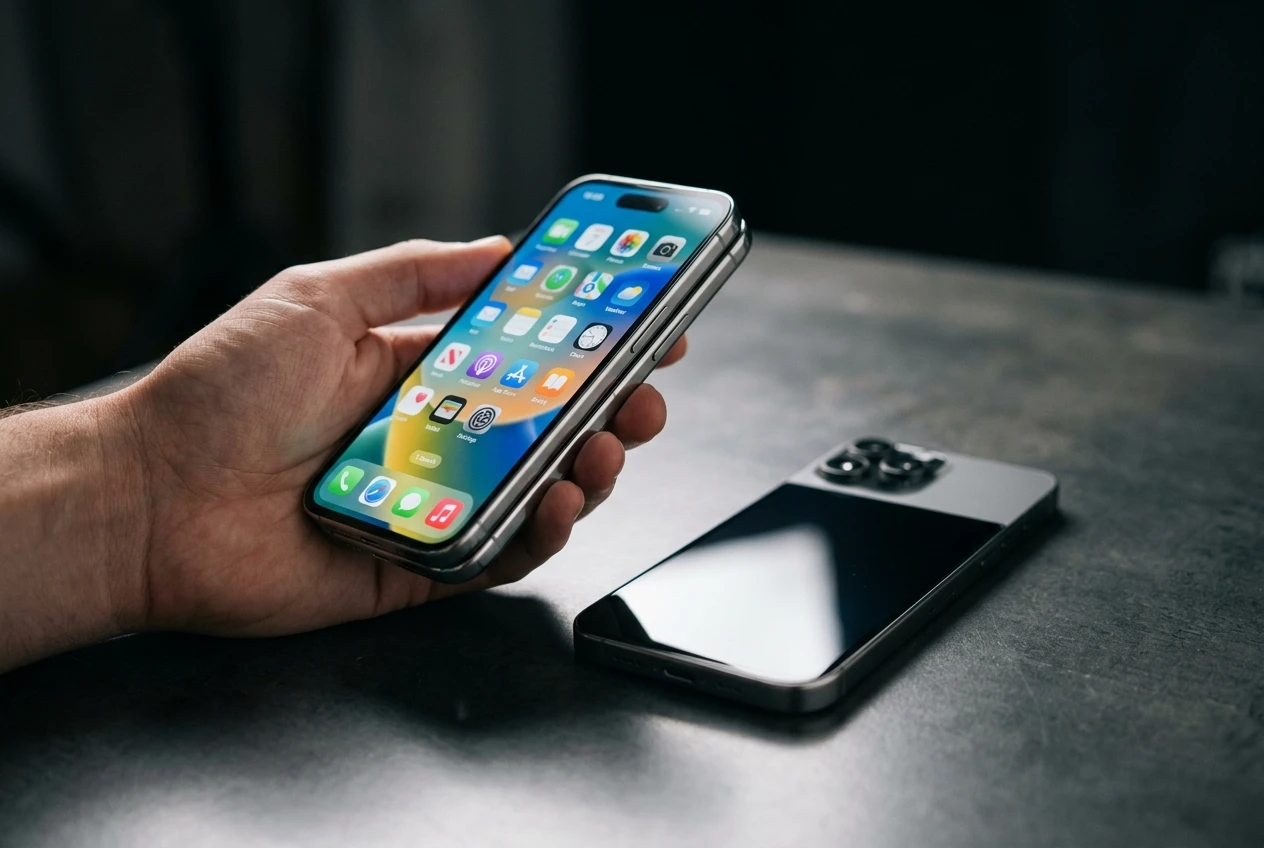
Apple raised its 2026 target to 10 million, and that still isn’t enough
The new supply ceiling comes from the latest Nikkei Asia report, published at the start of July. Apple has told suppliers to prepare to make roughly 10 million foldable iPhones this year, up from a 7-to-8 million target it set a few months ago. That’s a meaningful bump, and a real win for Apple’s purchasing team, but it still depends on production starting this month at Foxconn and ramping to a larger run only near year end, as detailed in Apple’s raised 2026 foldable production target. Inside that 10 million sits the whole year for what is expected to be Apple’s flagship hardware of the decade.
For scale, Apple has already booked parts for around 80 million smartphones for the second half of 2026 across the iPhone 18 Pro, iPhone 18 Pro Max and the first-ever foldable iPhone, with some suppliers told to expect as many as 85 million new iPhones in that window. The foldable’s 10 million is a fraction of that, and Apple’s full-year iPhone production is still expected to top 220 million units. Analyst Ming-Chi Kuo’s early summer note still gives the foldable a $2,300-$2,500 starting range and warns that pent-up demand is likely to outrun that allocation, as written up in Kuo’s mid-2026 foldable supply and pricing note. Apple declined to comment on the analyst’s report, citing its standing policy of not commenting on future products.
The shipping math, in plain terms.
- Foldable units Apple asked suppliers to prepare for in 2026: ~10 million
- Apple parts booked for H2 2026 across iPhone 18 Pro and foldable: ~80 million
- Apple’s full-year iPhone production forecast for 2026: 220 million
- High-end supplier forecast for H2 2026 iPhone orders: up to 85 million
- IDC forecast for iPhone Ultra average selling price: $2,500
What’s inside the iPhone Ultra
The iPhone Ultra is a book-style fold, wider than it is tall when unfolded, with an outer display of 5.3-5.5 inches and an inner display of 7.6-7.8 inches, a footprint close to a small tablet when opened, and reportedly a crease-free inner panel. The chassis will use a titanium border, take design cues from the iPhone Air and stay ultra-thin when unfolded, more or less two iPhone Airs stacked.
Inside, the iPhone Ultra will run the same silicon Apple plans to ship in the iPhone 18 Pro. The A20 Pro chip is built on a 2-nanometer process using TSMC’s wafer-level multi-chip module packaging, packs 12 GB of RAM and pairs with faster LPDDR5 memory. The cellular modem is Apple’s own C2, replacing Qualcomm’s 5G modem with an Apple-designed part. The hinge that tripped up production in early 2026 is reportedly resolved now, but that resolution is the same reason the device launches in a wave rather than all at once, as covered in the report’s spec details and the 10M production target and the A20 chip also bound for the iPhone Air 2 in 2027.
Apple is also bringing back Touch ID on the Ultra, integrated into the power button as on iPad Air and iPad mini. The reason is mechanical. Apple reportedly could not shrink the Face ID components enough to fit two separate modules, one for each screen, into a thin foldable, so it took Face ID out entirely.
The $2,500 price tag puts the iPhone Ultra in new territory
Apple’s pricing on the Ultra is tracking above anything it has shipped before. Kuo’s $2,300-$2,500 starting range is the analyst’s anchor, while IDC has gone further, predicting the Ultra will carry an average selling price of $2,500, with storage tiers reaching $3,000, per the Nikkei reporting. By comparison, the iPhone 17 Pro Max with 2 TB of storage, the priciest configuration Apple currently sells, costs $1,999 in the US. The Ultra at $2,500 would sit $501 above that ceiling.
How the new foldable stacks up against the only direct rival already on shelves.
| Device | Starting / reference price |
|---|---|
| iPhone Ultra (foldable, expected) | $2,300-$2,500 starting; storage tiers up to $3,000 |
| iPhone 17 Pro Max 2 TB (highest-end current iPhone) | $1,999 |
| Samsung Galaxy Z Fold 7 (256 GB base, on sale now) | $1,999 starting price |
The iPhone X in 2017 is the playbook Apple is reusing
The iPhone X was Apple’s last major phone launch that resembled the Ultra’s shape. The X was unveiled on September 12, 2017 at the same event as the iPhone 8 and 8 Plus, with pre-orders opening on October 27 and in-store availability from November 3, in more than 55 countries and a US starting price of $999. The X’s manufacturing was the bottleneck then, and Apple accepted a roughly seven-week gap between announcement and shipment. The Ultra is now set up for the same kind of gap.
Just how tight iPhone X supply really was is on the record, in pieces that read uncomfortably like a forecast. Foxconn produced around 2 million units in September 2017, ramping to 10 million in October, leaving just over 12 million iPhone X handsets available for the November 3 launch, per the archived iPhone X supply estimate from late September 2017. KGI Securities analyst Ming-Chi Kuo told outlets that only 2-3 million units shipped for sale before the November 3 launch, citing TrueDepth camera yield rates as the holdup. The supply crunch eased by late November that year, and 2H17 iPhone X shipments ended up at roughly 30 million units.
Apple’s re-use of that schedule is deliberate enough that Macworld’s reporting explicitly names the 2017 playbook as the template. The hinge is a generation newer than the TrueDepth camera, and the iPhone Ultra’s price is more than double the X’s, but the rollout shape is the same: announce first, ship later, let the iPhone 18 Pro absorb the launch-day sales pressure, then watch the constrained device trade at a premium on resale markets for the following months.
How the iPhone Ultra stacks up against the Galaxy Z Fold 7
Samsung has been selling large-screen foldables since 2019 and iterating on them every year since. The Galaxy Z Fold 7 is the current benchmark: a book-style foldable priced around $2,000 at the 256 GB base configuration, with Samsung’s own foldable-tuned One UI handling the inner screen and a maturing hinge design now in its seventh generation.
The comparison points that matter for buyers today.
- iPhone Ultra starts above $2,300; Galaxy Z Fold 7 starts at $1,999. At the base level, the Ultra carries a roughly $300-$500 premium.
- Galaxy Z Fold 7 is on generation seven of a known hinge platform. iPhone Ultra is a first-generation foldable with a hinge that just cleared production testing in late July.
- Both devices support multitasking. iPhone Ultra runs iOS 27 with the side-by-side apps for multitasking and iPad-like app layouts Apple has already previewed; Galaxy Z Fold 7 runs Samsung’s foldable-tuned One UI shell.
The supply picture is the part Apple can defend and Samsung cannot match. Samsung keeps the Galaxy Z Fold 7 broadly in stock at retail. Apple has reportedly ordered a 10 million foldable iPhone run for the whole of 2026, against an iPhone lineup that already books roughly 80 million H2 2026 parts for the iPhone 18 Pro and Pro Max. That is the gap a patient buyer can exploit, set against the buy-now-or-wait-months reality for the first shipment, as Apple’s foldable bet against Samsung’s lead frames it.
Frequently Asked Questions
When will Apple’s foldable iPhone actually ship?
Apple is expected to announce the iPhone Ultra alongside the iPhone 18 Pro and Pro Max at its September 2026 event, but the Ultra will not ship on day one. Mass production starts in late July 2026, and Apple is reportedly preparing for a staggered release similar to the iPhone X in 2017, with the foldable arriving weeks after the iPhone 18 Pro models.
How much will Apple’s first foldable iPhone cost?
Analyst Ming-Chi Kuo expects a $2,300-$2,500 starting price, while IDC is forecasting a $2,500 average selling price with storage options reaching $3,000. Apple’s iPhone 17 Pro Max currently tops out at $1,999 in the US for 2 TB, which means the iPhone Ultra will likely be the most expensive iPhone Apple has ever sold.
What is different about the iPhone Ultra compared with the iPhone 18 Pro?
The Ultra is a book-style foldable with a 5.3-5.5-inch outer display and a 7.6-7.8-inch crease-free inner display, runs on the same A20 Pro chip and C2 modem as the iPhone 18 Pro, and uses Touch ID integrated into the power button instead of Face ID. It also drops the Telephoto camera, keeping only a 48 MP Main and 48 MP Ultra Wide on the rear.
Where does the iPhone Ultra sit against the Galaxy Z Fold 7?
Apple’s foldable is expected to start in the $2,300-$2,500 range, against the Samsung Galaxy Z Fold 7’s $1,999 base price for 256 GB. Samsung has multiple foldable generations of hinge refinement behind it; the iPhone Ultra is a first-generation device with a hinge that reportedly just cleared production testing.


South Korea Retail Investors Face Reckoning After KOSPI AI Rally Collapses

Surrey AI Maps Three Heart Attack Paths and Their Molecular Roots

Germany Locks Neutral Apple ATT Prompts Across Most of Europe

Apple’s 5% EU Fee Quietly Rewrites Alternative App Store Math

Apple’s EU Fee Truce Cuts Complexity but Leaves Rivals Fuming

Pixel 11 Pro Fold Trades Thinness for Durability and Seven-Year Stay

Mayo AI Flags HCM Obstruction From Everyday Ultrasound Videos

Indian Brands Quietly Scale Landmark Screens and Home Tech

Navin Vatsa Turns Grief Into a Lifetime of Quiet Seeing

Google Bets Pixel 11 Agentic AI Will Redefine Phones

Oracle Cuts 21,000 Jobs in a Year, Cites AI in 10-K Filing

Fable 5 and Mythos 5 Return as US Lifts Anthropic Export Controls

SpaceX’s Google Deal Turns a Rocket Company Into a Cloud Landlord

CD Projekt Red Co-CEO: Redemption Arc Isn’t Done, Witcher 4 in 2027

XPL Rallies 30% Ahead of Plasma One Card Tier Launch

Google Search Profiles Build a Follow Graph Inside Discover

DGO App Brings Rs 549 Mobile Pass for FIFA World Cup 2026 in Nepal

Moonshot AI Targets $30 Billion in China’s Fastest AI Funding Sprint

Oppo’s ColorOS 17 Eligibility List Leaves A-Series Buyers Behind

Microsoft Xbox Layoffs Start in July as Sharma Slams 3% Margin
-
 AI2 months ago
Oracle Cuts 21,000 Jobs in a Year, Cites AI in 10-K Filing
-
 AI2 months ago
Fable 5 and Mythos 5 Return as US Lifts Anthropic Export Controls
-
 AI2 months ago
SpaceX’s Google Deal Turns a Rocket Company Into a Cloud Landlord
-
 GAMING2 months ago
CD Projekt Red Co-CEO: Redemption Arc Isn’t Done, Witcher 4 in 2027
-
 CRYPTO2 months ago
XPL Rallies 30% Ahead of Plasma One Card Tier Launch
-
 NEWS2 months ago
Google Search Profiles Build a Follow Graph Inside Discover
-
 APPS2 months ago
DGO App Brings Rs 549 Mobile Pass for FIFA World Cup 2026 in Nepal
-
 AI2 months ago
Moonshot AI Targets $30 Billion in China’s Fastest AI Funding Sprint