
NEWS
Apple’s iPhone Air 2 Adds a Second Camera for Spring 2027
Apple is preparing an iPhone Air 2 for spring 2027 with a second rear camera, A20 chip on a 2nm process, C2 modem, and slimmer Face ID module.

Apple is preparing a second-generation iPhone Air for spring 2027, with a second rear camera for ultrawide-angle photography and the A20 chip on a 2nm process aimed at fixing the two complaints that have dogged the first Air since its September 2025 launch. The new model, code-named V62, is in advanced testing inside Apple and is set to arrive alongside the iPhone 18 and iPhone 18e, per reporting from Bloomberg’s Mark Gurman.
That makes the iPhone Air 2 less a feature refresh than a damage-control cycle. Apple’s thinnest iPhone was cut to a fraction of its launch production by November 2025 as supply chain sources described demand as weak. The two fixes Apple has settled on, a second lens and a more efficient chip, are aimed at the same two complaints those production cuts reflected.
A Second Camera Lands in the Air Lineup
Bloomberg’s Mark Gurman reported on June 17, 2026 that Apple is preparing a second-generation iPhone Air for spring 2027. The new model, code-named V62, adds a second rear camera for ultrawide-angle photography, and is in advanced testing inside Apple.
Per AppleInsider and MacRumors, the device has reached the advanced testing phase. Its design otherwise matches the current model, including the titanium frame and the 6.5-inch OLED panel. The launch window is March 2027, per Mashable’s write-up of the same Gurman reporting. Apple plans to release it alongside the iPhone 18 and iPhone 18e.
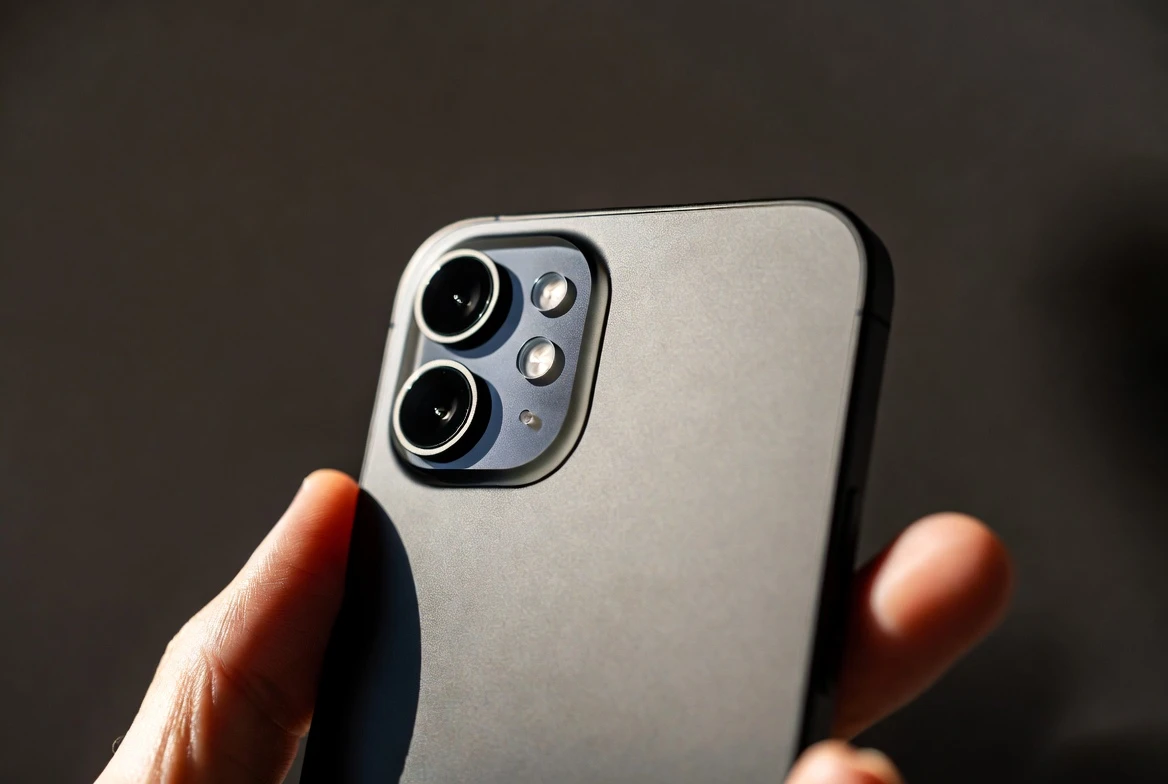
Gurman said the additional lens will be a 0.5× ultrawide, not a telephoto. That keeps the Air’s two-lens lineup consistent with the base-model iPhones 11 through 17, which paired a 1× wide with a 0.5× ultrawide. The single rear camera on the current Air has been the louder of the two complaints Apple is now answering.
Apple Inc. is preparing a second-generation iPhone Air for spring 2027, aiming to boost the appeal of the slimmed-down device, according to people with knowledge of the matter. Current prototypes of the new model, code-named V62, add a second rear camera for ultrawide-angle photography.
That quote is attributed to Bloomberg via John Gruber’s Daring Fireball post on June 22, 2026, and lines up with separate reporting describing the 0.5× ultrawide second camera arriving spring 2027 and MacRumors’ own piece on the dual-camera iPhone Air planned for spring 2027.
Why Apple Is Making This Move Now
The original iPhone Air shipped with a single 48-megapixel Fusion rear camera, missing both an ultrawide and a telephoto. The iPhone Air’s full tech specifications confirm the 48MP Fusion Main and no other rear lens. That left the $999 Air trailing the cheaper iPhone 17, which has two rear cameras, and the iPhone 17 Pro, which has three.
Battery life was the second consistent complaint. Apple’s own specs list 27 hours of video playback on the Air, against 40 hours with the $99 MagSafe battery pack Apple sells for it. The MagSafe pack exists because Apple knew the internal cell would not carry a heavy day on its own.
By November 2025, Apple had cut production orders for the original Air to less than 10 percent of September volume, per Nikkei sources briefed on the matter, detailed in supply chain data on iPhone Air production cuts. A KeyBanc Capital Markets investor survey described demand as “virtually no demand for iPhone Air.” That is the demand picture Apple is responding to.
AppleInsider framed the iPhone Air 2 around those same two pain points: “battery life improvements and adding a second camera. Both are chief complaints of iPhone Air buyers that Apple clearly needs to address.” The Air 2 is therefore less a feature refresh than a damage-control cycle. Apple’s wager is that a thin phone can succeed if the two non-negotiables, camera and battery, are fixed.
The Mechanical Fixes Behind the Redesign
The phone stays the same thickness, so Apple has had to free space elsewhere. Per Wccftech’s reporting, the company is using a customized, slimmer Face ID module to make room for the second rear camera. The existing module’s footprint has been compressed to fit the extra lens. That freed-up real estate goes to the camera.
Battery life is the harder problem because the chassis cannot grow. The path is efficiency, not capacity. MacRumors notes the iPhone Air 2 will run an A20 chip built on Apple’s new 2nm process, which should draw less power than the current A19 Pro. Wccftech adds Apple’s own C2 5G modem as a second efficiency lever, replacing the C1X in the current Air. iOS 27’s optimization work, also cited by Wccftech, is the third leg of the endurance push. With the design locked at 5.64mm, every watt saved is a watt Apple did not have to ship inside the chassis.
The 6.5-inch OLED panel, the titanium frame, the Ceramic Shield front and back, and the IP68 rating all carry over, per Apple’s spec sheet. The action button and the pressure-sensitive Camera Control button are expected to remain. Color options have not been officially confirmed beyond the existing four: Sky Blue, Light Gold, Cloud White, and Space Black.
- Single rear camera → second ultrawide lens added via a customized, slimmer Face ID module
- Battery life → A20 chip on 2nm process, plus the C2 modem and iOS 27 efficiency work
- Limited internal space → no thickness change, refinements kept internal
The Thin Phone Market Is Already Shrinking
The iPhone Air is not the only thin phone struggling. Samsung’s Galaxy S25 Edge sold 1.31 million units through August, against 8.28 million for the standard S25, 5.05 million for the S25 Plus, and 12.18 million for the S25 Ultra. Samsung has since halted S25 Edge production and cancelled the S26 Edge. The category signal is clear.
On the Apple side, the original iPhone Air stayed available for immediate shipment on apple.com in every color through the launch window, while iPhone 17 and 17 Pro showed two-to-three-week shipping delays. The supply-versus-demand gap is consistent with KeyBanc’s “virtually no demand” call. Apple has continued to ship the Air, but at sharply reduced volumes.
That backdrop frames the iPhone Air 2 as a targeted repair job. Apple is not abandoning the thin-phone experiment, but the experiment is also no longer running on hype. The Air 2 has to do the work the first Air could not, on a longer timeline than the iPhone’s usual annual cadence.
- iPhone Air weight: 5.82 ounces (165 grams), per Apple Support
- iPhone Air battery capacity: 12.263Wh (3149 mAh), per Wikipedia
- iPhone Air RAM: 12 GB LPDDR5X, per Apple Support
- iPhone Air storage tiers: 256GB, 512GB, 1TB, per Apple Support
- iPhone Air released: September 19, 2025, per Wikipedia
Apple’s Two-Season iPhone Calendar
The Air 2 is part of a wider change in how Apple schedules the iPhone. Mashable, summarizing Gurman, reports Apple is splitting its iPhone launches into two seasons per year: spring and fall. Gurman expects this pattern to continue “for years to come.” Apple will release five to six new iPhone models in a calendar year.
Spring 2027 will carry the iPhone Air 2, the iPhone 18, and the iPhone 18e. Fall 2027 is expected to bring the iPhone 18 Pro, iPhone 18 Pro Max, and Apple’s first foldable iPhone, per MacRumors. That cadence is double what the lineup carried two years ago. It is also the test bed for the Air 2: if a slim phone can succeed, it now has its own release window, not the September shadow of the Pro models.
The change matters because the first Air launched in September 2025 alongside the iPhone 17, 17 Pro, and 17 Pro Max, and was quickly compared to those devices on camera count and battery life. Its March 2027 successor will instead be judged against the iPhone 18 and 18e, both of which carry standard Apple camera stacks. That is a fairer comparison. It is also one Apple has been quietly engineering toward for a year.
Per AppleInsider’s piece on the spring 2027 launch alongside iPhone 18 and 18e, the Air 2 will hold strong to its release window. The foldable’s production delays, covered separately in the iPhone Fold’s $1,999 price and internal hardware, keep the Air 2 the more reliable spring release. Apple’s split calendar only works if the spring window stays full.
| Spec | iPhone Air (current) | iPhone Air 2 (rumored) |
|---|---|---|
| Display | 6.5-inch OLED, 120Hz, 3000 nits peak outdoor | 6.5-inch OLED, 120Hz, 3000 nits peak outdoor (carried over) |
| Chip | A19 Pro | A20 (2nm process) |
| Rear camera | 48MP single Fusion Main | 48MP Main + 48MP ultrawide |
| Modem | Apple C1X | Apple C2 (per Wccftech) |
| Frame | Titanium, 5.64mm thick | Titanium, same thickness (per MacRumors) |
| Water resistance | IP68 | IP68 (carried over) |
| Starting price | $999 (256GB) | $999 expected |
Frequently Asked Questions
When will the iPhone Air 2 launch?
Bloomberg’s Mark Gurman reports a March 2027 launch, with AppleInsider placing the device alongside the iPhone 18 and iPhone 18e in Apple’s spring window.
What cameras will the iPhone Air 2 have?
A 48-megapixel main lens paired with a 48-megapixel 0.5× ultrawide, per Gurman’s report, ending the single-lens setup that limited the first Air.
How much will the iPhone Air 2 cost?
The $999 starting price of the original Air is expected to carry over, with the same 256GB, 512GB, and 1TB storage tiers.
What chip will the iPhone Air 2 use?
An A20 chip built on Apple’s 2nm process, which should draw less power than the current A19 Pro and extend battery life.
Will the iPhone Air 2 be thinner than the original?
No. The 5.64mm titanium frame is expected to carry over, with the second lens made possible by a slimmer Face ID module, not a thinner body.


South Korea Retail Investors Face Reckoning After KOSPI AI Rally Collapses

Surrey AI Maps Three Heart Attack Paths and Their Molecular Roots

Germany Locks Neutral Apple ATT Prompts Across Most of Europe

Apple’s 5% EU Fee Quietly Rewrites Alternative App Store Math

Apple’s EU Fee Truce Cuts Complexity but Leaves Rivals Fuming

Pixel 11 Pro Fold Trades Thinness for Durability and Seven-Year Stay

Mayo AI Flags HCM Obstruction From Everyday Ultrasound Videos

Indian Brands Quietly Scale Landmark Screens and Home Tech

Navin Vatsa Turns Grief Into a Lifetime of Quiet Seeing

Google Bets Pixel 11 Agentic AI Will Redefine Phones

Oracle Cuts 21,000 Jobs in a Year, Cites AI in 10-K Filing

Fable 5 and Mythos 5 Return as US Lifts Anthropic Export Controls

SpaceX’s Google Deal Turns a Rocket Company Into a Cloud Landlord

CD Projekt Red Co-CEO: Redemption Arc Isn’t Done, Witcher 4 in 2027

XPL Rallies 30% Ahead of Plasma One Card Tier Launch

Google Search Profiles Build a Follow Graph Inside Discover

DGO App Brings Rs 549 Mobile Pass for FIFA World Cup 2026 in Nepal

Moonshot AI Targets $30 Billion in China’s Fastest AI Funding Sprint

Oppo’s ColorOS 17 Eligibility List Leaves A-Series Buyers Behind

Microsoft Xbox Layoffs Start in July as Sharma Slams 3% Margin
-
 AI2 months ago
Oracle Cuts 21,000 Jobs in a Year, Cites AI in 10-K Filing
-
 AI2 months ago
Fable 5 and Mythos 5 Return as US Lifts Anthropic Export Controls
-
 AI2 months ago
SpaceX’s Google Deal Turns a Rocket Company Into a Cloud Landlord
-
 GAMING2 months ago
CD Projekt Red Co-CEO: Redemption Arc Isn’t Done, Witcher 4 in 2027
-
 CRYPTO2 months ago
XPL Rallies 30% Ahead of Plasma One Card Tier Launch
-
 NEWS2 months ago
Google Search Profiles Build a Follow Graph Inside Discover
-
 APPS2 months ago
DGO App Brings Rs 549 Mobile Pass for FIFA World Cup 2026 in Nepal
-
 AI2 months ago
Moonshot AI Targets $30 Billion in China’s Fastest AI Funding Sprint