
AI
Anthropic’s Drug Push Begins With Claude Science in San Francisco
Anthropic’s drug development plan launched June 30 with Claude Science, targeting neglected diseases. John Jumper is leaving DeepMind to join the team.

Anthropic launched Claude Science, an AI workbench for scientific research, and announced an internal drug development program on June 30, 2026. The company said its life sciences team will use the new product to look for treatments that traditional biopharmaceutical companies have not pursued.
Made in San Francisco on Tuesday, the announcement lands in the same week that 2024 Nobel laureate John Jumper said he would leave Google DeepMind for Anthropic. Anthropic’s roughly $400 million April acquisition of the biotech startup Coefficient Bio rounded out the build-up. Taken together, the moves signal that Anthropic no longer wants to be only a vendor to drugmakers; it now wants to be one.
Anthropic’s Drug Push Starts With Claude Science
Eric Kauderer-Abrams, Anthropic’s head of life sciences, framed the program as a way to build better tools by running the same work as his customers. He said the company will focus on discovering treatments for “neglected” diseases that “traditional biopharmaceutical companies wouldn’t consider attractive targets.” The bet sits at the heart of Anthropic’s decision to take on drug discovery directly. The move runs alongside the launch of the new Claude Science product.
An Anthropic spokesperson told reporters that the company’s public benefit corporation status lets it “choose programs on patient benefit, including work the commercial market overlooks,” adding, “We’re at the start of this, and we’ll share more as the work progresses.” Anthropic has not said which diseases it will tackle first. It has also not said how it plans to fund any trials that come out of the program.
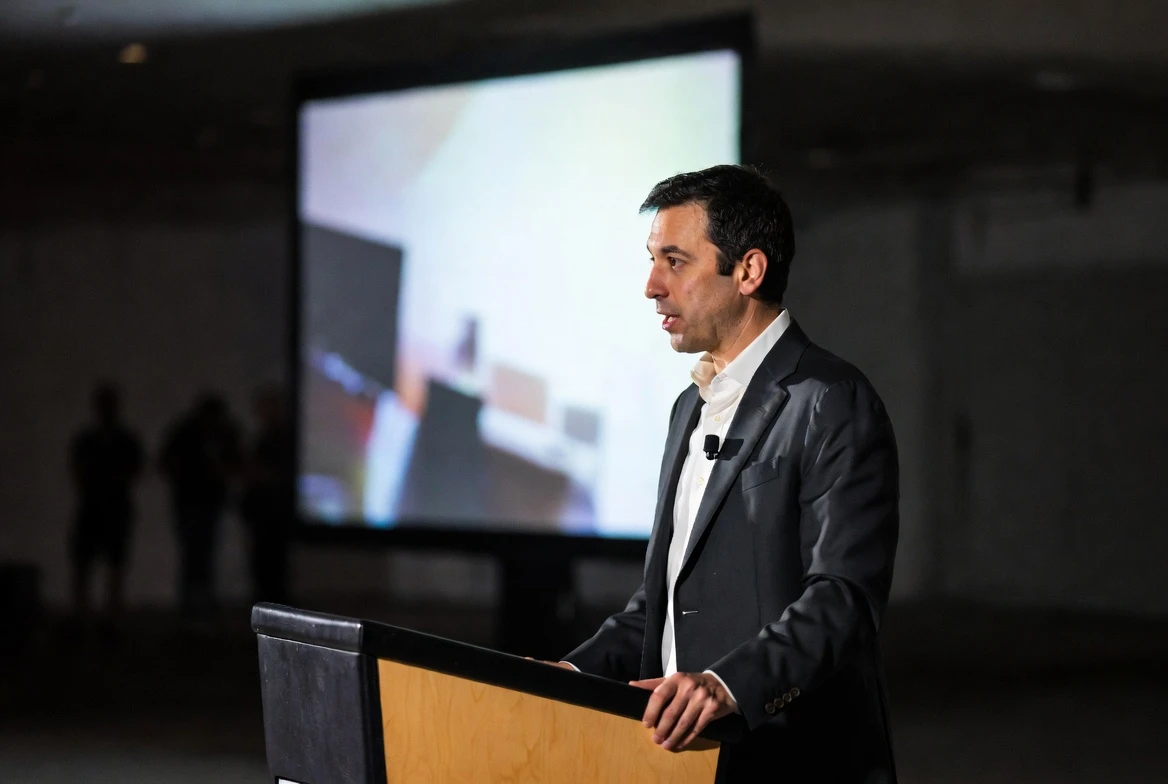
At the same event, Alexander Tarashansky, who led the development of Claude Science, showed how the system autonomously searched for drug candidates against phenylketonuria, a rare genetic disease. Tarashansky’s demo screened compounds for an enzyme linked to the condition and surfaced molecules worth further study, all without human direction at each step.
We’re doing this because we believe first and foremost that to build the right models, products and tools to accelerate the industry, we need to live it along with all of you. We believe in the power of tight feedback loops, and there’s no substitute for having our own experiences alongside you all in the trenches trying to develop drugs.
Kauderer-Abrams told MIT Technology Review that Claude Science ranks alongside Claude Code and Claude Cowork as a flagship product, calling it “the next really significant product that we’re releasing.” His argument is that Claude can only become a useful scientific partner if Anthropic runs real science with it. The team has done demos, not trials. Still, the announcement shows Anthropic willing to put its own model on the line for the same work it sells to customers.
How Claude Science Works
Claude Science, now available to all paid Claude subscribers, is meant to function the way Claude Code functions for software engineering. A researcher hands it a high-level instruction, and the system plans the work, runs analyses on compute clusters, drafts protocols, and checks reproducibility on its own. The product is Anthropic’s first full scientific workbench, distinct from earlier connector tools.
It also plugs into the scientific connectors Anthropic has been building since its October 2025 launch of Claude for Life Sciences, including PubMed, Benchling, 10x Genomics, and Synapse.org. The newer product layers an agentic workflow on top of those tools, so a bench scientist can give Claude Science a target and a hypothesis instead of stitching each step together by hand. Anthropic’s October 2025 Claude for Life Sciences page frames the broader ambition as one pipeline from “early discovery through to translation and commercialization,” with Claude Science as the workbench that ties the steps together. The product also competes with the general Claude.ai chat for scientists who want a single surface.
The DeepMind Talent Heist
The clearest signal of where Anthropic is aiming came 11 days before the product launch. On June 19, 2026, John Jumper, who shared the 2024 Nobel Prize in Chemistry for AlphaFold, posted on X that he was leaving Google DeepMind after nearly nine years to join Anthropic. AlphaFold has been used by more than two million scientists across 190 countries, and the project has predicted more than 200 million protein structures, work that cut years off structural biology research. The move put scientific weight behind Anthropic’s drug push in a way no connector tool could.
Demis Hassabis, Jumper’s co-laureate and the head of Google DeepMind, replied publicly. “What we achieved with AlphaFold changed the world, and showed the field what was possible with AI for science and medicine,” he wrote. “Lighting the way for how AI can benefit humanity.” The exchange made the gap visible: the scientist whose work defined AI for biology is now at the company trying to redefine it.
Anthropic had already moved to harden its bench. In April 2026, it bought Coefficient Bio, a stealth biotech startup founded eight months earlier by Samuel Stanton and Nathan C. Frey, both veterans of Genentech’s Prescient Design group. The all-stock deal was reported at roughly $400 million, and the team of about ten joined Anthropic’s life sciences unit. Anthropic’s two earlier flagship partnerships, with the Allen Institute and the Howard Hughes Medical Institute, added two more anchors in experimental biology.
- 35 million+: Biomedical papers Claude Science can search via PubMed.
- 600+: Vetted scientific tools Claude Science can call through ToolUniverse.
- Opus 4.5: Anthropic’s most capable model, the engine behind Claude Science.
Why an AI Lab Wants a Drug Pipeline
Kauderer-Abrams’s argument at the event was operational. If Anthropic wants Claude to do useful scientific work, the team has to do that work themselves; “there is no substitute for having our own experiences alongside you all in the trenches trying to develop drugs,” he said. The pitch is that feedback from running real drug programs will tighten Claude’s tools faster than customer pilots alone.
The neglected-disease focus lines up with how Anthropic is legally structured. As a public benefit corporation, the company can pick programs that commercial drugmakers ignore, which means Claude Science will not only serve paying pharma clients but also build a catalog of work that has no buyer attached. Anthropic has not yet said which foundations or government programs might underwrite the clinical phase of those candidates. The legal structure gives Anthropic cover to spend on projects with no near-term commercial path.
Jumper’s arrival adds scientific credibility Anthropic had not previously held. The DeepMind talent flow is now running in reverse, with the AlphaFold creator on Anthropic’s side as it tries to build agentic biology tools. Neither Anthropic nor Jumper has disclosed what role he will take at the company, but his expertise in protein structure prediction lines up with the kind of work Claude Science is meant to do.
Anthropic’s earlier partnerships give Claude a foothold in real lab data. The HHMI collaboration focuses on building AI agents for use inside labs at Janelia Research Campus, while the Allen Institute work centers on multi-agent systems for multi-omic data. Anthropic’s announcement of the Allen Institute and HHMI partnerships describes the goal as keeping “researchers in control of scientific direction while handling computational complexity.” The partnerships also give Anthropic credibility inside the basic-research community that pharma does not always reach. Both labs were announced as founding partners in life sciences before the Claude Science product launched.
The Crowded Field of AI Drug Discovery
Anthropic is the latest frontier AI lab to push past chatbots and into drug pipelines. OpenAI rolled out GPT-Rosalind in April 2026, a reasoning model the company named after the DNA researcher Rosalind Franklin and built to accelerate drug discovery and protein analysis. The model is now available as a research preview in ChatGPT, Codex, and the API.
Isomorphic Labs, the Alphabet spinout founded by Demis Hassabis, has been the most heavily funded player. It closed a $2.1 billion Series B in 2026 led by Thrive Capital, with Alphabet, GV, MGX, Temasek, CapitalG, and a UK government AI fund joining the round. Isomorphic has deals with Eli Lilly and Novartis to use AlphaFold 3 to design small molecules, and its IsoDDE engine is being pushed toward clinical trials. The Series B came about a year after Isomorphic’s first $600 million external round.
OpenAI and Isomorphic sell AI into pharma; Anthropic is also running its own drug programs with Claude Science at the same time. The field is moving through alliances at pharma scale, including recent partnerships like Insilico’s $600M Takeda deal announced July 2 that show AI biotech shifting from pilots to blockbuster-scale deals. Whether vertical integration pays off depends on whether neglected-disease candidates can move from a demo screen to a clinical trial.
| Player | Lead product | Launched | Key partners | Funding note |
|---|---|---|---|---|
| Anthropic | Claude Science | June 2026 | Allen Institute, HHMI, Coefficient Bio team | Coefficient Bio deal ~$400M, all-stock |
| OpenAI | GPT-Rosalind | April 2026 | Amgen, Moderna, Novo Nordisk, Allen Institute, Thermo Fisher | Not disclosed for life sciences line |
| Alphabet / Isomorphic Labs | IsoDDE (AlphaFold 3) | Founded 2021; Series B 2026 | Eli Lilly, Novartis | $2.1B Series B, Thrive Capital led |
Where the Drug Bet Could Break
Running a drug program inside an AI lab is not the same as shipping software. AI models can produce confident but wrong answers, and in drug discovery one bad prediction can waste months of benchwork. The phenylketonuria demo screened a wide compound library, but the molecules it surfaced still have to clear chemistry, toxicity, and animal studies before any human trial. Anthropic’s own Claude Science page describes the tool as designed to “augment, rather than replace, human scientific judgment,” a hedge that matches how scientists still need to validate each step.
The commercial problem is real too. Neglected diseases carry limited commercial return, so the program needs foundation grants, government partnerships, or a buyer of last resort to survive the clinical phase. Anthropic has not said how it will fund trials for the candidates Claude Science generates. The competition is not waiting: Isomorphic’s pipeline is already moving toward human trials, and OpenAI is positioning GPT-Rosalind as the default research assistant for biologists. Drug development, by PhRMA’s count, typically takes 10-15 years from target discovery to approval, and a January PitchBook report found that more than $17 billion has been invested in AI-driven drug discovery since 2019, yet AI-developed drugs have yet to reach large-scale trials.
Frequently Asked Questions
What is the Anthropic drug development plan?
The Anthropic drug development plan is a new internal program the company launched on June 30, 2026, alongside the Claude Science product. Unlike Claude for Life Sciences, which sells to drug companies, the plan has Anthropic running its own drug programs in-house, starting with rare and neglected diseases that commercial pharma does not pursue.
Who is John Jumper and why does his move to Anthropic matter?
John Jumper shared the 2024 Nobel Prize in Chemistry for AlphaFold, the AI system that has predicted protein structures for more than two million scientists across 190 countries. His decision to join Anthropic from Google DeepMind, announced June 19, 2026, gives the company scientific credibility in AI-driven biology that it previously lacked.
How is Claude Science different from Claude for Life Sciences?
Claude for Life Sciences, which Anthropic launched in October 2025, is a set of connectors and plugins that link Claude to scientific tools like PubMed and Benchling. Claude Science, launched in June 2026, is a standalone workbench that can autonomously plan and run scientific experiments in computational biology and drug development.
What did Anthropic acquire with Coefficient Bio?
Coefficient Bio was a stealth biotech startup founded eight months before Anthropic’s April 2026 acquisition, by Samuel Stanton and Nathan C. Frey, both formerly of Genentech’s Prescient Design group. Anthropic paid about $400 million in stock for the company, which had around ten employees at the time of the deal, and folded its team into Anthropic’s life sciences unit.
What is a neglected disease, and why is Anthropic targeting them?
Neglected diseases are conditions that disproportionately affect low-income populations and offer limited commercial return, which is why most pharmaceutical companies do not pursue treatments for them. Anthropic, structured as a public benefit corporation, has said it can choose programs on patient benefit even when the commercial market passes them by.


South Korea Retail Investors Face Reckoning After KOSPI AI Rally Collapses

Surrey AI Maps Three Heart Attack Paths and Their Molecular Roots

Germany Locks Neutral Apple ATT Prompts Across Most of Europe

Apple’s 5% EU Fee Quietly Rewrites Alternative App Store Math

Apple’s EU Fee Truce Cuts Complexity but Leaves Rivals Fuming

Pixel 11 Pro Fold Trades Thinness for Durability and Seven-Year Stay

Mayo AI Flags HCM Obstruction From Everyday Ultrasound Videos

Indian Brands Quietly Scale Landmark Screens and Home Tech

Navin Vatsa Turns Grief Into a Lifetime of Quiet Seeing

Google Bets Pixel 11 Agentic AI Will Redefine Phones

Oracle Cuts 21,000 Jobs in a Year, Cites AI in 10-K Filing

Fable 5 and Mythos 5 Return as US Lifts Anthropic Export Controls

SpaceX’s Google Deal Turns a Rocket Company Into a Cloud Landlord

CD Projekt Red Co-CEO: Redemption Arc Isn’t Done, Witcher 4 in 2027

XPL Rallies 30% Ahead of Plasma One Card Tier Launch

Google Search Profiles Build a Follow Graph Inside Discover

DGO App Brings Rs 549 Mobile Pass for FIFA World Cup 2026 in Nepal

Moonshot AI Targets $30 Billion in China’s Fastest AI Funding Sprint

Oppo’s ColorOS 17 Eligibility List Leaves A-Series Buyers Behind

Microsoft Xbox Layoffs Start in July as Sharma Slams 3% Margin
-
 AI2 months ago
Oracle Cuts 21,000 Jobs in a Year, Cites AI in 10-K Filing
-
 AI2 months ago
Fable 5 and Mythos 5 Return as US Lifts Anthropic Export Controls
-
 AI2 months ago
SpaceX’s Google Deal Turns a Rocket Company Into a Cloud Landlord
-
 GAMING2 months ago
CD Projekt Red Co-CEO: Redemption Arc Isn’t Done, Witcher 4 in 2027
-
 CRYPTO2 months ago
XPL Rallies 30% Ahead of Plasma One Card Tier Launch
-
 NEWS2 months ago
Google Search Profiles Build a Follow Graph Inside Discover
-
 APPS2 months ago
DGO App Brings Rs 549 Mobile Pass for FIFA World Cup 2026 in Nepal
-
 AI2 months ago
Moonshot AI Targets $30 Billion in China’s Fastest AI Funding Sprint