
GADGETS
Smart Scales Promise Lab-Grade Body Fat Numbers, and the Science Pushes Back
Smart scales estimate body fat using bioelectrical impedance, but peer-reviewed research shows readings can miss DEXA scan results by several points.

The smart scale market is on pace to reach $4.8 billion in sales this year, and nearly every model on the shelf now promises lab-grade body fat numbers from a bathroom floor. Peer-reviewed testing keeps finding a real gap between that number and a clinical DEXA scan.
Every brand markets its accuracy against DEXA (dual-energy X-ray absorptiometry, the imaging scan doctors treat as the clinical benchmark for body composition). The reading on a home scale still moves for reasons that have nothing to do with fat loss.
What Does a Smart Scale Measure at Home?
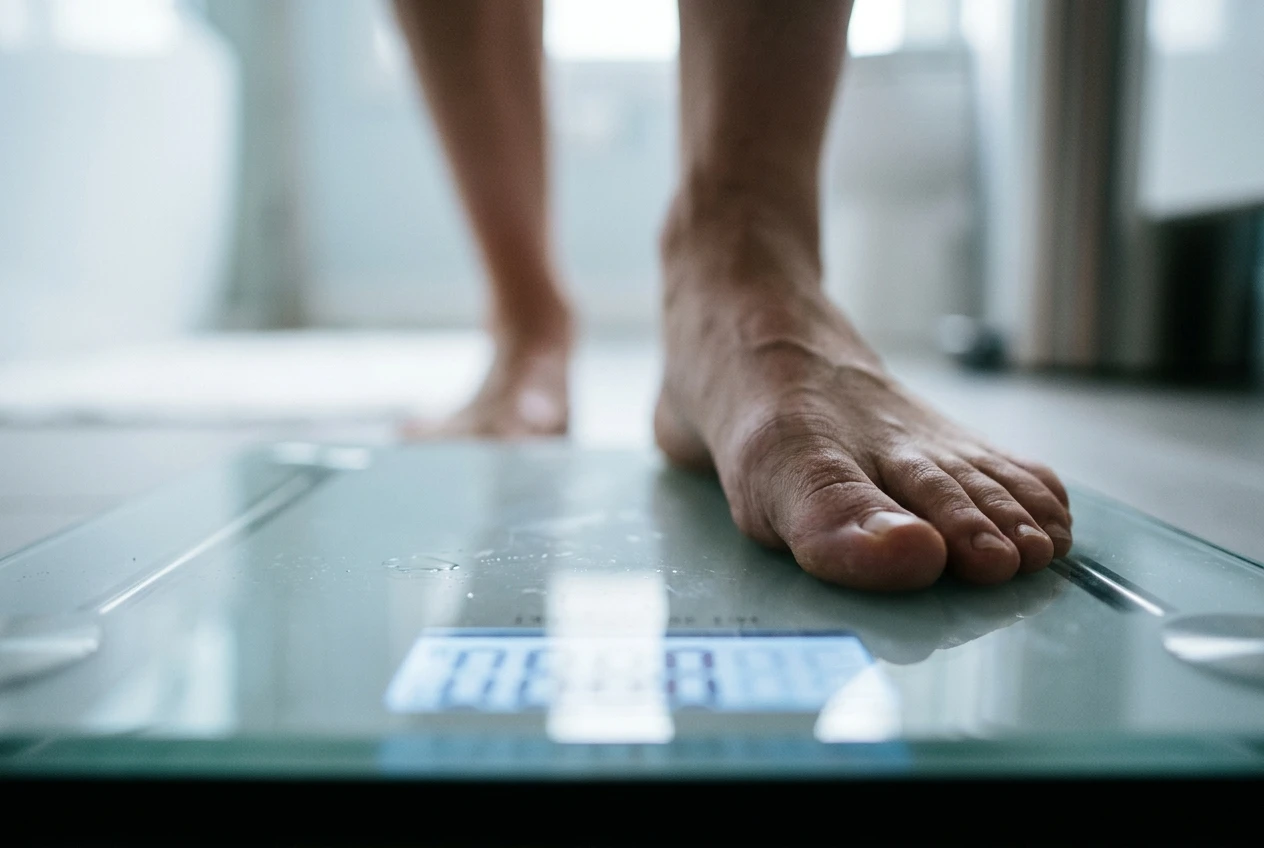
A smart scale weighs the body the same way a bathroom scale always has, then sends a faint, imperceptible electrical current through the feet. Fat resists that current more than water rich muscle does, so the device uses the resistance reading, plus height, age, sex and weight, to estimate body fat percentage. It is a calculation, not a direct measurement.
That method is called bioelectrical impedance analysis (BIA). Most bathroom style scales only measure current traveling from one foot to the other, so the signal barely reaches the torso or arms, which is exactly where a lot of fat and muscle sit.
Pricier models add a handle so current runs across the whole body and can be split into segments: arms, legs, trunk. That segmental approach is what companies like Withings now sell as a premium tier, and it is starting to move down in price.
The Gap Between the Reading and a DEXA Scan
A cross-sectional study comparing standing BIA scales, with and without a handle, against a clinical supine device found fat mass accuracy of 3.3 to 3.4 percentage points against DEXA, compared with 2.6 points for the hospital grade version. The standing scales came close to the clinical device on precision. The researchers still warned the two should not be used interchangeably, since standing scales tend to exaggerate how much a person’s body fat has actually shifted between weigh ins.
An independent 30 day comparison test published in 2026 measured five popular scales against DEXA scans taken before and after testing. Price alone did not predict accuracy.
| Scale | Price | Body Fat Accuracy vs DEXA | Standout Feature |
|---|---|---|---|
| Withings Body Comp | Flagship tier | Not scored in percentage terms | Visceral fat validated against MRI; nerve health assessment |
| Garmin Index S2 | Premium | Off by about 2.3 points | Syncs weight and composition into Garmin Connect |
| Renpho ES-CS20M | $39 | About 2 points above the DEXA reference | 13 metrics, syncs with five major health apps |
| FitTrack | Mid-range | Off by about 2.9 points | Cardiovascular age score from 17 metrics |
| Wyze Scale X | $29 | Off by about 4.1 points | Cheapest model still rated usable for trends |
None of the five scales were wildly off. Every one of them still missed DEXA by a measurable margin, and the cheapest model in the group carried the widest gap.
Withings Bets on Segmental Tracking as GLP-1 Use Grows
Withings is pushing its segmental analysis technology down to a lower price point. The company’s new BodyFit scale costs $279.95 and asks users to grip a handle during a weigh in, sending current across arms, legs, trunk and abdomen instead of just foot to foot.
Withings says the system can capture over 40 data points in 20 seconds, which the company describes as up to three times faster than most other segmental scales on the market. Withings also claims up to a 99% correlation with DEXA for fat mass in its own validation testing.
That is half the price of the existing Withings Body Scan, which adds an ECG and vascular health monitor for $499.95. It is also a preview of what is coming next. Body Scan 2 picked up a CES 2026 Innovation Award and is positioned as the company’s cardiometabolic flagship. Early hands-on coverage says the device is built to measure 60 different biomarkers using a heart efficiency monitor and bioimpedance spectroscopy, plus automatic hypertension risk alerts.
Withings is prioritizing a US launch first, and the company points to one specific reason: rising use of GLP-1 receptor agonist medications for weight loss. Muscle loss alongside fat loss is a common worry for people on those drugs, which makes a scale that separates the two more useful than one that only tracks total weight.
Regulators are paying closer attention as the category grows. According to one 2026 market analysis, certain scales that make diagnostic claims now fall under FDA Class II medical device rules, and the EU’s medical device regulation adds stricter clinical evidence requirements for companies marketing body fat accuracy.
Where the Marketing Claims and the Peer-Reviewed Data Split
Withings’ BodyFit runs current across 13 frequencies through a handle, and three different parties describe what that sensor delivers in three different ways.
- Withings – says its BodyFit system, validated in-house against DEXA scans, shows up to 99% correlation for fat mass and 98% for muscle mass.
- Independent researchers – an observational study hosted on the National Institutes of Health’s PubMed Central archive concluded that smart scales should not replace DEXA in patient care, after finding multi-kilogram fat mass errors across three tested consumer devices.
- BodySpec – a company that sells DEXA scans for a living, says a scale can be consistently wrong by a few percentage points and still correctly show whether a trend is moving up or down.
Correlation and individual accuracy are not the same statistic. A device can track closely with DEXA across a large group of people while still being wrong for any one person standing on it that morning.
What Throws Off a Reading at Home?
A body fat reading can shift by several points overnight without any real change in fat, and the usual causes have nothing to do with body composition itself. Hydration, foot contact, flooring and timing all move the number, which is why a trend line over several weeks matters more than any single weigh in.
- Hydration swings – fluctuating water levels change how easily current passes through tissue, which can shift a reading before any real fat loss happens.
- Poor electrode contact – dry feet or light pressure on the scale’s metal plates weaken the signal the electrodes pick up.
- Uneven flooring – rugs, uneven tile or a scale that rocks slightly can interrupt the current entirely.
- Timing and algorithm – the hour of day, recent exercise and the brand’s own proprietary formula all shift the final number on the same body.
Even professional grade equipment is not immune. A 2024 study on the InBody 770, a multi-frequency system used in some clinics and gyms, found it needed a 3 percentage point correction factor to line up closely with DEXA.
Frequently Asked Questions
Can a Smart Scale Replace a DEXA Scan?
No. A DEXA scan uses low-dose X-ray imaging that only certain clinics and testing centers offer, and the cost is not always covered by insurance. Doctors generally recommend a home scale for tracking trends between checkups, not as a diagnostic substitute, and anyone concerned about their actual body fat level should raise it directly with a physician.
How Big Is the Error Margin on a Home Body Fat Reading?
In one observational study of three consumer smart scales, fat mass readings differed from DEXA scans by roughly 2.2 to 4.4 kilograms depending on the model, even though the same scales weighed people almost exactly right. Body weight and body composition are not the same measurement problem.
How Many People Can Share One Smart Scale?
It depends on the brand. Garmin’s Index S2 supports up to 16 separate user profiles, while Withings’ Body Scan supports up to eight. Most modern scales recognize returning users automatically instead of requiring a manual login every time.
Is Bluetooth or Wi-Fi Better for a Smart Scale?
Bluetooth remains the more common connection because the modules are more standardized and draw less power, which keeps unit costs down across the market. Wi-Fi models trade some of that battery efficiency for the convenience of uploading a reading straight to the cloud without opening a phone first.
Does a Smart Scale Still Help if the Number Itself Is Imprecise?
Yes. Connected scales have been shown to increase how often people weigh themselves, and more frequent self-weighing is linked to greater weight loss over time, regardless of how precise any single body fat percentage turns out to be.
Disclaimer: This article is for informational purposes only and is not medical advice. Body composition scales rely on estimation methods that vary by individual and by device, and all figures reflect data available as of publication. Talk to a doctor or qualified health professional before making decisions based on body fat, BMI or other health metrics.


AMD’s Data Center Revenue Jumps 57% as Its Stock Bets on Execution

Microsoft Loses an Xbox Lawsuit Just as Sony Kills Physical Discs

Bethesda Union Says HR Tore Down Its Memorial for Laid-Off Staff

Google Pixel 11 Pro Fold Price Leaks Point Toward a $2,000 Foldable

Smart Scales Promise Lab-Grade Body Fat Numbers, and the Science Pushes Back

Amap’s Ride-Hailing Hits 1,000 Cities Amid Security Warnings

Ulys’s Automatic Toll Billing Draws Scammers to 7 Million Drivers

Google’s Veo AI Video Tools Threaten VFX Jobs Far Beyond Hollywood

Music Industry Unveils AI Labels, but Streaming Giants Haven’t Signed On

Apple Sues OpenAI and Two Ex-Employees Over Stolen Trade Secrets

Microsoft Xbox Layoffs Start in July as Sharma Slams 3% Margin

Google Search Profiles Build a Follow Graph Inside Discover

Oppo’s ColorOS 17 Eligibility List Leaves A-Series Buyers Behind

Oracle Cuts 21,000 Jobs in a Year, Cites AI in 10-K Filing

Google DeepMind and A24 Sign $75 Million AI Partnership Deal

OCC Issues AML Consent Order Against Wise and Crypto.com Sponsor Bank

DGO App Brings Rs 549 Mobile Pass for FIFA World Cup 2026 in Nepal

Anthropic Tells Senators Alibaba Ran the Largest Claude Distillation Attack

Apple Strikes Preliminary Deal For Intel To Make iPhone And Mac Chips

Google Home Spring Update Adds Gemini 3.1 And Old Nest Cam AI
-
 GAMING1 month ago
Microsoft Xbox Layoffs Start in July as Sharma Slams 3% Margin
-
 NEWS1 month ago
Google Search Profiles Build a Follow Graph Inside Discover
-
 NEWS1 month ago
Oppo’s ColorOS 17 Eligibility List Leaves A-Series Buyers Behind
-
 AI3 weeks ago
Oracle Cuts 21,000 Jobs in a Year, Cites AI in 10-K Filing
-
 AI3 weeks ago
Google DeepMind and A24 Sign $75 Million AI Partnership Deal
-
 CRYPTO2 months ago
OCC Issues AML Consent Order Against Wise and Crypto.com Sponsor Bank
-
 APPS1 month ago
DGO App Brings Rs 549 Mobile Pass for FIFA World Cup 2026 in Nepal
-
 AI2 weeks ago
Anthropic Tells Senators Alibaba Ran the Largest Claude Distillation Attack