
AI
APAC Executives Flag a $160 Billion Infrastructure Bet on AI Appreciation Day
APAC executives mark AI Appreciation Day 2026 citing $160 billion in AI infrastructure spending, a malware surge and a 95% AI scaling failure rate.

Asia-Pacific technology executives used AI Appreciation Day on July 16 to point past the chatbots and toward something less glamorous: the data centres, power grids and security systems now straining to carry the region’s AI boom. Hyperscalers have already committed more than US$160 billion to AI-related infrastructure across Asia-Pacific, and one cybersecurity vendor logged a 1,548% jump in new malware in a single quarter.
Three executives, spanning cloud infrastructure, customer experience and cybersecurity, delivered a similar message this week. The data centres, fibre links and power contracts sitting underneath AI systems will decide whether the spending pays off, and a run of stalled pilots and rising attack volume shows the risk is real.
Hyperscalers Commit More Than $160 Billion to APAC’s Build-Out
Noah Drake, chief executive officer of Xenith IG, said the money behind AI has moved well beyond the handful of giant cloud platforms most people picture when they think about the technology.
“Across Asia-Pacific, hyperscalers alone have committed over US$160 billion to AI-related infrastructure. APAC is now also a significant investment region for neoclouds,” Drake said. “Doing so ethically must also be part of the conversation. But responsible AI isn’t only about how the technology is applied.”
McKinsey independently tracked over $160 billion in hyperscaler commitments since January 2024, spanning Amazon Web Services, Google, Microsoft and Oracle building out AI infrastructure across the region.
Drake argued the build-out is about more than chips and servers. Data centres, fibre connections and energy supplies need the same attention as the models running on top of them, he said, calling for resilience to be designed in from the start.
The cloud layer underneath that spending is already shifting shape. Oracle, for instance, is pushing its AI Database@Azure offering into JAPAC through new partner channels, a sign that multicloud arrangements are becoming the default way enterprises buy AI compute in the region rather than sticking with one vendor.
The Power and Land Squeeze Behind the Boom
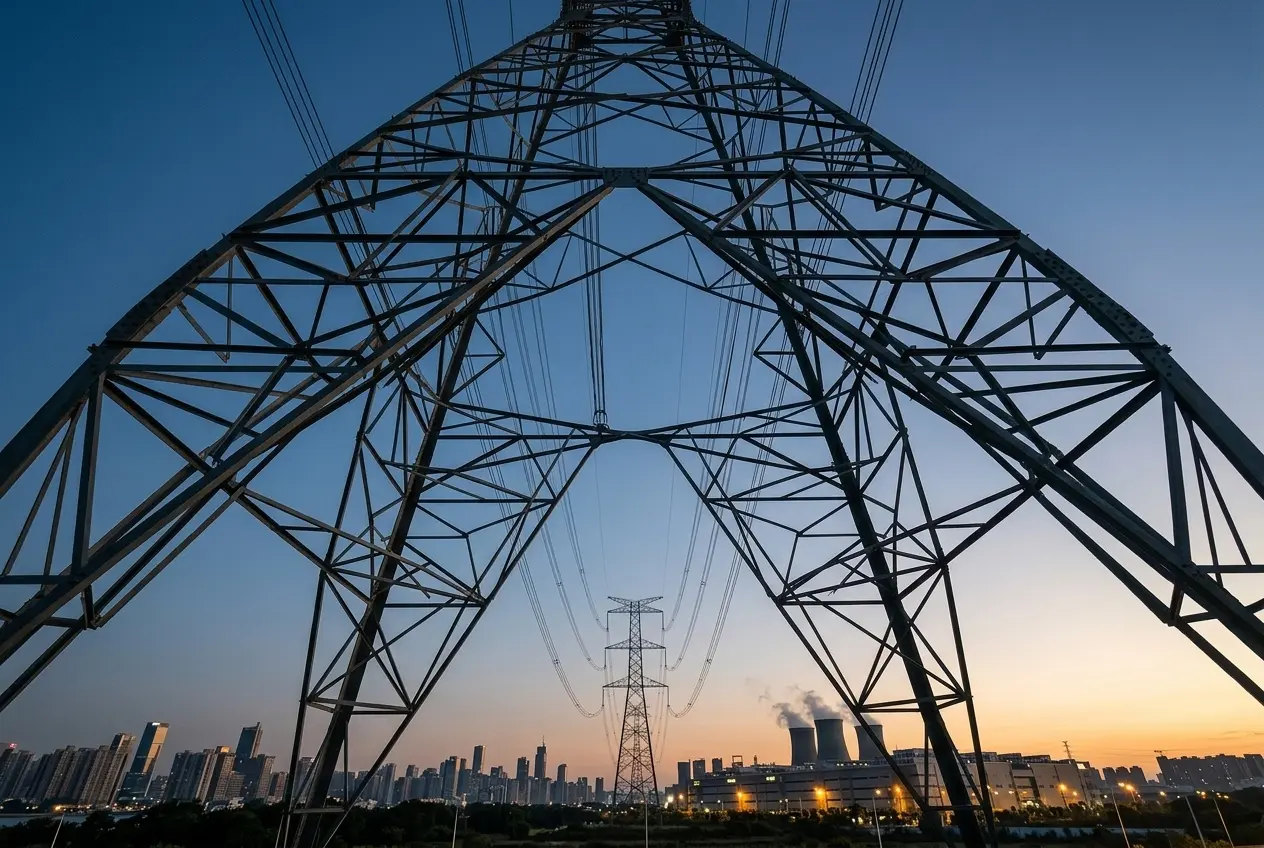
Power has become the binding constraint on the region’s build-out. CBRE recorded US$11.6 billion in direct Asia-Pacific data centre investment in 2025, a record, as landlords and operators chased sites with reliable grid access over prime addresses.
“AI is reshaping how infrastructure is selected and deployed across Asia Pacific,” said Matt Madden, senior managing director for data centre solutions, Asia Pacific, at CBRE. “For neocloud providers, access to power is increasingly outweighing traditional location advantages.”
Neoclouds are the newer players in this build-out. They are specialist cloud firms that rent out GPU computing power for AI training and inference, operating alongside the hyperscalers rather than competing head-on with them.
CBRE’s outlook also points to a sharp rise in planned AI capital spending this year, with demand for high-density sites concentrating in India, Malaysia and parts of Southeast Asia as land and grid access lag construction plans.
Put the region’s headline infrastructure figures side by side and the scale becomes clearer.
| Metric | Figure | Source |
|---|---|---|
| Planned rise in tech firms’ AI capital spending, 2026 | 61% | CBRE |
| Global AI data centre value-chain capital need, 2025 to 2030 | $6.7 trillion | McKinsey & Company |
| APAC’s share of global data centre demand by 2030 | About 34% (versus about 46% for North America) | McKinsey & Company |
Executives frame this build-out as part of a wider responsibility question. Governance conversations that used to stop at algorithms and datasets now reach the data centres, fibre routes and energy contracts feeding them, and that same resilience logic is showing up in how companies run AI on the customer-facing side of the business.
Australian Firms Lean on AI When Demand Spikes
Nigel Lindsay-Smith, managing director for ANZ at NiCE, the Nasdaq-listed customer experience software company, said Australian businesses are contending with disruption that arrives without warning across banking, utilities and retail.
“Whether it’s extreme weather, cyber incidents, service outages or workforce shortages, customer demand can quickly exceed what human teams alone can manage,” Lindsay-Smith said. “AI provides the flexibility to absorb demand surges and ensures customers continue to receive support while human agents focus on the conversations that require empathy and complex problem-solving.”
NiCE’s own field data shows the pattern already playing out. A containment rate exceeding 80% with CSAT gains up to 20% turned up among enterprises already running agentic AI in production, according to the company’s research.
Yet Lindsay-Smith was blunt about the gap between ambition and execution. He pointed to the same report’s starker number: “95% of AI initiatives fail to scale, often because organisations focus on the technology rather than how people and AI work together.”
He said the finding argues for redesigning how people and AI share the work, freeing staff for the judgement calls machines cannot make.
Malware Volume Jumped 1,548% in a Single Quarter
The old rhythm of attack and patch has broken down completely, according to WatchGuard Technologies, a cybersecurity firm serving managed service providers.
We have officially moved past the novelty era of artificial intelligence. Not long ago, the cyber threat landscape followed a manageable rhythm: attackers found a technique, defenders patched it, and the cycle repeated at a pace security teams could plan around. Today, that cycle no longer exists.
Anthony Daniel, managing director for Australia, New Zealand and the Pacific Islands at WatchGuard, said the shift shows up starkly in the company’s own threat data. New malware climbed every quarter through 2025, culminating in a 1,548% jump between the third and fourth quarters, according to WatchGuard’s 2H 2025 Internet Security Report.
The report’s other findings sharpen the picture of a threat surface moving faster than signature-based tools can track.
- 23% of all malware WatchGuard blocked had never been seen before, bypassing signature-based detection by design.
- 96% of blocked malware arrived hidden inside encrypted TLS traffic.
- 68.42% year-over-year drop in overall ransomware activity, even as extortion payouts hit record levels.
- Phishing campaigns increasingly stage malware-as-a-service tools, including remote access trojans, through malicious PowerShell scripts.
Daniel said AI’s biggest contribution to defenders is time. By absorbing repetitive triage work, it lets security teams investigate the threats that actually matter and make the judgement calls no algorithm can replace.
Why Do Most AI Initiatives Still Fail to Scale?
Most AI projects stall over unclear ownership, thin governance and a failure to redesign how teams work once an agent joins them. NiCE’s research found that pattern even among large enterprises with adequate budgets and willing staff.
The gap shows up in how differently two groups of adopters perform. A deployment cycle running up to three times faster and an 85% reduction in cost per contact separated early adopters from peers still stuck running pilots that never reach production.
The shift from pilot to production is starting to show up in enterprise software, too. Manufacturing platforms across the region are building AI-native tools directly into planning and shop-floor systems instead of bolting AI on as an add-on, closer to the redesign work that separates scalers from stallers.
Cost visibility is part of the same problem. Vendors experimenting with outcome-based pricing tied to agent performance are trying to fix it from the billing side, charging for results instead of tokens so finance teams can see what an agent delivers before the budget runs out.
What Comes Next for the Region’s AI Bill
Governments are already underwriting pieces of this build-out. Singapore committed an additional S$1 billion (about US$786 million) over five years to its National AI Research and Development Plan in January 2026, backing its NAIS 2.0 programme and broader research efforts, according to McKinsey.
Japan took a similar path, launching AI Bridging Cloud Infrastructure 3.0 (ABCI 3.0), a national sovereign AI supercomputer backed by 36 billion yen, about US$232 million, to strengthen the country’s AI sovereignty.
McKinsey projects the region’s data centre demand will keep shifting shape through the decade. AI training and inference make up roughly 30% of APAC workloads today. By 2030, the firm expects a roughly even split between AI and traditional compute, a balance that barely existed two years ago.
Frequently Asked Questions
What Is AI Appreciation Day, and Why the Focus on Infrastructure?
AI Appreciation Day falls every July 16 and has been observed since 2021 as an industry-wide moment to weigh AI’s benefits against its costs. This year’s commentary from Asia-Pacific executives shifted from what AI models can do to whether the data centres, power supplies and security systems underneath them can keep up.
What Exactly Is a Neocloud?
Neoclouds are specialist cloud providers built specifically to rent out GPU capacity for AI training and inference rather than general-purpose computing. Chipmakers such as NVIDIA have prioritised allocating scarce GPUs to neoclouds like CoreWeave, giving hyperscalers an incentive to lease capacity from them rather than relying only on their own data centres.
How Much Electricity Do the World’s Data Centres Actually Use?
Global data centre electricity consumption reached roughly 415 terawatt-hours in 2024, about 1.5% of total world electricity use, and has been growing at a compound annual rate of 12% since 2017, according to the IEA’s analysis of energy demand from AI. Southeast Asia’s data centre electricity demand is on track to more than double by 2030.
Why Did Malware Volumes Spike So Sharply in Late 2025?
WatchGuard’s report points to attackers shifting tactics as much as raw volume. Beyond the quarterly jump in new malware, the company found threat actors leaning more on living-off-the-land techniques, hijacking trusted Windows binaries instead of obvious malicious scripts to slip past endpoint defences.
Is Asia-Pacific’s Data Centre Boom at Risk of Turning into a Bubble?
Fears of an AI investment bubble are largely a United States concern, according to CBRE’s research. Data centre capacity oversupply is not a worry across Asia-Pacific, the firm found, because land and power availability continue to lag well behind demand rather than exceeding it.


South Korea Retail Investors Face Reckoning After KOSPI AI Rally Collapses

Surrey AI Maps Three Heart Attack Paths and Their Molecular Roots

Germany Locks Neutral Apple ATT Prompts Across Most of Europe

Apple’s 5% EU Fee Quietly Rewrites Alternative App Store Math

Apple’s EU Fee Truce Cuts Complexity but Leaves Rivals Fuming

Pixel 11 Pro Fold Trades Thinness for Durability and Seven-Year Stay

Mayo AI Flags HCM Obstruction From Everyday Ultrasound Videos

Indian Brands Quietly Scale Landmark Screens and Home Tech

Navin Vatsa Turns Grief Into a Lifetime of Quiet Seeing

Google Bets Pixel 11 Agentic AI Will Redefine Phones

Oracle Cuts 21,000 Jobs in a Year, Cites AI in 10-K Filing

Fable 5 and Mythos 5 Return as US Lifts Anthropic Export Controls

SpaceX’s Google Deal Turns a Rocket Company Into a Cloud Landlord

CD Projekt Red Co-CEO: Redemption Arc Isn’t Done, Witcher 4 in 2027

XPL Rallies 30% Ahead of Plasma One Card Tier Launch

Google Search Profiles Build a Follow Graph Inside Discover

DGO App Brings Rs 549 Mobile Pass for FIFA World Cup 2026 in Nepal

Moonshot AI Targets $30 Billion in China’s Fastest AI Funding Sprint

Oppo’s ColorOS 17 Eligibility List Leaves A-Series Buyers Behind

Microsoft Xbox Layoffs Start in July as Sharma Slams 3% Margin
-
 AI2 months ago
Oracle Cuts 21,000 Jobs in a Year, Cites AI in 10-K Filing
-
 AI2 months ago
Fable 5 and Mythos 5 Return as US Lifts Anthropic Export Controls
-
 AI3 months ago
SpaceX’s Google Deal Turns a Rocket Company Into a Cloud Landlord
-
 GAMING2 months ago
CD Projekt Red Co-CEO: Redemption Arc Isn’t Done, Witcher 4 in 2027
-
 CRYPTO3 months ago
XPL Rallies 30% Ahead of Plasma One Card Tier Launch
-
 NEWS3 months ago
Google Search Profiles Build a Follow Graph Inside Discover
-
 APPS3 months ago
DGO App Brings Rs 549 Mobile Pass for FIFA World Cup 2026 in Nepal
-
 AI3 months ago
Moonshot AI Targets $30 Billion in China’s Fastest AI Funding Sprint