
AI
UNESCO and LG Turn AI Ethics Principles into Free Global Practice Course
UNESCO and LG AI Research launch a free 10-module Coursera MOOC that turns the 2021 AI ethics Recommendation into practical skills for developers and.

UNESCO and LG AI Research opened a free 10-module course on the ethics of artificial intelligence on 20 July 2026 in Seoul. Hosted on Coursera and grounded in the 2021 global standard, it already lists more than 2,200 learners and aims to turn principles into daily practice for anyone who builds, deploys or regulates AI.
The launch at the Ethics by Design conference marks the shift from paper consensus to skills. Principles alone do not build ethical AI; people do.
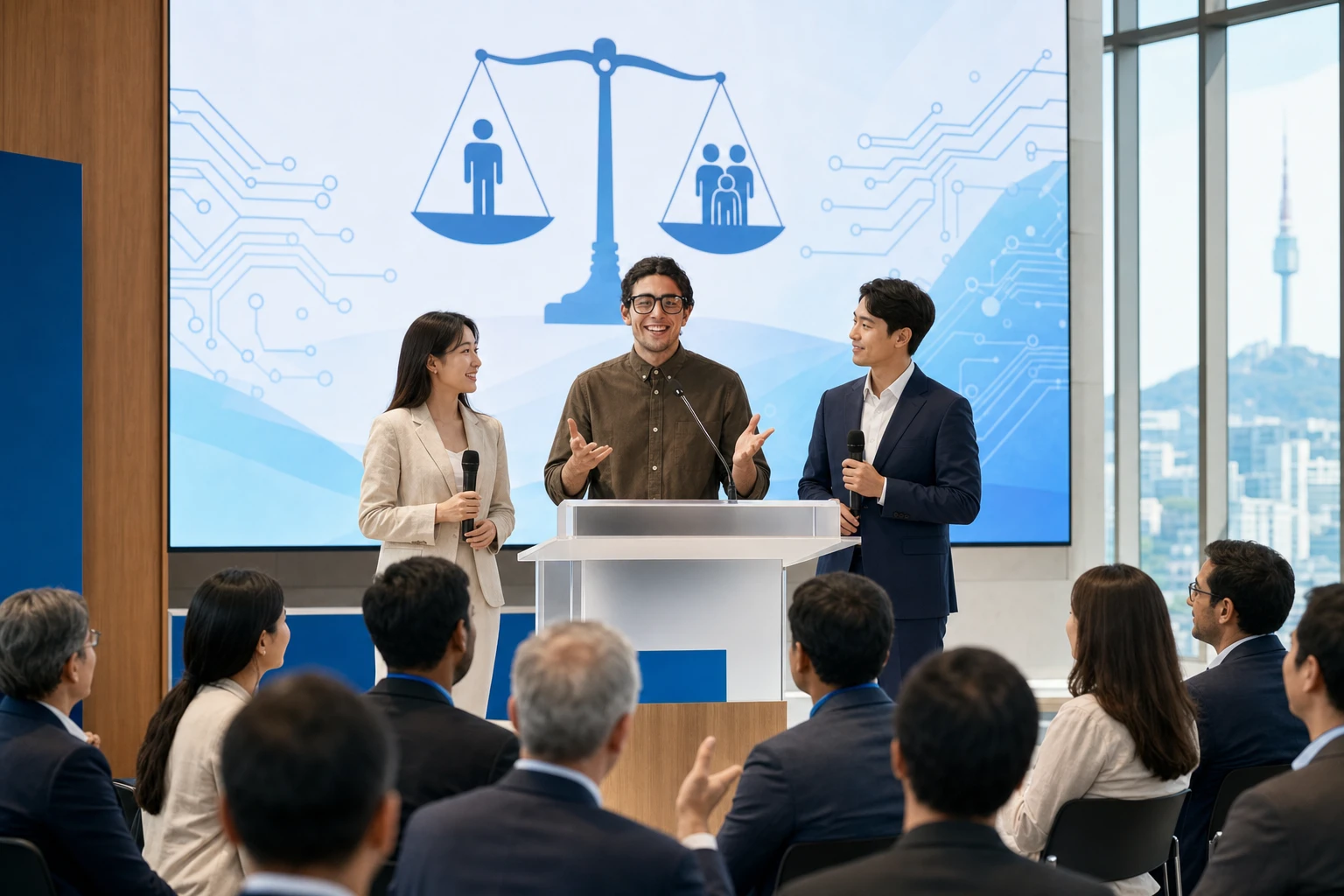
Seoul Launch Brings Governments and Industry Together
Prof. Khaled El-Enany, UNESCO Director-General, Dr. Kyung Hoon Bae, Korea’s Deputy Prime Minister and Minister of Science and ICT, and Dr. Woohyung Lim, President of LG AI Research, opened the event at the Korean National Commission for UNESCO. Module leads and the International Advisory Group joined them.
El-Enany said the course takes the next step in UNESCO’s leadership by translating the Recommendation into practical learning that empowers people across the AI lifecycle. Bae called it a global public good that supports human-centred AI and digital inclusion. Lim stressed that the missing piece after shared consensus is practice: carrying ethics from product development through service operation so responsible innovation becomes habit.
Those three framings work together. A UN agency supplies the normative base. A national science ministry treats the course as public infrastructure. An industry research lab insists that ethics only matters when it survives contact with shipping schedules and live services.
Two panels mixed LG AI Research staff with voices from Kakao, Naver, the United Nations University Institute in Macau, the University of Toronto, Korea AI Safety Institute and AFRIA. They pressed for evidence of safety and fairness, stronger skills for designers, clear governance inside product decisions, and transparent public communication.
The mix of speakers mattered as much as the topics. Platform companies, safety institutes, academic centres and regional networks shared the same stage. That setup signalled that no single sector owns the full set of answers. Designers need sharper skills. Product teams need governance that reaches into actual release choices. The public needs communication it can inspect.
Ten Modules That Cover the Full Lifecycle
The intermediate course runs roughly eight to ten hours at a flexible pace. It needs only basic AI knowledge. Learners receive a UNESCO-LG AI Research certificate on completion and can add it to LinkedIn. It is taught in English with translation options in 11 languages. Two assignments are AI-graded.
The modules sit in three tracks and were jointly produced by UNESCO and named leads:
| Track | Module | Lead |
|---|---|---|
| Building Blocks | Foundations of AI Ethics | Dr Atoosa Kasirzadeh, Carnegie Mellon |
| Building Blocks | Human-AI Interaction | Ms Maha Jouini, AFRIA |
| Core Principles | Safety and Security | Dr Nathalie Anne Devillier |
| Core Principles | Fairness, Non-Discrimination and Inclusion | Dr Shion Guha, University of Toronto |
| Core Principles | Privacy, Data Protection and Data Governance | Dr Urs Gasser, Technical University of Munich |
| Core Principles | Transparency, Explainability and Accountability | Mr Can Şimşek, Humboldt Institute |
| Core Principles | Environment and Sustainability | Ms Ana Prica Cruceanu |
| Core Principles | Proportionality and Do No Harm | Dr David Leslie, Alan Turing Institute |
| AI, Economy and Governance | Human Autonomy, Meaningful Work and the AI Economy | Dr Johann Laux, Oxford Internet Institute |
| AI, Economy and Governance | Global AI Governance | Mr Alex Lew Wen Jie, Asia Internet Coalition |
Most modules follow a four-part video pattern: introduction, application, deep dive, best practices and tools. Interactive dilemmas, simulations, use cases and quizzes force learners to weigh trade-offs rather than recite rules. The full module leads and three-track structure appear on UNESCO’s project page.
The track order itself is a teaching choice. Building Blocks first give shared vocabulary. Core Principles then unpack the values one by one. AI, Economy and Governance finally places those choices inside labour markets and international rule-making. A learner who finishes all three has moved from definitions through risk methods to the wider systems that shape deployment.
AI-graded assignments keep the course scalable while still requiring written judgment. The certificate that follows is meant to travel with the learner into hiring conversations and team reviews, not stay locked inside a learning platform.
The 2021 Standard Finally Gets Hands-On Tools
The course rests on the 2021 Recommendation on the Ethics of AI, adopted unanimously by UNESCO’s 193 Member States as the first global normative instrument. Its four core values are human dignity and rights, just and peaceful societies, diversity and inclusiveness, and flourishing of environment and ecosystems.
Those values feed ten principles that include proportionality and do no harm, safety and security, fairness and non-discrimination, sustainability, privacy and data protection, human oversight, transparency and explainability, responsibility and accountability, awareness and literacy, and multi-stakeholder governance. Earlier soft-law efforts stopped at high-level language. This MOOC supplies frameworks, cases and reflective exercises that map directly onto product and policy choices.
Mapping is the operational heart of the design. A principle such as fairness becomes a set of questions a team can ask before a model ships. Sustainability becomes a reporting habit rather than a late slide in a deck. Human oversight becomes a defined role inside a release checklist. The course does not invent new norms. It equips people to apply the ones already agreed.
Marni Baker Stein, Coursera’s Chief Content Officer, welcomed UNESCO to the platform and noted years of joint work through the Global Education Coalition. Her Coursera’s partnership announcement frames the course as expanding access to high-quality education on one of the era’s central issues.
Hosting on a major open platform turns a diplomatic text into something a working professional can finish between sprints. That distribution choice is part of the pedagogy.
Who the Course Reaches and Who Built It
Target learners are technologists, researchers, policymakers, students and any professional whose work touches AI. The design choice is deliberate: ethics-by-design lands where systems are actually built, not only in after-the-fact reviews.
A Project Steering Committee of UNESCO headquarters, the Regional Office for South Asia and LG AI Research oversaw production. Ten module leads shaped content. A 15-member International Advisory Group supplied regional, gender and professional diversity so examples reflect more than one cultural or industrial context.
That advisory layer reduces the risk that every case study feels drawn from a single market or legal tradition. When examples travel across regions, the same fairness or privacy tool can be tested against different deployment settings. Learners then see where a method holds and where local context forces adjustment.
Skills listed on the platform include responsible AI, data ethics, AI security, sustainability reporting, GDPR, human-centred design and governance risk management. The course treats ethics as method for maximising public value and reducing harm, not a compliance checkbox.
Listing those skills in plain language also helps managers and hiring teams recognise what a completed certificate claims to show. The claim is practical competence across risk, design and governance, not abstract theory alone.
Public-Private Model and Korea’s Stake
LG AI Research co-developed the curriculum. Korean tech firms Kakao and Naver sat on launch panels. The partnership is presented as a flagship example of industry helping create global public goods that operationalise ethical AI.
That model carries second-order weight. When a major corporate research lab helps write the practical playbook used by developers and regulators worldwide, the shared language of fairness, sustainability and human oversight becomes harder to treat as optional. Korea positions itself as a contributor to human-centred AI standards rather than only a hardware or model exporter.
Industry co-authorship also changes incentives inside firms. Staff who helped shape the modules have a stake in seeing the same vocabulary used in their own product reviews. Regulators who assign the course gain a common reference when they ask companies how fairness or oversight was handled.
Similar principle sets already circulate in other governance conversations; one example is the seven shared principles for AI governance discussed by Magnifica Humanitas and MANAV. The UNESCO-LG course adds scale, free access and a certificate that employers can recognise.
Scale and recognition are the practical differences. Many principle lists stay inside expert circles. A free certificate course on a global platform can travel into classrooms, ministry trainings and engineering onboarding at the same time.
Early Numbers and What Remains Open
The Coursera page shows 2,281 learners for UNESCO’s first course. Enrolment opened with the Seoul event. The course is free to take; certification is available on completion. Official UNESCO and Coursera channels have driven most early visibility.
Principles alone do not build ethical AI, people do. Through this course, UNESCO is taking the next step in its leadership on AI ethics, translating the Recommendation on the Ethics of Artificial Intelligence into practical learning that empowers people to apply ethical principles throughout the AI lifecycle.
Prof. Khaled El-Enany, Director-General of UNESCO, said that at the launch. Mariya Gabriel, UNESCO Assistant Director-General for Communication and Information, echoed the human-centred line on X and pointed learners to enrol.
Organic discussion remains light a week after launch. That is typical for capacity-building work. The open questions are whether completion rates stay high, whether product teams inside companies actually adopt the frameworks, and whether the multi-language versions reach regions where AI deployment is accelerating fastest.
Those three questions point in different directions. Completion measures individual persistence. Adoption measures organisational change. Language reach measures geographic equity. Progress on one does not automatically deliver the others. Tracking all three over time will show whether the shift from paper consensus to skills is holding.
The free Global MOOC on Coursera is live now. Learners can start immediately and move at their own pace.
Dilemmas and Simulations Train Daily Judgment
The course does not stop at video lectures. Interactive dilemmas, simulations, use cases and quizzes push learners to choose under constraint. That design follows directly from the launch message that practice, not principle lists alone, builds ethical AI.
A dilemma on fairness may force a choice between competing inclusion goals. A safety simulation may ask how much testing is enough before release. A governance case may require deciding who holds veto power when a model fails an oversight check. None of these exercises has a single memorised answer. They train the habit of weighing harms, benefits and duties in sequence.
Because the same four-part pattern repeats across modules, learners build a stable routine: hear the concept, see it applied, examine the hard case, then collect tools they can reuse. Over eight to ten hours that routine can become muscle memory for later product reviews and policy drafts.
The two AI-graded assignments extend the same logic. They ask for written reasoning that a system can score at scale, keeping the course open and free while still demanding more than multiple-choice recall.
Shared Language Helps Teams and Regulators Align
When technologists, policymakers and researchers finish the same modules, they gain a common vocabulary drawn from the 2021 Recommendation. Fairness, human oversight, sustainability and accountability stop being slogans each side defines alone. They become reference points that can appear in design docs, impact assessments and public explanations.
The panels in Seoul already modelled that alignment. Voices from Kakao, Naver, academic institutes and safety bodies pressed for evidence, skills, internal governance and transparent communication in the same conversation. The course gives those groups a lasting shared text rather than a one-day exchange.
Korea’s role as co-developer and host adds a further layer. A country known for advanced industry is also exporting training that treats human-centred standards as part of the product stack. That stance can influence how partner markets and supply chains talk about responsibility.
Free access and eleven translation options widen who can join the conversation. Students, civil servants and engineers who never attend a Seoul conference can still earn the same certificate and carry the same frameworks into local decisions. Whether they do so at volume remains one of the open questions, but the door is open.
Frequently Asked Questions
How long does the UNESCO LG AI ethics MOOC take to finish?
Most estimates put total effort at eight to ten hours. Coursera lists one week at ten hours per week as a possible pace, but the schedule is fully flexible and self-paced so working professionals can stretch it over several weeks.
Is the certificate free or does it require payment?
Enrolment and all course materials are free. Learners who complete the modules and the two AI-graded assignments become eligible for the UNESCO-LG AI Research Certificate of Completion, which can be added to a LinkedIn profile without an extra fee listed on the course page.
Which languages does the course support beyond English?
Primary delivery is English. Translation options cover eleven languages so that learners in non-English regions can follow the same modules and exercises without starting from zero.
Who are the main instructors and module leads?
The institutional instructor is listed as UNESCO – LG AI Research. Individual modules were led by named experts including Atoosa Kasirzadeh of Carnegie Mellon, Shion Guha of the University of Toronto, Urs Gasser of TUM, David Leslie of the Alan Turing Institute and Johann Laux of the Oxford Internet Institute, among others.
Does the course require advanced programming or machine-learning experience?
No. It is pitched at intermediate level for professionals who already have basic knowledge of AI. The focus is ethical frameworks, risk assessment, trade-offs and governance rather than coding new models.


D&D Bets Big on WoW and Star Wars to Grow Its Tables

Game Pass Drops Celeste and Crusader Kings on First Net-Loss Day

Gemini Breaks Basic Calls on Foldable Phones in Android Auto

Citadel Clears AI Fund Overhang While Crypto Stays Flat

Morgan Stanley Staking ETPs Crack Open Crypto Yield for Wealth Clients

Snapdragon Price Hike Forces Premium Buyers Toward Last Year’s Phones

Croc 2 Remaster Unlocks Argonaut’s Full Revival Path

Scale AI Names Google Cloud Veteran deSouza CEO for Enterprise Push

Epic Store Hits Brazilian iPhones Amid Apple’s Familiar Friction Play

LORDNINE Helena Server Races Players Toward Real USDT Rewards

Fable 5 and Mythos 5 Return as US Lifts Anthropic Export Controls

SpaceX’s Google Deal Turns a Rocket Company Into a Cloud Landlord

Oracle Cuts 21,000 Jobs in a Year, Cites AI in 10-K Filing

CD Projekt Red Co-CEO: Redemption Arc Isn’t Done, Witcher 4 in 2027

XPL Rallies 30% Ahead of Plasma One Card Tier Launch

DGO App Brings Rs 549 Mobile Pass for FIFA World Cup 2026 in Nepal

Google Search Profiles Build a Follow Graph Inside Discover

Moonshot AI Targets $30 Billion in China’s Fastest AI Funding Sprint

Microsoft Xbox Layoffs Start in July as Sharma Slams 3% Margin

Oppo’s ColorOS 17 Eligibility List Leaves A-Series Buyers Behind
-
 AI1 month ago
Fable 5 and Mythos 5 Return as US Lifts Anthropic Export Controls
-
 AI2 months ago
SpaceX’s Google Deal Turns a Rocket Company Into a Cloud Landlord
-
 AI1 month ago
Oracle Cuts 21,000 Jobs in a Year, Cites AI in 10-K Filing
-
 GAMING1 month ago
CD Projekt Red Co-CEO: Redemption Arc Isn’t Done, Witcher 4 in 2027
-
 CRYPTO2 months ago
XPL Rallies 30% Ahead of Plasma One Card Tier Launch
-
 APPS2 months ago
DGO App Brings Rs 549 Mobile Pass for FIFA World Cup 2026 in Nepal
-
 NEWS2 months ago
Google Search Profiles Build a Follow Graph Inside Discover
-
 AI2 months ago
Moonshot AI Targets $30 Billion in China’s Fastest AI Funding Sprint