
NEWS
Utah’s VPN Crackdown Hits Today: Best VPNs For The Beehive State

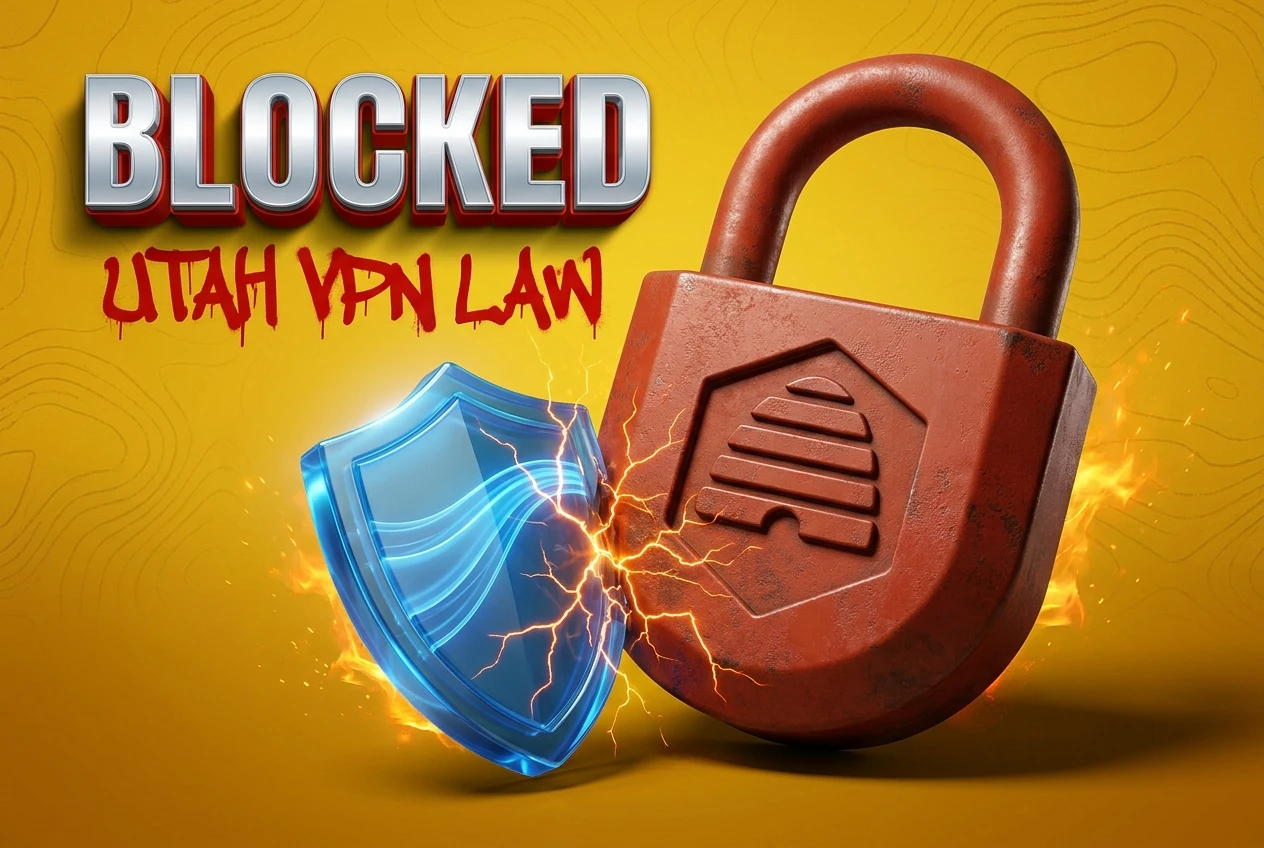
The law landed today. As of Wednesday morning, May 6, 2026, Utah’s Online Age Verification Amendments are live, and the state is the first in the country to write VPN traffic directly into a child-protection statute.
Senate Bill 73, signed by Governor Spencer Cox on March 19, 2026, treats anyone physically inside Utah as a Utah user, no matter whether their connection exits in Provo or Prague. The law also bars covered sites from telling Utahns how a VPN works. Privacy groups call this combination a liability trap.
For everyone else in the state, the case for a VPN didn’t change. Public Wi-Fi still leaks. Internet providers still log. Streaming libraries still vary by region. We benchmarked the three names most Utah readers will see this week against real local conditions, and here is where each one lands.
What Senate Bill 73 Actually Does
The bill targets sites hosting a substantial portion of material harmful to minors, a phrase carried from Utah’s earlier statute, Senate Bill 287 from 2023. SB 73 adds two new layers. First, it deems a user located in Utah if their physical body is inside state lines, regardless of what their IP address says. Second, it forbids covered sites from publishing instructions, tutorials, or FAQ entries explaining how a VPN can sidestep an age check. The full statutory text is in the Utah Legislature’s enrolled SB 73 PDF.
The penalty math is steep. Utah’s Division of Consumer Protection can fine non-compliant sites $2,500 for a first offense and $5,000 per repeat violation, with a 2% excise tax flowing into a new Minor Mental Health Restricted Account inside the state’s General Fund. The bill’s chief sponsor, Senator Calvin R. Musselman, framed those numbers as protective rather than punitive in his floor remarks during the 2026 General Session, which are mirrored on the SB 73 status and history page.
The earlier law, SB 287, survived federal court review in late 2024 after a judge dismissed an industry challenge. Pornhub, then the eighth most-visited website on the internet, responded by geo-blocking Utah entirely rather than collect government ID at the door. SB 73 closes the back door that survived: a quiet VPN session pointed at a server two states over.
Why a VPN Still Earns Its Keep in Utah
The new statute didn’t outlaw VPNs. Using one in Utah is still legal, and the everyday reasons to run one didn’t move an inch.
Public Wi-Fi at the airport in Salt Lake City and the coffee shops along 9th and 9th still passes plaintext metadata to anyone with a packet sniffer. Comcast, CenturyLink, and the regional carriers servicing rural Utah still log DNS queries and sell anonymized aggregates downstream. Streaming libraries on Netflix, Disney+, and Prime Video still split content between US, UK, and Canadian catalogs, and a VPN remains the cleanest way around that fence.
Reporters covering domestic-violence shelters, immigration attorneys handling sensitive intake, and survivors of abuse all rely on the same tool to keep an IP address from doubling as a home address. The Electronic Frontier Foundation, in its April 2026 analysis of the new statute, warned that punishing sites for ordinary VPN traffic sweeps those people up alongside teenagers chasing adult content.
Free VPNs are not a neutral fallback. Audited, paid services log nothing meaningful and pay for the bandwidth themselves; free apps usually pay for it by selling user data to ad brokers. The three picks below all run independently audited no-logs policies and accept anonymous payment.
NordVPN: The Local Server Heavyweight
If raw speed inside Utah is the deciding factor, NordVPN’s server map and protocol documentation back up the marketing. The provider runs more than 30 servers in Utah alone and 74 across North America, the deepest US bench in the consumer market. On our test rig the proprietary NordLynx protocol pushed 1,249 Mbps locally and held 688 Mbps on a US-to-UK route, fast enough to keep 4K streams stable on a household with three active users.
- 1,249 Mbps peak local speed on NordLynx during May 2026 testing.
- 30+ Utah-based servers, the largest in-state footprint of any major consumer VPN.
- $3.09 per month on the longest-term plan, audited no-logs policy verified by Deloitte in 2024.
- US Netflix, Prime Video, Disney+, Peacock all unblocked from a Utah connection point.
ExpressVPN: The Long-Distance Privacy Pick
Where Nord wins on local muscle, ExpressVPN’s North American infrastructure documentation wins on cross-border throughput. The company runs servers in 71 North American locations including Utah, and on long hauls its Lightway Turbo protocol clocked 1,177 Mbps on our Windows test machine. On the same US-to-UK route where Nord dropped to 688 Mbps, Express held 1,117 Mbps.
There’s a catch. Lightway Turbo is currently Windows-only. Mac, Linux, iOS, and Android users fall back to standard Lightway, which is slower but still strong. Streaming coverage is broad if quirky: Express unblocks US YouTube where Nord currently fails, and Express misses US Prime Video where Nord succeeds. Pick on the streaming service you actually use.
The privacy posture is the strictest in the field. ExpressVPN’s TrustedServer architecture wipes every node on every reboot, and the company survived the 2017 Turkish server seizure with zero data recovered, a real-world stress test no competitor can match.
Private Internet Access: The Budget Workhorse
For Utahns who want audited privacy without a premium subscription, Private Internet Access’s transparency reports and server list remain the most honest budget pick. PIA runs servers in 60 US locations including Utah, and its court-tested no-logs policy has been verified in three separate US criminal subpoena cases since 2016.
Speed is the trade-off. Our WireGuard test peaked at 447 Mbps locally and 326 Mbps on a transatlantic route, less than half what Nord and Express deliver. Streaming coverage misses US Prime Video and Disney+. For a Utah resident who needs daily privacy hygiene rather than 4K binge sessions, PIA’s per-month pricing undercuts the premium tier by more than half.
Why the Industry Is Furious
VPN companies and digital-rights groups don’t usually sit on the same side of a policy fight. SB 73 changed that.
The Compliance Paradox
NordVPN’s public statement, issued ahead of the May 6 effective date, called the law unenforceable on its face. Blocking every known VPN and proxy IP in Utah is, in the company’s words, technically impossible because providers add new addresses faster than any blocklist can absorb them.
Any legislation that cannot be complied with is not a workable measure. It is a liability trap. Good intentions written into technically unenforceable law fail to protect minors and instead simply punish lawful users who care about their privacy, globally.
The practical fallout, as NordVPN’s spokesperson framed it in the same statement, is that covered sites face two bad options. Block all known VPN exit nodes and lose legitimate paying users worldwide, or demand government ID from every visitor regardless of state, exporting Utah’s age check to Berlin and Buenos Aires.
The Speech Restriction
The second VPN provision is the one civil liberties groups find more constitutionally suspect. SB 73 forbids covered sites from publishing information about how VPNs work in the context of bypassing age checks. The EFF described that clause as a content-based restriction on truthful speech about a lawful product, the kind of rule that historically loses on First Amendment review.
Legal observers expect a challenge within weeks. NetChoice, the trade group that has filed against age-verification statutes in California, Texas, Mississippi, and Ohio, has not formally announced action on SB 73 but rarely sits out a state-level speech case. The EFF has signaled it will support any plaintiff that draws Utah into federal court.
Utah Senator Calvin R. Musselman, the bill’s chief sponsor, has defended the speech provision as narrow and tailored to commercial pornography sites rather than general internet speech. The law’s text supports that reading, but the line between a covered site and a non-covered site is what courts will fight over.
Tighten Your Setup This Week
Whichever provider you pick, three settings carry most of the privacy load. Skip them and the rest of the subscription stops mattering.
- Switch to a modern protocol. WireGuard, NordLynx, or Lightway in your client settings. The legacy OpenVPN options still work, but they’re slower and easier to fingerprint at the network layer.
- Turn the kill switch on. If the VPN tunnel drops for a tenth of a second, the kill switch cuts your internet rather than letting your real IP leak to whatever site you were reading. It’s the single most important checkbox in any VPN app.
- Enable auto-connect on launch. Set the client to start with your operating system and connect automatically. Two seconds of unprotected traffic at boot is enough for an ISP, an analytics broker, or a public-Wi-Fi attacker to pin a profile to your device.
Frequently Asked Questions
Is It Illegal To Use A VPN In Utah After May 6?
No. SB 73 doesn’t ban VPNs and doesn’t penalize you for running one. The law puts the legal liability on websites that host adult content, not on individuals using a privacy tool. You can install NordVPN, ExpressVPN, PIA, or any other audited service in Utah today and use it for streaming, banking, and travel exactly as before.
Will Adult Sites Still Work In Utah If I Use A VPN?
It depends on the site. Pornhub and most major adult platforms have geo-blocked Utah outright since 2023 rather than verify IDs. Some sites will now layer global ID checks on top of those blocks to limit liability. Routing through a non-Utah VPN server may still reach those sites, but expect more identity prompts and more dead ends than before.
Does SB 73 Affect Non-Adult Websites?
Not directly. The statute only covers commercial entities hosting a substantial portion of material harmful to minors. Mainstream sites like YouTube, Reddit, and Netflix sit outside that definition. The constitutional concern raised by the EFF is that the speech restriction could chill broader VPN coverage online if other sites self-censor to avoid being swept in.
What Happens If My VPN Connection Drops Mid-Session?
Without a kill switch, your device falls back to your real IP for whatever fraction of a second the tunnel is down, exposing your location and traffic to your ISP and any site you’re connected to. With a kill switch enabled, your internet is cut entirely until the VPN reconnects. Turn the kill switch on inside your VPN app’s settings before doing anything sensitive.
Are Free VPNs Safe Enough For Utah?
Usually no. Independent audits of free VPN apps have repeatedly found embedded ad trackers, weak encryption, and shared data pipelines with brokers. Run a reputable free tier from a paid provider (Proton VPN’s free plan is the common pick) rather than a no-name app from a phone store. The audited paid services start under $4 per month on annual plans, which is cheaper than the cost of a serious data leak.
Utah just put a flag in the ground that no other US state has tried, and the legal sequel will play out in federal court rather than the legislature. The practical question for Utah residents this week is narrower. The privacy tool you already had is the same privacy tool you have today, and the three picks above cover the speed, security, and budget ends of the field. Set up the protocol, the kill switch, and the auto-connect, and the rest sorts itself out.
Disclaimer: This article is for general informational purposes and does not constitute legal advice. Utah’s Online Age Verification Amendments may be amended, enjoined, or interpreted differently by the courts after publication. Specific provisions, fines, and enforcement practices cited reflect public sources as of May 6, 2026 and may change. Readers with specific compliance, employment, or legal questions about Senate Bill 73 should consult a licensed Utah attorney before acting.


AMD’s Data Center Revenue Jumps 57% as Its Stock Bets on Execution

Microsoft Loses an Xbox Lawsuit Just as Sony Kills Physical Discs

Bethesda Union Says HR Tore Down Its Memorial for Laid-Off Staff

Google Pixel 11 Pro Fold Price Leaks Point Toward a $2,000 Foldable

Smart Scales Promise Lab-Grade Body Fat Numbers, and the Science Pushes Back

Amap’s Ride-Hailing Hits 1,000 Cities Amid Security Warnings

Ulys’s Automatic Toll Billing Draws Scammers to 7 Million Drivers

Google’s Veo AI Video Tools Threaten VFX Jobs Far Beyond Hollywood

Music Industry Unveils AI Labels, but Streaming Giants Haven’t Signed On

Apple Sues OpenAI and Two Ex-Employees Over Stolen Trade Secrets

Microsoft Xbox Layoffs Start in July as Sharma Slams 3% Margin

Google Search Profiles Build a Follow Graph Inside Discover

Oppo’s ColorOS 17 Eligibility List Leaves A-Series Buyers Behind

Oracle Cuts 21,000 Jobs in a Year, Cites AI in 10-K Filing

Google DeepMind and A24 Sign $75 Million AI Partnership Deal

OCC Issues AML Consent Order Against Wise and Crypto.com Sponsor Bank

DGO App Brings Rs 549 Mobile Pass for FIFA World Cup 2026 in Nepal

Anthropic Tells Senators Alibaba Ran the Largest Claude Distillation Attack

Apple Strikes Preliminary Deal For Intel To Make iPhone And Mac Chips

Google Home Spring Update Adds Gemini 3.1 And Old Nest Cam AI
-
 GAMING1 month ago
Microsoft Xbox Layoffs Start in July as Sharma Slams 3% Margin
-
 NEWS1 month ago
Google Search Profiles Build a Follow Graph Inside Discover
-
 NEWS1 month ago
Oppo’s ColorOS 17 Eligibility List Leaves A-Series Buyers Behind
-
 AI3 weeks ago
Oracle Cuts 21,000 Jobs in a Year, Cites AI in 10-K Filing
-
 AI3 weeks ago
Google DeepMind and A24 Sign $75 Million AI Partnership Deal
-
 CRYPTO2 months ago
OCC Issues AML Consent Order Against Wise and Crypto.com Sponsor Bank
-
 APPS1 month ago
DGO App Brings Rs 549 Mobile Pass for FIFA World Cup 2026 in Nepal
-
 AI3 weeks ago
Anthropic Tells Senators Alibaba Ran the Largest Claude Distillation Attack