
APPS
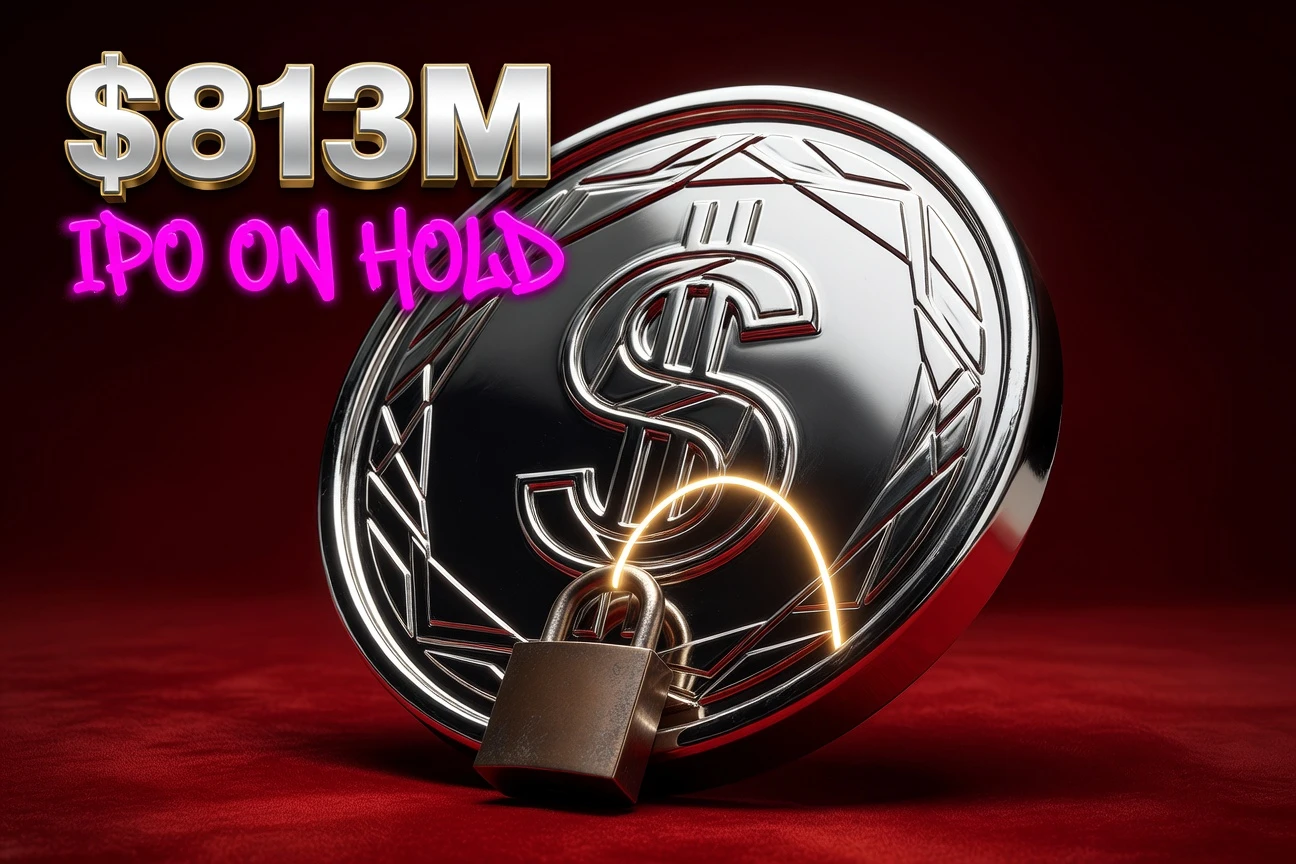
Airtel Africa Profit More Than Doubles To $813M, IPO Slips

Airtel Africa’s profit more than doubled to $813 million in the year ended 31 March 2026, a 147.4% jump from the $328 million it booked the previous year. Revenue climbed 29.5% to $6.42 billion. The London-listed carrier added 17.4 million customers across its 14 sub-Saharan markets, the biggest annual haul in its history, and pushed Airtel Money’s annualised transaction value past $215 billion in the fourth quarter.
Then came the catch. Chief executive Sunil Taldar confirmed the long-awaited Airtel Money IPO has slipped to the second half of 2026, blaming geopolitical pressure on energy and logistics costs. The listing was meant to land in the first half. War in Iran and a jittery London market changed the calendar.
The Numbers That Carried The Year
Reported revenue of $6.42 billion grew 24.0% in constant currency, stripping out the violent swings of the Nigerian naira and several Francophone currencies. Underlying EBITDA rose 37.2% in reported terms to $3.16 billion, with margins widening to 49.3% for the full year and 50.3% in the fourth quarter alone. Basic earnings per share more than tripled to 18.6 cents from 6.0 cents.
The company’s audited results announcement filed with the London Stock Exchange shows leverage falling to 1.8x from 2.3x, while lease-adjusted leverage came in at just 0.5x. The board recommended a final dividend of 4.26 cents per share, lifting the full-year payout to 7.1 cents, up 9.2% on the previous year.
Where The Growth Came From
- Nigeria: 47.5% constant-currency revenue growth, the standout market
- Francophone Africa: 17.1% constant-currency growth across 8 markets
- Data revenue: up 35.2% in constant currency, now the largest single revenue line
- Mobile money revenue: up 28.4% in constant currency, contributing 21.1% of group revenue
Nigeria’s number is the one that did the heavy lifting, and it carries an asterisk worth understanding.
The Nigerian Tariff Story Behind The Headline
For the first time since 2013, Nigerian operators were allowed to raise prices. The Nigerian Communications Commission’s January 2025 decision approving a 50% tariff hike reset the entire economics of the country’s telecoms. Airtel and MTN had asked for 100%. They got half of that. They took it.
The effect lapped through Airtel’s books all year. Group constant-currency revenue growth slowed slightly to 22.3% in Q4 once the tariff comparison started annualising. That is not a sign of weakness. It is the maths of any one-off pricing reset working through year-on-year numbers.
The naira tells the other half of the story. Nigeria’s currency collapsed from roughly 471 to the dollar in mid-2023 to over 1,500 by late 2025. Reported-currency revenue growth of 29.5% beats constant-currency growth of 24.0% only because the prior year’s base was distorted by even worse FX moves. Investors reading the headline should look at the constant-currency line.
Airtel Money Is Now The Crown Jewel
The mobile money business is no longer a side hustle. It carried 54.1 million customers at year-end, up 21.3%. Annualised total processed value hit $215 billion in the fourth quarter, a 49% jump in reported currency. Per-customer monthly TPV climbed 14.4% to $332.
Mobile money EBITDA reached $689 million, up 31.3% in reported currency, with margins of 50.8%. The unit alone now generates more cash than most listed African banks. That is the asset Bharti wants to spin out.
The adoption of new digital technologies and AI has been pivotal in unlocking growth opportunities, driving efficiencies across the business and enhancing the customer experience.
That line, from Taldar in the results commentary, is doing more work than it appears. App-based transacting customers grew 74% year-on-year. TPV processed through the myAirtel app reached $8.3 billion in FY26, up from $4.6 billion. Self-service is replacing call centres and branch agents, which is exactly the cost lever a fintech IPO needs to flex.
Why The IPO Slipped
Taldar had told analysts in February the listing would happen by mid-year. It will not. The official reason is geopolitics. The unofficial reason is London.
According to Bloomberg’s late-April reporting on the deal preparations, Airtel is targeting a London Stock Exchange listing that could raise between $1.5 billion and $2 billion at a valuation of up to $10 billion. Citigroup is advising. Three or four additional banks are expected to join the syndicate.
That valuation matters for one reason. TPG put $200 million into Airtel Money in 2021 at a $2.65 billion valuation. Mastercard followed with $100 million. The Qatar Investment Authority took a stake later that year. A $10 billion print would mark a roughly fourfold uplift on TPG’s entry. London needs the win as badly as the investors do.
What Could Still Go Wrong
- Energy costs: Diesel powers a large share of African cell sites, and the company flagged near-term EBITDA margin pressure from rising fuel inputs
- FX volatility: Another naira leg-down would compress reported numbers even with constant-currency growth intact
- Listing window: London IPO appetite is fragile, and a soft-print risk grows the longer the calendar stretches
- Regulatory drag: Mobile money taxes in markets like Tanzania and Uganda continue to dampen transaction volumes
Taldar acknowledged the headwind directly in the results call commentary. “We remain committed to the Airtel Money IPO and continue to make progress with the preparations,” he said. “However, prevailing market conditions have led us to target the second half of 2026 for the potential listing.”
The Continent-Sized Tailwind
Airtel’s results land into a market that is finally being recognised for what it is. The GSMA’s State of the Industry Report on Mobile Money 2026 showed sub-Saharan Africa processed $1.4 trillion in mobile money transactions in 2025, up 27% year-on-year and accounting for 66% of global mobile money flows.
Vivek Badrinath, GSMA Director General, framed the shift bluntly. “Mobile money has become one of the world’s most impactful financial services. What began as a simple way to move money has evolved into a global financial ecosystem, reshaping how hundreds of millions of people manage their financial lives,” he said in the report’s launch statement.
Africa hosts roughly 1.2 billion of the world’s 2.3 billion mobile money accounts. The continent represents 74% of global mobile money transaction volume. Airtel Money is one of three names that dominate the league table, alongside Safaricom’s M-Pesa and MTN’s MoMo. That is the structural backdrop investors will price into the IPO book.
Spending To Defend The Lead
Capital expenditure jumped 31.9% to $884 million during FY26. Guidance for FY27 sits at roughly $1.1 billion. The company added more than 3,250 new sites and laid 3,200 kilometres of fibre, taking total fibre to 81,900 kilometres.
The spending priorities flag where management thinks the next leg of growth lives. Home broadband is named as a focus area. So is data centre infrastructure. Airtel has already announced a $120 million hyperscale build at Eko Atlantic in Lagos. Other African telcos are watching the same playbook — connectivity revenue is finite, but enterprise data, cloud-adjacent services, and home fibre have years of runway.
For context on the wider African connectivity push, our coverage of Hormuud’s $19 smartphone financing rollout in Somalia shows how operators across the continent are racing to put devices in hands that will then consume data and mobile money services.
The Mittal Succession
One detail buried beneath the numbers shapes the next decade. On 25 March 2026, Sunil Bharti Mittal informed the board he intends to retire as chair at the conclusion of the AGM in July. Gopal Vittal, currently chief executive of Bharti Airtel in India, will take over as non-executive chair the same day.
Vittal is not a passive successor. He has run Bharti Airtel India through its turnaround from a debt-heavy laggard to one of the most profitable telcos in Asia. Investors who track Bharti’s Indian disclosures will recognise his hand in cost discipline, premium tariff positioning, and aggressive 5G site rollouts. The same operating template is likely to deepen in Africa under his chairmanship.
What The Quarter-By-Quarter Pattern Shows
| Metric | FY25 | FY26 | Change |
|---|---|---|---|
| Revenue (reported) | $4.96B | $6.42B | +29.5% |
| Profit after tax | $328M | $813M | +147.4% |
| EBITDA margin | ~46.6% | 49.3% | +270 bps |
| Customers | 166.1M | 183.5M | +10.5% |
| Data customers | 73.4M | 84.2M | +14.8% |
| Airtel Money customers | 44.6M | 54.1M | +21.3% |
| Capex | $670M | $884M | +31.9% |
Q4 revenue grew 24.9% in constant currency, the strongest quarterly print of the year. That acceleration matters. It says the underlying business is still expanding even as the Nigerian tariff base effect fades. Smartphone penetration crossing 49.5% from 44.8% a year earlier means another 14 million phones are now capable of consuming the data and mobile money services that drive ARPU.
Frequently Asked Questions
When Will The Airtel Money IPO Actually Happen?
The company is targeting the second half of 2026 for a London Stock Exchange listing. Taldar confirmed the slippage in the FY26 results, citing geopolitical pressure on energy and logistics costs. No firm date has been announced. Citigroup is the lead adviser, with three or four additional banks expected to join the syndicate. Watch for a formal intention-to-float notice, which typically lands four to six weeks before pricing.
How Much Could Airtel Money Be Worth At IPO?
Reports point to a $7 billion to $10 billion valuation range, with a fundraise of $1.5 billion to $2 billion. At the upper end, the listing would rank among the largest IPOs on a European exchange in recent years. TPG entered at a $2.65 billion valuation in 2021, so a $10 billion print would be roughly a fourfold uplift. Final pricing depends on the London IPO market when the company opens books.
Is Airtel Africa A Buy On These Results?
That decision belongs to you and your financial adviser. The structural case is real: 49% EBITDA margins, falling leverage, a growing fintech arm, and 14 markets with rising smartphone penetration. The risks are real too: naira volatility, energy cost inflation, regulatory change in Nigeria, and IPO execution risk. Read the full results announcement and a current broker note before forming a view. Past performance does not predict future returns.
What Markets Does Airtel Africa Operate In?
Airtel Africa runs telecom and mobile money services in 14 sub-Saharan markets: Nigeria, Kenya, Tanzania, Uganda, Rwanda, Zambia, Malawi, Madagascar, Democratic Republic of Congo, Republic of Congo, Gabon, Niger, Chad, and Seychelles. It holds the number one or number two position in every market it operates in. Nigeria is the single largest revenue contributor, with Francophone markets the second-fastest-growing cluster.
Who Are Airtel Money’s Biggest Outside Investors?
Three names matter. TPG Inc. invested $200 million in 2021 at a $2.65 billion valuation. Mastercard Inc. committed $100 million the same year. An affiliate of the Qatar Investment Authority, Qatar’s sovereign wealth fund, took a stake later in 2021. All three remain on the cap table heading into the planned 2026 listing and stand to realise large paper gains if the IPO prints near the $10 billion target.
The FY26 print does what a results announcement is meant to do. It validates the strategy, raises the dividend, and frames the IPO pitch. The harder work starts now. Vittal inherits a business firing on every metric except the one that needs a clean London market and a quiet quarter in the Strait of Hormuz to land. Both are out of his control.


CAA Demands Meta Default Muse Image to Opt-In Consent

Memory Costs Are Quietly Squeezing Low-End Phones and PA Suppliers

Social Media Algorithms Now Reward Watch Time, Not Conversation

ResMed Cuts a $490 Million Deal to Exit MatrixCare Software

Nothing’s Phone (4b) Lands at £299, Just £50 Below the Better 4a

Parents’ Phone Distraction Tied to Teen Insecure Attachment

AirPods Custom EQ and Adaptive Audio Slider Arrive in iOS 27 (9A5314b)

EU Court Rejects Apple’s Three Challenges to Its Gatekeeper Status

Black Flag Resynced Playable Build Leaks Ahead of July 9 Launch

Penton Publications Enters Liquidation on 3 July 2026

Microsoft Xbox Layoffs Start in July as Sharma Slams 3% Margin

Google Search Profiles Build a Follow Graph Inside Discover

Google DeepMind and A24 Sign $75 Million AI Partnership Deal

DGO App Brings Rs 549 Mobile Pass for FIFA World Cup 2026 in Nepal

Oracle Cuts 21,000 Jobs in a Year, Cites AI in 10-K Filing

Oppo’s ColorOS 17 Eligibility List Leaves A-Series Buyers Behind

Anthropic Tells Senators Alibaba Ran the Largest Claude Distillation Attack

Apple Strikes Preliminary Deal For Intel To Make iPhone And Mac Chips

Andreessen Horowitz Bets $2.2B on Crypto’s Quiet Cycle

Google Home Spring Update Adds Gemini 3.1 And Old Nest Cam AI
-
 GAMING4 weeks ago
Microsoft Xbox Layoffs Start in July as Sharma Slams 3% Margin
-
 NEWS1 month ago
Google Search Profiles Build a Follow Graph Inside Discover
-
 AI2 weeks ago
Google DeepMind and A24 Sign $75 Million AI Partnership Deal
-
 APPS4 weeks ago
DGO App Brings Rs 549 Mobile Pass for FIFA World Cup 2026 in Nepal
-
 AI2 weeks ago
Oracle Cuts 21,000 Jobs in a Year, Cites AI in 10-K Filing
-
 NEWS1 month ago
Oppo’s ColorOS 17 Eligibility List Leaves A-Series Buyers Behind
-
 AI2 weeks ago
Anthropic Tells Senators Alibaba Ran the Largest Claude Distillation Attack
-
 NEWS2 months ago
Apple Strikes Preliminary Deal For Intel To Make iPhone And Mac Chips