
NEWS
UK Under-16 Social Media Ban Leaves Disabled Teens Stranded

The British government’s three-month consultation on banning under-16s from social media closed on May 26, and a response from Technology Secretary Peter Kyle is expected before summer’s end. Disability advocates spent the window arguing that the same smartphone the policy targets is the only fully accessible computer most physically disabled teenagers can hold.
That tension defines the policy bind. A blunt age cap pulls disabled adolescents off platforms where they organise friendships, follow disabled-led communities and watch role models they cannot meet in person. It also leaves them facing a market of cheaper, feature-phone handsets that, with three or four exceptions, were never built for users who navigate by voice, switch or single finger.
Westminster’s Decision Window Opens This Summer
Part 3 of the Children’s Wellbeing and Schools Act 2026 received Royal Assent on 29 April and hands ministers the power to set age or feature restrictions on social platforms through secondary legislation. The government has committed to publishing a progress report within three months of that date, with regulations to follow inside a twelve-month window, although officials have signalled they want first rules in place before the year is out.
The consultation itself opened on 2 March and asked respondents whether the digital age of consent under the UK General Data Protection Regulation (UK GDPR, the post-Brexit copy of the EU data law) should rise from 13 to 16, whether features such as endless scroll, stranger pairing and algorithmic feeds should be restricted, and whether outright account closure is workable. Ministers have made clear that some form of restriction is coming regardless of how the responses break, with mandatory age-verification mechanics like the facial recognition age-check Roblox is deploying this June already in the regulatory mood music.
Britain is not arriving early. Australia switched on its under-16 cut-off on 10 December 2025, covering Facebook, Instagram, Reddit, Snapchat, TikTok, X, Threads, Twitch, Kick and YouTube. Spain’s Council of Ministers approved a similar measure in February, with France and Denmark advancing their own variants. The UK question is no longer whether to legislate but how narrowly to draw the line.
Disabled Teens Have Different Stakes in the Smartphone
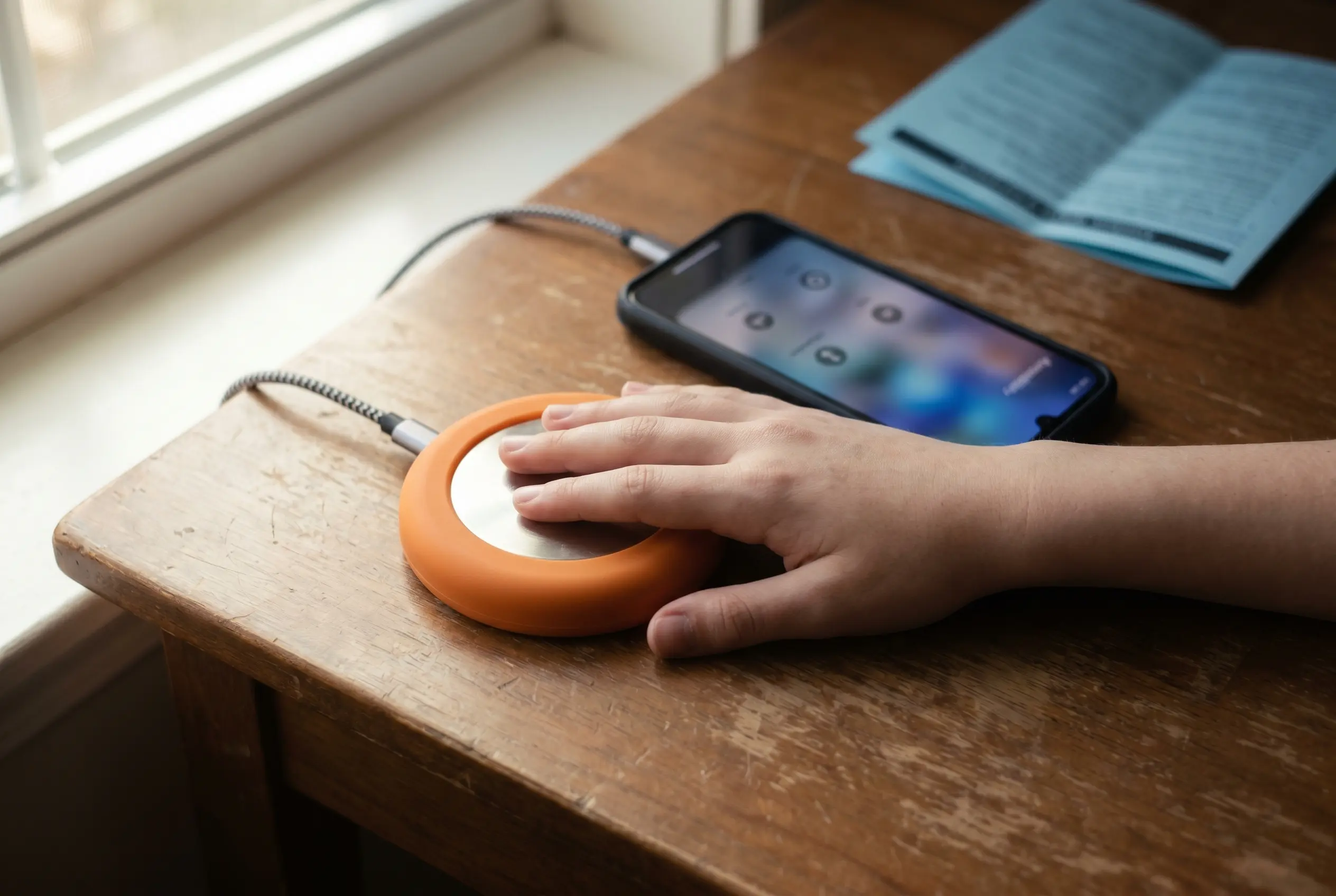
For a physically disabled teenager, a touchscreen smartphone does jobs no single legacy device replaces: a remote control for the lights and television, a voice for users who cannot speak clearly, a friendship layer for the housebound, and the first piece of mainstream consumer tech many have ever used that adapts to them rather than the other way round.
Apple’s Voice Control, VoiceOver and Switch Control, plus Google’s TalkBack and Switch Access on Android, let users with limited movement operate the device with breath, head movement, single-button switches or speech. AbilityNet’s published guidance on accessible smart-speaker setups lists a typical disabled teenager’s phone as covering a dozen daily tasks, from buying groceries to drafting school work to dimming a bedroom lamp.
Strip those features out and the remaining options look thin. The same device the consultation targets as the source of harm is also:
- The communication aid for non-verbal teenagers using augmentative and alternative communication apps
- The smart-home hub controlling lighting, heating, TV input, blinds and door locks through Alexa, Siri or Google Assistant
- The mobility tool that books accessible taxis, plans step-free routes and pays through assistive payment shortcuts
- The medical interface that pairs with insulin pumps, hearing aids and seizure-monitor wearables
- The social space where school friendships carry on through the days a teenager spends in hospital or stuck in bed
Phoebs Lyle, the disability columnist who has been paralysed from the neck down since the age of three, has written that touchscreens were the first piece of mainstream consumer tech she could use independently. Her able-bodied brother and cousins had options. She watched.
Australia Already Ran This Experiment
The Australian eSafety Commissioner began enforcing the under-16 cut-off on 10 December 2025. Within ten weeks, disability groups in Melbourne, Sydney and Brisbane had logged a steady flow of complaints from parents whose autistic and physically disabled children had lost their primary social channel overnight.
None of those groups argue that platforms are safe for disabled minors as currently designed. Their complaint is that the policy treats a disabled 15-year-old’s Instagram account as identical to an able-bodied peer’s, when the cost of removal is not the same.
Autistic Teens Lost Asynchronous Friendship
My online friends were easier because I can communicate in my own time and think about what I want to say. My social media was my main way of socialising and without it I feel like I’ve lost my friends.
Indy, a 14-year-old autistic Australian, told Guardian Australia in February about losing her primary social channel after the rules took effect. Asynchronous text, written at the user’s own pace, removed the pressure of real-time conversation that many autistic teenagers find exhausting in person.
Physically Disabled Teens Lost Their Peer Group
Ezra Sholl, a 15-year-old left paralysed by a nerve condition triggered during treatment for Hodgkin’s lymphoma, told reporters that social media had filled the gap where school sports and casual hang-outs used to be. The Disability Advocacy Resource Unit and Disability Support Guide have separately catalogued similar accounts from teenagers with cerebral palsy, muscular dystrophy and chronic illness, recommending tailored access pathways rather than blanket exclusion.
The pattern visible on the eSafety Commissioner’s age-restriction guidance is the absence of any disability carve-out. The Australian Act applies to every under-16, regardless of how the platform fits into their assistive routine. That is the gap UK charities are trying to close before secondary legislation lands.
The Accessible Alternatives Market Looks Thin
Lyle’s own research for her recent column turned up just three feature phones that combine basic accessibility (large tactile buttons, voice control or built-in screen reader) with the stripped-down feature set a parent might want for a younger teen. The market is dominated by phones aimed at elderly users, not adolescents, and even those vary widely in price and capability.
| Device | Primary access route | Typical price | Designed for |
|---|---|---|---|
| BlindShell Classic 3 | Voice control, tactile keypad, screen reader | £359 | Blind and low-vision users |
| RealSAM Pocket | Voice-first OS, no touchscreen needed | £449 | Severe visual impairment |
| Jitterbug Flip2 (Lively) | Voice commands, large tactile buttons (US only) | $79.99 | Older adults |
| RAZ Memory Cell Phone | Voice and video calls only, low-vision mode | $309 | Seniors with cognitive decline |
Three things jump out of that list. None of these devices target teenagers. None offer the breadth of switch control that mainstream iOS and Android already build in for free. And none include the smart-home integration that turns a phone into a functional limb for a physically disabled user.
Cameras built for disabled photographers are even rarer. A scan of consumer compacts and mirrorless bodies on sale this spring turned up almost none with voice shutter, switch input or an accessible viewfinder a wheelchair user might need. Hobbies that able-bodied teenagers can take up by walking into a shop simply do not exist on the same terms for disabled peers.
What Disability Groups Want Built Alongside Any Ban
Two themes run through the consultation submissions filed by UK disability charities. The first is that a flat age cap with no carve-outs will hit disabled children disproportionately. The second is that the right response is supply-side, not concession-based: government should push device makers and platforms to build accessible alternatives at the same time as it tightens age gates.
The shopping list looks something like this:
- Statutory accessibility standards for the feature-phone handsets manufacturers want to market as the kid-safe alternative, covering switch input, voice control and screen reader support out of the box
- Public funding routes modelled on the United States Federal Communications Commission’s iCanConnect programme, where low-income disabled users receive subsidised accessible devices and training
- Tailored access pathways inside the social media rules themselves, allowing disabled teenagers to retain accounts on the platforms their support networks live on, with stricter privacy defaults rather than account closure
- Consultation requirements that involve disabled young people directly, instead of routing their views through carers, charities or parents
Barnardo’s chief executive Lynn Perry, in the charity’s consultation response on the under-16s proposals, said platforms have failed to protect children but warned against treating connection and risk as a single problem. Children First, the Scottish charity, made a similar point about evidence-led design over blanket prohibitions.
Neither response named disability specifically. Disability-led groups argue that absence is part of the issue: the loudest voices in the consultation room were never the ones who would lose the most if the rules land hard.
Frequently Asked Questions
When Will the UK Under-16s Social Media Ban Take Effect?
No fixed date has been set. The consultation closed on 26 May 2026 and the government has committed to publishing a progress report by the end of July, with regulations to follow within twelve months. Ministers have signalled they want the first rules live before the end of 2026.
Will Disabled Teenagers Be Exempt From the Ban?
Nothing in Part 3 of the Children’s Wellbeing and Schools Act 2026 currently carves out a disability exemption. UK charities have asked for tailored access pathways rather than blanket exemptions, meaning stricter privacy defaults and adult oversight inside retained accounts rather than account closure.
Are There Accessible Alternatives to Smartphones for Disabled Teens?
The market is narrow. BlindShell Classic 3 and RealSAM Pocket are the two best-known feature phones with built-in accessibility, both targeted at blind users. For physically disabled teenagers who rely on switch control or voice navigation, mainstream iOS and Android devices remain the most capable option, which is exactly why advocates are pushing back against a flat prohibition.
Which UK Disability Charities Are Engaged on This Issue?
AbilityNet, Scope, Sense and the National Autistic Society are among the UK organisations on the record about online safety regulation for disabled children. Most have called for accessibility standards to be tightened in parallel with any new restrictions on under-16 accounts.
Does Australia’s Ban Include a Disability Exemption?
No. The Australian Online Safety Amendment (Social Media Minimum Age) Act 2024, in force from 10 December 2025, applies to all under-16s regardless of disability status. The eSafety Commissioner has not published exemption guidance, and disability groups in Australia have called this the central flaw in the law as enforced.
The summer response from Westminster will land somewhere between Australia’s hard line and the carve-outs disability groups want. If the regulations name an accessibility floor for any alternative device a parent is expected to buy, the rules can pass without leaving disabled teenagers stranded. If they do not, the United Kingdom will repeat the Australian experiment, and the same complaints will arrive on the same desks, six months later than they did in Canberra.


D&D Bets Big on WoW and Star Wars to Grow Its Tables

Game Pass Drops Celeste and Crusader Kings on First Net-Loss Day

Gemini Breaks Basic Calls on Foldable Phones in Android Auto

Citadel Clears AI Fund Overhang While Crypto Stays Flat

Morgan Stanley Staking ETPs Crack Open Crypto Yield for Wealth Clients

Snapdragon Price Hike Forces Premium Buyers Toward Last Year’s Phones

Croc 2 Remaster Unlocks Argonaut’s Full Revival Path

Scale AI Names Google Cloud Veteran deSouza CEO for Enterprise Push

Epic Store Hits Brazilian iPhones Amid Apple’s Familiar Friction Play

LORDNINE Helena Server Races Players Toward Real USDT Rewards

Fable 5 and Mythos 5 Return as US Lifts Anthropic Export Controls

SpaceX’s Google Deal Turns a Rocket Company Into a Cloud Landlord

Oracle Cuts 21,000 Jobs in a Year, Cites AI in 10-K Filing

CD Projekt Red Co-CEO: Redemption Arc Isn’t Done, Witcher 4 in 2027

XPL Rallies 30% Ahead of Plasma One Card Tier Launch

DGO App Brings Rs 549 Mobile Pass for FIFA World Cup 2026 in Nepal

Google Search Profiles Build a Follow Graph Inside Discover

Moonshot AI Targets $30 Billion in China’s Fastest AI Funding Sprint

Microsoft Xbox Layoffs Start in July as Sharma Slams 3% Margin

Oppo’s ColorOS 17 Eligibility List Leaves A-Series Buyers Behind
-
 AI1 month ago
Fable 5 and Mythos 5 Return as US Lifts Anthropic Export Controls
-
 AI2 months ago
SpaceX’s Google Deal Turns a Rocket Company Into a Cloud Landlord
-
 AI1 month ago
Oracle Cuts 21,000 Jobs in a Year, Cites AI in 10-K Filing
-
 GAMING1 month ago
CD Projekt Red Co-CEO: Redemption Arc Isn’t Done, Witcher 4 in 2027
-
 CRYPTO2 months ago
XPL Rallies 30% Ahead of Plasma One Card Tier Launch
-
 APPS2 months ago
DGO App Brings Rs 549 Mobile Pass for FIFA World Cup 2026 in Nepal
-
 NEWS2 months ago
Google Search Profiles Build a Follow Graph Inside Discover
-
 AI2 months ago
Moonshot AI Targets $30 Billion in China’s Fastest AI Funding Sprint