
AI
Apple Intelligence Finally Clears China, With Alibaba Running the Filter
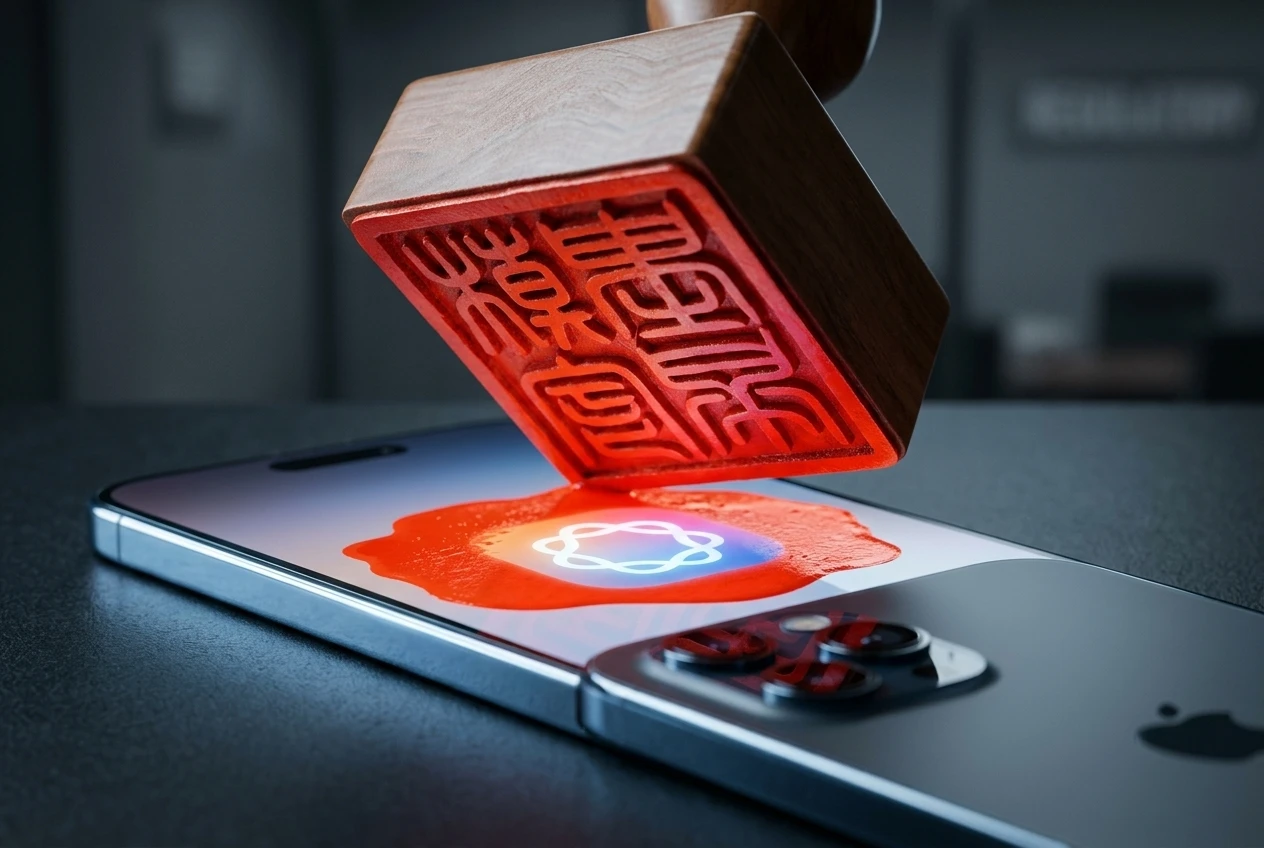
China’s cyberspace regulator approved Apple Intelligence for iPhones, linking it to Alibaba’s Qwen AI model after a two-year regulatory wait.

China’s internet regulator cleared Apple Intelligence for iPhones on Wednesday, ending a wait of nearly two years by pairing Apple’s AI suite with Alibaba’s Qwen model. Baidu is also part of the arrangement, developing additional features for Chinese iPhone users, Reuters reported. No launch date has been set.
The approval came with a catch. Alibaba’s model doubles as a filter on what Apple’s AI is allowed to say inside China, and both new partners already sit on a Pentagon list of Chinese firms tied to the country’s military.
Alibaba’s Qwen Moves Inside Apple’s Operating Systems
The Cyberspace Administration of China, known as the CAC, is the country’s internet watchdog. This week it added Apple’s on-device generative AI service to a list of newly approved providers, alongside six other smartphone-based AI services.
Only two of those seven were foreign brands. Apple Intelligence and Samsung’s Galaxy AI got the green light; the rest went to Huawei, Oppo, Vivo, Xiaomi and ZTE, all domestic vendors.
An Alibaba representative told the South China Morning Post that Qwen would “be integrated into Apple Intelligence experiences within iOS, iPadOS, macOS and visionOS for users in China.” A Baidu spokesperson added, “Apple is also working with Baidu to develop Apple Intelligence features for Chinese iPhone users.”
The deal goes further than plugging in a chatbot. A Bloomberg report from last year described how Alibaba’s system is built to adjust Apple Intelligence’s output for state censors, reviewing and modifying answers before Chinese users see them.
The regulator’s notice gave no launch date for the rollout.
| Smartphone Brand | AI Partner Confirmed | Foreign or Domestic |
|---|---|---|
| Apple | Alibaba’s Qwen, plus Baidu on select features | Foreign |
| Samsung | Galaxy AI (partner not disclosed in the notice) | Foreign |
| Huawei | Not disclosed in the CAC notice | Domestic |
| Xiaomi | Not disclosed in the CAC notice | Domestic |
| Oppo | Not disclosed in the CAC notice | Domestic |
| Vivo | Not disclosed in the CAC notice | Domestic |
| ZTE | Not disclosed in the CAC notice | Domestic |
None of the five domestic winners named an outside AI partner in the notice, a detail that leaves Apple and Samsung as the only two companies on the list relying on outside help to meet Beijing’s rules.
Why Apple Needed This Win Now
China’s smartphone market is shrinking. Total shipments fell 4.3% year over year in the second quarter, to roughly 66 million units, the fifth straight quarterly decline, according to the International Data Corporation (IDC, a technology research firm that tracks the industry).
Apple was one of only two major brands that still grew. iPhone shipments in China climbed 24.4% year over year in the same quarter, pushing Apple’s share of the market to 18.1%, up from 13.9% a year earlier. That put Apple in second place, trailing only Huawei’s 22.6% share, which itself grew 19.4%. Xiaomi’s shipments fell 21.7% over the same stretch.
Not every tracker agrees on the shape of that rebound. Counterpoint Research put Apple’s China sales down 9% year over year in a July 7 report, even while estimating Apple’s share still grew to 18% amid a broader 13% market decline, a gap likely tied to counting shipments versus actual sales.
Apple’s own recent quarterly report put Greater China revenue up 28% year over year to $20.5 billion, and the company recently reclaimed the number two spot in China’s smartphone rankings after discounting the iPhone lineup during a shopping festival.
Rising memory chip prices squeezed Android rivals into raising their own prices this year. Apple and Huawei both held theirs steady instead.
The rebound looks even sharper zoomed out. Apple’s global smartphone share hit a record 21% in the first quarter, up from 19.5% a year earlier, with China an increasingly large part of that climb.
Alibaba’s Shares Jump as US Scrutiny Deepens
Alibaba’s US-listed shares gained about 5% before Wednesday’s opening bell and extended the rally past 6% during the session, once the company confirmed Qwen’s role. Apple shares edged up close to 1% the same day.
The scale of what Apple is plugging into is enormous. Alibaba’s Qwen consumer app had surpassed 295 million monthly active users as of March, according to the company’s own annual filing.
Not everyone is cheering the tie-up. The Pentagon has added Alibaba and Baidu to a list of Chinese companies it links to the country’s military-civil fusion strategy, eWeek reported this week. Apple executives were already fielding questions from Washington well before Beijing’s approval arrived.
Officials from the White House and the House of Representatives contacted Apple in 2025 to ask whether the Alibaba arrangement could give Chinese firms access to user data or advanced AI models.
Apple’s own stock barely reacted to any of it. Shares have been riding a separate rally this year, one that had already pushed the company to a record high amid Wall Street’s AI rotation long before this week’s China news broke.
Apple Tried Baidu, DeepSeek and ByteDance First
Apple first unveiled Apple Intelligence in 2024, promising on-device AI features across iPhone, iPad and Mac. Chinese customers got none of it. Regulatory requirements kept the feature switched off in the country for nearly two years while Apple negotiated a path through Beijing’s approval process.
The road there wasn’t straight. Apple’s earliest serious conversations were with Baidu, but the company reportedly ran into trouble adapting Baidu’s models for Chinese customers. From there, Apple’s search widened before it settled on its final lineup.
- Baidu – Apple’s first real conversation partner, later reduced to a smaller supporting role after technical setbacks
- DeepSeek – evaluated as a potential model provider before Apple moved on
- ByteDance – also considered, according to later reports, before Alibaba emerged as the lead
By February 2025, reports said Alibaba would build the primary system, with Baidu contributing a smaller share, the same structure that ultimately won regulatory approval this week. That timeline lines up with the wider rise of Chinese open-source AI. Export controls squeezing American labs have handed Chinese open-source models a boost well beyond this one deal, and Qwen has been among the biggest beneficiaries of that shift.
Will Apple Intelligence Reach iPads and Macs in China Too?
Not yet, officially. This week’s approval, as published, names iPhones only, leaving China-bound iPads, Macs and Vision Pro headsets without a confirmed AI timeline. Apple hasn’t said whether or when that will change.
- Known: The CAC has registered Apple’s generative AI service for iPhones, and both Alibaba and Baidu have confirmed their roles in building it.
- Known: Regulatory approval typically arrives a few months ahead of an actual launch, which would put a China debut around the same time as iOS 27 this fall.
- Unconfirmed: Whether iPad, Mac and Vision Pro users in China will get Apple Intelligence, since the published license names iPhones only.
- Unconfirmed: The exact division of labor between Alibaba’s and Baidu’s models inside the finished product.
There’s a twist on the other side of this deal, too. Even as Beijing clears Apple to run Qwen at home, Chinese officials are separately weighing whether to restrict foreign access to the country’s most powerful AI models, a debate playing out amid a broader standoff between Washington and Beijing over frontier AI.
a desire to control a technology that is central for national security
Scott Singer, a fellow in the technology and international affairs program at the Carnegie Endowment for International Peace, described that balancing act to Time.
Beijing’s instinct to control access already shows up elsewhere. The country has moved to wall off its top AI models from the rest of the world, even as it hands Apple a domestic exception to use one of them.
Apple’s fall software update is already scheduled. China’s version of Apple Intelligence will ship on Beijing’s timeline, not Cupertino’s, and neither side has said when that will be.
Frequently Asked Questions
What Is Apple Intelligence?
Apple Intelligence is Apple’s generative AI system, first unveiled in 2024, that drafts and summarizes text, edits photos and powers a rebuilt Siri. Heavier requests route through Apple’s own Private Cloud Compute servers rather than a third party, keeping most processing inside Apple’s infrastructure.
Does Apple Intelligence in China Run on ChatGPT or Google Gemini?
No. Outside China, Siri can call OpenAI’s ChatGPT for general knowledge questions, and Apple’s rebuilt assistant arriving with iOS 27 draws on Google’s Gemini. Neither is available in China, so Alibaba’s Qwen and Baidu’s models take over that job for Chinese iPhone owners instead.
Is Apple Intelligence Censored in China?
Yes. A separate report from 9to5Mac said the local build must pass a test refusing to answer at least 95% of 2,000 questions touching sensitive political topics, on top of the content filtering Alibaba already applies to Apple Intelligence’s answers.
Why Did Apple Choose Alibaba Over Baidu, DeepSeek or ByteDance?
One industry newsletter pointed to Alibaba’s vast trove of Chinese consumer data, spanning shopping, payments and everyday behavior, as its edge over rivals for building personalized features. Baidu remained involved too, but in a smaller supporting role inside the finished product.
How Big a Business Is China for Apple’s iPhone?
iPhone sales made up just over 50% of Apple’s total revenue in fiscal 2025, reaching $209.6 billion of $416.2 billion in company-wide sales, according to Apple’s own SEC filings. That scale is why a single regulatory approval in one country can move markets the way this one did.


T-Mobile’s Free iPhone 17 Deal Carries a 24-Month String

Nvidia’s AI Security Alliance Excludes OpenAI, Google and Anthropic

CleanMy®Phone Clears iPhone Clutter and Funds Ukraine’s Defense

Amodei Rejects Open-Weight AI Ban, Pushes Chip and Distillation Curbs

Americans Say China Leads AI While the Money Still Says Otherwise

ONR Bets on AI to Run Research and Multiply Program Officers

TrendAI Appoints Richard Harrison as First Auckland-Based Global VP

Honor’s Robot Phone Launches August 12 as IPO Pressure Builds

The Snapdragon 8s Elite Leak That Foreshadowed Qualcomm’s Chip Split

Ookla’s Manila Study Favors Carrier Calls as Philippines’ 3G Deadline Nears

Fable 5 and Mythos 5 Return as US Lifts Anthropic Export Controls

SpaceX’s Google Deal Turns a Rocket Company Into a Cloud Landlord

CD Projekt Red Co-CEO: Redemption Arc Isn’t Done, Witcher 4 in 2027

Oracle Cuts 21,000 Jobs in a Year, Cites AI in 10-K Filing

XPL Rallies 30% Ahead of Plasma One Card Tier Launch

DGO App Brings Rs 549 Mobile Pass for FIFA World Cup 2026 in Nepal

Google Search Profiles Build a Follow Graph Inside Discover

Moonshot AI Targets $30 Billion in China’s Fastest AI Funding Sprint

Microsoft Xbox Layoffs Start in July as Sharma Slams 3% Margin

Oppo’s ColorOS 17 Eligibility List Leaves A-Series Buyers Behind
-
 AI4 weeks ago
Fable 5 and Mythos 5 Return as US Lifts Anthropic Export Controls
-
 AI2 months ago
SpaceX’s Google Deal Turns a Rocket Company Into a Cloud Landlord
-
 GAMING1 month ago
CD Projekt Red Co-CEO: Redemption Arc Isn’t Done, Witcher 4 in 2027
-
 AI1 month ago
Oracle Cuts 21,000 Jobs in a Year, Cites AI in 10-K Filing
-
 CRYPTO2 months ago
XPL Rallies 30% Ahead of Plasma One Card Tier Launch
-
 APPS2 months ago
DGO App Brings Rs 549 Mobile Pass for FIFA World Cup 2026 in Nepal
-
 NEWS2 months ago
Google Search Profiles Build a Follow Graph Inside Discover
-
 AI2 months ago
Moonshot AI Targets $30 Billion in China’s Fastest AI Funding Sprint