
AI
DeepSeek Takes $7.4 Billion After Years of Refusing Investors
DeepSeek is closing its first external funding round at about $7.4 billion, backed by Tencent and CATL, after two years of taking no outside money.

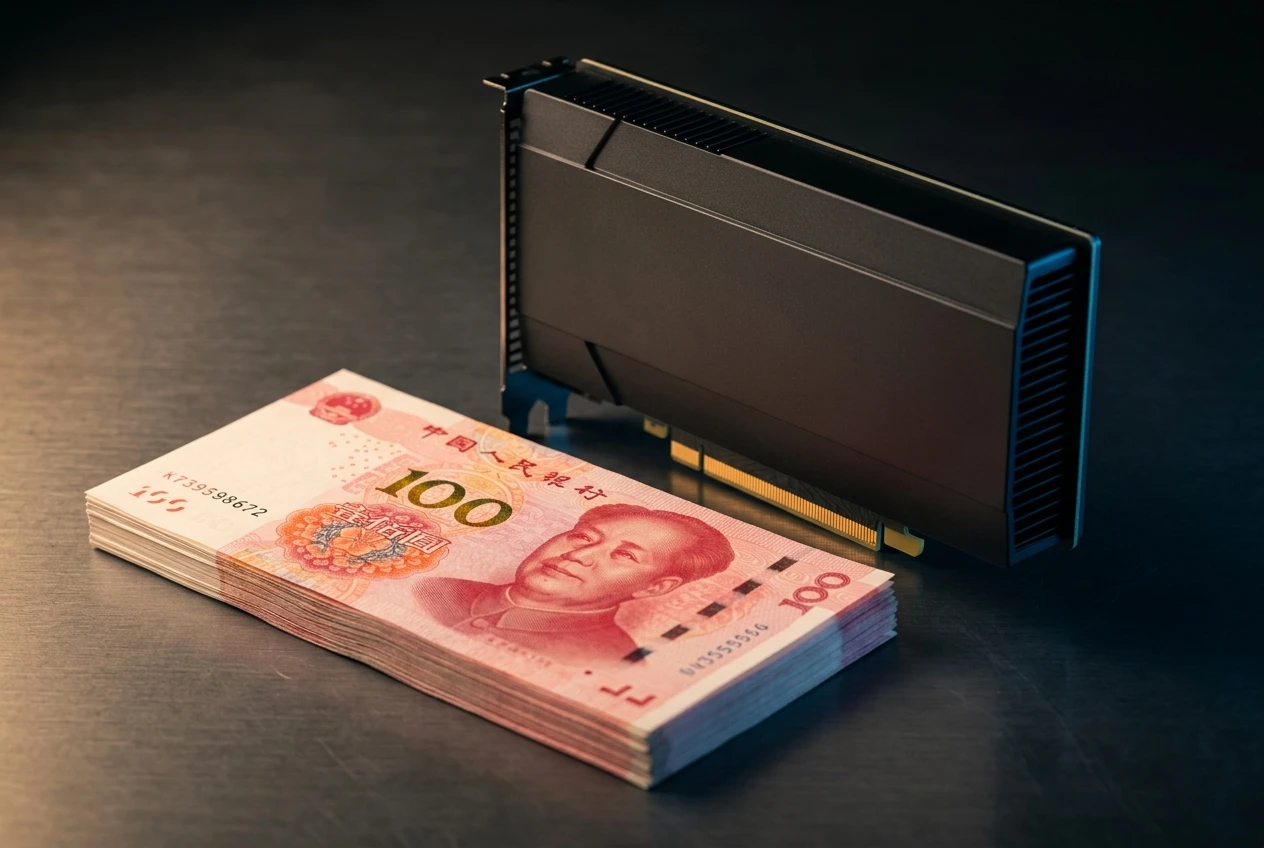
DeepSeek, the Chinese lab that stunned global markets by building a frontier artificial intelligence (AI) model on a shoestring budget, is closing its first external funding round at about $7.4 billion (roughly 50 billion yuan), according to reporting from the news agency Reuters. The deal would value the company at 350 billion to 400 billion yuan, around $52 billion to $59 billion, and rank among the largest debut raises any AI startup has pulled off.
There is a twist worth holding onto. DeepSeek built its reputation on not needing this. It took zero outside capital for two years, its founder kept warning that investors would meddle, and its calling card was a top-tier model trained for under $6 million. This round closes the book on both of those stories.
The Numbers on the Table
The round has been reported in pieces over several weeks, and the figures keep moving. Early talks floated a valuation near $10 billion. The latest reporting puts the post-money figure at $52 billion to $59 billion, a jump that says more about investor appetite than about anything the lab shipped in between.
Founder Liang Wenfeng is reportedly putting in about 20 billion yuan of his own money. Tencent Holdings, the social-media and gaming conglomerate behind WeChat, is weighing roughly 10 billion yuan. CATL, the world’s largest electric-vehicle battery maker, is looking at about 5 billion yuan. Those three commitments alone would cover 70% of the target.
| Investor | Reported commitment | Role in the deal |
|---|---|---|
| Liang Wenfeng (via High-Flyer) | ~20 billion yuan | Insider, keeps control |
| Tencent Holdings | ~10 billion yuan | Strategic tech backer |
| CATL | ~5 billion yuan | Industrial and power play |
| IDG Capital, Monolith Capital | Undisclosed | Financial investors |
| NetEase, JD.com | Undisclosed (reported) | Strategic tech backers |
State-linked semiconductor funds have also been reported among the prospective participants. The breakdown above reflects the figures circulating in source-based reporting, not a final, signed cap table.
The Independence DeepSeek Built Its Brand On
For two years, the answer to who funds DeepSeek was simple: the founder did. Liang Wenfeng owns about 84% of the company, with most of the rest held by people tied to High-Flyer, the quantitative hedge fund he started and used to bankroll the lab’s chips and salaries.
He was not coy about why. He told associates he was in no rush to raise, fearing outsiders would interfere with the lab’s decisions, and he was especially wary of government-linked money. In a 2023 interview, before the company was a household name, he put the real constraint plainly.
Money has never been the problem for us; bans on shipments of advanced chips are the problem.
That line aged into a thesis. The bottleneck was compute, and venture capital (VC, the private money that funds most startups) couldn’t buy chips Washington had blocked from export. So why raise now? Part of the answer is people. Rivals have been poaching DeepSeek researchers, and opening a priced round lets the founder hand employees equity worth something concrete. The rest of the answer is that the compute problem got bigger, not smaller.
The $6 Million Model and the Compute It Can’t Escape
The number that made DeepSeek famous came straight from its own paperwork, and so did the fine print most people skipped.
What the Cheap Number Left Out
The lab’s DeepSeek-V3 technical report states the model took 2.788 million H800 graphics-processing-unit (GPU) hours to train, which at an assumed rental price of $2 per GPU hour works out to about $5.6 million. The H800 is the throttled chip Nvidia designed to comply with US export limits to China.
The report adds a caveat the headlines dropped: that figure covers only the final training run. It excludes prior research, failed experiments, data work and the salaries of the people who did it. Bernstein analysts flagged the same gap, doubting the model was really built for the advertised price.
Why Efficiency Stopped Being Enough
None of that dented the shock. When DeepSeek’s V3 and R1 models went viral in late January 2025, US investors dumped chipmakers on the fear that cheap Chinese AI had broken the spending case for expensive hardware. Nvidia shed about $589 billion in market value in a single session, the largest one-day loss in Wall Street history.
The efficiency story had a ceiling, though. Training one model cheaply is one thing; serving hundreds of millions of users, running the next training cycle, and chasing artificial general intelligence (AGI, software that matches human reasoning across tasks) is another. Doing all of it under chip-export limits takes capital that High-Flyer’s profits could no longer cover on their own.
Why a Battery Giant and a Gaming Empire Want In
The two biggest outside checks come from companies that look nothing alike, and their reasons say a lot about how China is wiring its AI build-out.
CATL’s Bet on Powering the Data Centers
CATL builds batteries, not chatbots, and its interest in DeepSeek runs through the wall socket. AI data centers are straining power grids with enormous peak demand and instability, and the battery maker wants to sell them energy-storage systems and backup power. A stake in a marquee AI lab buys it a seat inside the supply chain it hopes to electrify.
That turns the investment into a route through AI infrastructure, the physical layer of the boom, rather than a bet on model quality alone.
Tencent and the State-Champion Logic
Tencent’s logic is more familiar: cloud capacity to sell, a billion-user distribution network in WeChat, and an interest in keeping a leading domestic model close. Behind both backers sits the state. DeepSeek is increasingly treated as a national technology champion, and reporting has placed China’s state-backed semiconductor funds among the prospective investors.
Put together, the round reads like an attempt to bolt a single domestic stack together: a frontier model, local silicon, cloud distribution and the power infrastructure to run it, all inside borders the US chip controls can’t reach.
A Financing Frenzy Across China’s AI Labs
DeepSeek is not raising in a vacuum. Chinese AI valuations have been climbing across the board through 2026, pushed up by corporate strategics and a wave of state money that is repricing the whole sector at once.
- Moonshot AI, the startup behind the Kimi chatbot, has been reported valued north of $20 billion.
- China’s third national chip fund, the 344 billion yuan semiconductor vehicle known as Big Fund III, is steering state capital toward the silicon and AI plays Washington’s controls target.
- The country’s tech giants have each backed multiple model labs, turning rivals into shared portfolio companies.
The pattern mirrors the West in scale, where the AI boom just delivered a record venture quarter even as older startups without an AI story struggle to raise at all. The difference is who writes the checks. In China, more of the money carries a state fingerprint, and that changes what a private AI champion really is.
What the Money Is Meant to Fix
Strip the symbolism away and the cash has three jobs. The first is talent: it hands DeepSeek’s engineers equity that can compete with poaching offers. The second is compute, a war chest for the chips and inference capacity the lab always said it lacked, at a moment when even AI’s heaviest spenders are recoiling at their soaring compute bills. The third is ambition; Liang Wenfeng has told prospective investors that AGI is the goal, not a tidy commercial product.
What it costs is independence. Tencent, CATL and state funds on the cap table mean DeepSeek now answers, at least in part, to outside capital it spent two years avoiding. The lab gets the resources; its backers get influence over a company Beijing views as strategic.
The round is expected to close within weeks. When it does, the lab that told the world it didn’t need outside money will have taken $7.4 billion of it.


Sony’s 10 Percent Disc Drop Leaves the 2028 Cutoff Intact

Chip Allocation Sidelines the Base iPhone 18 This Fall

Miami-Dade Fights the Vice City Brand It Already Wears

IFA 2026 Awards Put Tecno Ahead of Flagship Phones

USB-C Gadgets Made the Junk Drawer Rechargeable

Pixel 11 Pro Asks $1,099 for a Light Google Locked

The iPhone Ultra Sells Two Retired Minis as One Foldable

Google Opens Gmail to Voice and Gates Docs Live

Lenovo Prices the IdeaPad Vibe Against Apple’s $699 Neo

Xbox Caps Game Pass Cloud Gaming at 15 Hours

Oracle Cuts 21,000 Jobs in a Year, Cites AI in 10-K Filing

Fable 5 and Mythos 5 Return as US Lifts Anthropic Export Controls

SpaceX’s Google Deal Turns a Rocket Company Into a Cloud Landlord

CD Projekt Red Co-CEO: Redemption Arc Isn’t Done, Witcher 4 in 2027

XPL Rallies 30% Ahead of Plasma One Card Tier Launch

Google Search Profiles Build a Follow Graph Inside Discover

DGO App Brings Rs 549 Mobile Pass for FIFA World Cup 2026 in Nepal

Moonshot AI Targets $30 Billion in China’s Fastest AI Funding Sprint

Oppo’s ColorOS 17 Eligibility List Leaves A-Series Buyers Behind

Microsoft Xbox Layoffs Start in July as Sharma Slams 3% Margin
-
 AI3 months ago
Oracle Cuts 21,000 Jobs in a Year, Cites AI in 10-K Filing
-
 AI2 months ago
Fable 5 and Mythos 5 Return as US Lifts Anthropic Export Controls
-
 AI3 months ago
SpaceX’s Google Deal Turns a Rocket Company Into a Cloud Landlord
-
 GAMING3 months ago
CD Projekt Red Co-CEO: Redemption Arc Isn’t Done, Witcher 4 in 2027
-
 CRYPTO3 months ago
XPL Rallies 30% Ahead of Plasma One Card Tier Launch
-
 NEWS3 months ago
Google Search Profiles Build a Follow Graph Inside Discover
-
 APPS3 months ago
DGO App Brings Rs 549 Mobile Pass for FIFA World Cup 2026 in Nepal
-
 AI3 months ago
Moonshot AI Targets $30 Billion in China’s Fastest AI Funding Sprint