Connect with us

AI

Google Adds AI Search Links, Still Hides Click Data

Published

on

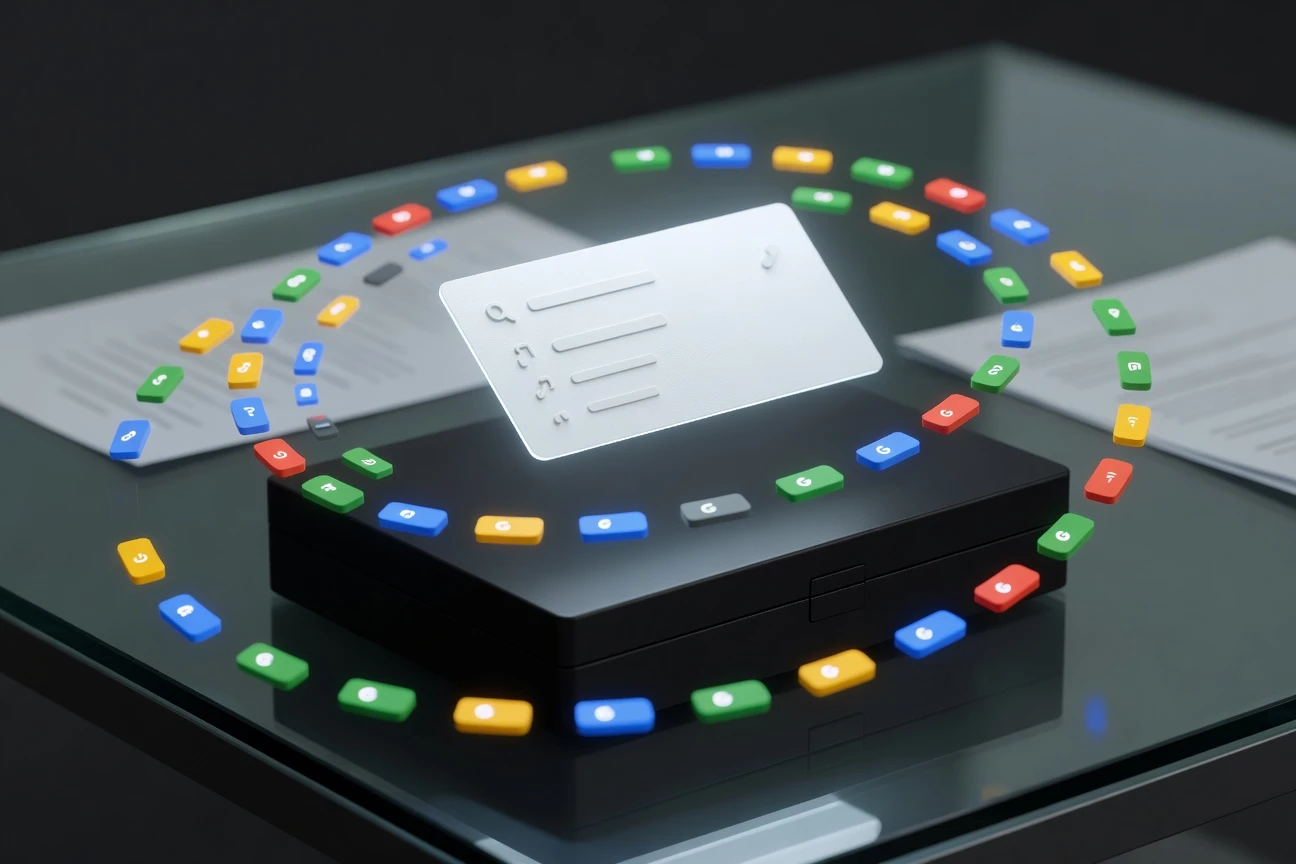
Google AI search links got a visible upgrade in May 2026, with AI short for artificial intelligence, the systems that generate and source answers. The company added inline citations, subscription labels, forum perspectives, desktop previews and a new end-of-answer article module across AI Overviews and AI Mode, while Search Console still folds AI clicks into ordinary Web search reporting.

That makes the update less of a peace offering than a measurement test. Links can help only where the answer leaves enough curiosity to click, and publishers still cannot separate a better link from a lost visit in Google’s own reporting.

Five Link Surfaces, One Reporting Gap

Hema Budaraju, Google vice president of product management for Search, presented the changes in Google’s May product note on AI search links. The package has five new places to click, but none changes the reporting layer that publishers use to prove whether those clicks arrived.

The distinction matters because each surface solves a different user problem. Some reduce friction. Some add context. One favors paying subscribers. The publisher question is narrower: can the site owner see the incremental traffic by feature, query and page?

Feature What the User Sees Publisher Upside Unanswered Measurement Issue
Inline Links Source links placed next to relevant AI response text Less hunting for the cited page No separate click filter by inline placement
Explore New Angles Suggested articles after many AI responses A route for deeper analysis that was not cited in the answer May appear after the query is already satisfied
Subscription Labels Markers on sources a reader already pays for Potential lift for paid publications No public click-rate number from early tests
Perspectives Quotes from discussions, social posts and firsthand sources More visibility for communities and creators The quote itself can replace the visit
Desktop Previews Hover cards showing a site or page title More confidence before a desktop click Limited value for mobile-heavy audiences

Search Console Keeps AI Clicks in the Web Bucket

The hard limit sits in Google’s own documentation. In Google’s AI Search Console guidance for site owners, the company says appearances in AI features are included in overall Search Console traffic and reported inside the Web search type. That gives publishers totals, not a clean split.

Search Console remains the bottleneck because it is the shared ledger for search engine optimization, editorial planning and ad sales. A news site can see that a page gained impressions and lost clicks. It cannot tell from the native report whether an inline citation helped, a generated answer cannibalized the query, or a subscription label lifted paid-reader traffic.

Google also keeps arguing that clicks from AI-enhanced search are higher quality. The company defines that in its documentation as users being more likely to spend time on a site. That is useful if a publisher can connect the click to a session in analytics. It still leaves the first question unanswered: how many AI-surfaced clicks arrived in the first place?

Independent Data Keeps Pressing the Same Point

Outside measurements have filled the vacuum, and they keep pointing in the same direction. Pew Research Center’s Google AI summary study used browsing data from 900 U.S. adults and 68,879 unique Google searches to compare behavior with and without AI summaries.

  • 8% of visits with a Google AI summary led to a traditional search result click, versus 15% without one.
  • 1% of visits with a summary produced a click on a link inside the summary itself.
  • 13.7% was the activation rate in a recent arXiv study of 55,393 trending queries, rising to 64.7% for question-form searches.

The newer academic work adds a second problem beyond traffic. The arXiv study on AI Overview activation and publisher impact found that 11.0% of the atomic claims it checked were unsupported by the cited pages. A link beside a claim does not guarantee that the cited page backs the claim cleanly.

That matters for publishers because the link can become reputational risk without guaranteed traffic. A site may get cited, may not get clicked, and may still be associated with a generated claim that does not match its article.

The best version of Google’s May change would make source proximity more honest and more useful. The unresolved version makes citations more visible while the click counter stays blended.

Subscription Labels Move the Bargain Closer to Google

Subscription labels are the sharpest part of the package for paid publishers. Google says early testing made users significantly more likely to click labeled links, but it did not publish the size of that lift. The company also asks publishers to submit information so it can connect a subscriber’s paid sources to the search experience.

  • Paid news brands get a new way to remind subscribers that they already have access.
  • The label appears inside a Google-controlled AI surface, not inside the publisher’s own product.
  • The publisher must judge the lift without a native feature-level report in Search Console.

That is why the feature feels useful and uncomfortable at the same time. A new Google-controlled label may help a subscriber choose a paid source over a generic answer. It also makes Google part of the paid-reader habit loop that publishers have spent years trying to move back to their own apps, newsletters and homepages.

Regulators Are Asking for Controls

The United Kingdom’s Competition and Markets Authority, the country’s competition regulator, has already moved past link placement. Its January 2026 proposals for Google Search call for publisher controls, fair ranking, choice screens and data portability. The CMA package for Google search services says publishers should get more choice and transparency over how their content is used in AI answers.

That regulatory framing is important. It treats attribution as one piece of a larger bargain, not the full repair. The issue is not only whether a link appears. It is whether a publisher can decline certain AI uses without losing ordinary search visibility, see how ranking works, and measure the effect on traffic.

The European Commission, the executive arm of the European Union, is pushing on a related front through the Digital Markets Act (DMA, the EU rulebook for large online gatekeepers). In the U.S., Penske Media Corporation, publisher of Rolling Stone and The Hollywood Reporter, has challenged Google’s AI search practices in federal court. The pressure is converging on the same gap: choice and transparency need operational controls, not just nicer citations.

Revenue Has Moved Faster Than Measurement

Alphabet’s search business has not shown the pain that publishers describe. In its first quarter Alphabet earnings release, the company reported Google Search and other revenue of $60.399 billion for the quarter ended March 31, 2026, up from $50.702 billion a year earlier. Sundar Pichai, Alphabet and Google chief executive, also said queries reached an all-time high.

Google Network, the ad business that includes ads placed on partner properties, moved the other way in the same table, falling to $6.971 billion from $7.256 billion. That line does not prove AI search caused the decline. It does show why publishers watch the mix closely: search ads can grow while partner-site economics weaken.

Chartbeat, the publisher analytics company, has reported that chatbot referrals remain less than 1% of pageviews across its network, even as ChatGPT and Perplexity traffic grows. That means replacement traffic from AI assistants is still too small for most publishers to offset losses from ordinary search referrals.

If Google creates separate filters for AI Search surfaces, the May link changes become measurable. If it keeps reporting them as Web search, publishers will be left comparing screenshots, rankings and server logs while the most important click counter stays blended.

Logan Pierce is a writer and web publisher with over seven years of experience covering consumer technology. He has published work on independent tech blogs and freelance bylines covering Android devices, privacy focused software, and budget gadgets. Logan founded Oton Technology to publish clear, no nonsense tech news and reviews based on real hands on testing. He has personally tested and reviewed dozens of mid range and budget Android phones, written extensively about app privacy, and built and managed multiple WordPress publications over the past decade. Logan holds a bachelor's degree in English and studied digital marketing at a certificate level.

Continue Reading
Click to comment

Leave a Reply

Your email address will not be published. Required fields are marked *

AI

Claude AI Models Push Investors Past the Chip Trade

Published

on

Claude AI models are moving the artificial intelligence (AI) investment debate from chatbot rankings toward security, finance workflow agents, cloud capacity and the hardware needed to run long tasks at scale, after Anthropic said its restricted Mythos Preview system helped partners find more than ten thousand serious vulnerabilities through Project Glasswing and Gartner raised its AI spending outlook.

Portfolio managers can stop asking whether AI remains a theme and start asking which parts of the stack collect the next dollar. The new evidence points to a wider trade: security teams, market-data owners, cloud platforms, memory suppliers, consulting firms and workflow software all sit closer to the revenue line than they did when the contest centered on raw model scores.

The Claude Signal Is No Longer a Chatbot Benchmark

Model news used to trade like a scoreboard. A lab posted a higher benchmark, investors rewarded the chip names, and software vendors promised to add a smarter assistant. That loop still exists, but the AI trade is broadening as models move from answering questions into doing multi-step work inside codebases, spreadsheets and security programs.

The cleanest public marker is the Claude Opus 4.7 release. The company said the model improved on advanced software engineering, long-running coding tasks, vision and enterprise document analysis, while keeping API pricing at $5 per million input tokens and $25 per million output tokens. Application programming interface (API, the developer gateway that lets software call a model) pricing matters because usage can become a recurring cost line instead of a one-off experiment.

The stronger signal may be the model that most customers cannot use. Mythos Preview remains limited because of its computer security capability. That creates a strange investment setup: the restricted system shows what future frontier models may do, while the released system tests whether guardrails, cloud access and paid workflows can turn that power into revenue without blowing up risk budgets.

The Investment Map Has Four New Columns

The usual AI screen starts with chips, cloud and the model lab. This cycle adds workflow packaging, security response and distribution control. That matters because a portfolio built only around training clusters can miss the companies that profit when AI work becomes audited, scheduled and tied to real data.

Signal From the Latest Cycle Business Asset Likely Public-Market Exposure Weak Point
Long-running coding and document reasoning Developer hours, app modernization and office automation Cloud platforms, developer tools and IT services Review cost and accuracy controls
Restricted cyber model Vulnerability discovery backlog Cybersecurity vendors, cloud security teams and cyber insurers Patch triage capacity
Finance agent templates Packaged analyst workflows Market-data firms, consulting partners and workflow software Audit trails and bad source data
Multi-cloud compute contracts Capacity as distribution Accelerators, memory, networking, power and data centers Utilization risk if demand disappoints

That table is why a new model release can move more than one basket. If the model performs, cloud usage rises. If the model performs in finance, data providers get pulled into the workflow. If it performs in security, the industry inherits a patching problem. Each outcome sends dollars to a different vendor class.

Security Turns From Cost Center to Capacity Problem

In cybersecurity, stronger models create two tradable outcomes at once. They make protection spending more urgent, and they threaten parts of the manual testing market by finding flaws faster than human teams can verify them. Anthropic says the bottleneck in Project Glasswing has shifted from finding bugs to verifying, disclosing and patching them.

  • approximately 50 partners are working with the restricted system through Project Glasswing.
  • 6,202 high or critical estimates were found in open-source projects during the company’s scan, out of 23,019 total vulnerability estimates.
  • 90.6 percent true positive rate was reported among 1,752 assessed findings, with 62.4 percent confirmed as high or critical severity.

The number that should worry security chiefs is smaller: 75 of 530 high or critical disclosed bugs had been patched when the company published the update. That gap is the market. Tools that verify reports, prioritize exposure, route patches and prove remediation become more valuable when discovery volume jumps.

There is a catch. A flood of AI-generated bug reports can bury maintainers and security teams. Investors should be careful with any vendor promising instant protection from model-driven vulnerability discovery. The durable spending may sit with firms that reduce alert noise and document the chain from finding to fix.

Finance Agents Put the Model in Analyst Workflow

The finance release is the clearest product signal for investors because it turns model capability into named jobs. Anthropic introduced finance agent templates for banking and investing work, saying each package combines instructions, governed data connectors and subagents that handle parts of the task such as comparables selection or methodology checks.

The company listed ten ready-to-run finance agents, and said the updates pair best with Opus 4.7, which led Vals AI’s Finance Agent benchmark at 64.37 percent. The agents can run as plugins in Cowork or Code, or as cookbooks for Managed Agents. Claude also works across Excel, PowerPoint and Word, with Outlook listed as coming soon.

  • Pitch builder creates target lists, runs comparables and drafts meeting books.
  • Earnings reviewer reads transcripts and filings, then flags thesis changes.
  • Model builder creates and maintains financial models from filings and data feeds.
  • Valuation reviewer checks methods against comparables and firm standards.
  • Month-end closer runs close checklists, prepares journal entries and produces reports.

For public markets, the important point is distribution. A general chatbot lives in an innovation budget. A finance agent embedded in office software, market data and approval flows can land in operating budgets. That gives data owners and consulting partners a stronger claim on AI spending than a thin wrapper around a model.

Compute Commitments Give the Trade Its Toll Roads

The second-order trade needs power, chips and reserved cloud capacity. The model lab captures attention, but the toll-road assets collect rent whenever users call the model, run agents overnight or send documents through compliance review. That is why the infrastructure numbers attached to this release cycle matter.

Cloud Capacity

The Google and Broadcom compute agreement calls for multiple gigawatts of next-generation Tensor Processing Unit capacity starting in 2027. Tensor Processing Units (TPUs, Google’s custom chips for machine learning work) give the company another route around graphics processing units (GPUs, chips used for parallel AI math) and help explain why the AI trade has spread into custom silicon and networking.

Amazon Web Services (AWS, Amazon’s cloud computing arm) has its own claim. Amazon’s latest infrastructure agreement includes a $5 billion investment now, up to an additional $20 billion tied to commercial milestones, a commitment by Anthropic to spend more than $100 billion on AWS technologies over ten years, and up to 5 gigawatts of capacity.

Hardware and Memory

The macro backdrop supports the same read. Gartner’s May AI spending forecast put worldwide AI spending at $2.59 trillion in 2026, up 47 percent from the prior year, with infrastructure accounting for more than 45 percent of the market. That makes capacity a central part of the investment case, not a back-office detail.

The Public-Market Read

IDC’s AI infrastructure tracker note put 2025 AI infrastructure spending at $318 billion and projected $487 billion in 2026. IDC also flagged power generation, grid capacity, memory scarcity and storage constraints as risks. Those constraints are investable, but they are also where margin surprises can appear if capacity arrives late or costs rise faster than usage.

Public Equities Get a Broader Scorecard

The clean winners are no longer limited to one chip supplier or one cloud provider. Hyperscalers gain when model demand turns into reserved capacity, enterprise access and governance controls. Custom silicon suppliers gain if customers want alternatives to GPU scarcity. Memory and networking suppliers gain when inference demand compounds after each new model generation.

Security vendors face the most mixed setup. Better AI can create more demand for scanning, remediation and identity controls, but it can also expose products that depend on expensive manual review. A company that sells triage, proof and patch workflow may benefit more than one that merely adds AI wording to an old scanner.

Software incumbents have a tougher test. If agents live inside spreadsheets, email, documents and code editors, the owner of the workflow can keep the customer relationship. If the model layer pulls work into a separate interface, some traditional software seats lose daily importance. The market will likely reward firms that own data rights, review steps and approvals because those pieces are hard to replace with a prompt box.

The Risk Is Execution, Not Imagination

The bear case is practical. Models can be powerful and still fail in production if they need too much supervision, produce hard-to-audit work or force companies to redesign approvals before savings show up. Gartner noted that enterprises still favor tactical efficiency projects over disruptive change, which means adoption may arrive as a slow budget migration rather than a sudden rewrite of the office.

That is why finance and security are useful tests. Both areas have money, urgency and repetitive work. Both also punish errors. A wrong vulnerability report wastes scarce engineering hours. A wrong financial model can flow into a client deck, audit file or capital decision.

The investment question is therefore less glamorous than the model demo. Can vendors prove verification and control at scale, while the cloud providers deliver enough capacity at the right cost? The answer will decide whether this phase of AI spending lifts many stocks or only the companies closest to usage and governance.

If agent rollouts keep moving into audited workflows, the AI trade broadens from model labs to the companies that carry, secure and govern the work. If verification costs rise faster than productivity, the same releases will look less like a straight line and more like a capex cycle with a margin test.

Disclaimer: This article is for informational purposes only and does not provide investment advice. AI and technology securities carry market, valuation, execution and regulatory risks. Consult a qualified financial professional before making investment decisions. Figures are accurate as of publication.

Continue Reading

AI

ChatGPT Tip Helped Drive a Georgia Child Abuse Life Sentence

Published

on

The ChatGPT tip in the Corey Hickey case shows how an AI upload can become a child safety report: prosecutors say the tool flagged at least two illegal images, sent a CyberTipline report to the National Center for Missing and Exploited Children, and led Georgia investigators to a phone with more evidence.

On May 21, 2026, a Putnam County jury convicted Hickey, 38, on 31 counts. T. Wright Barksdale III, district attorney for Georgia’s Ocmulgee Judicial Circuit, said the judge imposed two life sentences without parole, three life sentences with parole eligibility and 220 years in prison to run consecutively.

The Tip That Started a Criminal Case

The public record begins with a cyber tip. The Georgia Bureau of Investigation (GBI, the state agency that handled the cybercrime inquiry) said it began investigating Hickey’s online activity in October 2025 after receiving a report from the center about possible production, possession and distribution of child sexual abuse material (CSAM, illegal material depicting child sexual exploitation). The Georgia Bureau of Investigation arrest notice says Hickey was charged with three counts of sexual exploitation of children and booked into the Putnam County Jail.

Prosecutors later said the case widened after agents confirmed the images were taken in Putnam County and seized Hickey’s phone. A forensic review of that device uncovered numerous videos, leading to additional warrants for rape, aggravated assault and child molestation. The original online alert became the doorway to a local evidence case.

The indictment shows the shift. Prosecutors said jurors convicted Hickey on three counts of rape of a child under 10, four counts of aggravated child molestation, three counts of child molestation and 21 counts of sexual exploitation of children. That mix matters because it ties the online upload to alleged in-person abuse, device evidence and a full trial record.

The AI Report Chain Has Four Hands

The technology piece can sound instant: upload, flag, report, arrest. The working chain is slower and more human. The case moved through a four-hand relay involving a company safety system, a national clearinghouse, state investigators and local prosecutors.

The CyberTipline report process at NCMEC says staff review tips and work to find a potential location so reports can be made available to the proper law enforcement agency. That routing function is why the same pipeline can serve a social network, a cloud service, a messaging app or an AI product.

Actor Role in a CyberTip Case Publicly Confirmed in This Case
OpenAI Detects and reports prohibited uploads or requests involving CSAM. Prosecutors said at least two images uploaded to the AI tool were flagged and sent onward.
NCMEC CyberTipline Reviews reports and routes them to the law enforcement agency best placed to respond. GBI said its inquiry began after a CyberTipline report from the center.
GBI CEACC Unit Investigates online child exploitation leads with local partners. GBI said its Child Exploitation and Computer Crimes Unit opened the inquiry and made the arrest.
Ocmulgee Judicial Circuit DA Turns investigative findings into charges and trial proof. Prosecutors said the jury returned guilty verdicts across the full indictment.

That division of labor is easy to miss. The company can detect and report. The center can triage and route. Investigators still need warrants, devices, interviews and forensic work before a prosecutor can ask a jury for a conviction.

The Scale Behind One Tip

One Georgia prosecution landed inside a reporting system that now handles industrial-scale volume. The latest CyberTipline data from NCMEC says the service received 21.3 million reports in 2025, and provider reports included 61.8 million images, videos and other files.

  • 21.3 million reports reached the CyberTipline in 2025.
  • 61.8 million files were attached to electronic service provider reports.
  • 107,817 reports were submitted by OpenAI to the center from July to December 2025, according to OpenAI child safety reporting totals.

The data also shows why generative AI has become a child safety category of its own. NCMEC said 2025 reports included 1.5 million with a generative AI nexus, though it noted that more than 1.1 million came from Amazon AI Services detections tied to potential CSAM inside training datasets and did not include actionable offender or victim information.

That caveat is important. A report can describe a known image, a new upload, a cloud storage hit, an attempted generation or a training-data detection. Law enforcement value depends on what comes with the alert: account details, timestamps, location signals, preserved files and enough context to identify a suspect or protect a child.

Detection Happens Before a Courtroom

The case answers a common tech question in blunt terms: uploads to AI services are subject to safety checks when they involve suspected child exploitation. OpenAI says its rules bar users from exploiting, endangering or sexualizing anyone under 18, and that its systems monitor for child safety violations.

Our Child Safety Team reports all instances of CSAM, including uploads and requests, to NCMEC

That line appears in OpenAI’s child exploitation safety post, which also says the company uses hash matching for known material and Thorn’s CSAM classifier for potentially novel material. Thorn is a child safety technology nonprofit whose tools are used by platforms trying to identify abuse material at scale.

AI-specific abuse adds another layer. The same service can receive an old illegal image, a newly produced file, an attempt to generate abusive content or a request asking the model to describe an uploaded file. Detection has to sort those cases quickly, then hand the highest-risk ones to a human process that can preserve evidence and escalate urgent threats.

Prosecutors Still Needed Local Evidence

A CyberTipline report can start the knock on the door, but prosecutors still have to prove crimes under state law. In Hickey’s case, the proof described by prosecutors moved from the AI upload to physical jurisdiction, a seized phone and a broader digital review.

  • Location: investigators confirmed the images tied to the tip were taken in Putnam County.
  • Device evidence: Hickey’s phone was seized after his arrest and reviewed forensically.
  • Cloud evidence: prosecutors said more than 400 additional images were found on his Google Drive.
  • Charging decision: the case grew from three initial sexual exploitation charges into a 31-count indictment.

Prosecutors said law enforcement found over 4,800 images and videos of child abuse material on the phone. That volume did not replace the jury’s job. It gave prosecutors a body of local evidence that could be tested in court, tied to a device and placed beside the testimony and forensic work needed for conviction.

The Google Drive detail also shows why these cases rarely stay inside one product. A single tip can point to a handset, then to cloud storage, then to accounts, timestamps and other services. For investigators, the first alert is often a map fragment, not the whole map.

The Privacy Trade-Off Sits in the Same File

The safety win carries a privacy tension that deserves plain language. AI companies invite users to upload files, images and videos for help, but some categories of content trigger monitoring, account action and legal reporting. The boundary is drawn around suspected harm, yet the mechanism still depends on scanning user-provided material.

The company’s U.S. privacy policy for uploaded content says user content can include prompts and uploaded files, images, audio and video. It also says personal data may be used to comply with legal obligations and protect the rights, privacy, safety or property of users, the company or third parties.

That is the bargain every large platform now has to defend. Weak detection leaves children exposed and lets offenders use mainstream services as cover. Overbroad systems can create false alarms, chill lawful use and put sensitive material in front of reviewers. The hard standard is not just catching more. It is catching better, with secure handling, clear escalation and records a court can understand.

The Alert Is Only the First Rescue

The deepest fact in the Georgia case is that an online report surfaced alleged offline abuse. Prosecutors said the victim was a 7-year-old child known to Hickey, and the uploads gave investigators a path into a case that was larger than the two images that triggered the alert.

NCMEC says its staff review tips, seek a potential location and make reports available to appropriate law enforcement. The GBI said its inquiry was part of the Internet Crimes Against Children (ICAC, a U.S. Department of Justice-backed task force program) effort housed with the state agency’s child exploitation unit. In practice, that means child safety work moves across company systems, nonprofit analysts, state investigators and county courtrooms.

For readers who suspect online child exploitation, the practical route remains direct reporting through the CyberTipline or local law enforcement rather than confronting a suspect or circulating material. The Georgia case shows why: the evidence has to be preserved, routed and handled by people trained to protect both the child and the case.

A model can refuse an upload in milliseconds, but the child is protected only when the report reaches someone with a badge.

Continue Reading

AI

Apple Turns Accessibility AI Into an Operating System Test

Published

on

Apple accessibility AI updates in Apple’s May 19 accessibility preview bring artificial intelligence (AI, software that performs tasks linked to human judgment) into VoiceOver, Magnifier, Voice Control and Accessibility Reader, add generated subtitles across five device families, and let Apple Vision Pro users control compatible power wheelchairs with eye tracking later this year.

Placement carries the story. The new tools sit inside the operating system (OS, the core software that runs a device), touching reading, voice input, captions and mobility controls. That turns a feature announcement into a test of device support, safety rules, privacy claims and the way app makers label their own interfaces.

The AI Moves From Description to Control

The market is large before the first beta lands. The World Health Organization says 1.3 billion people experience significant disability, equal to 16% of the world’s population, which makes accessibility a mainstream computing problem. Cupertino is addressing that scale through features people already know, not a separate store of assistive apps.

The announcement touches vision, hearing, mobility and reading at once. VoiceOver and Magnifier get richer visual descriptions. Voice Control gets natural language commands. Accessibility Reader adds summaries, translation and support for complex layouts. Generated subtitles fill some caption gaps on personal videos, shared clips and online streams.

  • May 19: The company previewed the feature set ahead of its software releases later this year.
  • 5 device families: Generated subtitles are planned for iPhone, iPad, Mac, Apple TV and Apple Vision Pro.
  • 4 core tools: VoiceOver, Magnifier, Voice Control and Accessibility Reader are the main AI targets.
  • 2 drive systems: Tolt and LUCI are the first wheelchair partners in the U.S.

That makes OS-level assistance the useful phrase. If a photo lacks alt text, a video lacks captions or an app uses vague buttons, the system tries to supply context at the moment of use. Users get faster help, while product teams lose another excuse for shipping unlabeled controls.

VoiceOver Gets a Conversation Layer

VoiceOver’s Image Explorer is the clearest example of the shift. The screen reader will describe photos, scanned bills, personal records and other visual material in more detail, then let users ask follow-up questions through Live Recognition. Magnifier gets a similar visual question layer in a high-contrast interface, plus spoken commands such as zooming or turning on the flashlight.

Feature User Task New Layer Stated Constraint
VoiceOver Image Explorer Understand images and documents Detailed descriptions and follow-up questions Not for high-risk use
Magnifier Explore physical surroundings Visual descriptions in a high-contrast view Not for navigation or diagnosis
Voice Control Operate iPhone and iPad by voice Commands based on visible controls English in four countries at launch
Generated Subtitles Follow uncaptioned videos On-device speech recognition English in the U.S. and Canada
Accessibility Reader Read complex material Summaries, translation and layout handling Feature support will vary
Vision Pro Wheelchair Control Drive compatible power wheelchairs Eye-tracking input Initial support for Tolt and LUCI

Availability narrows the promise. Apple’s Apple Intelligence device requirements include supported hardware, matching device and Siri languages, and 7 GB of storage on iPhone, iPad or Mac. A useful access feature can still miss the person who owns the wrong device, uses the wrong language or needs it outside the first markets.

Wheelchair Control Raises the Stakes

Wheelchair control is the feature that gives the announcement its sharpest edge. For some power wheelchair users, a joystick is not workable. Alternative drive controls can be the difference between waiting for help and moving independently, so adding eye input to a headset turns Vision Pro from a display device into part of a mobility system.

The option to control my power wheelchair on my own is gold to me

Pat Dolan, founder of GeoALS and a member of Team Gleason’s patient advisory board, said that in Apple’s announcement. He has lived with amyotrophic lateral sclerosis (ALS, a progressive nervous system disease) for 10 years. The quote carries more force than a stage demo because the use case is daily independence, not novelty.

The safety ceiling matters. Apple’s Vision Pro safety guidance says the headset should be used in controlled environments, away from roadways and moving hazards, and that it is not intended for use where device failure could lead to death or personal injury. For wheelchair input, that language will shape where early users, caregivers, clinicians and vendors are comfortable testing the system.

Privacy Claims Meet Availability Limits

Privacy is central because accessibility data can be deeply personal. A visual assistant may see a medical letter, a banking notice, a bedroom, a wheelchair route or a family video. Apple’s privacy page for Apple Intelligence says many requests are handled on device, while heavier requests can use Private Cloud Compute, Apple’s server system designed to process requests without storing them or making them available to the company.

That claim has practical importance for people who cannot treat visual context as disposable data. The same tension showed up in Oton Technology’s camera AirPods privacy fight, where giving Siri more visual awareness raised a simple question: who gets to see the world through a device worn on the body?

Privacy design does not erase support gaps. Apple’s footnotes say Voice Control powered by the AI layer will start in English in the U.S., Canada, the UK and Australia, while generated subtitles will start in English in the U.S. and Canada. That is a reasonable rollout path for a complex speech feature, but it also means access arrives unevenly.

The customer backdrop is not friction-free. Oton’s recent look at the smartphone satisfaction AI gap showed AI already affects how phone buyers judge value, even before many users can name which features help them day to day. Accessibility gives the AI story a concrete use case, with a harsher pass-fail test than photo edits or inbox summaries.

Rivals Are Chasing the Same Assistive Layer

Apple enters a contest already underway. Google, Microsoft and specialist assistive apps have spent the past few years pushing computer vision into screen readers and camera tools. The difference in Apple’s update is the breadth of the control surface, from subtitles to wheelchair input, under one hardware and software stack.

  • Google: Android’s TalkBack can use generative AI image descriptions, and Google says selected images are processed and then deleted. Its own help page warns that generative AI is experimental and may be inaccurate.
  • Microsoft: Windows Narrator supports rich image descriptions for images, charts, graphs, diagrams and unlabeled buttons, while Microsoft warns against relying on them for medical, legal or financial images.
  • Apple: The new package links visual descriptions to spoken commands, captions, reading tools and headset input, giving it a wider device footprint if the launch quality holds.

Google’s own AI push gives the comparison a useful backdrop. Oton’s preview of the Android and Gemini developer agenda showed how aggressively assistant features are being threaded into mobile software. Accessibility is no longer a side benefit of that race. It has become one of the clearest reasons to put AI in the OS.

Developers Inherit the Accessibility Bill

The most important audience may be app makers. Apple says Voice Control’s new option can help when elements are not properly labeled for accessibility, because a user can describe what they see on screen. That is useful backup. It should also embarrass teams whose buttons, icons and menus still require the OS to guess what a control means.

Regulators are pushing in the same direction. The European Commission says the European Accessibility Act covers computers, operating systems and smartphones, along with services such as banking, e-commerce and passenger transport. For global software companies, accessibility now sits closer to product compliance than brand virtue.

That shift is already visible in smaller release notes. ExpressVPN’s recent desktop update, covered by Oton in its screen reader and keyboard navigation push, treated accessibility as a shipping feature across Mac, Windows and Linux. Apple’s announcement raises that bar for every app that depends on iPhone, iPad or Mac users who do not interact by touch alone.

Trust Will Decide the First Wave

The hardest part is not whether an AI model can describe a bill or a room. The harder question is whether a blind or low-vision user can tell when the description is wrong. A CHI research paper on AI-powered scene description apps for blind and low-vision users found average satisfaction of 2.76 out of 5 and average trust of 2.43 out of 4 in a two-week diary study with 16 participants.

Those numbers do not kill the case for AI accessibility. They make the product challenge plain. Descriptions need confidence cues, easy ways to ask follow-up questions, a path to human help when stakes rise and clear warnings when the system is guessing. Apple has some of that structure through conversational follow-ups and on-device privacy design. It now has to prove the outputs are good enough for repeated use.

The first wave will succeed if users treat the tools as dependable helpers rather than impressive demos. If the descriptions are careful, the captions timely and the wheelchair controls conservative by design, Apple’s accessibility push could become the most practical use of consumer AI on its devices so far. If those pieces wobble, the same features will remind everyone that access technology earns trust one ordinary day at a time.

Continue Reading

Trending