
NEWS
Moto G Max Puts Three-Day Battery Ahead of Specs Race
Motorola’s Moto G Max lands August 14 in India with a 7000mAh silicon-carbon battery, Snapdragon 6s Gen 4 and headphone jack as the quiet endurance play.

The Moto G Max reaches India on August 14 at 12pm with a 6.72-inch FHD+ 120Hz display, Snapdragon 6s Gen 4 chipset, 50-megapixel Sony LYTIA 600 camera and a 7,000mAh silicon-carbon battery claimed to last up to three days. Flipkart and Motorola have already posted the full colour lineup and core hardware.
Price remains unconfirmed, though earlier tips placed it near Rs 30,000. The India model diverges sharply from the global version that launched in June.
India Specs Pull Away From the Global Model
Global units used a MediaTek Dimensity 6400, a 5,200mAh pack and a 200-megapixel main sensor. The Indian Moto G Max swaps that for Qualcomm’s Snapdragon 6s Gen 4, LPDDR5X RAM, UFS 3.1 storage and the larger silicon-carbon cell. Motorola also lists up to 18GB of RAM Boost.
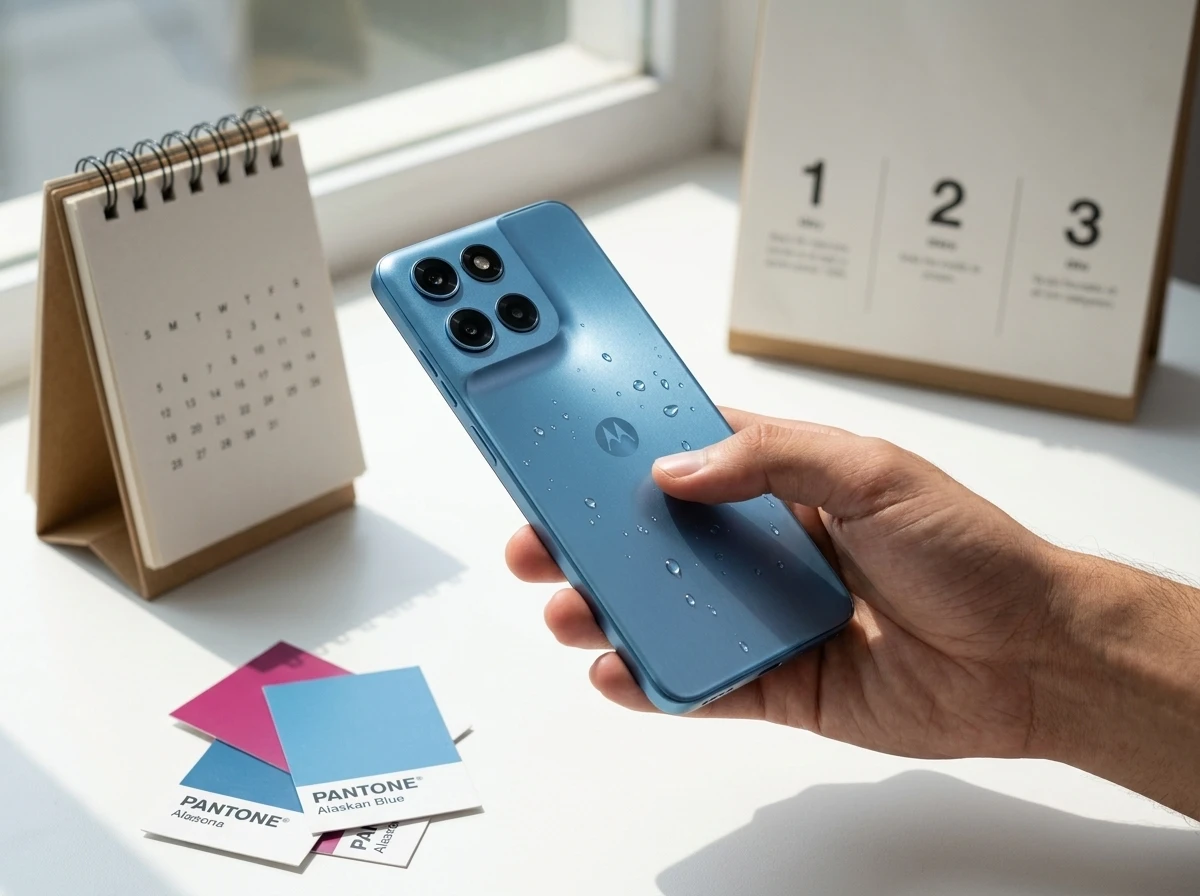
The display is a 6.72-inch FHD+ LCD panel running at 120Hz with peak HBM brightness of 1,050 nits and Water Touch 2.0 for wet-finger input. Colours are Pantone-curated: Stargazer, Malaga and Alaskan Blue, all in a satin finish with a flat frame.
| Feature | Detail |
|---|---|
| Display | 6.72-inch FHD+ 120Hz, 1,050 nits HBM, Water Touch 2.0 |
| Chipset | Snapdragon 6s Gen 4, LPDDR5X, UFS 3.1 |
| Rear cameras | 50MP Sony LYTIA 600 + 8MP ultrawide |
| Front camera | 32MP |
| Battery | 7,000mAh silicon-carbon, up to 1,000 cycles, claimed 3-day life |
| Software | Android 16, 2 OS upgrades, 3 years security |
| Audio and ports | Stereo Dolby Atmos, 3.5mm jack |
| Build | IP64, MIL-STD-810H, Gorilla Glass 7i / Ceramic |
The full hardware rundown sits on the official Moto G Max product page and the Flipkart landing page that first confirmed the date.
Why a 7000mAh Silicon-Carbon Pack Lands Now
Motorola has spent the last year stuffing silicon-carbon cells into its Power-branded G phones. The G57 Power and G77 Power already carried 7,000mAh packs that promise multi-day use while keeping the chassis relatively slim. The Max continues that line at a higher price tier.
Silicon-carbon chemistry packs more energy into the same volume than traditional lithium-ion and supports higher cycle counts. Motorola rates this cell for 1,000 full charges while still claiming three days of mixed use. That combination appears on a growing list of silicon-carbon battery phones in India, many of them from Motorola itself.
Buyers who keep phones for three or four years notice the difference when the battery still holds useful capacity. The same cell also lets Motorola retain a 3.5mm jack and stereo speakers without turning the phone into a brick.
Meet the moto g max where premium PANTONE design meets a 50MP Sony LYTIA 600 camera, Snapdragon 6s Gen 4 performance and a massive 7000mAh battery. moto g max launching 14th August on Flipkart, motorola.in and leading retail stores.
That line comes straight from the Motorola India launch announcement post that first put the date and key hardware in public view.
How the Chipset and Cameras Stack
Independent tests of the Snapdragon 6s Gen 4 on a similar Moto G57 put AnTuTu near 806,000 points, roughly 30 percent ahead of the older 6s Gen 3. Multi-core Geekbench lands around 2,876. The GPU (Adreno 710) improves graphics scores by nearly half versus the prior generation, enough for smoother 120Hz gaming and everyday multitasking.
- AnTuTu total: approximately 805,947
- Geekbench multi-core: 2,876
- Process: 4nm with 4× Cortex-A78 performance cores
- Memory support: LPDDR5X and UFS 3.1
The main camera is a 50-megapixel Sony LYTIA 600 sensor, often with OIS in this generation, paired with an 8-megapixel ultrawide. The 32-megapixel front camera handles selfies and video calls. This is a clear step down in megapixel count from the global 200MP model, yet the LYTIA sensor typically delivers cleaner day-to-day shots and better low-light results than raw resolution numbers suggest.
Charging is expected around 30W TurboPower based on related Power models; final confirmation arrives at launch.
Durability Features Buyers Use
IP64 dust and water resistance, MIL-STD-810H military certification and Gorilla Glass 7i (or Ceramic in some listings) cover the usual drop, dust and splash scenarios. Water Touch 2.0 keeps the screen responsive when wet, a practical detail in monsoon months.
The 3.5mm headphone jack survives here while many rivals drop it. Stereo speakers with Dolby Atmos round out the media side. These are the features that keep a midrange phone useful for years rather than impressing on a launch-day unboxing.
- IP64 + MIL-STD-810H for everyday abuse
- 3.5mm jack + Dolby Atmos stereo for wired audio
- Water Touch 2.0 for wet-screen reliability
- 1,000-cycle battery rating for long-term health
Together they form a package aimed at users who want one phone to last through heavy daily use without constant charging or case upgrades.
Where It Sits Against Recent Rivals
The midrange endurance race is crowded. Xiaomi’s Redmi Note 17 8000mAh battery approach pushes capacity even higher. OnePlus returned a jack on the OnePlus N6x bringing back the headphone jack with its own 7,000mAh cell. Vivo’s T5e series also leans into battery life over raw memory in some configurations.
| Phone | Battery | Key Extra | Approx Price Band |
|---|---|---|---|
| Moto G Max | 7,000mAh SiC | Jack, IP64, MIL-STD, LYTIA 600 | ~Rs 25-30k expected |
| Redmi Note 17 | 8,000mAh | Larger capacity, higher charging | Similar midrange |
| OnePlus N6x | 7,000mAh | Headphone jack retained | Lower midrange |
Motorola’s edge is the combination of silicon-carbon longevity rating, Pantone finish, Water Touch and military certification at the same time. Pure capacity kings exist, but fewer phones pack the full durable-media set.
Software Limits and the Trade Motorola Accepts
Android 16 ships out of the box. Motorola promises only two major OS upgrades and three years of security patches. That is the floor many midrange brands now meet, yet it lags the four or five years some Chinese rivals advertise.
Crowd reaction on X already flags familiar Moto software gripes: occasional UI bloat and the short support window. The hardware endurance story therefore carries a quiet trade-off. Buyers who prioritise battery health and physical features over five years of updates will find the Max attractive. Those who want longer OS support may look elsewhere even if the battery lasts longer in daily use.
Smart Connect multi-device features and basic AI photo tools round out the software side. Final pricing and exact RAM/storage SKUs will decide how competitive the package feels on launch day.
The Moto G Max arrives as the clearest recent expression of Motorola’s India strategy: big durable batteries, useful ports and rugged certs first, peak camera or update numbers second. Whether that bet pays off becomes clear once the Rs 30,000 question is answered on August 14.


South Korea Retail Investors Face Reckoning After KOSPI AI Rally Collapses

Surrey AI Maps Three Heart Attack Paths and Their Molecular Roots

Germany Locks Neutral Apple ATT Prompts Across Most of Europe

Apple’s 5% EU Fee Quietly Rewrites Alternative App Store Math

Apple’s EU Fee Truce Cuts Complexity but Leaves Rivals Fuming

Pixel 11 Pro Fold Trades Thinness for Durability and Seven-Year Stay

Mayo AI Flags HCM Obstruction From Everyday Ultrasound Videos

Indian Brands Quietly Scale Landmark Screens and Home Tech

Navin Vatsa Turns Grief Into a Lifetime of Quiet Seeing

Google Bets Pixel 11 Agentic AI Will Redefine Phones

Oracle Cuts 21,000 Jobs in a Year, Cites AI in 10-K Filing

Fable 5 and Mythos 5 Return as US Lifts Anthropic Export Controls

SpaceX’s Google Deal Turns a Rocket Company Into a Cloud Landlord

CD Projekt Red Co-CEO: Redemption Arc Isn’t Done, Witcher 4 in 2027

XPL Rallies 30% Ahead of Plasma One Card Tier Launch

Google Search Profiles Build a Follow Graph Inside Discover

DGO App Brings Rs 549 Mobile Pass for FIFA World Cup 2026 in Nepal

Moonshot AI Targets $30 Billion in China’s Fastest AI Funding Sprint

Oppo’s ColorOS 17 Eligibility List Leaves A-Series Buyers Behind

Microsoft Xbox Layoffs Start in July as Sharma Slams 3% Margin
-
 AI2 months ago
Oracle Cuts 21,000 Jobs in a Year, Cites AI in 10-K Filing
-
 AI2 months ago
Fable 5 and Mythos 5 Return as US Lifts Anthropic Export Controls
-
 AI3 months ago
SpaceX’s Google Deal Turns a Rocket Company Into a Cloud Landlord
-
 GAMING2 months ago
CD Projekt Red Co-CEO: Redemption Arc Isn’t Done, Witcher 4 in 2027
-
 CRYPTO3 months ago
XPL Rallies 30% Ahead of Plasma One Card Tier Launch
-
 NEWS3 months ago
Google Search Profiles Build a Follow Graph Inside Discover
-
 APPS3 months ago
DGO App Brings Rs 549 Mobile Pass for FIFA World Cup 2026 in Nepal
-
 AI3 months ago
Moonshot AI Targets $30 Billion in China’s Fastest AI Funding Sprint