
COMPUTERS
Surface Laptop Ultra Revives the Arm Bet That Cost Microsoft $900M

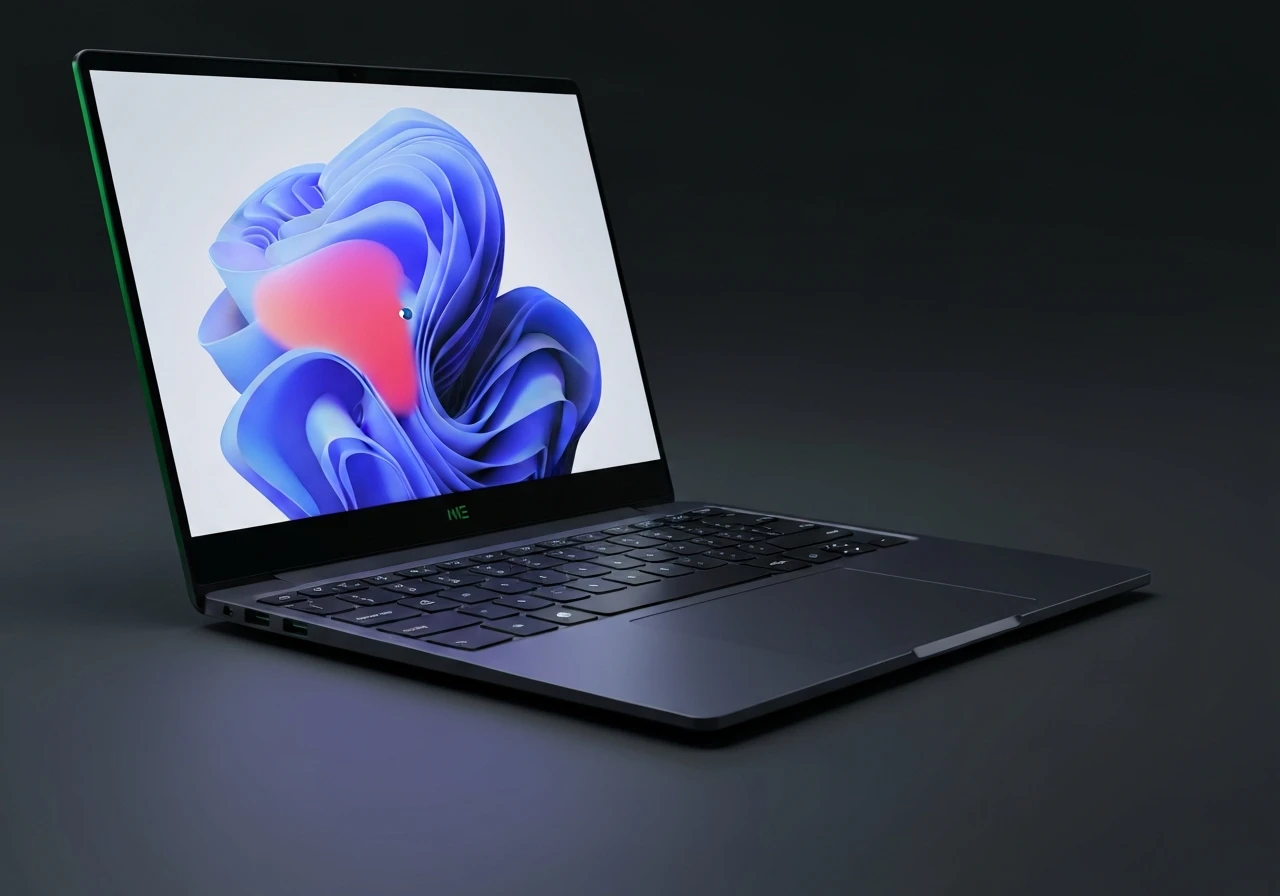
Microsoft took a $900 million write-down in 2013 on an Arm-based tablet built around an Nvidia chip. On May 31, 2026, the company unveiled the Surface Laptop Ultra, a 15-inch Arm laptop built around a new Nvidia chip, and called it the most powerful Surface it has ever shipped.
The hardware sounds nothing like the 2012 flop. What sank that first machine had almost nothing to do with hardware, and that is the part worth watching this time.
The Bet Microsoft Already Lost Once
Back in October 2012, Microsoft launched the original Surface alongside Windows 8. It ran Windows RT, a version of the operating system rebuilt for Arm processors, and it used Nvidia’s Tegra 3 chip. On paper it was thin, quiet and modern. In practice it could not run the enormous library of x86 desktop software that people actually bought Windows machines to use.
Developers were asked to rebuild their apps for an unproven platform, and most of them simply did not show up. A locked, signed-apps-only store made the shortage worse. Buyers who expected real Windows got a tablet that looked like Windows but behaved like something else.
The bill arrived nine months later. Microsoft disclosed the $900 million inventory charge in its fiscal 2013 results, tied to unsold Surface RT units. The company later acknowledged that Surface RT and Surface Pro combined had generated only about $853 million in revenue by that point. Nearly a billion dollars of stock had to be marked down because the apps never came.
That is the ghost sitting next to the new machine. Same chip vendor. Same processor architecture. Same promise that this Arm device is the future of Windows.
How the New Machine Stacks Against the Old One
The two products are separated by fourteen years and an enormous gap in ambition. Putting them side by side shows how much the spec sheet has changed, and how little the underlying wager has.
| Attribute | Surface RT (2012) | Surface Laptop Ultra (2026) |
|---|---|---|
| Chip | Nvidia Tegra 3, 4 Arm cores | Nvidia RTX Spark, up to 20 Arm cores |
| Memory | 2GB RAM | Up to 128GB unified memory |
| Operating system | Windows RT, no x86 desktop apps | Windows 11 on Arm, with Prism emulation |
| Display | 10.6-inch, 1366 by 768 | 15-inch mini-LED, 262 ppi, 2,000 nits |
| Positioning | Mass-market tablet | High-end workstation laptop |
| Outcome | $900 million write-down | Price and ship date still unannounced |
The shape of the bet is identical. The difference is that Microsoft now controls a software stack that did not exist in 2012, and Nvidia is bringing far more silicon to the table than a tablet chip.
What the RTX Spark Silicon Brings
The heart of the laptop is Nvidia’s RTX Spark, which the company is calling a superchip. It is roughly the same processor already sold inside Nvidia’s DGX Spark mini-PC for AI developers, now tuned to run Windows 11 instead of a Linux developer stack.
From DGX Spark to a Windows Chip
The DGX Spark version is built on the GB10 Grace Blackwell design, pairing 20 Arm CPU cores with a Blackwell graphics die carrying 6,144 cores and 128GB of shared memory. Nvidia rates that hardware at up to 1 petaflop of AI compute at FP4 (4-bit floating point, a low-precision format used to speed up AI math). Crucially for its target buyer, the full CUDA stack (Compute Unified Device Architecture, Nvidia’s parallel-computing platform) runs natively, so a developer can fine-tune and run models locally rather than renting cloud time.
Nvidia is building its own Arm-based processors across its lineup now, a push that runs from desktops all the way into the data center, where its Nvidia Vera CPU aimed at the x86 server moat uses the same custom-core strategy. The RTX Spark family will eventually stretch across a range of prices, and some Surface configurations will ship with as little as 16GB of memory rather than the headline 128GB.
A Mobile RTX 5070, More or Less
For graphics, Nvidia positions the chip in roughly the same class as a mobile GeForce RTX 5070, while drawing far less power. That is what lets Microsoft promise the usual all-day battery life alongside genuine GPU horsepower. Here is how the silicon stacks up against its predecessor’s tablet processor:
- 1 petaflop of AI compute, versus a Tegra 3 that had no dedicated AI hardware at all
- 128GB of unified memory at the top end, against 2GB in the 2012 machine
- 6,144 Blackwell graphics cores, the same count as a desktop-class RTX 5070
- 120 billion parameters, the size of model Microsoft says the laptop can run locally
Andrew Hill, Microsoft’s Surface chief, did not undersell it when asked how the laptop ranks against everything the team has built.
This is the most powerful thing we’ve ever made.
That was Hill’s reply during press briefings around the reveal. The numbers back the claim. Whether buyers care is a separate question, and it depends almost entirely on software.
The Display, Trackpad and Ports
Above the silicon sits a 15-inch mini-LED PixelSense Ultra touchscreen at 262 pixels per inch. Microsoft says it peaks at 2,000 nits of HDR (high dynamic range) brightness, which the company calls the brightest display it has ever shipped on a Surface. The laptop also gets what Microsoft says is the largest haptic trackpad it has put on any Surface device.
Connectivity is generous by Surface standards, which have historically been stingy. The port list covers USB-C, USB-A, HDMI, a full-size SD card slot and a headphone jack, with what looks like three USB-C ports in the published images. Microsoft has not confirmed the speeds or versions of any of those connectors yet.
The machine comes in dark grey and silver, badged Nightfall and Platinum, and weighs under 4.5 pounds. Microsoft’s own announcement leans hard on mood over detail, with lines like “No walls. No compromises.” and “A machine like this should not sit still.” You can read the full pitch in Microsoft’s Surface Laptop Ultra announcement, which is long on adjectives and short on numbers.
Why the App Gap Looks Different This Time
This is the section that decides whether history repeats. In 2012, the app gap was fatal. In 2026, it is a manageable problem rather than a wall.
What Prism and Native Apps Cover Now
Microsoft’s emulation layer, Prism, has grown up. A recent update added translation for x86 instruction extensions including AVX and AVX2 (Advanced Vector Extensions, the math instructions many modern apps assume exist), plus related sets like BMI, FMA and F16C. That single change let apps such as Ableton Live install and run after years of failing outright. The detail is laid out in Microsoft’s Prism emulation update for Windows on Arm, and the mechanics are documented in the Windows on Arm x86 emulation guide.
The bigger shift is native code. By Microsoft’s own count, more than 93% of the apps people spend their time in now run natively on Windows on Arm, and native versions account for around 90% of total user minutes. The foundational tools, from Adobe’s creative suite to Blackmagic’s editing software, are no longer holdouts. The list of changes that separate 2026 from 2012 is short but decisive:
- Prism now emulates the modern instruction sets that used to break x86 installers
- The vast majority of mainstream apps ship in native Arm builds
- Nvidia says it is working with every major anti-cheat provider to clear popular games
- CUDA runs natively, giving the chip a developer audience the Tegra tablet never had
Where the Cracks Remain
It is not solved. Anti-cheat software remains the stubbornest barrier because it often sits close to the kernel, where translation layers struggle. That is the same problem that kept Fortnite off early Snapdragon-based Copilot+ machines. Nvidia’s anti-cheat outreach matters precisely because gaming is one of the few mainstream categories where Arm still stumbles, and the RTX Spark’s gaming pitch only lands if those titles actually launch.
The rest of the incompatibilities now cluster in specialized, niche workloads rather than everyday tasks. That is a world away from 2012, when the everyday tasks themselves were the problem.
What Microsoft Still Has Not Said
For all the spec bravado, the two numbers that decide a laptop’s fate are missing. Microsoft has not announced a price, and it has not committed to anything firmer than “later in 2026” for availability.
The memory story carries its own quiet warning. The 128GB figure anchors every headline, but configurations starting at 16GB will exist, and a 16GB Arm laptop running emulated software is a very different machine from the 128GB workstation in the marketing copy. Nvidia has signaled the RTX Spark family will spread across price tiers, which means the cheapest Surface Laptop Ultra may not deliver the experience the reveal is selling.
Nvidia, for its part, is treating Windows PCs as a serious new front. The company has been pouring capital across the industry, including the more than $40 billion in equity bets Nvidia committed in 2026, and the laptop chip pushes it directly into territory long owned by Intel, AMD and Qualcomm. The technical specs are detailed on Nvidia’s RTX Spark product page and its DGX Spark developer system.
If the apps that mattered in 2012 finally run in 2026, the price tag is the only thing standing between this laptop and the redemption Microsoft has chased since the 2013 write-down. If they stumble, the playbook for what comes next is already written.
Frequently Asked Questions
How much does the Surface Laptop Ultra cost?
Microsoft has not announced a price. At the May 31 reveal the company shared specifications but gave no figure and no firm release date beyond “later in 2026,” so any cost estimate is speculation.
What chip powers the Surface Laptop Ultra?
It uses Nvidia’s RTX Spark superchip, an Arm-based processor closely related to the GB10 design in Nvidia’s DGX Spark mini-PC. The top configuration offers up to 20 CPU cores, 6,144 Blackwell graphics cores and 128GB of unified memory, though some versions ship with as little as 16GB.
Can it run normal Windows desktop apps?
Yes, far more than the 2012 Surface RT could. It runs Windows 11 on Arm, where over 93% of the apps people use most run natively, and Microsoft’s Prism layer emulates most of the rest, including software that needs modern instruction sets like AVX2.
Is the Surface Laptop Ultra good for gaming?
Its graphics sit in roughly the same class as a mobile GeForce RTX 5070, so it has real gaming power. The catch is anti-cheat software on some popular titles; Nvidia says it is working with every major anti-cheat provider to clear those games on Arm.
How is this different from the Surface RT that failed?
The Surface RT failed because Windows RT could not run standard desktop software and developers ignored the platform, forcing a $900 million write-down. The Surface Laptop Ultra runs full Windows 11 on Arm with broad native app support and emulation, so the software gap that doomed the original is far smaller.


South Korea Retail Investors Face Reckoning After KOSPI AI Rally Collapses

Surrey AI Maps Three Heart Attack Paths and Their Molecular Roots

Germany Locks Neutral Apple ATT Prompts Across Most of Europe

Apple’s 5% EU Fee Quietly Rewrites Alternative App Store Math

Apple’s EU Fee Truce Cuts Complexity but Leaves Rivals Fuming

Pixel 11 Pro Fold Trades Thinness for Durability and Seven-Year Stay

Mayo AI Flags HCM Obstruction From Everyday Ultrasound Videos

Indian Brands Quietly Scale Landmark Screens and Home Tech

Navin Vatsa Turns Grief Into a Lifetime of Quiet Seeing

Google Bets Pixel 11 Agentic AI Will Redefine Phones

Oracle Cuts 21,000 Jobs in a Year, Cites AI in 10-K Filing

Fable 5 and Mythos 5 Return as US Lifts Anthropic Export Controls

SpaceX’s Google Deal Turns a Rocket Company Into a Cloud Landlord

CD Projekt Red Co-CEO: Redemption Arc Isn’t Done, Witcher 4 in 2027

XPL Rallies 30% Ahead of Plasma One Card Tier Launch

Google Search Profiles Build a Follow Graph Inside Discover

DGO App Brings Rs 549 Mobile Pass for FIFA World Cup 2026 in Nepal

Moonshot AI Targets $30 Billion in China’s Fastest AI Funding Sprint

Oppo’s ColorOS 17 Eligibility List Leaves A-Series Buyers Behind

Microsoft Xbox Layoffs Start in July as Sharma Slams 3% Margin
-
 AI2 months ago
Oracle Cuts 21,000 Jobs in a Year, Cites AI in 10-K Filing
-
 AI2 months ago
Fable 5 and Mythos 5 Return as US Lifts Anthropic Export Controls
-
 AI3 months ago
SpaceX’s Google Deal Turns a Rocket Company Into a Cloud Landlord
-
 GAMING2 months ago
CD Projekt Red Co-CEO: Redemption Arc Isn’t Done, Witcher 4 in 2027
-
 CRYPTO3 months ago
XPL Rallies 30% Ahead of Plasma One Card Tier Launch
-
 NEWS3 months ago
Google Search Profiles Build a Follow Graph Inside Discover
-
 APPS3 months ago
DGO App Brings Rs 549 Mobile Pass for FIFA World Cup 2026 in Nepal
-
 AI3 months ago
Moonshot AI Targets $30 Billion in China’s Fastest AI Funding Sprint