
NEWS
Tolaram Puts a Plant Operator in Charge of Group Technology
Tolaram promoted Kavinkumar Murukanathan to CTO in June 2026, handing ERP, cyber, and AI across factories, Guinness Nigeria, and Amar Bank to a plant operator.

In June 2026 Tolaram named Kavinkumar Murukanathan, a nearly 15-year plant operator, as group chief technology officer. The Lagos announcement puts him over digital work, ERP, cybersecurity, data, and artificial intelligence for a private group that still earns its keep in African consumer goods.
He already held the Head of IT and Digital Transformation seat. The new title makes the stretch official: the same person who ran noodles, seasoning, and flexible packaging now owns technology for factories, a licensed brewery, and a cloud bank.
Tolaram Handed Group Technology to a Plant Operator
Tolaram is a Singapore-headquartered group founded in 1948. Its own culture page says there are over 20,000 people at Tolaram. Diageo’s June 2024 description of the group counted over 15,000 staff in Nigeria alone and combined Nigerian investments of over $1 billion.
The June 2026 note lists a wide brief. Kavinkumar is to lead enterprise technology strategy, including digital programmes, architecture, ERP upgrades, cybersecurity, data and analytics, artificial intelligence, infrastructure, and newer tools across global operations. That is a corporate-IT job description hung on a résumé that was built in plants.
Before the IT title, he was Head of Manufacturing for Noodles and Seasoning, then General Manager for Flexible Packaging at Dufil Group. Earlier posts include Factory Manager, Head of Six Sigma, Operations Manager, and Six Sigma Black Belt. The announcement says those tours included automation, plant upgrades, warehouse systems, alternative energy, and Six Sigma programmes.
Directories listed him as IT and Digitalization Head while he still sat in that prior role. The promotion is an elevation, not a hire from outside. What changed is the public claim that one operator can hold the whole stack together.
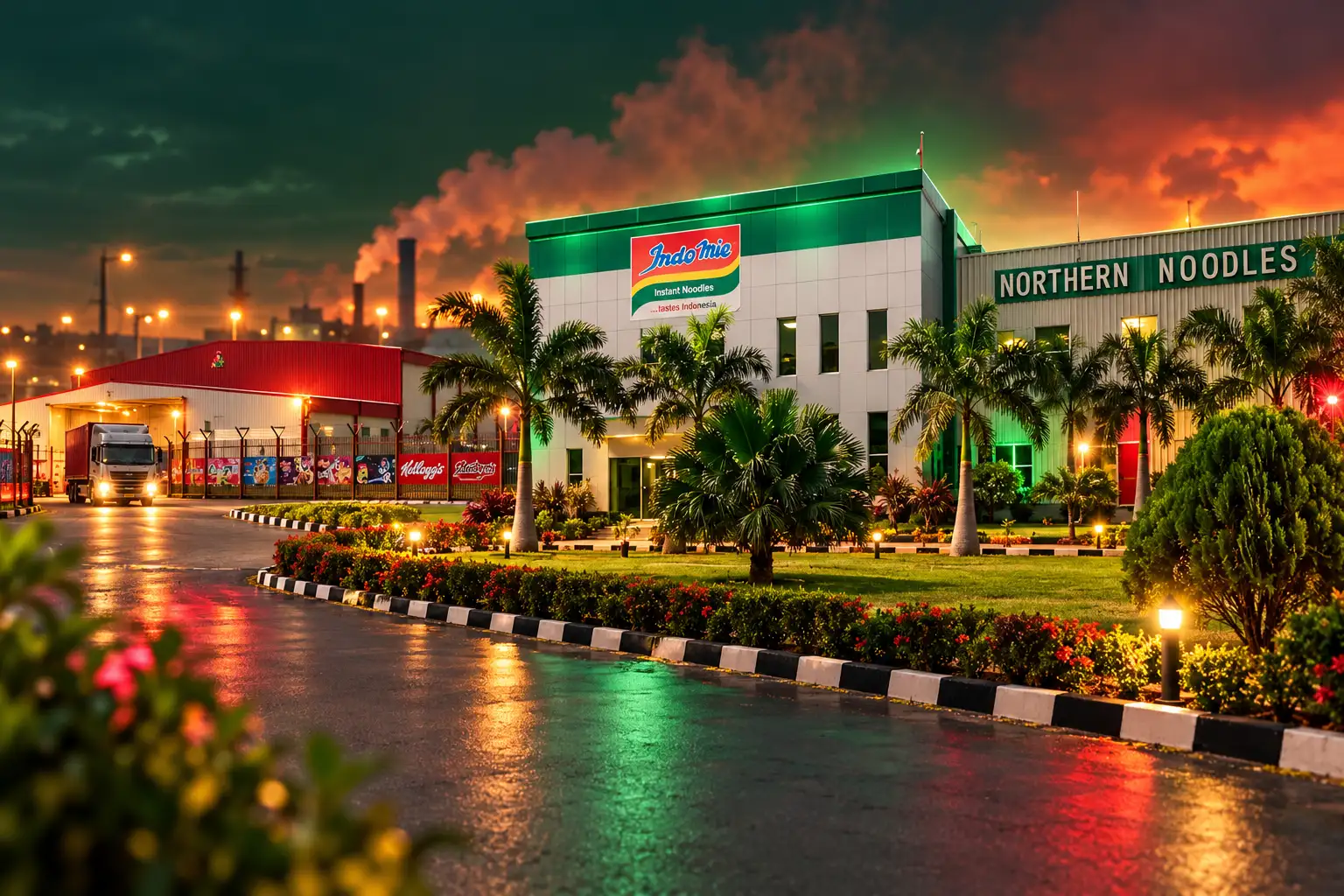
One CTO for Factories, a Bank, and a Brewery
Tolaram’s site says its consumer arm reaches over half a billion African consumers. Partners named there include Indofood, Arla, Kellogg’s, and Colgate-Palmolive. The same page records the 2024 Guinness Nigeria brewery purchase and full ownership of Amar Bank in Indonesia.
Diageo’s 2024 briefing on Tolaram put the industrial footprint at 30 manufacturing plants across Africa, 25 of them in Nigeria. A 2022 NTU-SBF Centre for African Studies case, written before that count, said Tolaram then derived four-fifths of revenue from packaged foods and posted US$1.33 billion in 2021.
THE STACKS NOW UNDER ONE CTO
| Business | What Tolaram runs | The technology problem |
|---|---|---|
| Consumer foods | Dufil noodles, oil, pasta, snacks, plus JVs | Plants, warehouses, ERP |
| Guinness Nigeria | Stout, malt drinks, licensed spirits | Brewery systems after a Diageo exit |
| Amar Bank | Tunaiku loans and a mobile bank | Cloud credit scoring and bank-grade cyber |
| Lagos Free Zone and Lekki Port | 830 ha zone and a deep-sea port | Industrial and port systems |
| BHN logistics | More than 4,000 vehicles | Fleet and warehouse software |
Horizon, the group’s Baltic sack-kraft mill, adds a European industrial site that does not share a noodle plant’s software. The CTO job as written does not split those worlds.
GROUP SCALE ON THE PUBLIC RECORD
- Staff: Over 20,000 people group-wide, and over 15,000 in Nigeria as of Diageo’s 2024 note.
- Plants: 30 across Africa, 25 in Nigeria.
- Reach: Consumer goods sold to over half a billion people in Africa.
- Port claim: Lekki Port’s aggregate impact is put at USD 361 billion over a 45-year concession.
Kellogg’s Noodles in Egypt and South Africa, a 2015 joint venture, sell close to half a billion packets a year, Tolaram says. That is a second noodle network sitting beside the Nigerian lines.
What the New Mandate Puts on One Desk
The June 2026 announcement does not rank the work. It piles eight domains onto one office and asks business heads to work with that office on operations, decisions, and growth.
THE BRIEF AS PUBLISHED
- Digital programmes: Group-wide change work that he already ran as Head of IT.
- Enterprise architecture: How plants, a bank, and a brewery share (or refuse to share) systems.
- ERP upgrades: The unglamorous core of a 25-plant Nigerian manufacturing base.
- Cybersecurity: A factory OT problem and a banking problem at the same time.
- Data and analytics: From packing-line counts to loan books.
- Artificial intelligence: Named in the remit; Amar Bank already markets AI in credit and savings.
- Infrastructure: Servers, plants, and the physical kit behind both.
- Newer tools: A catch-all that will be judged on uptime, not slide decks.
None of those lines mention Indomie, Guinness, or Tunaiku by name. The portfolio does the naming for them.
Fifteen Years From Six Sigma to Group IT
Almost the entire published career is inside Tolaram. The company moved its headquarters to Singapore in 1975 and began selling Indomie in Nigeria in 1988, then opened local noodle making in 1996. Kavinkumar’s nearly 15 years sit inside the later, heavier version of that machine: more plants, a bank, a port, and then a brewery.
The factory-floor path into the CTO role is the part of the résumé the group is asking every other vertical to trust. Warehouse systems and line automation are real digital work. They are not the same as core-banking controls or a Diageo-era brewery landscape being unwound under a licence.
HOW THE SURFACE AREA OF THE JOB GREW
- 1948: Group founded; later headquartered in Singapore from 1975.
- 1988: Indomie exports to Nigeria begin; local plants follow in 1996.
- 2014: Amar Bank becomes part of Tolaram; Tunaiku lending is already live.
- 2015: Kellogg’s joint venture for African snacks, cereals, and noodles.
- 30 September 2024: Tolaram completes the Guinness Nigeria share purchase.
- June 2026: Kavinkumar is named group chief technology officer.
A 2022 NTU-SBF case put Nigerian output at nearly nine million packets a day from plants in Ogun State, Port Harcourt, and Kaduna, with Nigerians eating 2.46 billion servings a year and Indomie holding nearly three-quarters of sales on the company’s own figures. Those are 2022 numbers. They still describe the clock a plant-trained CTO understands.
Guinness Nigeria and the License Model
On 11 June 2024 Diageo said Tolaram would take its 58.02% of Guinness Nigeria at 81.60 naira a share, a 63% premium to the 30-day volume-weighted average. The sale closed on 30 September 2024. Diageo kept the Guinness brand and licensed it back, along with locally made ready-to-drink and mainstream spirits brands.
That structure leaves Tolaram running breweries and a listed Nigerian company while brand and marketing strategy for Guinness still sit with Diageo. Information systems do not move as cleanly as share registers. A group CTO who grew up on noodle lines now inherits a second industrial stack that used to live inside a London-listed drinks company.
Our partnership with Diageo to jointly grow Guinness Nigeria underscores our commitment to build on our strong presence and heritage in Nigeria, cultivated over decades of dedication and unwavering confidence in the future of Africa. We take a long-term view on all our investments and this partnership reflects our optimism on the exciting opportunities that lie ahead across the continent.
Sajen Aswani, Chief Executive, Tolaram, in Diageo’s 11 June 2024 statement
Haresh Aswani, Managing Director of Tolaram Africa, called the deal a step in the group’s growth and diversification. Debra Crew, then Diageo’s chief executive, said Guinness had been Nigeria’s favourite beer for nearly 75 years. None of those remarks named a technology cutover. The cutover is now on Kavinkumar’s list anyway.
Diageo also listed Tolaram consumer operations in Ghana, Egypt, South Africa, Eswatini, Kenya, Ivory Coast, Mozambique, and Saudi Arabia. Each extra country is another instance of the same question: one template, or a patchwork the plants already know how to live with.
Owning a Neobank Changes the Cyber Job
Tolaram’s businesses page calls Amar Bank Indonesia’s first and only pure-play neobank. It owns the Tunaiku digital lending platform, which the group says uses big data to approve loans of up to USD 1,900 for six to 20 months. Amar Bank’s own about page says the bank has been part of Tolaram since 2014, that Tunaiku launched that year as an app-based lender, and that a cloud, mobile-only bank with AI savings tools followed in 2020.
A seasoning plant and a licensed digital bank do not share threat models. Shop-floor networks worry about stopped lines. A bank worries about customer data, credit models, and supervisors. The June remit puts cybersecurity and artificial intelligence on the same desk as ERP for noodles. That is the second-order cost of the promotion, and it is not theoretical: the bank is already on the org chart.
Tolaram also runs T-Sign, an internal signing tool that logs in with Microsoft. It is a small clue that group IT already ships its own software. It is not a substitute for core banking.
Lagos Free Zone is described as 830 hectares with room for more than 100 businesses and a 50,000-strong community. Lekki Port, built with China Harbour Engineering Company, is called Nigeria’s largest private infrastructure project. BHN’s more than 4,000 vehicles move the consumer brands. Those sites need industrial controls and logistics software. They still are not a neobank.
The Plants Still Have to Keep Packing
Multipro is described as West Africa’s largest sales and distribution company, covering Nigeria, Ghana, and other African markets. TG Arla packages Dano milk, which Tolaram says doubled volume in the first two years of the partnership and leads milk powder. Hypo bleach, sold in sachets through the Colgate joint venture, is another local product that lives or dies on cheap packs and wide reach. Lush Hair, launched in 2018 from the old textile trade, is the group’s beauty line.
Every one of those businesses can use a cleaner ERP and a warehouse system that actually matches the trucks. That is work Kavinkumar has already been paid to do. The promotion asks the same person to keep that work going while a brewery licence and a Jakarta loan book sit in the same architecture conversation.
The Ogun, Port Harcourt, and Kaduna lines were already being asked for nearly nine million packets a day in that 2022 case study. That volume, not the new title, is the clock the job still runs on.

Instagram Plus Tests a Read-Only Mode That Cuts Stories

Altman Asks the Public to Accept Some AI Harm

Google Freezes OSS VRP Product Reports After AI Flood

AI Agents Make Payment Rails the Scarce Prize

Turkey’s Crypto Boom Now Runs Through Three Banks

Fable 5 Came Back Under a Commerce On-Off Switch

Google’s SpaceX GPU Lease Has a Sept. 30 Deadline

Plasma One’s XPL Locks Face a 1.81 Billion Cliff

DGO’s Rs 549 World Cup Pass Cost Fans Sleep and Data

Moonshot AI’s $30 Billion Ask Became a $35 Billion Close
-
 AI4 months ago
Fable 5 Came Back Under a Commerce On-Off Switch
-
 AI5 months ago
Google’s SpaceX GPU Lease Has a Sept. 30 Deadline
-
 CRYPTO4 months ago
Plasma One’s XPL Locks Face a 1.81 Billion Cliff
-
 APPS4 months ago
DGO’s Rs 549 World Cup Pass Cost Fans Sleep and Data
-
 AI5 months ago
Moonshot AI’s $30 Billion Ask Became a $35 Billion Close
-

 NEWS5 months ago
ColorOS 17 Device List Spans Oppo, OnePlus and Realme
-

 GAMING4 months ago
The RTX 4050 Under Rs 70,000 Hides a Wattage Gap
-

 AI4 months ago
Boris Cherny’s Loops Still Demand a Higher Production Bar