
NEWS
Sweden Tells Parents: No Smartphones for Children Under 13
Sweden’s health agency says no smartphones before age 13, citing harmful content, sleep loss, and addiction-like use. Finland and Denmark back the same line.

Sweden’s Public Health Agency recommended on June 11 that parents not give children a smartphone of their own before the age of 13, citing harmful content, poor sleep, and the risk of addiction-like use. The guidance from Folkhälsomyndigheten lines up with what Finland and Denmark have already said, and it lands weeks before a separate Swedish law bars phones in schools up to grade nine. Olivia Wigzell, the agency’s director, said the agency wants the recommendation to be support for everyday life, not a rule with penalties.
The Under-13 Recommendation
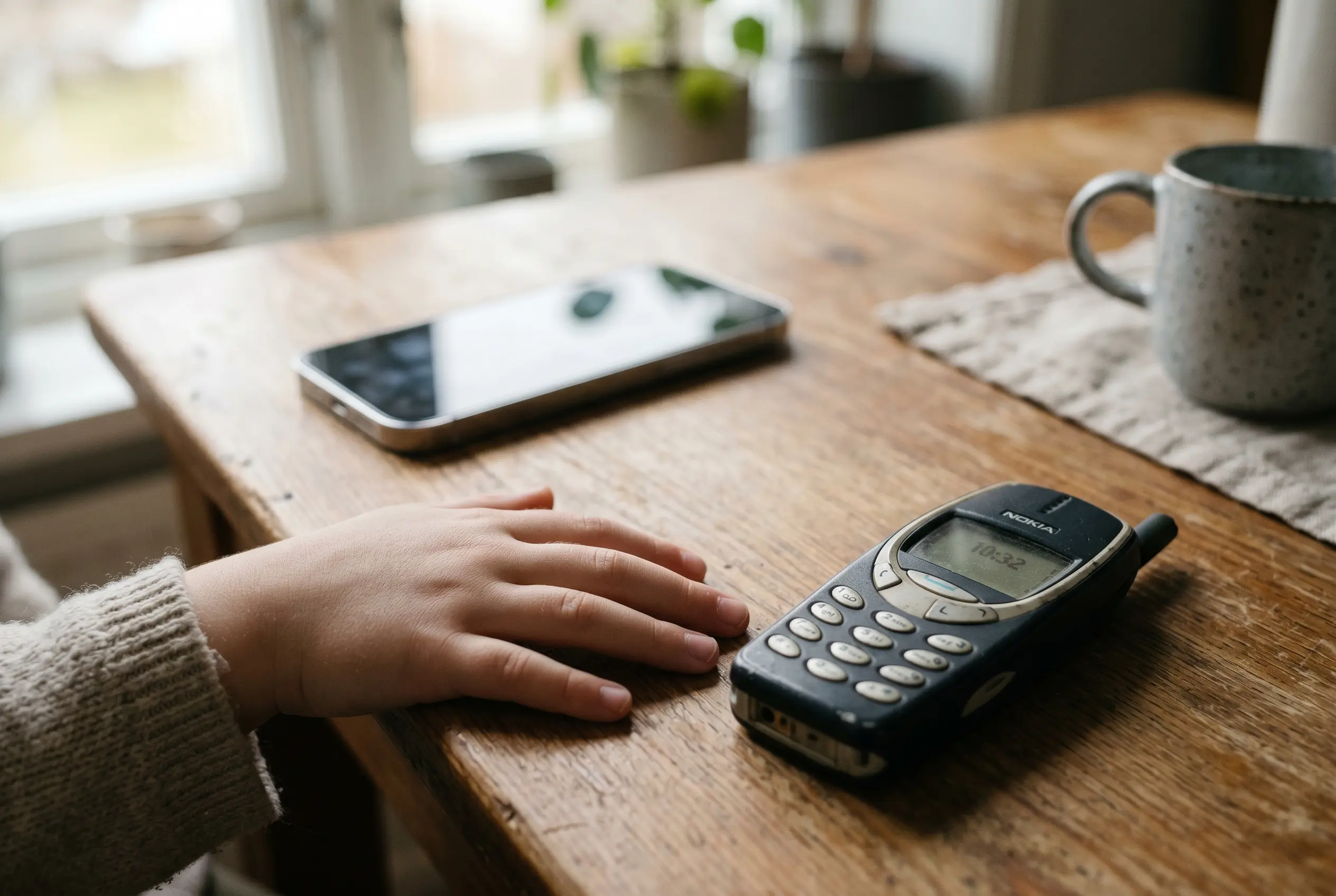
The agency’s recommendation is plain. Parents should not give a child under 13 a smartphone, and if a phone is needed, it should be a simple phone without internet access. The point is to keep young children off the apps and content that a modern smartphone unlocks.
Wigzell said the agency wanted the guidance to feel like support at home rather than a top-down order. She pointed to Sweden’s Nordic neighbours Denmark and Finland as the reference points. The Straits Times reported the announcement on June 11, with AFP carrying the wire. The agency framed the rationale in three terms: harmful content, sleep, and patterns of use that look like addiction.
The push lands in a country that, in January 2026, said it would write a school phone ban into the Education Act. The same Folkhälsomyndigheten has also been telling adults to put their own phones down for two years. The under-13 line is the newest layer in a stack of guidance that started in 2024.
Our hope is that the recommendation will serve as support in everyday life.
Olivia Wigzell, director of Sweden’s Public Health Agency, said this in the agency’s June 11 statement, reported by AFP via the agency’s no-smartphones-under-13 announcement.
Why Sweden Points to Sleep, Content, and Addiction
The agency’s case for the rule rests on a stack of risks that show up in research and in interviews with children. Use of a personal smartphone is “associated with distraction, social pressure, and exposure to harmful content and harmful contacts,” the agency said in its statement. The same statement ties smartphone use to “poorer sleep.” The agency’s own framing of the purpose is sharper: cut the risk of children seeing harmful content, sleeping badly, or falling into an addiction-like pattern of use. Children told interviewers they value the phone for keeping in touch with family and friends, but the agency judged the risks heavier than the benefits for under-13s.
- Harmful content exposure
- Sleep problems
- Addiction-like patterns of use
- Distraction from schoolwork and play
- Social pressure from peers
- Contact with potentially harmful people
The simple phone was offered as a compromise that preserves the call function without the harms. The agency’s earlier screen-time guidance, issued in 2024 and still in force, goes further: no screens at all for under-2s, one hour a day for ages 2 to 5, two hours for ages 6 to 12, and three hours for ages 13 to 18. Bedtime is also a no-screen window, with phones, tablets, and computers supposed to stay outside the bedroom. Apps that look like cartoons to a child but deliver adult content to anyone who can read are part of why the under-13 line is hard to ignore, as a cartoon app that keeps reaching children makes clear.
The Adults in the Room Get a Warning Too
The agency spent the first day of June on a second front: parents themselves. Folkhälsomyndigheten told adults to put their phone away when spending time with children and to declare parts of the home phone-free. The Guardian reported the new guidance on June 1, and the under-13 smartphone recommendation came on June 11.
The agency’s specific words were direct: “Put your phone away when you’re with your child. Use it only if you need to or when you’re using it together.” The agency framed adult screen habits as a model for children, with research showing heavy parental use and heavy child use tend to travel together. Sweden’s minister of social affairs, Jakob Forssmed, called the impact on children stronger than the public had been told. Sweden’s under-13 rule and the parent guidance are now part of the same 2026 communications push, with both messages going out from the same agency in the same month.
The guidance also covered the home. The agency recommended screen-free zones in the bedroom and at the dining table, and asked parents to “protect and respect your child online” by thinking before posting photos or videos of children. The arc from “reflect on your use” in 2024 to “put your phone away” in 2026 is a steady tightening. Helena Frielingsdorf, a psychiatrist and researcher at the agency, told SVT that small changes in everyday adult phone use can shift a child’s own habits over time.
The new line is the agency’s first recommendation aimed specifically at the under-13 age group. Earlier guidance, in 2024, set daily screen-time caps by age but did not single out smartphones. The June 1 statement on parents and the June 11 under-13 line are now the two bookends of the 2026 communications push. Both rest on the same research base on screen habits at home and the patterns children pick up from adults.
I don’t think people realise that [their screen use] affects children to the extent that we now know that it does.
Jakob Forssmed, Sweden’s minister of social affairs, told SVT, the Swedish public broadcaster, as reported by the parental-screen-use guidance from June 1.
The Nordic Pattern Behind Sweden’s Rule
Sweden is not alone in the Nordic region. Wigzell framed the new guidance as “in line with” the positions already taken in Denmark and Finland, the two countries the agency has been watching. Finland’s recommendations, drawn up jointly by the Finnish National Agency for Education and the Institute for Health and Welfare (THL), cover the same ground and go further on social media. They bar children under 13 from using social media services at all.
The Finnish line was set out in 2026 and built with input from a network of 160 experts and more than 6,000 public comments, per Finland’s matching under-13 smartphone recommendation. Denmark is also moving in the same direction on the school question, with NPR reporting in June that a ban similar to Sweden’s is in the works. A separate Finnish report on banning social media for under-15s is being prepared under Prime Minister Petteri Orpo. Sweden’s law covers the school day, while Finland’s recommendations cover free time at home. On smartphones, school phones, and social media, Sweden and Finland are now in step.
| Sweden (June 2026) | Finland (2026) | |
|---|---|---|
| Under-13 personal smartphone | Not recommended | Not recommended |
| Social media for under-13s | Not addressed in this release | Must not use |
| No screen time for under-2s | Yes (prior 2024 guidance) | Yes |
Schools Are Already Locking Phones Away
The smartphone story in Sweden does not stop at home. In January 2026, the government said it would write a national school phone ban into the Education Act, covering pupils up to grade nine, the equivalent of ages 15 to 16. The ban starts with the 2026-27 autumn term, and the school day is already being reshaped. At Malmö Borgarskola, students hand their phones into a box nicknamed the Mobile Hotel at the start of class and pick them up when class ends, as detailed in a report from Malmö’s Borgarskola high school. The school ban is the part of the Swedish policy stack that has legal force.
The shift to books is also being funded. The government set aside 555 million Swedish krona ($59 million) in 2026 as a grant for purchasing textbooks and teachers’ guides. The reading case behind the policy is real: the 2022 Program for International Student Assessment, the OECD’s reading benchmark, found that 24.3% of Swedish ninth graders did not reach a basic level of reading comprehension, only a touch better than the EU average of 26.2%.
“We’re rolling the screens back because we believe that books and more traditional ways of learning are better for kids,” Joar Forsell, chairperson of the Swedish parliament’s education committee, told NPR. The school ban dovetails with a broader back-to-books push that has been building since 2023. Swedish children under 2 have been limited to nondigital materials such as books since summer 2025, and preschoolers face no requirement to use digital learning tools. A new curriculum to prioritize book-based learning is expected in 2028.
The Edtech Counter-Argument
The shift is contested. Trade association Swedish Edtech Industry has argued, in a report cited by NPR, that 90% of all future jobs are expected to require digital skills. The group’s warning is that cutting screen time too far in schools could leave Swedish students underprepared and shrink the country’s innovation pipeline. The argument lands at a moment when even the school ban still allows every student a laptop computer, with teachers deciding when in-class use is appropriate.
The same NPR report quoted Peter Carlsson, CEO of Malmö-based Imvi Labs, who said not all screens disrupt learning and that some software is “critical” to help children with learning or reading difficulties. The argument cuts against the agency’s blanket under-13 rule, since the rule does not carve out educational apps. The edtech group’s specific warning was a skills shortage among young Swedes, a lack of innovation in the public sector, and even increased unemployment. The school phone ban in Sweden begins in autumn 2026; the under-13 smartphone recommendation is, for now, advice with no penalty attached.
Frequently Asked Questions
When does the rule start?
Sweden’s under-13 smartphone recommendation is not a law with a start date. The Folkhälsomyndigheten issued it on June 11, 2026, as guidance for parents. The school phone ban is the part of Sweden’s stack that has a hard date, with the 2026-27 autumn term as the start.
What if a child already has a smartphone?
The recommendation is not retroactive, in the sense that there is no order to take phones away from children who already have them. The agency is asking parents, for any new phone decision, to choose a simple phone without internet access over a smartphone.
Are other countries saying the same thing?
Yes. Finland’s 2026 recommendation, drawn up by the Finnish National Agency for Education and the Institute for Health and Welfare (THL), also says children under 13 should not have a personal smartphone and should not use social media. Denmark is moving in the same direction on school phones.
Is the school phone ban the same as the under-13 rule?
The school phone ban and the under-13 rule are separate moves. The school ban is in the Education Act, applies during school hours, and covers grades up to nine (ages 15 to 16) starting the 2026-27 autumn term. The under-13 rule is a recommendation to parents from the Public Health Agency, with no legal force and no penalty for non-compliance.
Disclaimer: This article is for informational purposes only and reflects a public health recommendation issued in Sweden in June 2026. It is not a substitute for medical, psychological, or educational advice from a qualified professional. Figures and policies cited are accurate as of publication and may change.


Workers Still Trust Judgment Over the AI Tools They Use

DigitalOcean’s $894 Million Backlog Rewrites the Old Cloud

Companies Froze Job Design and Called AI a People Problem

AI Capex Looks Unique Because the Chips Wear Out

Samsung Medison’s HERA Z10 Aims at the Sonographer Shortage

GPT-6 Astra Ships as OpenAI’s First Critical Cyber Model

Palms Sells Clean Air Without Ending Casino Smoking

OnlyFans Promo Bots on X Now Pass the Humanity Tests

Datamaran Drops the ESG Label After Winning the Argument

Xiaomi’s Own Chip Lands While Apple Argues Over Color

Oracle Cuts 21,000 Jobs in a Year, Cites AI in 10-K Filing

Fable 5 and Mythos 5 Return as US Lifts Anthropic Export Controls

SpaceX’s Google Deal Turns a Rocket Company Into a Cloud Landlord

CD Projekt Red Co-CEO: Redemption Arc Isn’t Done, Witcher 4 in 2027

XPL Rallies 30% Ahead of Plasma One Card Tier Launch

Google Search Profiles Build a Follow Graph Inside Discover

DGO App Brings Rs 549 Mobile Pass for FIFA World Cup 2026 in Nepal

Moonshot AI Targets $30 Billion in China’s Fastest AI Funding Sprint

Oppo’s ColorOS 17 Eligibility List Leaves A-Series Buyers Behind

Microsoft Xbox Layoffs Start in July as Sharma Slams 3% Margin
-
 AI3 months ago
Oracle Cuts 21,000 Jobs in a Year, Cites AI in 10-K Filing
-
 AI2 months ago
Fable 5 and Mythos 5 Return as US Lifts Anthropic Export Controls
-
 AI3 months ago
SpaceX’s Google Deal Turns a Rocket Company Into a Cloud Landlord
-
 GAMING3 months ago
CD Projekt Red Co-CEO: Redemption Arc Isn’t Done, Witcher 4 in 2027
-
 CRYPTO3 months ago
XPL Rallies 30% Ahead of Plasma One Card Tier Launch
-
 NEWS3 months ago
Google Search Profiles Build a Follow Graph Inside Discover
-
 APPS3 months ago
DGO App Brings Rs 549 Mobile Pass for FIFA World Cup 2026 in Nepal
-
 AI3 months ago
Moonshot AI Targets $30 Billion in China’s Fastest AI Funding Sprint