
GAMING
Ubisoft Cut Rainbow Six Crews While Closing Two Studios
Ubisoft shut Winnipeg and Belgrade on June 10, putting 380 jobs at risk, while the same Rainbow Six focus round pulled people off Mobile and Siege.

Ubisoft closed its Winnipeg and Belgrade studios on June 10, 2026, putting up to 380 jobs at risk in those offices, Barcelona, and publishing.
Barcelona was told to work only on Rainbow Six. The same day, the company shut the Winnipeg crew that had shipped Rainbow Six Mobile on February 23 and moved about 120 people off Rainbow Six Siege.
Rainbow Six Took the Hit From Its Own Reset
Yves Guillemot, Ubisoft’s chief executive, has spent 2026 telling staff and investors the company must put its strongest live brands first. Rainbow Six Siege is the live game he keeps naming. Vantage Studios, the Tencent-backed unit run by co-CEOs Christophe Derennes and Charlie Guillemot, exists to push Assassin’s Creed, Far Cry, and Rainbow Six.
June 10 was billed as that focus, arriving in an internal note about cost structure and “priorities.” The Rainbow Six org chart got smaller in four places at once.
THE RAINBOW SIX BILL ON JUNE 10
- Mobile’s core studio: Ubisoft Winnipeg closed, and about 50 of its about 65 people had been on Rainbow Six Mobile.
- Siege live ops: About 120 Rainbow Six Siege staff were moved to other work, described as ramps, not extra layoffs.
- Barcelona mandate: The Spanish studio was pointed at Siege only, with a 51-job cut later put in motion.
- Publishing overlay: Global publishing cuts sat inside the same 380-role tally, across several countries.
A company source said Siege “remains a strong brand” and that team size moves with live-ops stages. That is true of any service game. It does not explain why the Mobile studio that had just left the gate was erased in the same meeting.
Rainbow Six Mobile launched worldwide on February 23, 2026, less than four months before Winnipeg went dark. The title was still live. Operation Gray Phantom went out on June 4. A monthly shooter does not keep that cadence when its dedicated room is gone and a second group has been sent elsewhere.
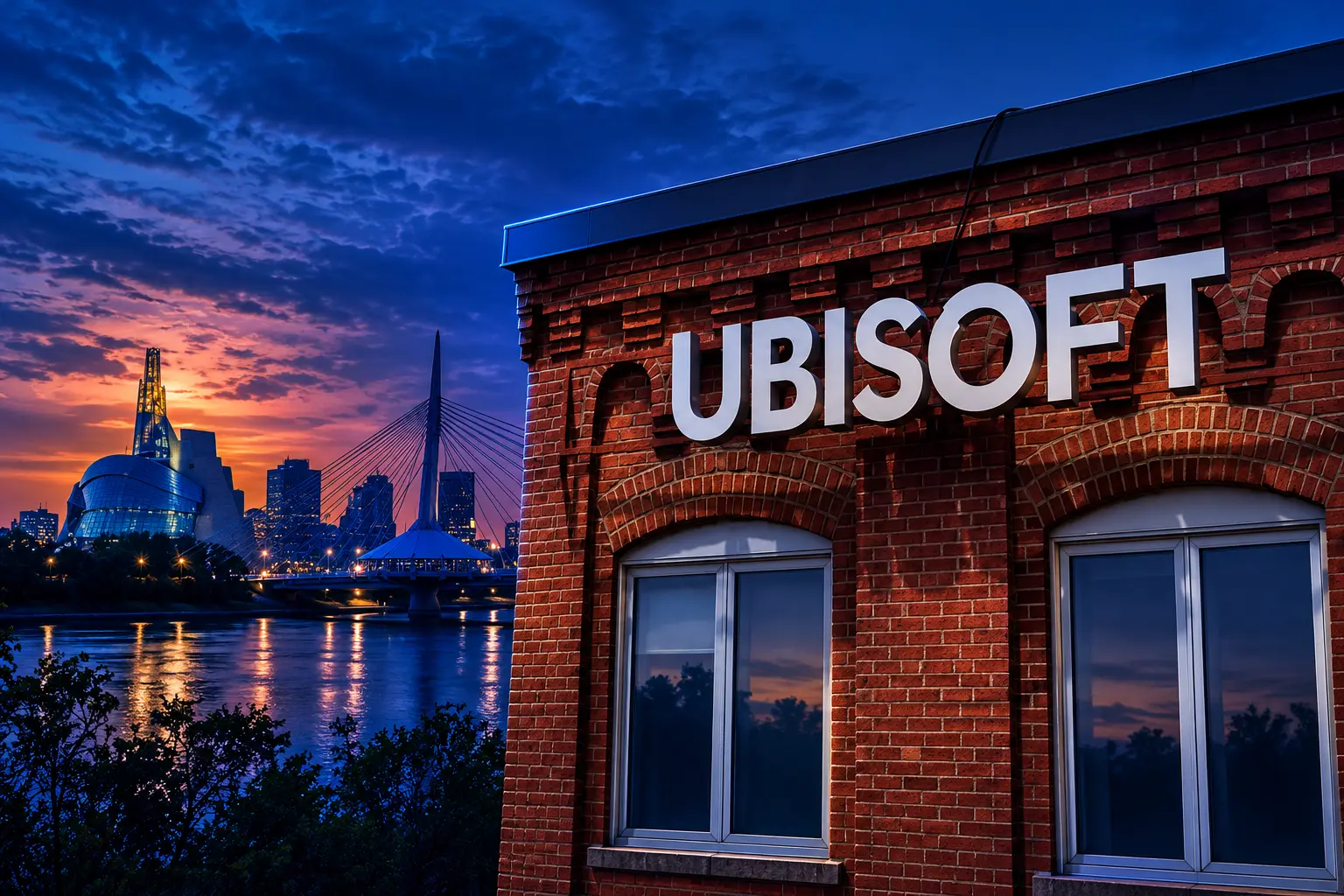
Four Months After Launch, Winnipeg Was Gone
Caroline Stelmach, an Ubisoft spokesperson, confirmed the Winnipeg shutdown in an email on June 10 and said no other Canadian studio was hit in that wave. Local accounts put the roster at about 65 people, a figure Ubisoft Canada later matched.
The studio opened in 2019 in the Merchants Building in the Exchange District. It started as a tech and support shop on Ubisoft’s in-house Anvil and Snowdrop engines, the plumbing under Assassin’s Creed, Far Cry, and Siege, then moved onto Rainbow Six Siege, XDefiant, Far Cry 6, and Assassin’s Creed Valhalla. By the end it was a Mobile shop.
Staff found out on Wednesday morning in a meeting with management. LinkedIn filled with goodbye posts within hours. One programmer called it the last beat of a run that had already taken him through Siege and XDefiant.
Antoine Leduc-Labelle, another Ubisoft spokesperson, tied the choice to cost, “priorities,” and “adjustments to the level of activity following recent portfolio reviews.” He also said Montreal was not in this round. Montreal is the giant. Winnipeg was the cheap capacity sitting under it.
Canada had already taken a blow. Ubisoft Halifax closed in January 2026, cutting 71 jobs, five months before Winnipeg. Toronto had shed about 40 roles in February. Winnipeg was the second Canadian studio to vanish in half a year, and it was the one that still had a public growth pledge on the books.
The $264 Million Promise Manitoba Was Sold
On March 18, 2022, with Premier Heather Stefanson and then-mayor Brian Bowman in the room, Ubisoft said it would grow the Winnipeg studio to 300 people by 2030. The plan was 200 extra jobs on a base of about 100, plus CAD$139 million more in the province, taking the company’s Manitoba spend to $264 million from 2018 to 2030.
Michael Henderson, then managing director of Ubisoft Winnipeg, said the first three years had already been “an exceptional success” and that “we’re here in Winnipeg because the talent’s here.” About 70 percent of the staff at that time came from Manitoba. The 100-person target set at founding had been hit more than a year early.
Four years later the studio closed at about 65 people, 35 below that 2022 headcount and 235 short of the 2030 target. The $264 million arc was supposed to run to 2030. It stopped in 2026.
Very difficult news for those who lost their jobs, but the closure was a Ubisoft issue, not a Winnipeg issue.
Scott Gillingham, Mayor of Winnipeg, June 10, 2026
Jamie Moses, Manitoba’s minister of business, mining, trade and job creation, called the shutdown concerning and said the province was reaching out with job supports and training. New Media Manitoba said the local scene was still better for Ubisoft having been there, which is a polite way of saying a tax-credit tenant walked out.
Staff in Belgrade Threw a Farewell on Release Day
Ubisoft Belgrade opened in 2016 as a support studio and grew from a handful of people into a co-dev bench of about 100. The list of shipped work is a tour of Ubisoft’s last decade: Ghost Recon Wildlands and Breakpoint, The Crew 2, Rainbow Six, Riders Republic, Skull & Bones, then Assassin’s Creed Shadows and Assassin’s Creed Black Flag Resynced.
On June 10 the whole site was let go. There was no “refocus” clause. The Serbian office was not folded into another city. It was switched off.
Black Flag Resynced, the remake Belgrade had been credited on, launched on July 9, 2026. Remaining staff marked that Thursday with a release gathering and a studio goodbye on the same day. The game later sat at 84 on Metacritic, a high mark for the series. The people who had just helped finish it were already out.
Support studios exist so flagship teams can ship. When the support layer goes, the flagship still puts a logo on the box. The invoice just lands somewhere else, or it does not get paid at all.
Why Barcelona Walked Out After the Rainbow Six Mandate
Ubisoft Barcelona was not closed. Derennes and Charlie Guillemot told staff the studio would “redirect its expertise and resources towards Rainbow Six Siege” after a portfolio review. The mobile studio in the same city was left alone. The console and PC shop was not.
The note covered 51 jobs, about 28% of that studio. Barcelona had been a multi-franchise support house, with credits on Assassin’s Creed, The Division, Ghost Recon, Rabbids, and the underwater systems, fauna, and naval contracts in Black Flag Resynced. After July 9, those Assassin’s Creed people were told there would be no further mandates, even though the team had pitched new ones.
Isabel Codina García, a QA and QC lead, wrote after seven years that “this is not how I imagined it would end.” Layoffs at the studio began once Black Flag Resynced was out. Ubisoft still described the Spanish plan as a proposal under consultation. The people leaving were not waiting on that wording.
Unions called Tuesday and Thursday afternoon strikes from June 30 to July 16, 2026.
WHAT BARCELONA ASKED FOR
- A new mandate: Keep the 51 people on a live project instead of ending their work after Black Flag.
- Job cover: A five-year shield against another mass-dismissal round.
- Promotions already promised: Pay the raises and titles the company had frozen.
- Hybrid work: Restore a 60 percent work-from-home mix, against the five-day office rule.
A live-service shooter can absorb a support studio that only does Siege. It cannot absorb a 28 percent cut, a frozen promotion ladder, and a public fight in the same quarter without the roadmap getting thinner. That is the trade Ubisoft made, and it made it inside Vantage, the unit that was supposed to protect this brand.
Headcount Is 16,590, Down 1,200 in a Year
The June 10 wave sits inside a cost program Ubisoft has been running since FY2022-23. A first squeeze pulled the fixed-cost base down from €1.75 billion. A second phase, at least €100 million versus FY2024-25, was marked done by March 2026, a year early. In January 2026 the company opened a third phase: another €200 million (about $235 million) over two years, which it called the final one.
Full-year 2025-26 results, issued May 20, put the fixed cost base of €1.435 billion, down €118 million, or 8 percent, from the prior year. Cumulative cuts since FY2022-23 were about €325 million, with a path to €500 million of run-rate savings and a €1.25 billion cost base by March 2028. Headcount was 16,590 at the end of March 2026, down about 1,200 from a year earlier.
Net bookings for the year were €1,525.1 million, down 17.4 percent. IFRS 15 sales were €1,395.7 million, down 21.8 percent. IFRS operating income was -€1,322.3 million. The year included a Tencent cheque of €1.16 billion for Vantage, seven projects stopped, and six delayed. Guillemot called FY2026-27 a “low point” in free cash flow, with a light slate and more cash costs from the reset.
THE THREE SITES IN THE JUNE 10 ROUND
| Studio | Opened | Staff in the cut | Last work | Outcome |
|---|---|---|---|---|
| Ubisoft Winnipeg | 2019 | About 65 | Rainbow Six Mobile, Anvil, Snowdrop | Closed |
| Ubisoft Belgrade | 2016 | About 100 | Black Flag Resynced, AC Shadows | Closed |
| Ubisoft Barcelona | Support house | 51 jobs, about 28% | Black Flag Resynced, now Siege only | Open, narrowed |
Those site figures do not add up to 380, and they are not meant to. The 380 wraps the two closures, the Barcelona cut, and publishing roles in other offices still going through local rules.
THE 2026 RESET CALENDAR
- January 2026: Creative Houses are unveiled, Halifax (71 jobs) and Stockholm close, seven games stop, six slip, and the extra €200 million phase starts.
- February 23, 2026: Rainbow Six Mobile launches worldwide.
- May 20, 2026: Full-year results land, with 16,590 staff and a €1.435 billion cost base.
- June 10, 2026: Winnipeg and Belgrade close, Barcelona is pointed at Siege, publishing is cut, 380 roles sit at risk.
- June 30 to July 16, 2026: Barcelona strikes on Tuesday and Thursday afternoons.
- July 9, 2026: Black Flag Resynced ships; Belgrade marks the game and the shutdown together.
January’s script called this the last round of studio shutdowns. June added two more names to the list. The third cost phase still runs to March 2028.
What the Support Layer Took With It
The new operating model splits Ubisoft into five Creative Houses with end-to-end control of brands, plus a Creative Network of resource studios. Winnipeg and Belgrade sat on the network side. They wrote engine code, filled production gaps, and caught overflow from Siege, Assassin’s Creed, and the games that never became posters. Barcelona is being pulled the other way, out of that bench and into a single Vantage franchise.
That is a coherent org chart on a slide. It is also how you lose the people who knew Anvil and Snowdrop, how you orphan a free-to-play shooter 107 days after launch, and how you tell a Spanish team that shipped a well-reviewed remake that their next job is a smaller Siege mandate or the door.
Guillemot’s own May line still holds as a forecast, not a verdict. FY2026-27 is the low point he asked investors to sit through, with Rainbow Six Siege named as the live game that has to carry the wait. The June 10 round made that wait cheaper on paper. It also took tools and crews off the same brand the wait depends on.

Instagram Plus Tests a Read-Only Mode That Cuts Stories

Altman Asks the Public to Accept Some AI Harm

Google Freezes OSS VRP Product Reports After AI Flood

AI Agents Make Payment Rails the Scarce Prize

Turkey’s Crypto Boom Now Runs Through Three Banks

Fable 5 Came Back Under a Commerce On-Off Switch

Google’s SpaceX GPU Lease Has a Sept. 30 Deadline

Plasma One’s XPL Locks Face a 1.81 Billion Cliff

DGO’s Rs 549 World Cup Pass Cost Fans Sleep and Data

Moonshot AI’s $30 Billion Ask Became a $35 Billion Close
-
 AI4 months ago
Fable 5 Came Back Under a Commerce On-Off Switch
-
 AI5 months ago
Google’s SpaceX GPU Lease Has a Sept. 30 Deadline
-
 CRYPTO4 months ago
Plasma One’s XPL Locks Face a 1.81 Billion Cliff
-
 APPS5 months ago
DGO’s Rs 549 World Cup Pass Cost Fans Sleep and Data
-
 AI5 months ago
Moonshot AI’s $30 Billion Ask Became a $35 Billion Close
-

 NEWS5 months ago
ColorOS 17 Device List Spans Oppo, OnePlus and Realme
-

 GAMING4 months ago
The RTX 4050 Under Rs 70,000 Hides a Wattage Gap
-
 AI4 months ago
Boris Cherny’s Loops Still Demand a Higher Production Bar