
AI
White House Readies Voluntary AI Model Standards for Frontier Systems
The U.S. is finalizing voluntary AI model standards for advanced AI, the FT reported. Trump’s June 2 executive order set the framework’s groundwork.

The U.S. government is finalizing voluntary AI model standards for the release of new systems, with an announcement possible as soon as next week, the Financial Times reported Wednesday. The framework would set benchmarks, evaluation timelines, and rules on who can access the most capable systems in the United States and abroad. Talks with leading developers have accelerated after Washington intervened to suspend Anthropic’s newest models and asked OpenAI to limit GPT-5.6 to a small group of vetted partners, the FT said, citing people familiar with the discussions.
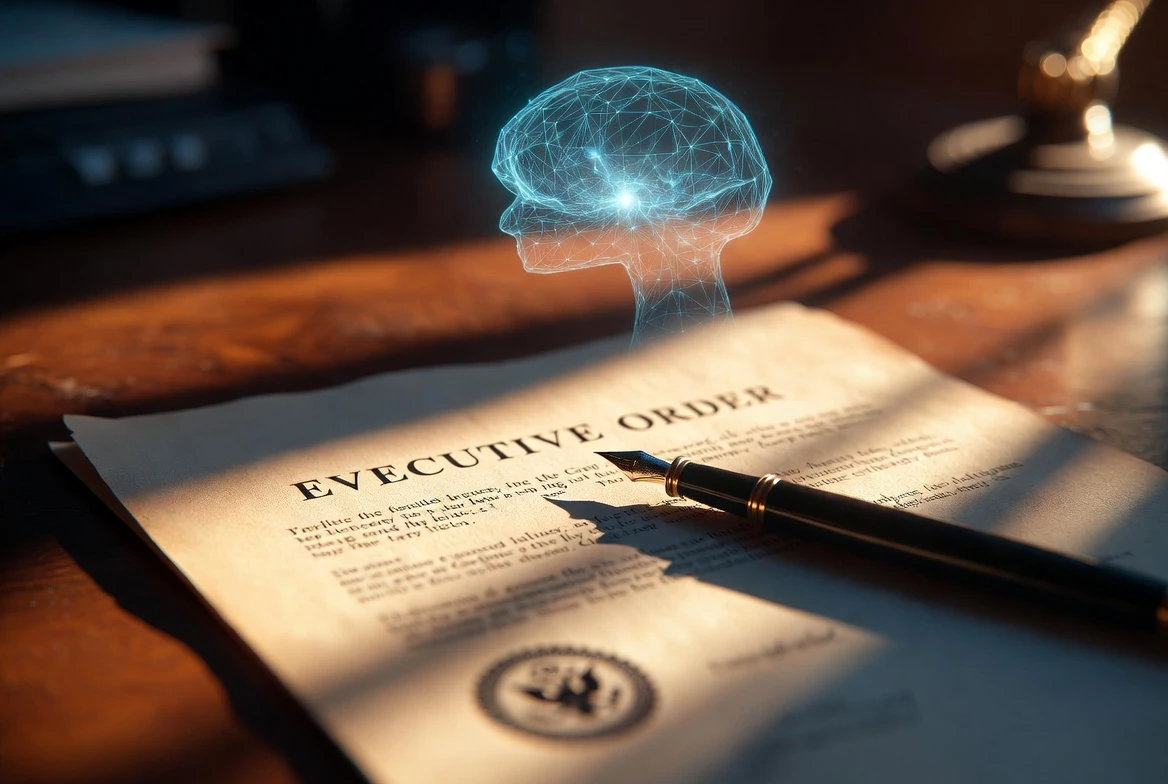
The proposed standards implement President Donald Trump’s executive order on advanced AI security issued in June, which already directs federal agencies to build a voluntary framework for engaging developers before they release frontier systems. The White House, Anthropic, and OpenAI did not immediately respond to requests for comment outside regular business hours.
Two Interventions Built the Pressure
The case-by-case pressure that shaped the new framework came into view last month. On June 12, the Commerce Department’s Bureau of Industry and Security issued an export-control directive ordering Anthropic to suspend access to its Claude Fable 5 and Claude Mythos 5 models. The directive covered any foreign national, whether inside or outside the United States, including foreign national Anthropic employees. The letter cited national security authorities but did not detail the concern, Anthropic said. The company said its understanding is that the government believes it has become aware of a method of bypassing, or “jailbreaking,” Fable 5.
In its statement on the Fable 5 directive, Anthropic said the “potential jailbreaks that have been disclosed to us are either entirely benign responses or are minor findings that provide no Mythos-specific uplift.” The company complied but pushed back on the standard being applied. Anthropic said it disagrees “that the finding of a narrow potential jailbreak should be cause for recalling a commercial model deployed to hundreds of millions of people.” Anthropic warned that “if this standard was applied across the industry, we believe it would essentially halt all new model deployments for all frontier model providers.”
Less than three weeks later, the Commerce Department lifted the export controls on Tuesday. Anthropic said Fable 5 had returned globally and that the company was proposing an industry-wide framework for scoring jailbreak severity, “together with Amazon, Microsoft, Google, and other Glasswing partners.” The episode gave Washington a working template for pressuring a frontier developer without legislation.
OpenAI’s GPT-5.6 Standoff
OpenAI’s friction with Washington arrived separately. Last week, OpenAI agreed to stagger the public release of GPT-5.6 at the U.S. government’s request, the FT and Reuters reported, limiting initial access to a small group of vetted partners whose details were shared with the authorities. The arrangement leaves the United States government as gatekeeper for the first wave of access to one of the most-watched model launches of the year. The Information first reported that OpenAI chief executive Sam Altman told staff in a company Q&A that the company would release GPT-5.6 in limited preview. The Verge covered the GPT-5.6 staggered release as a Trump administration request tied to national security and safety concerns.
Google has been in talks with the government ahead of its own advanced coding models, a source told Reuters on Wednesday. The company is also taking part in broader discussions on industry standards, the source added. Technical teams from OpenAI, Anthropic, and Alphabet have held regular meetings with administration officials in recent days as negotiations continue, the FT reported.
What the June Executive Order Actually Authorizes
Trump signed Executive Order 14409, “Promoting Advanced Artificial Intelligence Innovation and Security,” on June 2, 2026. The order directs the Secretary of the Treasury, the Secretary of War, the Secretary of Homeland Security, and the director of the National Security Agency to “design a voluntary framework with AI developers” through which developers could engage the government on whether a model meets the designation of covered frontier model. The order also instructs CISA, the National Cyber Director, and others to coordinate the rollout. The framework draws on Section 3 of the order, titled “Secure Frontier Model Deployment.”
The order instructs those agencies to “develop and maintain a classified benchmarking process to assess the advanced cyber capabilities of AI models and determine the threshold at which an AI model should be designated a covered frontier model.” The director of the NSA will make that determination, in consultation with the National Cyber Director, the assistant to the president for science and technology, the CISA director, and other representatives of the Department of War. The benchmark is classified, which means the threshold will not be public.
Once a model carries that designation, the framework lets developers “provide the Federal Government with access to covered frontier models, subject to appropriate confidentiality, cybersecurity, insider-risk, and intellectual-property protection, use, and nondisclosure requirements, for a period of up to 30 days before they plan to release such models to other trusted partners.” The order then allows for collaboration with the government on selecting which trusted partners get early access. Trusted partners can include federal agencies, state and local authorities, and operators of critical infrastructure such as rural hospitals and community banks. The early access window is meant to give government time to evaluate before wider release.
The order explicitly disclaims any licensing regime. It says nothing in the section “shall be construed to authorize the creation of a mandatory governmental licensing, preclearance, or permitting requirement for the development, publication, release, or distribution of new AI models, including frontier models.” It also orders the creation of an AI cybersecurity clearinghouse run by Treasury, NSA, and CISA in voluntary collaboration with industry to coordinate vulnerability scanning and patch distribution.
How “Voluntary” Still Gets a 30-Day Footprint
Voluntary does not mean optional in any practical sense for the largest frontier developers. The 2023 Biden-era voluntary commitments from leading AI developers to test systems before public release are the model the new framework leans on, one legal analysis noted. The Trump order extends that pattern with a 30-day pre-release access window for the government and a narrower release to “trusted partners” chosen in collaboration with Washington. The classified benchmarking process gives Washington a permanent say in which models qualify.
If this standard was applied across the industry, we believe it would essentially halt all new model deployments for all frontier model providers.
Anthropic put the warning in its June statement on the Fable directive. A developer who declines the new framework could find itself frozen out of the early-access tier, federal contracts, and pre-release cybersecurity resources. A legal analysis of the June 2 order warned bluntly that “companies that choose not to participate may find themselves at a disadvantage in securing government contracts, gaining early access to federal cybersecurity resources or being selected as trusted partners for early model access.”
The order layers more architecture on top of the access window. It directs CISA to release Binding Operational Directives to expedite civilian federal cyber defense within 30 days, with priority for state and local authorities and operators of critical infrastructure such as rural hospitals, community banks, and local utilities. The Office of Personnel Management must expand the U.S. Tech Force cybersecurity hiring pipeline within 60 days. Treasury, NSA, and CISA must stand up the AI cybersecurity clearinghouse with industry to coordinate vulnerability scanning and patch distribution.
| Provision | What It Requires |
|---|---|
| Classified benchmarking | NSA-led assessment of advanced cyber capabilities to set the “covered frontier model” threshold |
| 30-day pre-release window | Government access to covered frontier models up to 30 days before wider release |
| Trusted-partner tier | Narrower initial release to partners selected with the government |
| AI cybersecurity clearinghouse | Treasury, NSA, and CISA coordinating vulnerability scanning and patch distribution with industry |
| No licensing regime | Order expressly disclaims any mandatory preclearance or permitting requirement |
The IPO Clock Now Runs Through Washington
The framework lands as both OpenAI and Anthropic are preparing for IPOs. The voluntary framework adds a federal review period that did not exist in any prior listing prospectus from frontier developers. For OpenAI, the GPT-5.6 rollout already shows what a government-requested staggered release looks like in public: a model that might have shipped broadly is gated to a small group of vetted partners while Washington sees it first. The 30-day window for covered frontier models would put similar gates on the launches that follow. Investors pricing the next round of AI IPOs now have to model in a federal pre-release period that did not exist before the order.
For Anthropic, the Fable and Mythos episode shows what a narrow finding of jailbreakability can do to a deployed commercial model. Anthropic said Fable 5 had returned globally after the Commerce Department lifted its export controls on Tuesday. The standards give both companies a more predictable route to market and give Washington a more predictable hook into the launch sequence. As the report on Washington’s AI standards talks noted, both OpenAI and Anthropic are working through IPO preparations at the same time the framework is taking shape.
Frequently Asked Questions
What are the U.S. voluntary AI model standards?
The standards are a forthcoming framework, built under Trump’s June 2 executive order, that would set benchmarks, evaluation timelines, and access rules for frontier AI systems. The Financial Times reported Wednesday that an announcement could come as soon as next week.
Which AI companies are involved?
Technical teams from OpenAI, Anthropic, and Alphabet have met with administration officials in recent days, the FT reported. Google has been in talks ahead of advanced coding models with more sophisticated capabilities.
What is a “covered frontier model”?
It’s the label the executive order assigns to AI models the NSA determines have sufficiently advanced cyber capabilities. Such models become eligible for the government’s 30-day pre-release access window.
Are the standards mandatory?
No. The June 2 order expressly disclaims any mandatory licensing, preclearance, or permitting requirement. Developers can decline, but a Skadden analysis of the order warns that non-participants may lose access to federal contracts, early-access tiers, and cybersecurity resources.
Why now?
Two recent interventions forced the issue: the Commerce Department’s June 12 suspension of Anthropic’s Fable 5 and Mythos 5, lifted on Tuesday, and OpenAI’s agreement last week to delay GPT-5.6’s public launch and limit initial access to vetted partners.


Workers Still Trust Judgment Over the AI Tools They Use

DigitalOcean’s $894 Million Backlog Rewrites the Old Cloud

Companies Froze Job Design and Called AI a People Problem

AI Capex Looks Unique Because the Chips Wear Out

Samsung Medison’s HERA Z10 Aims at the Sonographer Shortage

GPT-6 Astra Ships as OpenAI’s First Critical Cyber Model

Palms Sells Clean Air Without Ending Casino Smoking

OnlyFans Promo Bots on X Now Pass the Humanity Tests

Datamaran Drops the ESG Label After Winning the Argument

Xiaomi’s Own Chip Lands While Apple Argues Over Color

Oracle Cuts 21,000 Jobs in a Year, Cites AI in 10-K Filing

Fable 5 and Mythos 5 Return as US Lifts Anthropic Export Controls

SpaceX’s Google Deal Turns a Rocket Company Into a Cloud Landlord

CD Projekt Red Co-CEO: Redemption Arc Isn’t Done, Witcher 4 in 2027

XPL Rallies 30% Ahead of Plasma One Card Tier Launch

Google Search Profiles Build a Follow Graph Inside Discover

DGO App Brings Rs 549 Mobile Pass for FIFA World Cup 2026 in Nepal

Moonshot AI Targets $30 Billion in China’s Fastest AI Funding Sprint

Oppo’s ColorOS 17 Eligibility List Leaves A-Series Buyers Behind

Microsoft Xbox Layoffs Start in July as Sharma Slams 3% Margin
-
 AI3 months ago
Oracle Cuts 21,000 Jobs in a Year, Cites AI in 10-K Filing
-
 AI2 months ago
Fable 5 and Mythos 5 Return as US Lifts Anthropic Export Controls
-
 AI3 months ago
SpaceX’s Google Deal Turns a Rocket Company Into a Cloud Landlord
-
 GAMING3 months ago
CD Projekt Red Co-CEO: Redemption Arc Isn’t Done, Witcher 4 in 2027
-
 CRYPTO3 months ago
XPL Rallies 30% Ahead of Plasma One Card Tier Launch
-
 NEWS3 months ago
Google Search Profiles Build a Follow Graph Inside Discover
-
 APPS3 months ago
DGO App Brings Rs 549 Mobile Pass for FIFA World Cup 2026 in Nepal
-
 AI3 months ago
Moonshot AI Targets $30 Billion in China’s Fastest AI Funding Sprint