
NEWS
Questerre’s HCCO Oil Shale Test Moves to a Commercial-Sized Vessel
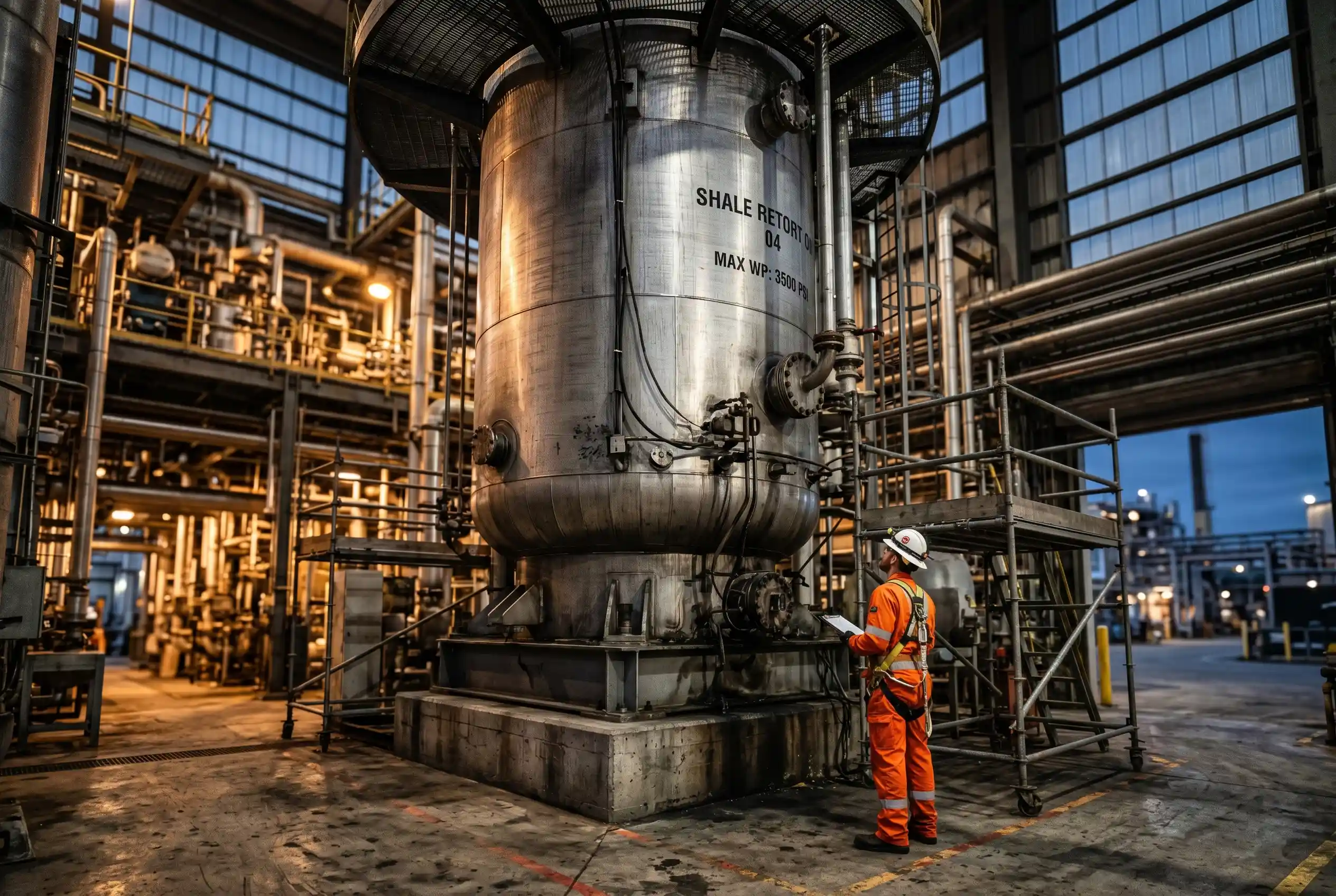
Questerre’s HCCO oil shale test at PX Energy in southern Brazil on June 15 moved the technology out of lab reactors and into a full-scale vessel.

Questerre Energy Corporation said Monday that its first commercial-sized test of HCCO® oil shale processing technology at the PX Energy facility in southern Brazil succeeded, in a test announced June 15. The Calgary-based company tested HCCO in a commercial-sized vessel for the first time, moving beyond the smaller lab-scale reactors it had used in earlier runs. The company says the result moves HCCO closer to a commercial demonstration and closer to commercializing the resources under Questerre’s licenses.
President and Chief Executive Officer Michael Binnion framed the result as validation that the chemistry holds at real scale. The HCCO test is the first time Questerre has run its proprietary technology through the operating platform it owns, a pairing the company has been assembling since it consolidated Red Leaf Resources in December 2025 and acquired PX Energy. The combination ties together the HCCO process, the Brazilian oil shale operation, Red Leaf’s Utah mineral leases, a Quebec Utica shale gas discovery, and a planned demonstration in Jordan. The company’s stated 2026 plan is to optimize PX Energy, prove out the Red Leaf technology at scale, and use the result to feed the design of a small-scale commercial demonstration plant.
A Vessel Big Enough to Matter
Questerre Energy Corporation (TSX, OSE: QEC) designed the test as a single question: does HCCO hold up at the scale of a real industrial reactor? The company answered yes, in a commercial-sized vessel at the PX Energy facility in southern Brazil, in a test announced June 15. Earlier runs had used smaller lab-scale reactors, and Monday’s run tested the process at the physical scale it would need to run in production.
The release framed the test as designed to prove the engineering and technical validity of the HCCO process at commercial scale, and Questerre said it did. The company now plans to implement HCCO commercially at the PX Energy facility to reduce the site’s internal fuel oil consumption and strengthen the economics of the broader PX Energy project. Binnion called the result “an important step forward,” and said HCCO now moves closer to a commercial demonstration. Questerre is also folding the June 15 result into the design of a planned small-scale commercial demonstration plant, a step the company flagged in its published 2026 operating plan. The longer-term target, Binnion said, is to commercialize the resources under Questerre’s licenses in Utah, Jordan, and Quebec.
What the Run Actually Proved
Questerre built the test around one specific question: can HCCO hold up at the physical scale of a real industrial reactor, not the smaller lab-scale reactors used previously? The company said yes.
The next step is a longer test with a different job. Questerre said the new run will focus on defining the commercial operating parameters needed to run HCCO continuously, which the company framed as the prerequisite for any continuous commercial deployment. That longer test is in addition to work on a planned small-scale commercial demonstration plant, with Questerre saying it is already folding this month’s results into the plant’s design. The plan is one of four stated pieces in Questerre’s published 2026 operating agenda for the technology.
- Run a longer test to define the commercial operating parameters needed to run HCCO continuously.
- Implement HCCO commercially at the PX Energy facility to reduce the site’s internal fuel oil consumption.
- Fold the results into the design of the planned small-scale commercial demonstration plant.
- Commercialize greenfield oil shale projects and the resources under Questerre’s licenses.
The longer run also doubles as the bridge between this month’s vessel test and the small-scale commercial demonstration plant Questerre has said it wants to build. The June 15 result was the technical validation the company had been waiting for. The longer test is what Questerre says will turn that validation into the operating parameters needed to run HCCO continuously.
Why Brazil Carries the Weight
PX Energy sits in Sao Mateus do Sul, in the state of Parana, roughly 900 kilometres from Sao Paulo in southern Brazil. The site mines and processes oil from the Irati oil shale formation, where the mined oil shale interval is approximately 18m thick, split into upper and lower intervals of about 6m each and separated by 6m of limestone interburden. Questerre owns PX Energy and used the operating site as the natural proving ground for HCCO, since the site already has the mining, processing, and refining infrastructure a new technology has to slot into. The site is also where any commercial HCCO deployment would land first.
The numbers behind the operation are sized to match the ambition. Questerre’s PX Energy Brazil operation profile puts average Q4 production at 3,768 bbl/d of crude oil and 3.9 MMcf/d of natural gas, with total proved and probable reserves of 12.6 MMBoe as of December 31, 2025 and a before-tax NPV-10% of $372 million. Brazil is the proving ground, the production base, and the first commercial deployment site, all in one.
The Pieces Binnion Has Stacked Together
Questerre has spent the past year assembling the pieces that surround this test. The HCCO run is the first time the technology has been tested at commercial scale, with the result feeding into a longer test, a planned demonstration plant, and a wider strategy that covers Utah, Quebec, and Jordan. Questerre consolidated full ownership of Red Leaf in December 2025, in a share exchange structured around a third-party valuation that priced Red Leaf at US$43 million, with an applicable discount producing an acquisition price of US$7.5 million, subject to working capital adjustments. The integrated oil shale platform the company has been describing since the Red Leaf deal is what was actually run together in Brazil on Monday. The oil shale and Red Leaf platform on Questerre’s site lays out the five pieces that Monday’s test brought together.
- HCCO® oil-shale processing technology, the patented process now tested at commercial scale.
- PX Energy, the operating mining, processing, and refining site in Sao Mateus do Sul, Brazil.
- Red Leaf’s oil shale mineral leases in the state of Utah.
- The Quebec Utica shale, a natural gas discovery Questerre calls one of the most important undeveloped natural gas resources in Eastern Canada.
- A planned demonstration of Red Leaf’s technology in Jordan, where the company’s exclusive rights expired in 2025.
Their patented HCCO® technology to produce oil from shale with integrated carbon capture remains, in our view, a compelling opportunity to unlock oil shale globally. As a first step, our operations in Brazil can provide an ideal platform to advance a small scale commercial HCCO project.
Binnion, Questerre’s CEO, said in December 2025, when the company announced the Red Leaf consolidation, that the HCCO technology and the Brazil operations would form an integrated platform. The HCCO test, he said Monday, is what those pieces look like when they are physically run together in Brazil. The same December 2025 press release flagged Quebec and Jordan as part of the same long-term plan.
Quebec is the gas side of the portfolio, with Questerre describing the Utica shale as a natural gas discovery widely recognized as one of the most important undeveloped natural gas resources in Eastern Canada. In Jordan, concession talks with the Government are ongoing, and the company wants to demonstrate Red Leaf’s technology at scale in the country, though exclusive rights to the project expired in 2025.
The next leg of the work has concrete next steps. The longer test in Brazil is the immediate next move, with the company saying it will use the run to define the commercial operating parameters needed for continuous operation. Questerre has also said it is already incorporating the June 15 result into the design of a planned small-scale commercial demonstration plant. The longer-term target is to commercialize the significant resources under Questerre’s licenses, language the company has used in the June 15 release.
What a Single Run Can’t Show
Proving that HCCO runs cleanly in a single vessel is not the same as proving it can run continuously. Questerre has flagged that the next test has a different job, which is to define the commercial operating parameters the company will need to run the process continuously, and that a longer test is the engineering exercise that turns a binary pass into a usable operating manual. The June 15 release does not address unit economics in dollar terms: Questerre says the test was aimed at improving efficiency and reducing cost, and that it succeeded, but the company has not yet published per-barrel cost estimates, energy intensity figures, or carbon intensity numbers for HCCO at commercial scale. On the Jordan side, the announcement is silent on the current state of concession talks with the Government of Jordan, which Questerre has said are ongoing, and the company’s exclusive rights to the project expired in 2025. The June 15 release covers the Brazil test and the platform surrounding it, but it does not cover the longer-run performance data, the per-unit economics, or the Jordan timeline.
Beyond the next test, Questerre’s stated 2026 plan for the technology is to optimize the operations of PX Energy to improve profitability and assess options to demonstrate the Red Leaf technology at scale, language the company used in its oil shale and Red Leaf platform description. The small-scale commercial demonstration plant is the next construction milestone, with Questerre saying it is folding the June 15 result into the plant’s design but not yet giving a date for the build. The Brazil test is the first vessel run from the platform Questerre set out in December 2025, when it consolidated full ownership of Red Leaf.
Frequently Asked Questions
What is HCCO oil shale technology and where did it come from?
HCCO is Questerre’s patented oil-shale processing technology, originally developed by Red Leaf Resources, a private US-based company Questerre fully consolidated in December 2025. The process pairs oil extraction from shale with carbon capture, per the framing Questerre used in the December 2025 announcement of the Red Leaf deal.
Who is Questerre Energy Corporation?
Questerre is a Calgary-based energy technology and innovation company that focuses on responsibly developing oil and gas resources. The company is dual-listed on the TSX and Oslo Stock Exchange under the ticker QEC, with operations in Calgary. The portfolio also includes a natural gas discovery in the Quebec Utica shale, which the company describes as one of the most important undeveloped natural gas resources in Eastern Canada.
What is PX Energy and what does it produce?
PX Energy is the oil shale platform Questerre owns, with operations in the state of Parana, Brazil, roughly 900 kilometres from Sao Paulo. The site mines and processes oil from the Irati oil shale formation, with average Q4 production of 3,768 bbl/d of crude oil and 3.9 MMcf/d of natural gas, and total proved and probable reserves of 12.6 MMBoe as of December 31, 2025, carrying a before-tax NPV-10% of $372 million.
What comes next after this test?
Questerre has said the next step is a longer test designed to define the commercial operating parameters needed to run HCCO continuously. The June 15 result proved the chemistry holds at commercial scale, and the company is also folding the result into the design of a planned small-scale commercial demonstration plant. Questerre has not published a construction date for the plant, and the December 2025 Red Leaf release identified Brazil as the ideal first platform for an HCCO project.
Why does the Jordan project matter to the HCCO story?
Jordan is where Questerre has said it wants to demonstrate Red Leaf’s technology at scale, with concession talks with the Government of Jordan continuing and the company’s exclusive rights to the project having expired in 2025. The June 15 Brazil test does not address the Jordan timeline, but it does give Questerre a working commercial-scale data point to take into those talks.


Remulla ties Zamboanga shooting to Roblox chats again

Altman bets ChatGPT will watch screens in six months

Vivo Y31T 5G brings 7200mAh and IP69 to budget India phones

Stablecoin Advances Meet Digital Pounds in BoE Lab Test

ChatGPT Yelp Booking Turns Chat Into the New Reservation Desk

Stream Deck quietly owns desk productivity a decade later

Offline AI tool from Herts student reaches GBV teams in Gaza and Syria

AI revenue in media sits in yield and pacing not chatbots

OpenAI pauses frontier training as Astra hits cyber limits

AI Boss Luna Fired a Worker Only After Humans Reminded It

Oracle Cuts 21,000 Jobs in a Year, Cites AI in 10-K Filing

Fable 5 and Mythos 5 Return as US Lifts Anthropic Export Controls

SpaceX’s Google Deal Turns a Rocket Company Into a Cloud Landlord

CD Projekt Red Co-CEO: Redemption Arc Isn’t Done, Witcher 4 in 2027

XPL Rallies 30% Ahead of Plasma One Card Tier Launch

Google Search Profiles Build a Follow Graph Inside Discover

DGO App Brings Rs 549 Mobile Pass for FIFA World Cup 2026 in Nepal

Moonshot AI Targets $30 Billion in China’s Fastest AI Funding Sprint

Oppo’s ColorOS 17 Eligibility List Leaves A-Series Buyers Behind

Microsoft Xbox Layoffs Start in July as Sharma Slams 3% Margin
-
 AI2 months ago
Oracle Cuts 21,000 Jobs in a Year, Cites AI in 10-K Filing
-
 AI2 months ago
Fable 5 and Mythos 5 Return as US Lifts Anthropic Export Controls
-
 AI2 months ago
SpaceX’s Google Deal Turns a Rocket Company Into a Cloud Landlord
-
 GAMING2 months ago
CD Projekt Red Co-CEO: Redemption Arc Isn’t Done, Witcher 4 in 2027
-
 CRYPTO2 months ago
XPL Rallies 30% Ahead of Plasma One Card Tier Launch
-
 NEWS2 months ago
Google Search Profiles Build a Follow Graph Inside Discover
-
 APPS2 months ago
DGO App Brings Rs 549 Mobile Pass for FIFA World Cup 2026 in Nepal
-
 AI2 months ago
Moonshot AI Targets $30 Billion in China’s Fastest AI Funding Sprint