
AI
Meituan LongCat-2.0 Trains End-to-End on Chinese Chips
Meituan’s LongCat-2.0, a 1.6 trillion-parameter open-source AI, was trained entirely on a 50,000-card domestic Chinese chip cluster end-to-end.

Chinese food delivery giant Meituan released LongCat-2.0 on Tuesday, a 1.6-trillion-parameter open-source AI model it says was trained and served entirely on domestic Chinese chips. The company is calling it the first trillion-parameter model to complete both pre-training and inference on a 50,000-card cluster of locally made accelerators. The announcement lands in the middle of a U.S.-China contest over compute access that has shaped two years of export controls, and arrives with a twist: before Meituan put its name on the model, an anonymous version called Owl Alpha had spent two months climbing OpenRouter’s global rankings. Meituan confirmed the link on June 29 in a post on its LongCat X account.
What Meituan Actually Released
LongCat-2.0 is built as a Mixture-of-Experts (MoE) model with 1.6 trillion total parameters and an average of 48 billion parameters activated per token. The activation window scales dynamically between 33 billion and 56 billion parameters depending on task complexity, so a simple variable-naming request routes through a thinner subnetwork than a recursive algorithm. The model carries a native 1 million token context window, the size required to read an entire large codebase in a single prompt, and was pre-trained from scratch on 30 trillion tokens of Chinese, English, multilingual, and code data, per the official model page.
The architectural choices are aimed squarely at agentic software engineering. Three specialized expert groups, Agent Experts for tool use and self-correction, Reasoning Experts for multi-hop logic and STEM, and Interaction Experts for instruction following and hallucination suppression, are fused through a process Meituan calls Multi-Teacher On-Policy Distillation and routed at inference by a gating network. LongCat Sparse Attention, the company’s in-house evolution of DeepSeek Sparse Attention, brings cost down for the model’s full context by selecting key information rather than scoring every position, moving the curve from quadratic to roughly linear. The full architecture, including the Zero-Compute Experts framework that lets simple tokens consume no compute while complex tokens get more, is laid out on the official LongCat-2.0 model page.
Trained on 50,000 Domestic Cards
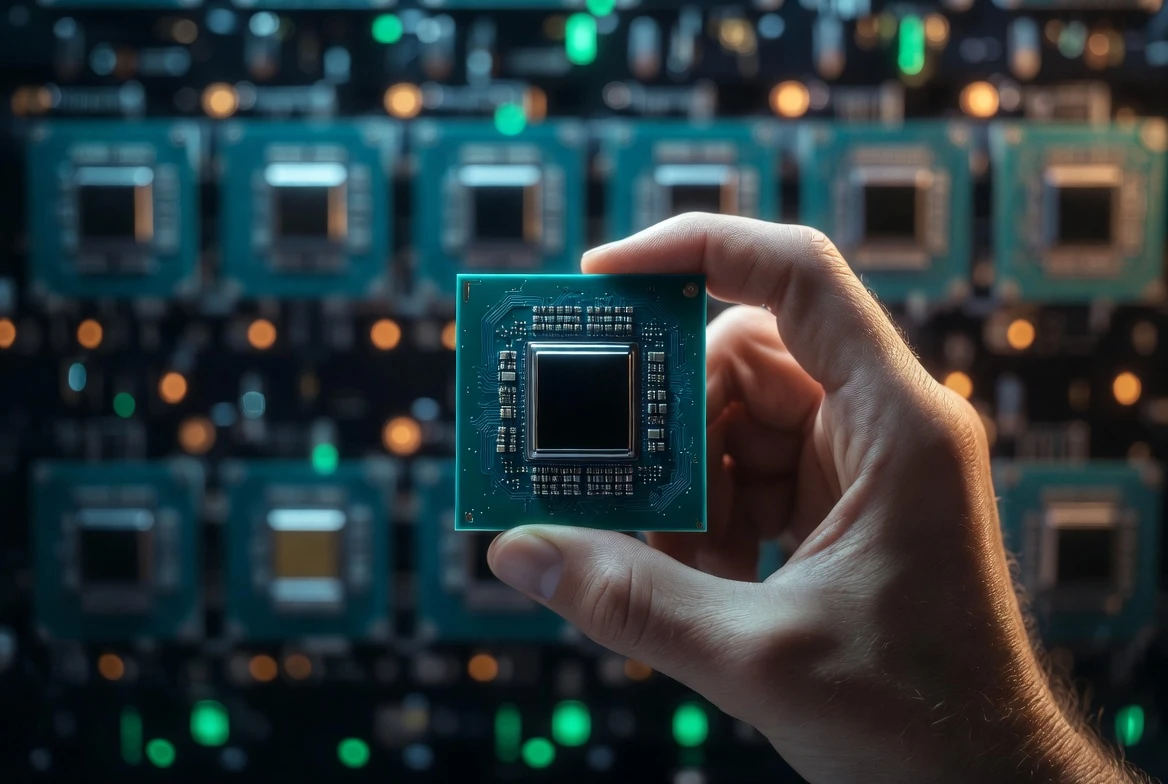
The compute claim is the headline. LongCat-2.0’s full pre-training and its production inference both ran on what Meituan describes as a domestic cluster of locally made accelerators.
The company has not publicly named the chip supplier or specific SKU. The strongest public signal sits in its technical materials: a reference to Huawei’s Collective Communication Library (HCCL), the chip-to-chip communication library Huawei ships with its Ascend accelerators and a near-analogue of NVIDIA’s NCCL. In a WeChat post accompanying the release, Meituan wrote that LongCat-2.0 has demonstrated “the capability to train large-scale models on domestic computing clusters.” DeepSeek-V4-Pro, released in April, leaned on home-grown silicon only for inference, not pre-training, per SCMP’s reporting. SCMP also noted that Meituan and Huawei Technologies did not immediately respond to requests for comment on the supplier question, so the chip itself remains officially unnamed.
The team started small. LongCat’s exploration of domestic compute began in 2023, scaling from thousands to 50,000 cards over three years, per the company’s own technical materials. The systems work spanned operator adaptation, communication optimization, and distributed stability. The LongCat team reports a 70%+ reduction in monthly daily fault rate, 1.5× Model FLOPs Utilization (MFU) improvement, and steady-state throughput exceeding 1 trillion tokens per day on domestic accelerator clusters.
The cluster also exposed hard limits. Meituan acknowledged that its domestic accelerators carry significantly less memory per device than NVIDIA’s H800, the chip Washington has banned from export to China. Memory was the “primary bottleneck” the team named, and reaching frontier scale took what the company called “significant effort into building a stable, secure, and scalable infrastructure,” with optimization around pipeline scheduling, memory, and operator-level control.
- 1.6 trillion total parameters in the LongCat-2.0 MoE architecture
- 48 billion parameters active per token on average, dynamic range 33B-56B
- 30 trillion tokens of pre-training data from scratch
- 1 million tokens native context window via LongCat Sparse Attention
- 50,000-card domestic compute cluster used for both training and inference
LongCat-2.0 vs. the Frontier on Coding
On coding benchmarks, LongCat-2.0 lands inside the leaderboard cluster rather than at its peak. LongCat-2.0 posts a 59.5 on SWE-bench Pro, ahead of OpenAI’s GPT-5.5 at 58.6 and Google’s Gemini 3.1 Pro at 54.2, with a 77.3 on SWE-bench Multilingual that puts it within a point of Claude Opus 4.6’s 77.8. Meituan’s official model page sets out the full benchmark slate for the agentic-coding use case the company has chosen.
The full benchmark slate from the official model page:
| Benchmark | LongCat-2.0 | Focus and comparison |
|---|---|---|
| SWE-bench Pro | 59.5 | Leads GPT-5.5 (58.6), Gemini 3.1 Pro (54.2), Claude Opus 4.6 (57.3) |
| SWE-bench Multilingual | 77.3 | On par with Claude Opus 4.6 (77.8) |
| Terminal-Bench 2.1 | 70.8 | Real terminal command interaction |
| RWSearch | 78.8 | Search agent tasks |
| FORTE | 73.2 | Productivity scenarios |
| BrowseComp | 79.9 | Complex browsing and retrieval |
Outside coding, the gap widens. Meituan acknowledges that LongCat-2.0 trails frontier systems such as OpenAI’s GPT-5.5 and Anthropic’s Claude Opus 4.8 on broader general-agent benchmarks like FORTE and BrowseComp. The model has not yet been evaluated on the independent Artificial Analysis or Arena leaderboards, nor on emerging tests such as Agents’ Last Exam and CyberGym. Third-party verification of the chip-stack claim is also still ahead, and rests on Meituan’s own account of its own infrastructure. The Owl Alpha period on OpenRouter is the longest record so far of how the model performed on real developer traffic.
On commercial access, Meituan ships LongCat-2.0 under an MIT license for self-hosting and sells API access at $0.75 per million input tokens and $2.95 per million output tokens, with a limited-time promotion dropping the rates to $0.30 per million for input and $1.20 for output. Under that promo, the per-million total quoted by VentureBeat’s pricing comparison is $1.50, identical to MiniMax-M3 and below DeepSeek-V4-Pro at $1.305, and far below GPT-5.5 at $35 per million total. The price gap fits the broader pattern of how Chinese open-weight models undercut Western frontier pricing on tokens.
The Owl Alpha Stealth Test
LongCat-2.0 entered the public eye under a different name. For roughly two months before the Meituan reveal, an anonymous model called Owl Alpha sat on OpenRouter, the platform developers use to benchmark and route production workloads. Owl Alpha reached the global top three by call volume on OpenRouter, topped the Hermes Agent workspace, ranked second on Claude Code deployments, and landed third across international OpenClaw environments. Meituan confirmed the identity on June 29 in a post on its LongCat X account.
During the unmasked residency, Owl Alpha processed roughly 10.1 trillion monthly tokens, averaging 559 billion per day, a 242% month-over-month jump in volume. By the time Meituan attached its corporate identity, the model had built usage, rankings, and a developer reputation independent of the brand. Under that approach, the model ran against real developer workloads for two months before any Meituan branding was attached.
What the Announcement Doesn’t Settle
Four specifics about the LongCat-2.0 announcement remain open. Meituan has been careful with the hardware specifics, and the official language stops at “domestic chips” and “domestic compute.” The LongCat blog uses the same phrasing and names no vendor. The HCCL reference in the technical materials is the strongest public signal, since that library ships with Huawei’s Ascend stack, but no Meituan or Huawei spokesperson has confirmed the chip model on the record. SCMP reported that Meituan and Huawei Technologies did not immediately respond to requests for comment on the supplier question, leaving third-party verification of the cluster itself resting on Meituan’s own account.
The headline policy question in U.S.-China tech competition has been whether denying Chinese labs the newest NVIDIA hardware would keep them from training frontier-scale models. The export-control framework stays in place, since restrictions still raise cost, slow access, and force harder engineering trade-offs, while LongCat-2.0 puts pressure on the simpler assumption behind that framework: that frontier-scale pre-training on domestic silicon was out of reach.
Meituan has commercial reasons to make this land. Its share price has fallen more than 30% year-to-date and its market capitalization has slipped below HK$400 billion. CEO Wang Xing told the annual shareholders’ meeting that recent stock performance had been “unsatisfactory” and that he bore “significant responsibility” for it, while CFO Chen Shaohui argued Meituan is “significantly undervalued” by the market and plans to resume share buybacks, per the Geopolitechs account of the meeting. The open-source release ships the weights directly into the developer community, where LongCat-2.0’s claims can be tested against real workloads.
Frequently Asked Questions
What is Meituan LongCat-2.0?
LongCat-2.0 is an open-source Mixture-of-Experts AI model released by Chinese food delivery and local services company Meituan on June 30, 2026. It carries 1.6 trillion total parameters with about 48 billion parameters active per token, supports a 1 million token context window, and is built specifically for agentic coding tasks.
Was LongCat-2.0 really trained without NVIDIA chips?
Meituan says yes, with both pre-training and large-scale inference on a 50,000-card domestic Chinese cluster and no NVIDIA or AMD GPUs in the pipeline. The chip supplier has not been publicly named, though the technical materials reference Huawei HCCL, the communication library Huawei ships with its Ascend accelerators.
How does LongCat-2.0 compare to GPT-5.5 and Claude Opus 4.6?
On coding-focused benchmarks, LongCat-2.0 posts a 59.5 on SWE-bench Pro, ahead of GPT-5.5 at 58.6 and Gemini 3.1 Pro at 54.2, with a 77.3 on SWE-bench Multilingual that puts it within a point of Claude Opus 4.6 at 77.8. On broader agentic tests like FORTE and BrowseComp, Meituan acknowledges the model still trails frontier systems including GPT-5.5 and Claude Opus 4.8.
What was Owl Alpha on OpenRouter?
Owl Alpha was the anonymous name under which LongCat-2.0 circulated on OpenRouter for roughly two months before Meituan publicly claimed it. The model reached the global top three on OpenRouter by call volume during that period, ranking first on Hermes Agent, second on Claude Code, and third on OpenClaw, before Meituan confirmed the link on June 29, 2026.
Why does this matter for U.S. export controls on Chinese AI?
U.S. export controls are built on the premise that denying Chinese labs the most advanced NVIDIA hardware will keep them from training frontier-scale models. LongCat-2.0 does not overturn that calculus, since restrictions still raise cost and force harder engineering trade-offs, but it does show that a Chinese company has now trained a trillion-parameter model end-to-end on domestic accelerators, the heaviest part of the AI stack done without U.S. silicon.


South Korea Retail Investors Face Reckoning After KOSPI AI Rally Collapses

Surrey AI Maps Three Heart Attack Paths and Their Molecular Roots

Germany Locks Neutral Apple ATT Prompts Across Most of Europe

Apple’s 5% EU Fee Quietly Rewrites Alternative App Store Math

Apple’s EU Fee Truce Cuts Complexity but Leaves Rivals Fuming

Pixel 11 Pro Fold Trades Thinness for Durability and Seven-Year Stay

Mayo AI Flags HCM Obstruction From Everyday Ultrasound Videos

Indian Brands Quietly Scale Landmark Screens and Home Tech

Navin Vatsa Turns Grief Into a Lifetime of Quiet Seeing

Google Bets Pixel 11 Agentic AI Will Redefine Phones

Oracle Cuts 21,000 Jobs in a Year, Cites AI in 10-K Filing

Fable 5 and Mythos 5 Return as US Lifts Anthropic Export Controls

SpaceX’s Google Deal Turns a Rocket Company Into a Cloud Landlord

CD Projekt Red Co-CEO: Redemption Arc Isn’t Done, Witcher 4 in 2027

XPL Rallies 30% Ahead of Plasma One Card Tier Launch

Google Search Profiles Build a Follow Graph Inside Discover

DGO App Brings Rs 549 Mobile Pass for FIFA World Cup 2026 in Nepal

Moonshot AI Targets $30 Billion in China’s Fastest AI Funding Sprint

Oppo’s ColorOS 17 Eligibility List Leaves A-Series Buyers Behind

Microsoft Xbox Layoffs Start in July as Sharma Slams 3% Margin
-
 AI2 months ago
Oracle Cuts 21,000 Jobs in a Year, Cites AI in 10-K Filing
-
 AI2 months ago
Fable 5 and Mythos 5 Return as US Lifts Anthropic Export Controls
-
 AI3 months ago
SpaceX’s Google Deal Turns a Rocket Company Into a Cloud Landlord
-
 GAMING2 months ago
CD Projekt Red Co-CEO: Redemption Arc Isn’t Done, Witcher 4 in 2027
-
 CRYPTO2 months ago
XPL Rallies 30% Ahead of Plasma One Card Tier Launch
-
 NEWS3 months ago
Google Search Profiles Build a Follow Graph Inside Discover
-
 APPS2 months ago
DGO App Brings Rs 549 Mobile Pass for FIFA World Cup 2026 in Nepal
-
 AI3 months ago
Moonshot AI Targets $30 Billion in China’s Fastest AI Funding Sprint