
AI
Cognizant Neuro AI Trust Puts Guardian Agents on Watch
Cognizant Neuro AI Trust puts Guardian Agents on other enterprise agents, after a 350,000-employee test and a category Gartner named in February.

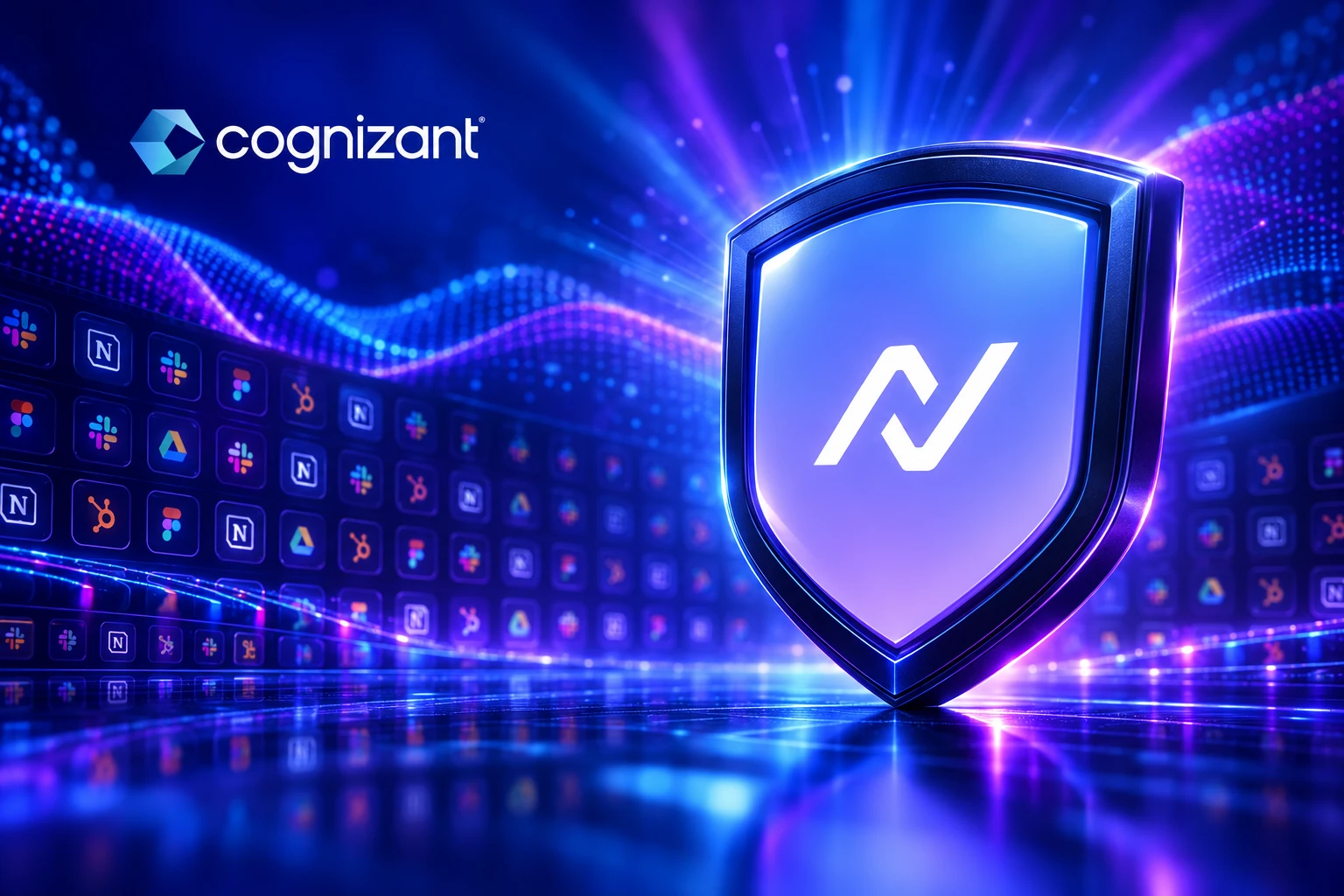
Cognizant launched Neuro AI Trust on July 1, 2026, a command center whose Guardian Agents watch other AI agents while they work. The Teaneck, N.J. firm, listed as Nasdaq CTSH, says static policy checks cannot keep up once models, tools and multi-step workflows start talking to each other. It already runs the stack on an intranet that serves 350,000 employees.
The pitch is control. The mechanism is another layer of autonomous software, sold as the way to live with the first layer.
Cognizant Put Agents in Charge of Other Agents
Neuro AI Trust is built as two layers that share a dashboard. A control layer uses Guardian Agents to watch behavior, interactions and outcomes. An intelligence layer scores those same interactions against configured policies and returns a live decision. Cognizant describes the whole thing as a central command center for real-time visibility across every model, agent and application in the estate.
Those Guardian Agents are not a log pack sitting beside the model. The company calls them a dedicated multi-agent system that follows other agents across steps, tools and turns. The failures it says it can catch are the ones a single-message filter never sees: escalation loops, circular disputes, risky tool use and patterns that only show up when several agents share a workflow.
The brand account posted the launch the same morning.
We have officially launched Cognizant Neuro® AI Trust, a new platform built to give enterprises real-time oversight and control across their AI systems. Read the full announcement: https://t.co/whPz0IBWSC pic.twitter.com/vDuzV3yJQT
— Cognizant (@Cognizant) July 1, 2026
Ravi Kumar S, Cognizant’s chief executive, wrote that static governance cannot keep pace and that trust is what closes the gap between buying AI and actually running it. Amir Banifatemi, the firm’s chief responsible AI officer, went further in the July 1 product announcement, tying the design to how agents behave once they are left running.
Neuro AI Trust was built to govern AI as it actually behaves: autonomously, continuously, and across systems that interact in ways no single policy check can anticipate. We know it is effective because we have applied it to our own AI systems.
Amir Banifatemi, Chief Responsible AI Officer, Cognizant, July 1, 2026 announcement
Banifatemi came to that job from XPRIZE, with earlier posts at the European Space Agency, Airbus and the European Commission. He now sells a runtime that is itself a multi-agent network, covering policy, risk and governance as separate agent domains. The watchers are agents. The watched are agents. The audit trail is the claim that a person can still reconstruct who did what.
The 350,000-Person Intranet Was the Test Bed
Cognizant’s proof is not a named bank or hospital. It is the company’s own agentified intranet, already serving 350,000 employees. That is a real production estate, and it is also the only one the launch materials identify.
On that network the platform is supposed to flag model drift, catch agents that fail to coordinate, and write records that let an operator replay an interaction, the policy that fired, and the action the governance layer took. Higher-risk or unclear calls can be paused and sent to a person with the surrounding context. Rules can be swapped at runtime, so a legal or risk team does not wait on a code release to tighten a threshold.
That internal run is doing two jobs at once. It gives sales engineers a reference they can point to. It also concedes that Cognizant did not trust periodic audits and static policies on its own agent stack. If the old tools had been enough for 350,000 people, there would have been little reason to build a second agent network to sit on top of the first.
The product is meant to sit beside Cognizant’s Neuro AI Multi-Agent Accelerator and beside third-party agent apps, which matters for buyers who already mix in-house models, vendor tools and outside APIs. Interoperability is the polite word for a mess the command center is being asked to paper over.
Gartner Had Already Named the Watchers
Cognizant did not invent the job title. On November 25, 2025, NeuralTrust, a separate security vendor, announced its own Guardian Agents as agents built to protect other agents. On February 25, 2026, Gartner published its first Market Guide for Guardian Agents, defining them as a blend of AI governance and runtime controls that supervise other agents, block risky actions, and are moving from bolted-on services toward autonomous policy enforcers.
That guide’s planning assumptions are blunt about where the failures will come from. Through 2028, Gartner says at least 80% of unauthorized AI agent transactions will be internal policy breaches (oversharing, unacceptable use, or misguided behavior) rather than outside attacks. By 2028 it expects organizations to put 5% to 7% of agentic AI spend into guardian agents, up from less than 1%.
THE ROAD TO THE JULY LAUNCH
- November 25, 2025: NeuralTrust announces Guardian Agents as agents that protect other agents.
- February 25, 2026: Gartner publishes its first Market Guide for Guardian Agents.
- June 4, 2026: Cognizant says Neuro AI Trust will plug into ServiceNow’s AI Control Tower.
- July 1, 2026: Cognizant ships Neuro AI Trust as a standalone command center and says it already runs on the 350,000-employee intranet.
The launch also leans on a Gartner survey of 360 organizations, run in the second quarter of 2025, that found firms which deployed AI governance platforms are 3.4 times more likely to achieve high effectiveness in AI governance than firms that did not. Lauren Kornutick, a Gartner director analyst, said traditional GRC suites are not built for live automated decisions, bias and misuse, and that point-in-time audits are not enough once systems act on their own.
THE SPEND GARTNER PUT ON THE CATEGORY
- 2026 platform spend: AI governance platforms are expected to reach $492 million this year.
- 2030 platform spend: That market is projected to pass $1 billion by 2030.
- Compliance bill: Fragmented AI rules are projected to cover 75% of the world’s economies by 2030 and to drive $1 billion in compliance spend, a separate total from platform revenue.
- GRC clutter: Large enterprises are forecast to run 10 GRC products by 2028, up from 8 in 2025.
Gartner also published its first Magic Quadrant for AI governance platforms in June 2026, two weeks before Cognizant’s standalone launch. The timing is the product’s real market context. Teaneck arrived after analysts had already drawn the map, and after a specialist vendor had already claimed the Guardian Agents name.
Mapping NIST, ISO and the EU AI Act
Every interaction, Cognizant says, is scored at runtime against the voluntary NIST AI Risk Management Framework, the EU AI Act, the OECD Principles, ISO/IEC 42001, and whatever internal policy pack the customer loads. The outcome is one of three states: permissive, warning or blocking.
Those four labels are not the same kind of rule. NIST released AI RMF 1.0 on January 26, 2023, for voluntary use, with no certificate attached. A generative-AI profile followed on July 26, 2024, and on April 7, 2026 NIST posted a concept note for a critical-infrastructure profile. ISO/IEC 42001:2023 is a certifiable AI management-system standard, closer to ISO 27001 than to a software feature. The EU AI Act is law. It entered into force on August 1, 2024, and general-purpose model duties applied from August 2, 2025.
HOW THE THREE FRAMEWORKS DIFFER
| Framework | Force | What counts as proof |
|---|---|---|
| NIST AI RMF 1.0 | Voluntary U.S. guidance | Self-attestation; no formal certificate |
| ISO/IEC 42001:2023 | Voluntary international standard | Third-party certification of an AI management system |
| EU AI Act | Binding EU law | Legal duties by role and risk class; GPAI rules from August 2, 2025 |
A dashboard that maps traffic to those names is a control. It is not a notified-body opinion, a CE mark, or an ISO certificate. Multinationals still have to show a regulator who owned the system, who could stop it, and which record proves the stop. Neuro AI Trust is built to produce that record. The legal duty stays with the provider or the deployer, depending on the use.
ServiceNow Saw the Platform Before the Launch
The public product date is July 1. The first big distribution deal came 27 days earlier. On June 4, 2026, Cognizant announced a June integration with ServiceNow AI Control Tower, and said more detail on Neuro AI Trust’s two layers would follow. July 1 was that follow-up.
Sriram Kumaresan, Cognizant’s global head of cloud and infrastructure services, said the market had already solved access to AI and that the remaining job was to run it at business speed without losing the plot. In the June note, Neuro AI Trust was described as a library of responsible-AI and Guardian agents that would sit on ServiceNow’s inventory, control and performance backbone. For a services firm trying to look like a platform company, that pairing is the go-to-market. ServiceNow already sits in the operations console. Cognizant wants the runtime referee that console calls.
Jennifer Hamel, research vice president for enterprise data and AI services at IDC, supplied the buyer line Cognizant wanted next to the product.
As agentic AI moves into enterprise operations, the constraint is no longer capability but trust. Technology leaders expect governance, accountability and transparency to be addressed by AI platforms. Increasingly, organizations look to service providers for agentic AI platforms, such as Cognizant Neuro AI Trust, that combine technical integration, governed deployment and auditability as a strategic operating layer, not isolated tooling.
Jennifer Hamel, Research Vice President, Enterprise Data and AI Services, IDC
That sentence does a lot of work for a systems integrator. It tells a CIO the purchase is not another scanner. It is the operating layer. Whether a second agent network can be that layer, without becoming one more thing to govern, is the question the launch does not close.
What Permissive, Warning and Blocking Outcomes Mean
The runtime loop is simple to state and hard to trust. Each interaction is evaluated, matched to a policy pack, and tagged permissive, warning or blocking. A warning can leave a trace. A block is supposed to stop the action. A permissive result is the system saying the path is inside the fence. Policy packs load at runtime, so the fence can move without a release train.
WHAT THE COMMAND CENTER SAYS IT WILL DO
- Trust score: Operators get a composite score plus lifecycle views of model behavior, cost, sustainability and agent interactions, including early drift and cross-agent coordination risk.
- Watcher network: Guardian Agents follow steps, tools and turns to catch loops, circular disputes and risky tool use.
- Live decisioning: Each interaction maps to NIST, the EU AI Act, OECD Principles, ISO/IEC 42001 and custom rules, then returns permissive, warning or blocking.
- Rule changes: Policies, packs and risk thresholds load at runtime for legal and risk teams, with no code drop required.
- Human pause: Ambiguous or high-stakes calls can halt and go to a reviewer who can approve, reject or ask for more information.
- Replay: Audit records and replay views reconstruct what happened, why, which policy applied, and how the governance layer answered.
- Upstream signals: Traces are supposed to flag a likely breach earlier in a workflow, before the bad action lands.
A control plane like that still leaves a person on the hook. A dashboard does not name an accountable executive, write the acceptable-use policy, or sit in front of a regulator when an agent refunds the wrong customer. Process, named owners and an evidence pack a human can defend remain the job, and a second agent network does not retire them. Cognizant’s own materials keep a human in the loop for the calls the agents cannot score, which is an admission as much as a feature.
As of September 2026, the only workforce Cognizant has named on Neuro AI Trust is still its own 350,000 employees. The watchers are in production. The public customer list is not.
Frequently Asked Questions
Does Mapping to ISO/IEC 42001 Mean Neuro AI Trust Is Certified?
No. ISO/IEC 42001 is a certifiable AI management system that an organization can seek from a third-party auditor, in the same family as ISO 27001. Neuro AI Trust maps live interactions to that standard, and to NIST, the EU AI Act and OECD Principles, then returns a control decision. Mapping is a product claim. A certificate is an audit result that hangs on the deploying company, not on the vendor dashboard.
Can Risk Teams Change a Rule Without a Software Release?
Yes. Cognizant says policies, policy packs and risk thresholds are loaded at runtime, so compliance, legal and risk staff can change controls as soon as a requirement moves. Engineering does not have to ship a build for a threshold change, which is the operational difference between a governance console and a library buried in application code.
Which Industries Does Cognizant Pitch First on the Product Page?
The product page lists financial services and banking, healthcare and life sciences, insurance, telecommunications, media and entertainment, and retail and consumer goods. Those are the verticals where the company says model risk, claims, clinical and network workflows already need a live referee, not a quarterly review.
What Happens When the System Cannot Score a Decision?
Higher-risk or unclear calls can be paused and routed to a human reviewer with the full context of the interaction. That person can approve, reject or request more information before the agent is allowed to act. The pause is how Cognizant keeps a named human in a system whose selling point is that agents no longer wait for one.
What Five Tests Sit in the Cognizant Trust Framework?
Neuro AI Trust is grounded in the Cognizant Trust framework, which the company describes as a way to keep systems transparent, fair, safe, accountable and reliable across the AI lifecycle. Those five tests are internal design goals. They are not a substitute for ISO certification or for an EU conformity assessment on a high-risk use case.

Instagram Plus Tests a Read-Only Mode That Cuts Stories

Altman Asks the Public to Accept Some AI Harm

Google Freezes OSS VRP Product Reports After AI Flood

AI Agents Make Payment Rails the Scarce Prize

Turkey’s Crypto Boom Now Runs Through Three Banks

Fable 5 Came Back Under a Commerce On-Off Switch

Google’s SpaceX GPU Lease Has a Sept. 30 Deadline

Plasma One’s XPL Locks Face a 1.81 Billion Cliff

DGO’s Rs 549 World Cup Pass Cost Fans Sleep and Data

Moonshot AI’s $30 Billion Ask Became a $35 Billion Close
-
 AI4 months ago
Fable 5 Came Back Under a Commerce On-Off Switch
-
 AI5 months ago
Google’s SpaceX GPU Lease Has a Sept. 30 Deadline
-
 CRYPTO5 months ago
Plasma One’s XPL Locks Face a 1.81 Billion Cliff
-
 APPS5 months ago
DGO’s Rs 549 World Cup Pass Cost Fans Sleep and Data
-
 AI5 months ago
Moonshot AI’s $30 Billion Ask Became a $35 Billion Close
-

 NEWS5 months ago
ColorOS 17 Device List Spans Oppo, OnePlus and Realme
-

 GAMING4 months ago
The RTX 4050 Under Rs 70,000 Hides a Wattage Gap
-

 AI4 months ago
Boris Cherny’s Loops Still Demand a Higher Production Bar