
AI
India Plans Dedicated AI Law as IT Rules Show Their Limits
MeitY Secretary S. Krishnan said on July 3 that the time is “getting right” for India to draft a dedicated AI law, pointing to gaps in the IT rules.

India’s top electronics and IT ministry secretary has signalled that the time is “getting right” for the country to draft a dedicated law to govern artificial intelligence, ending years of patching AI concerns through existing IT rules.
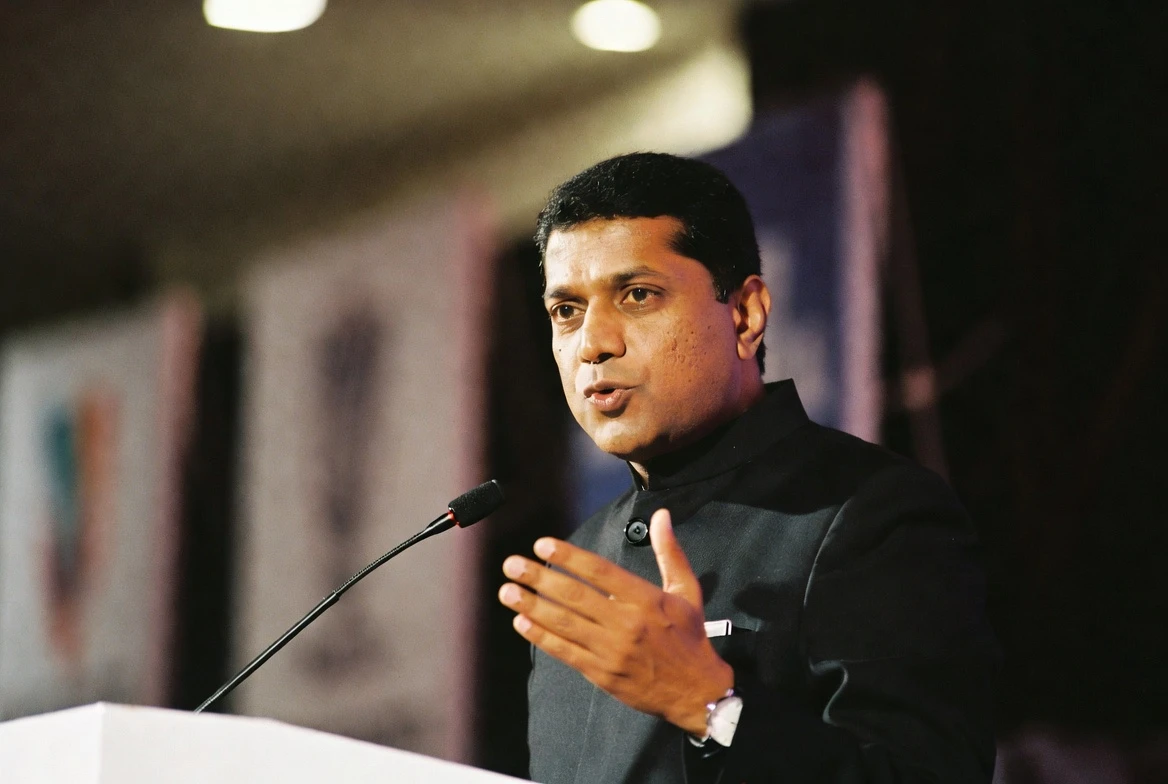
S. Krishnan, Secretary of the Ministry of Electronics and Information Technology (MeitY), told reporters on the sidelines of a Confederation of Indian Industry (CII) conference in New Delhi on July 3 that the Centre may now begin work on a separate statutory framework for AI. The shift comes even as the government continues to apply existing IT rules to synthetic media, deepfakes, and platform accountability.
MeitY Secretary Says the Time Is ‘Getting Right’
Krishnan’s framing placed the new push in the context of what existing law has already done. He described a regime that has run through IT rules, intermediary guidelines, and adjacent statutes to address deepfakes, synthetic content, and platform compliance. Now, he suggested, that scaffolding has reached its useful end. “We have used the IT rules, and other provisions of existing law to address various concerns that AI raises, but now, probably the time has come to look at a separate legislation,” he said, according to MeitY’s July 3 briefing on the AI law push.
The Secretary paired the signal with a careful caveat on timing. Asked when a draft AI law could be expected, Krishnan said ministry officials could prepare a legislative proposal but declined to fix a date for Parliament. On advisory bodies, he said the government is also expected to constitute them to help shape the AI policy framework.
It is a conversation which has commenced, and my Minister (IT Minister Ashwini Vaishnaw) and I have both been on record earlier that we will look at AI regulation when the time is right, and it appears that the time is getting right, and we will start looking at it.
S. Krishnan, the MeitY Secretary, offered the remarks on the sidelines of a CII conference in New Delhi on July 3. He spoke on the record to ANI and other outlets at the event.
What the IT Rules Already Cover
The legal scaffolding India leans on today is the Information Technology (Intermediary Guidelines and Digital Media Ethics Code) Rules, 2021, as tightened by amendments notified in February this year. Those amendments formally defined “audio, visual or audio-visual information” and “synthetically-generated information” for the first time. The definitions cover AI-created or altered content that appears real or authentic. Routine editing, accessibility improvements, and good-faith educational or design work were carved out of the definition.
The same amendment package set a hard response deadline for platforms. Online intermediaries such as X and Instagram must take down any deepfake or synthetic content flagged by a competent authority or court within three hours. Stricter disclosure norms proposed alongside the amendments would require clear and continuous labels identifying synthetically-generated information, visible throughout the entire duration of a visual display.
Krishnan’s read on that record was measured. The existing rules had been adequate to resolve initial concerns on deepfakes and AI-generated content, he said; additional regulation or a new law may now be needed to address harms from the technology.
The pivot rests on what the current text cannot reach. MeitY is preparing draft legislation for a fresh statute while the existing framework keeps running in parallel. The bridge between the two regimes is the set of labelling rules now in the rule-making pipeline.
- February 2026: IT Rules amended to define synthetic content and set a three-hour takedown window.
- October 2025: Government proposed mandatory labelling amendments with specific screen and audio disclosure rules.
- December 2025: MeitY said industry consultations on mandatory AI labelling had concluded and revised rules would be notified soon.
- February 2026 effective date: Three-hour deadline and formal definitions of synthetic content entered into force.
- July 3, 2026: MeitY Secretary flags a dedicated AI statute as the next step.
Where the Existing IT Rules Stop
The push for a separate law sits on top of acknowledged limits in the 2021 framework. IT Minister Ashwini Vaishnaw told PTI last month that the current information technology law was framed before the rapid emergence of artificial intelligence, and that a new framework may be needed to address AI’s rise. Krishnan’s Friday remarks echo that framing, with both officials pointing at the same gap. According to MeitY’s case for a separate AI regulatory framework, the ministry’s risk register runs wider than the existing rules can reach.
Deepfake videos, AI-generated audio, and other synthetic media can spread misinformation, damage reputations, influence elections, and facilitate financial fraud, the ministry has warned. The 2021 rules give the government takedown and labelling tools. A dedicated AI law could give it jurisdiction over training data, model accountability, algorithmic transparency, and the duties of large model providers.
The government is also expected to constitute advisory bodies to help shape the AI policy framework, sitting alongside the draft legislation Krishnan described. Vaishnaw has framed the push as an attempt to strike a balance between innovation and regulation. India’s distinctive choice is to start from a base of existing platform rules rather than a clean slate. That base now shapes what a new statute would need to either replace or supplement, as covered in how India governs AI without a dedicated act.
Labelling Amendments in the Pipeline
While the dedicated AI law remains at the drafting stage, a separate set of labelling amendments has been working through the rule-making process. The October 2025 proposed amendments to the IT Rules required AI-generated or AI-modified content to be clearly labelled, while raising the accountability of large digital platforms such as Facebook and YouTube for identifying and flagging such material. Krishnan said in December 2025 that industry consultations on mandatory labelling had concluded and that revised rules would be notified soon, per the proposed AI labelling rules and the risks MeitY has named. The set of obligations being prepared has five components drawn from that draft.
The proposed framework treats synthetic media as a defined category, with specific carve-outs for benign use cases. Platforms will need to act on flagged material quickly, with a fixed response window that has already been tested in the February 2026 amendment cycle. The full list of obligations, drawn from the October 2025 draft and the consultations that followed, lays out the practical duties of platforms and the visibility rules for AI media. Once notified, the labelling regime will sit alongside the existing IT Rules rather than replace them. The dedicated AI law Krishnan flagged on July 3 could fold the labelling rules into a broader statute, though its scope is still being drafted.
- Visible markers or metadata on all AI-generated or altered content.
- For visual content, the disclosure must cover at least 10% of the screen.
- For audio content, a disclosure must appear within the first 10% of the clip.
- Routine editing, accessibility improvements, and good-faith educational or design work are excluded.
- Platforms must take down flagged synthetic content within three hours of a competent authority or court order.
The Anthropic Sidetrack at the Same Briefing
Krishnan’s July 3 briefing also touched on the export-control side of the AI file. He told reporters that export restrictions on Anthropic’s Mythos model had been eased, though restrictions continue on Anthropic’s next-generation models.
Restrictions are still in place on Mythos 5, Krishnan said. That model is limited to Anthropic’s GlassWing partners, an initial group of US companies. Anthropic wants to extend access to entities in 15 countries including India, he added.
The expansion to those 15 jurisdictions is not yet live. Anthropic’s plan still requires US government clearance, Krishnan noted. Once cleared, the doors would open to entities in countries including India. That clearance process is currently in motion, per Krishnan.
The Mythos exchange was a sidetrack from the regulatory thrust of the briefing. It illustrates a second front on which the MeitY Secretary now fields AI questions. Market access for frontier models sits alongside domestic statutory design as a parallel concern.
What a New AI Law Could Add to the Patchwork
A dedicated statute would be a different animal from the amendments Krishnan is preparing under existing IT rule powers. Vaishnaw’s framing captures the gap: the government is consulting industry and aiming for the balance between innovation and regulation Krishnan outlined on Friday. The shape of any new law remains open while the draft is prepared.
A new law could codify that balance by setting out duties for model providers, training data accountability, and algorithmic transparency. Its scope is yet to be defined, with ministry officials expected to consult industry groups, technical experts, and civil society before any text is finalised. The drafting itself is the next visible step. It will come ahead of any cabinet note or parliamentary introduction.
The February 2026 amendments work as the bridge from the 2021 rules to a new AI-specific statute. Krishnan’s Friday remarks mark that bridge as crossed in intent. The risks MeitY has named in the meantime point to the scope the eventual statute will need to address.
| Layer | What it covers | Where it stops |
|---|---|---|
| IT Rules, 2021 (original) | Intermediary safe harbour, content takedowns on court or government order | Predates generative AI; no AI-specific definitions |
| February 2026 amendments | Formal definition of synthetic content; three-hour takedown; labelling proposals pending | Platform-facing only; no duties on model providers or training data |
| Pending dedicated AI law | Could cover model accountability, training data, algorithmic transparency, advisory bodies | Undrafted; timing of parliamentary introduction unclear |
Frequently Asked Questions
Why is India considering a dedicated AI law now?
MeitY Secretary S. Krishnan said on July 3 that the time is “getting right” for fresh AI legislation, pointing to the limits of existing IT rules. IT Minister Ashwini Vaishnaw told PTI last month that the current IT law was framed before the rapid emergence of AI and that a new framework may be required to address the change.
What does the existing three-hour deepfake takedown rule cover?
The February 2026 amendments to the IT Rules require platforms such as X and Instagram to remove AI-generated or synthetic content, including deepfakes, flagged by a competent authority or court within three hours. The same amendment package formally defined “audio, visual or audio-visual information” and “synthetically-generated information” covering AI-created or altered content that appears real or authentic.
What labelling rules are on the table for AI-generated content?
The October 2025 proposed amendments would require AI-generated or modified content to carry visible markers or metadata. For visual content, the disclosure must cover at least 10% of the screen; for audio, a disclosure must appear within the first 10% of the clip.
When might India table a dedicated AI bill?
Krishnan declined to give a date, saying ministry officials can prepare draft legislation but the timing of passage is a matter for Parliament. The drafting itself is the next visible step.
Will India’s AI law follow the EU AI Act model?
Krishnan and Vaishnaw have not said so explicitly. The government’s stated aim is to balance innovation and regulation, and Vaishnaw has framed the need as a way to address gaps in a pre-AI statute rather than to replicate any foreign model.


Pixel 11 Trails Galaxy Phones That Last as Long

OpenAI’s Research Intern Arrives With a Warning Attached

Robinhood Prices XRP Into a Two-Cent 9 a.m. Bet

Sony’s 10 Percent Disc Drop Leaves the 2028 Cutoff Intact

Chip Allocation Sidelines the Base iPhone 18 This Fall

Miami-Dade Fights the Vice City Brand It Already Wears

IFA 2026 Awards Put Tecno Ahead of Flagship Phones

USB-C Gadgets Made the Junk Drawer Rechargeable

Pixel 11 Pro Asks $1,099 for a Light Google Locked

The iPhone Ultra Sells Two Retired Minis as One Foldable

Oracle Cuts 21,000 Jobs in a Year, Cites AI in 10-K Filing

Fable 5 and Mythos 5 Return as US Lifts Anthropic Export Controls

SpaceX’s Google Deal Turns a Rocket Company Into a Cloud Landlord

CD Projekt Red Co-CEO: Redemption Arc Isn’t Done, Witcher 4 in 2027

XPL Rallies 30% Ahead of Plasma One Card Tier Launch

Google Search Profiles Build a Follow Graph Inside Discover

DGO App Brings Rs 549 Mobile Pass for FIFA World Cup 2026 in Nepal

Moonshot AI Targets $30 Billion in China’s Fastest AI Funding Sprint

Oppo’s ColorOS 17 Eligibility List Leaves A-Series Buyers Behind

Microsoft Xbox Layoffs Start in July as Sharma Slams 3% Margin
-
 AI3 months ago
Oracle Cuts 21,000 Jobs in a Year, Cites AI in 10-K Filing
-
 AI2 months ago
Fable 5 and Mythos 5 Return as US Lifts Anthropic Export Controls
-
 AI3 months ago
SpaceX’s Google Deal Turns a Rocket Company Into a Cloud Landlord
-
 GAMING3 months ago
CD Projekt Red Co-CEO: Redemption Arc Isn’t Done, Witcher 4 in 2027
-
 CRYPTO3 months ago
XPL Rallies 30% Ahead of Plasma One Card Tier Launch
-
 NEWS3 months ago
Google Search Profiles Build a Follow Graph Inside Discover
-
 APPS3 months ago
DGO App Brings Rs 549 Mobile Pass for FIFA World Cup 2026 in Nepal
-
 AI3 months ago
Moonshot AI Targets $30 Billion in China’s Fastest AI Funding Sprint