
AI
SK hynix $26.5B Nasdaq Listing Reignites Asia’s AI Trade
SK hynix priced a $26.5B US listing at a premium, the largest by a foreign firm on US markets. Asian markets rallied on Friday, though capex jitters persist.

SK hynix priced its long-awaited Nasdaq offering at $149 per American depositary share on Thursday, raising about $26.5 billion in what the company says is the largest US listing by a foreign firm. The deal, more than seven times oversubscribed, set a green-tinted tone for Asian markets on Friday, with Seoul’s Kospi jumping 3.4 percent to 7,539.56 and Tokyo’s Nikkei 225 adding 1.8 percent to 68,943.76 at the break. SoftBank piled on more than 10 percent in Tokyo, and Samsung rose 4 percent in Seoul.
The size of the raise, and the fact that SK hynix managed to price it at a premium to its Seoul close, signals that institutional demand for AI infrastructure plays has not abated. The listing hands the world’s leading high-bandwidth memory supplier a deeper US capital base and a higher profile with global investors. It does not, on its own, resolve the broader questions hanging over the AI trade, including stretched valuations and capital spending that even the chip industry’s strongest quarter cannot fully allay. The next test lands in the upcoming earnings season, with traders expecting interest rates to be kept elevated in the meantime.
The $26.5 Billion Vote for AI Memory
SK hynix priced 177.9 million American depositary shares, each representing one-tenth of a Seoul-listed common share, at $149 apiece in a deal led by BofA Securities, Citigroup, Goldman Sachs and JPMorgan, per the SK hynix’s Form F-1 filed with the SEC on June 24. The pricing was more than seven times oversubscribed, according to market sources cited by The Korea Herald. At about $26.5 billion, the offering is the largest US listing by a foreign firm, SK hynix said.
| Company | Year | Listing venue | Amount raised |
|---|---|---|---|
| SpaceX | 2026 | (US exchange) | $85.7 billion (largest US IPO overall; not a foreign firm) |
| SK hynix | 2026 | Nasdaq | $26.5 billion (largest US listing by a foreign firm) |
| Saudi Aramco | 2019 | NYSE | $25.6 billion |
The pricing was unusual in another way. The $149 ADS price came in at a roughly 2.9 percent premium to SK hynix’s Seoul close of 2.19 million won, or about $1,450 per common share, on Thursday. Large equity offerings are typically priced at a discount to prevailing market prices to attract buyers, and SK hynix said the deal was the first US initial public offering of its kind to be priced at a premium. Market sources told The Korea Herald that demand came from a broad roster of institutional investors, including global long-only funds, technology-focused funds, sovereign wealth funds and Asia-focused buyers. Conditional trading on the Nasdaq began Friday under the symbol SKHYV; regular trading as SKHY is set for Monday, with the offering scheduled to close Tuesday, according to SK hynix’s announcement of the initial public offering of ADSs.
The sale was registered with the SEC on June 24, when SK hynix filed its Form F-1 prospectus in the United States. SK hynix remains a step behind SpaceX’s roughly $85.7 billion offering last month, the largest IPO in US market history overall. Among foreign issuers, the deal now sits above Saudi Aramco’s 2019 $25.6 billion debut on the New York Stock Exchange, as detailed in the related SK Hynix’s $29B SKHY listing on the Nasdaq.
Why Memory, and Why HBM, Is the Bottleneck
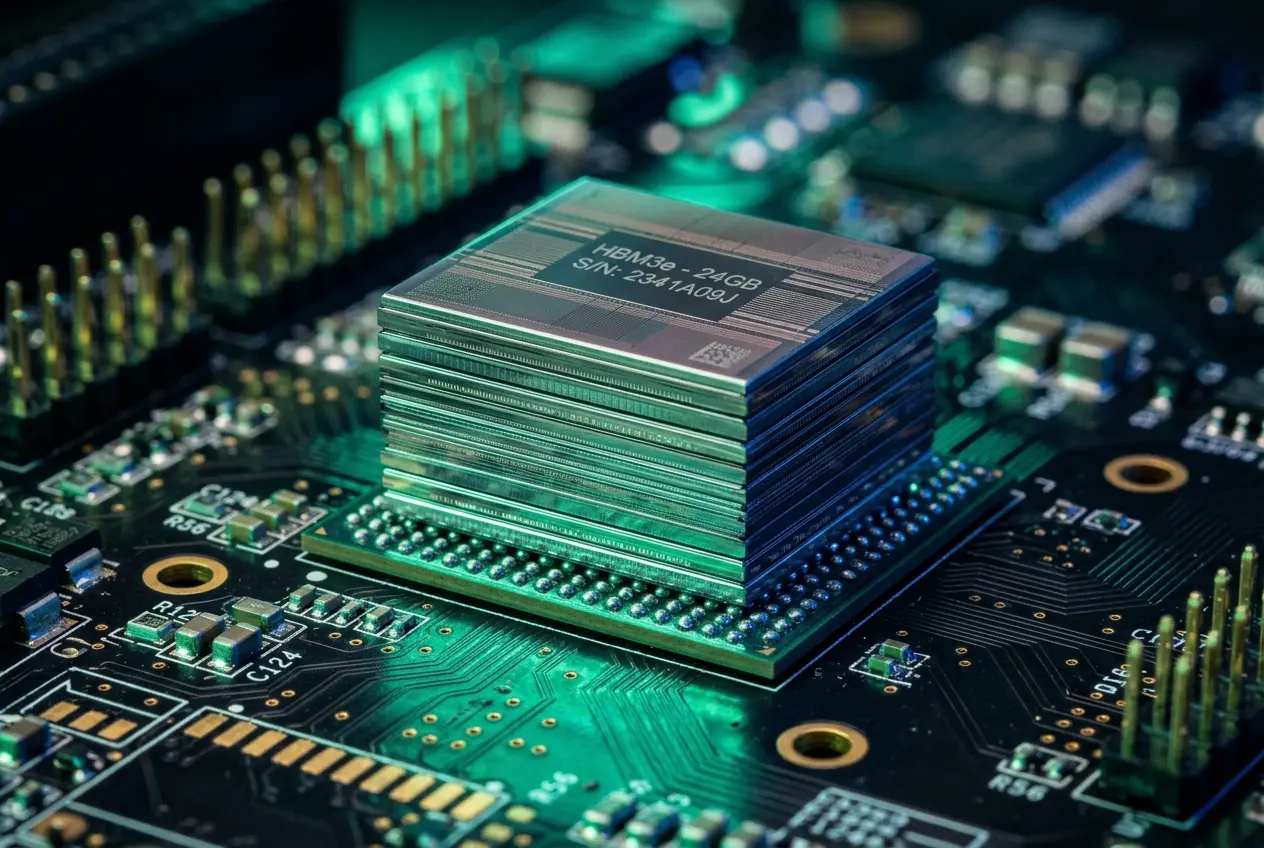
The deal is, at its core, a vote for high-bandwidth memory, the advanced component that has become the chokepoint in the AI buildout. SK hynix, Samsung and Micron are the three heavyweights in the global HBM market, supplying the memory stacks that sit alongside Nvidia’s processors in AI servers and other data-crunching semiconductors. SK hynix has held the lead in HBM through successive generations of Nvidia’s hardware, and the entire memory sector is sold out through 2026. The supply-driven boom shows no sign of letting up, with operating margins at the three HBM leaders forecast to run between 75 percent and 80 percent in the second quarter, according to Counterpoint Research.
- $54.6 billion: BofA estimate of the 2026 HBM market size
- 62 percent: SK hynix share of HBM shipments as of Q2 2025 (Counterpoint)
- 58 percent: BofA forecast for HBM market growth in 2026
- 70 percent: UBS forecast for SK hynix’s HBM4 share on Nvidia’s Rubin platform in 2026
- 82 percent: Goldman Sachs forecast for HBM demand growth in custom-ordered ASIC AI chips
Counterpoint expects that run-rate of 75 to 80 percent operating margins to hold through at least next year, per SK hynix’s own 2026 outlook on the HBM supercycle. The Nasdaq listing is also expected to help SK hynix close a long-running valuation gap with Micron by making its shares more accessible to US and global investors. SK hynix’s price-to-earnings ratio has been 20 percent to 40 percent lower than that of its US rival. The Korea-headquartered memory maker is applying to list under the ticker SKHY on the Nasdaq Global Select Market. Pepperstone research strategist Dilin Wu told AFP the pricing “says clearly that the AI memory cycle is real, the earnings are real.”
Across Asia: Who Led Friday’s Rally
The broader Asian market reaction was emphatic, with chip-heavy and AI-adjacent names doing the heaviest lifting. Tokyo’s tech complex led the move: SoftBank piled on more than 10 percent, while Tokyo Electron and Advantest each added around 4 percent. In Seoul, Samsung rose 4 percent, riding the same HBM wave. SK hynix, by contrast, was the day’s quietest winner in its home market.
The Seoul-listed shares rose just 1 percent on Friday, having already added around 5 percent on Thursday in advance of the pricing. The narrow Friday move reflected the 2.5 percent dilution from the new ADR issuance against SK hynix’s existing share count. Yet the external vote of confidence was overwhelming: orders during the Nasdaq book-building ran more than seven times the number of ADRs on offer.
Stephen Innes, managing partner at SPI Asset Management, said the oversubscription “tells you all you need to know about the current temperature of the market.” He added: “Investors are still desperate for anything bolted to AI infrastructure, especially if it sits close to the high-bandwidth memory bottleneck.” The Asia session’s index moves were broad, if more measured in the index levels themselves. Seoul’s Kospi gained 3.4 percent to 7,539.56, leading the regional move. At the break, the Nikkei 225 was up 1.8 percent to 68,943.76, the Hang Seng had risen 1.5 percent to 24,386.91, and Shanghai’s Composite was up 0.5 percent to 4,055.00.
Hong Kong, Shanghai, Singapore, Sydney and Jakarta all joined the advance in early trade. SK hynix’s Seoul-listed shares had ballooned almost 700 percent in the 12 months to their June 23 peak, before the stock got caught up in a global tech rout that AFP reports was fueled by fears of overheated valuations and questions about when huge AI investments will pay off. The Kospi touched intraday gains above 4 percent on Friday, before settling at 3.4 percent. Attention now turns to the upcoming earnings season, with traders looking to companies’ outlooks for the industry and investment plans amid expectations that interest rates will be kept elevated for the time being.
Why the Listing Barely Moved SK hynix’s Own Stock
The most striking detail of the day sat at the center of it. SK hynix’s own shares, the asset most directly exposed to the deal, rose just 1 percent on the Nasdaq debut. The broader Kospi jumped more than 4 percent at one point, and the rest of the chip complex went along for the ride.
The narrow SK hynix move partly reflected dilution. The new ADRs amount to about 2.5 percent of SK hynix’s existing share count, a small but real supply addition. The other factor was timing: SK hynix had already added around 5 percent on Thursday in advance of the pricing. SK hynix had climbed almost 700 percent in Seoul in the year to its June 23 peak, leaving a heavy run-up to absorb.
The relative indifference in the stock also hints at the long-running valuation gap with Micron that the listing is meant to close. SK hynix’s price-to-earnings ratio has been 20 percent to 40 percent lower than that of its US rival, according to the Korea Herald. The company expects the listing to draw more global investors and provide greater flexibility in raising capital over the longer term. SK hynix has also been building a broader presence on the global stage, including a market capitalization on the Kospi that passed $1 trillion in May, per AFP. The next test lands with the upcoming earnings season, with traders looking to companies’ outlooks for the industry and investment plans.
Where the $26.5 Billion Goes
The use of proceeds is the next chapter in the AI memory story. According to SK hynix’s regulatory filing, the $26.5 billion will help fund the first fabrication plant at the Yongin semiconductor cluster and the P&T7 advanced packaging plant in Cheongju. The company has separately earmarked 11.9 trillion won for extreme ultraviolet lithography equipment to be installed by the end of next year. The offering could also bring SK hynix closer to its goal of building a net cash position of 100 trillion won.
- Yongin Cluster: first fabrication plant for advanced memory
- Cheongju: P&T7 advanced packaging plant
- EUV lithography equipment: 11.9 trillion won earmarked, installation by end of next year
- Balance sheet: targeting a net cash position of 100 trillion won
Each of those bets is a multi-year commitment to HBM supply. Counterpoint Research’s forecast that operating margins at the three HBM leaders will average 75 percent to 80 percent in the second quarter gives the spending plan a financial cushion. But the same research firm expects the supply-driven boom to continue through at least next year, with the market quick to punish chip stocks when forward guidance wobbles after that window.
Oil, Hormuz, and the Crosscurrents at Earnings Season
Outside the AI complex, the macro backdrop was also pointing in a calmer direction on Friday. Oil trading floors were less tense than earlier in the week, with both main crude contracts edging up after dropping around 2 percent the day before. West Texas Intermediate rose 0.1 percent to $72.16 a barrel, and Brent North Sea crude added 0.1 percent to $76.35. Investors were growing less concerned that the recent US-Iran flare-up over the Strait of Hormuz would reignite a wider war.
The cooling in oil prices followed a sharp Wednesday rally that had pushed both contracts higher on Hormuz risk. Analysts pointed out that more oil is now produced outside the Gulf region, which tempers the impact of any disruption. The pullback suggested markets were treating the latest escalation as a temporary setback rather than the start of a prolonged conflict.
Oil prices are pulling back after Wednesday’s sharp rally, indicating that markets still expect diplomacy to ultimately prevail and that any disruption to global energy supplies is likely to be limited.
That was City Index analyst Fiona Cincotta, framing Thursday’s pullback as a sign that markets still expect diplomacy to ultimately prevail. The dollar eased against the yen, trading at 161.43 yen from 162.38 on Thursday. The Dow closed up 0.3 percent at 52,487.41, while London’s FTSE 100 ended down 0.2 percent at 10,472.45. SK Group Chairman Chey Tae-won and Kwak Noh-jung, SK hynix’s CEO, are due at the opening-bell ceremony at the Nasdaq MarketSite in New York’s Times Square as conditional trading began.
Frequently Asked Questions
What is high-bandwidth memory and why is it important for AI?
HBM is a type of stacked DRAM that sits next to AI processors like Nvidia’s GPUs in data center servers. It delivers the bandwidth needed to feed large AI models. Three companies, SK hynix, Samsung and Micron, dominate the global supply.
Why is SK hynix’s Nasdaq listing considered a record?
SK hynix raised about $26.5 billion by pricing 177.9 million American depositary shares at $149 apiece. The company said the deal was the largest US listing by a foreign firm, surpassing Saudi Aramco’s 2019 $25.6 billion New York Stock Exchange debut.
What did the oversubscription of the listing signal about investor appetite?
The offering was more than seven times oversubscribed, with demand coming from global long-only funds, technology-focused funds, sovereign wealth funds and Asia-focused investors. SPI Asset Management’s Stephen Innes said the oversubscription rate “tells you all you need to know about the current temperature of the market.”
How is SK hynix using the proceeds from the offering?
SK hynix has earmarked the proceeds to fund the first fabrication plant at the Yongin semiconductor cluster and the P&T7 advanced packaging plant in Cheongju, plus 11.9 trillion won for extreme ultraviolet lithography equipment. The company is also working toward a net cash position of 100 trillion won.


D&D Bets Big on WoW and Star Wars to Grow Its Tables

Game Pass Drops Celeste and Crusader Kings on First Net-Loss Day

Gemini Breaks Basic Calls on Foldable Phones in Android Auto

Citadel Clears AI Fund Overhang While Crypto Stays Flat

Morgan Stanley Staking ETPs Crack Open Crypto Yield for Wealth Clients

Snapdragon Price Hike Forces Premium Buyers Toward Last Year’s Phones

Croc 2 Remaster Unlocks Argonaut’s Full Revival Path

Scale AI Names Google Cloud Veteran deSouza CEO for Enterprise Push

Epic Store Hits Brazilian iPhones Amid Apple’s Familiar Friction Play

LORDNINE Helena Server Races Players Toward Real USDT Rewards

Fable 5 and Mythos 5 Return as US Lifts Anthropic Export Controls

SpaceX’s Google Deal Turns a Rocket Company Into a Cloud Landlord

Oracle Cuts 21,000 Jobs in a Year, Cites AI in 10-K Filing

CD Projekt Red Co-CEO: Redemption Arc Isn’t Done, Witcher 4 in 2027

XPL Rallies 30% Ahead of Plasma One Card Tier Launch

DGO App Brings Rs 549 Mobile Pass for FIFA World Cup 2026 in Nepal

Google Search Profiles Build a Follow Graph Inside Discover

Moonshot AI Targets $30 Billion in China’s Fastest AI Funding Sprint

Microsoft Xbox Layoffs Start in July as Sharma Slams 3% Margin

Oppo’s ColorOS 17 Eligibility List Leaves A-Series Buyers Behind
-
 AI1 month ago
Fable 5 and Mythos 5 Return as US Lifts Anthropic Export Controls
-
 AI2 months ago
SpaceX’s Google Deal Turns a Rocket Company Into a Cloud Landlord
-
 AI1 month ago
Oracle Cuts 21,000 Jobs in a Year, Cites AI in 10-K Filing
-
 GAMING1 month ago
CD Projekt Red Co-CEO: Redemption Arc Isn’t Done, Witcher 4 in 2027
-
 CRYPTO2 months ago
XPL Rallies 30% Ahead of Plasma One Card Tier Launch
-
 APPS2 months ago
DGO App Brings Rs 549 Mobile Pass for FIFA World Cup 2026 in Nepal
-
 NEWS2 months ago
Google Search Profiles Build a Follow Graph Inside Discover
-
 AI2 months ago
Moonshot AI Targets $30 Billion in China’s Fastest AI Funding Sprint