
AI
Phenom AI Day 2026 Puts HR Agent Engineering on Stage
Phenom’s fifth AI Day on September 17, 2026, argues generic HR models stall, and that orchestration.

Phenom will air its fifth AI Day on September 17, 2026, at 10 a.m. ET, with live agents that source, screen and schedule talent. The applied AI company, based in Greater Philadelphia, is opening the engineering under those agents: context, orchestration and a live record of every action.
Phenom told customers that teams which finish that layer by year end will spend 2027 competing. The European Union, after the Digital Omnibus on AI, now gives standalone high-risk hiring systems until December 2, 2027.
Phenom Puts the Architecture on a Live Stage
Registration opened on July 15, 2026. The SHRM-accredited and HRCI-accredited session runs from Phenom Studios and will sit on demand after the September 17 broadcast from Phenom Studios. Start time in Europe is 4 p.m. CEST.
The company bills itself as applied AI built only for HR, with engines that tidy data, ontologies that steer decisions, X AI that personalizes talent flows, and agents that sit beside recruiters. Its stated purpose is to help a billion people find the right work. Offices sit in Canada, India, Israel, the Netherlands, Germany and the United Kingdom.
That is a vendor frame, and it has been the frame for years. AI Day 2024 ran on September 12. AI Day 2025 ran on October 1, with CEO and co-founder Mahe Bayireddi on the state of AI for HR. The 2026 show is the fifth. The pitch has hardened from “try generative AI” to “generic AI is why your pilot died.”
Kumar Ananthanarayana, vice president and general manager of product management, put the sales line in plainer words ahead of the fall circuit. “Anyone can put ‘AI agent’ on a slide,” he said. “This fall, we’re putting them in attendees’ hands instead.” Phenom is also running an Agent Experience Center and an AI and Automation Lab with more than 75 use cases, and it is taking that kit to state CIOs, federal HR and Gartner’s HR symposium after the broadcast.
The public conversation around this particular day is quiet. Phenom’s own feed is doing most of the talking. The argument that matters is inside companies, where talent teams want speed and IT wants a log they can defend.
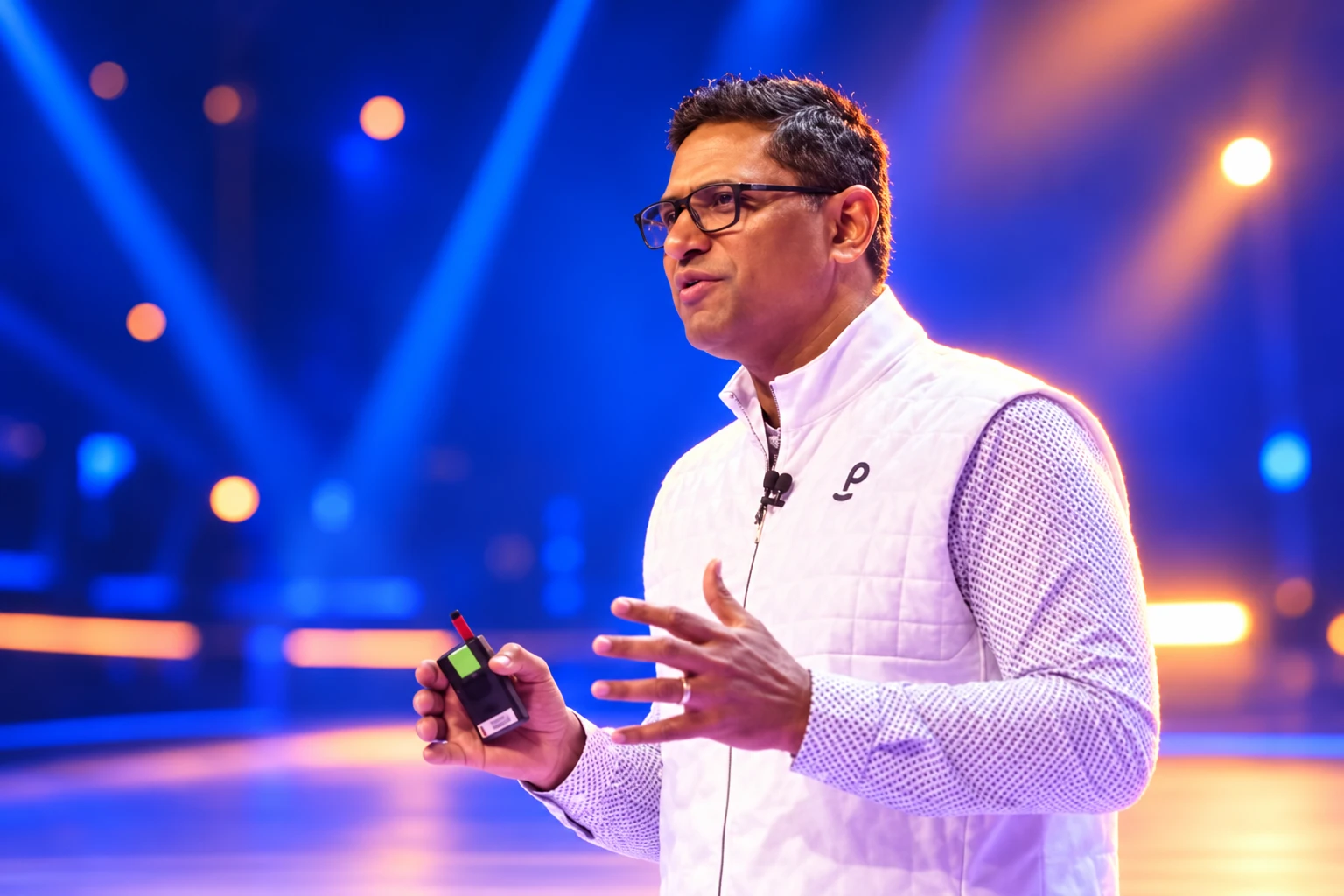
Why a Midwest Engineer and an ICU Nurse Break the Same Model
Phenom’s core claim is narrow and testable. A single foundation model, pointed at every requisition, cannot hold the difference between a software engineer in the Midwest and an ICU nurse in a large city. Same model, same prompts, different licenses, unions, shift rules and labor markets. That is the stall.
Bayireddi made the same point in March 2025 at IAMPHENOM, when Phenom shipped X+ Ontologies, X+ Agent Studio and a set of vertical agents. A nurse recruiter agent, he said, is entirely different from a financial analyst recruiter agent, which is different again from a technical recruiting agent. The 2026 agenda names that split a “unit of work,” cut by industry, function, role, geography and workflow, then mapped to the agent that should run.
Most AI deployments fail because the technology applied was never designed to solve the specific unit of work.
Kumar Ananthanarayana, vice president of product management, Phenom
On its product pages Phenom lists intake, sourcing and fraud-detection agents beside scheduling, a candidate concierge, an executive recruiter and a career coach. The company says agents run multi-step work, then hand off when a case falls outside their rules, and that a human still makes the hire. Industries on that list include healthcare, retail, financial services, manufacturing, hospitality, restaurants and transportation.
A pre-demo checklist is the right instinct. The harder gap is whether anyone can measure, months after go-live, if the agent still earns its keep against the actual Midwest engineer and the actual ICU roster.
Eleven Chapters Behind the Curtain
The marketing page sells four themes. The rundown on the event site is longer: an opening keynote, “Agentic Orchestration: Redesigning How Work Gets Done,” then 11 chapters. Several are live demos. That is the specimen, not another slide about copilots.
Phenom says viewers will watch agents source, screen and schedule live.
Most AI conversations in HR are still theoretical.
AI Day isn't.On September 17, you'll watch AI agents source, screen, and schedule LIVE!
One day. Real demos.
September 17, 2026 | 10AM ET → Register here: https://t.co/SCg2kF5jVS https://t.co/4JqNGhhYv1— Phenom (@PhenomTXM) August 19, 2026
AI DAY 2026 CHAPTERS THAT CARRY THE PRODUCTION ARGUMENT
| Chapter | Session focus | What is on stage |
|---|---|---|
| Opening keynote | State of AI for HR, plus a panel on agents, orchestration, governance and a new AI UX | Architecture tour |
| Chapter 1 | Context-aware ontology graphs, Hypercell Discovery, Role Analysis Agent | How a “unit of work” is cut |
| Chapter 2 | Intake, sourcing, outreach, job-description compliance | Live demo plus customer story |
| Chapter 3 | Screening and interviewing, voice-agent harness, coding assessments | Live demo of adaptive probes |
| Chapter 5 | Hiring integrity and synthetic talent | Live fraud-detection agent |
| Chapter 6 | AI governance and adverse-impact monitoring | Dynamic rules, not a PDF policy |
| Chapter 8 | Orchestration engine, policies as build-time and run-time guardrails | Live routing demo |
| Chapter 10 | Skills, profile builder, career coaching in Slack and Teams | Live development agents |
Chapter 5 is the 2026 tell the July registration note barely flagged. Remote hiring now collides with AI-written answers and synthetic video. Phenom’s fraud agent is pitched to flag AI-assisted responses, check identity and push follow-up questions, then keep scoring consistent across interviewers. Chapter 9 adds an omni-channel concierge across web, SMS and WhatsApp. Chapter 3 spends time on turn detection and interruption, the unglamorous parts of a voice screen that break in production.
Chapter 3 of the overview block still carries Phenom’s lag number: strategy moves in quarters, HR execution often trails by 12 to 18 months. Task intelligence and multi-layered ontologies are the proposed close on that gap, including job analysis, skill validation, exit interviews and agentic succession in Chapter 11.
Gartner’s 40 Percent Warning Hits Governance First
Two Gartner forecasts now sit on the same 40 percent figure and do not measure the same thing. On June 25, 2025, Gartner said over 40 percent of agentic AI projects will be canceled by the end of 2027, citing rising cost, unclear business value or weak risk controls. Anushree Verma, a senior director analyst, called most projects early experiments driven by hype and often misapplied.
That note also coined the insult vendors now throw at each other. Gartner said many firms are “agent washing,” rebranding assistants, RPA and chatbots, and estimated only about 130 of the thousands of agentic vendors are real. A January 2025 poll of 3,412 webinar attendees found 19 percent with significant agentic investment, 42 percent conservative, 8 percent none and 31 percent waiting or unsure. Gartner still forecast that by 2028, at least 15 percent of day-to-day work decisions would be made by agentic AI, up from 0 percent in 2024, and that 33 percent of enterprise software applications would include it, up from less than 1 percent in 2024.
On May 26, 2026, Gartner issued a second 40 percent line. It predicts that by 2027, 40 percent of enterprises will demote or decommission autonomous AI agents because of governance gaps found only after production incidents. That is enterprises, not projects, and the failure mode is control, not the model.
TWO GARTNER 40 PERCENT FORECASTS
| Issued | The 40 percent claim | What breaks |
|---|---|---|
| June 25, 2025 | Over 40 percent of agentic AI projects canceled by the end of 2027 | Cost, unclear value, weak risk controls, hype-driven proofs of concept |
| May 26, 2026 | 40 percent of enterprises demote or decommission autonomous agents by 2027 | Governance gaps seen only after a production incident |
Shiva Varma, a senior director analyst at Gartner, said companies treat agent rules as binary, locked down or fully trusted. Over-restrict a simple agent and teams build in the shadows. Under-restrict an autonomous one and the blast radius grows.
Enterprises are treating AI agent governance as binary, either locked down or fully trusted, and that is the root cause of failure.
Shiva Varma, senior director analyst, Gartner, May 26, 2026 newsroom note
Gartner’s fix is proportional control across four autonomy levels: Observe, Advise, Act with Approval, and Act Autonomously. Level 4, the one HR vendors sell hardest, is the one that needs continuous monitoring, rollback, circuit breakers and a named owner. Phenom’s Chapter 8, policies as guardrails at build time and run time, is an answer to that ladder, whether or not a given customer buys Phenom’s stack.
Brussels Pushed the High-Risk Deadline
HR is not a sandbox in EU law. Annex III of the AI Act lists recruitment and worker-management systems as high-risk. Point 4(a) covers AI used to recruit or select people, including targeted job ads, application filtering and candidate evaluation. Point 4(b) covers systems used to decide terms of work, promotion or termination, to allocate tasks from behaviour or personal traits, or to monitor and evaluate people in those relationships.
WHAT ANNEX III POINT 4 PUTS IN SCOPE
- Targeted ads: AI that places job advertisements at particular groups of people.
- Application filters: Tools that analyse and filter job applications before a human reads them.
- Candidate scoring: Systems that evaluate applicants at any stage of hiring.
- Work terms and exits: AI that bears on promotion, termination or other terms of the relationship.
- Tasking and monitoring: Allocation of work from behaviour or traits, plus performance and behaviour monitoring.
Those duties were due on August 2, 2026. Regulation (EU) 2026/1744, the Digital Omnibus on AI, moved standalone Annex III high-risk obligations to December 2, 2027, about 16 months later. The amending regulation entered into force on July 27, 2026. Transparency rules under Article 50 still landed on the original August 2, 2026 date, so a candidate who is talking to an agent still has to be told.
Phenom’s “finish by year end or spend 2027 experimenting” line is therefore a market clock, not the EU’s high-risk clock. Companies can still be sued, union-grieved or hit by U.S. bias claims on the old timetable. They do not, under the Omnibus, owe the full Annex III conformity pack on hiring systems until December 2, 2027.
That gap is useful if a team uses it to instrument logs, human review and adverse-impact tests. It is wasted if it becomes another year of unmeasured pilots.
The Buyer Shifts From CHRO Experiments to HRIT
AI Day is aimed at HR, HRIT, IT and AI leaders, not only talent-acquisition marketers. The second-order move is the buyer. Once an agent can write a job, screen a voice, score a code test and flag a deepfake, the person who signs is the one who must produce an audit trail, a rollback and a policy that a lawyer can read. That is HRIT and security, with the CHRO still owning the outcome.
Incumbent HCM suites are not waiting for a Philadelphia broadcast. Workday has been shipping organic agents inside its HCM, folding in acquired agents, and in June 2026 launched developer tools plus Agent Passport, a check against public standards including the OWASP LLM Top 10, the NIST AI RMF and MITRE ATLAS. SAP is rolling Joule HR agents across SuccessFactors modules through the second half of 2026. Phenom’s counter is that a system of record still applies one logic to every role unless an ontology splits the unit of work.
Neither side has a monopoly on production. Phenom still has to show, on September 17, an agent that holds context across a live intake, a fraud check and a human escalation without a custom project for each country. Workday and SAP still have to show that an embedded agent is more than a chatbot with a new badge.
PHENOM’S FALL CALENDAR AROUND AI DAY
- July 15, 2026: Registration opens for AI Day 2026.
- September 10, 2026: ServiceNow World Forum in New York, the first stop on the hands-on agent circuit.
- September 14, 2026: The Mission for Talent, an AI and public-sector hiring forum in Washington, D.C., including FedRAMP-ready positioning.
- September 17, 2026: Fifth AI Day, live from Phenom Studios at 10 a.m. ET, then on demand.
- September 27-30, 2026: NASCIO Annual Conference in San Diego, aimed at state technology leaders.
- October 6-8, 2026: Gartner HR Symposium EMEA in London.
- November 4-5, 2026: IAMPHENOM Europe in Paris.
- December 17, 2026: IAMPHENOM India in Hyderabad.
- April 20-22, 2027: IAMPHENOM 2027 in Philadelphia.
The September 14 public-sector forum is the tell that Phenom wants IT buyers who already speak FedRAMP, not only CHROs collecting SHRM credits. Chapter 6 on adverse-impact monitoring and Chapter 8 on run-time routing are built for that room.
A Fifth Showcase Still Has to Clear Production
Five AI Days in, the product names have changed and the failure mode has not. Generic models still flatten roles. Agents still die in pilot when nobody owns the exception path. Gartner’s May 2026 note says a large share of autonomous agents will be pulled back after an incident, which is another way of saying the log was not designed before the demo.
September 17 is Phenom’s chance to put intake, voice screening, fraud checks and policy routing on one live path and leave the recording up. The EU’s high-risk pack for those hiring tools now sits at December 2, 2027. The companies that treat that extra year as time to wire context and human escalation will have a 2027 stack. The ones that treat it as extra pilot budget will still be watching someone else’s keynote.

Instagram Plus Tests a Read-Only Mode That Cuts Stories

Altman Asks the Public to Accept Some AI Harm

Google Freezes OSS VRP Product Reports After AI Flood

AI Agents Make Payment Rails the Scarce Prize

Turkey’s Crypto Boom Now Runs Through Three Banks

Fable 5 Came Back Under a Commerce On-Off Switch

Google’s SpaceX GPU Lease Has a Sept. 30 Deadline

Plasma One’s XPL Locks Face a 1.81 Billion Cliff

DGO’s Rs 549 World Cup Pass Cost Fans Sleep and Data

Moonshot AI’s $30 Billion Ask Became a $35 Billion Close
-
 AI4 months ago
Fable 5 Came Back Under a Commerce On-Off Switch
-
 AI5 months ago
Google’s SpaceX GPU Lease Has a Sept. 30 Deadline
-
 CRYPTO4 months ago
Plasma One’s XPL Locks Face a 1.81 Billion Cliff
-
 APPS5 months ago
DGO’s Rs 549 World Cup Pass Cost Fans Sleep and Data
-
 AI5 months ago
Moonshot AI’s $30 Billion Ask Became a $35 Billion Close
-

 NEWS5 months ago
ColorOS 17 Device List Spans Oppo, OnePlus and Realme
-

 GAMING4 months ago
The RTX 4050 Under Rs 70,000 Hides a Wattage Gap
-

 AI4 months ago
Boris Cherny’s Loops Still Demand a Higher Production Bar