
AI
Rice $19.9M NSF Lab Turns Materials Discovery Into Cloud Utility
Rice leads a $19.9 million NSF project building a remote AI robotics lab for 2D materials and quantum films that opens elite synthesis to startups nationwide.

Rice University secured a $19.9 million National Science Foundation award to lead a four-year push that puts AI, robots and cloud access at the center of electronic and quantum materials synthesis. The project, called READINESS, builds a remote platform so researchers far from Houston can propose, simulate and run experiments on advanced materials that once required elite local labs.
Principal investigator Jun Lou, the Karl F. Hasselmann Professor of Materials Science and Nanoengineering, will head the effort with partners at SUNY Polytechnic Institute and the University of Texas at Austin. The work forms one node in a much larger national test bed.
Nearly $20 Million Builds a Remote Synthesis Engine
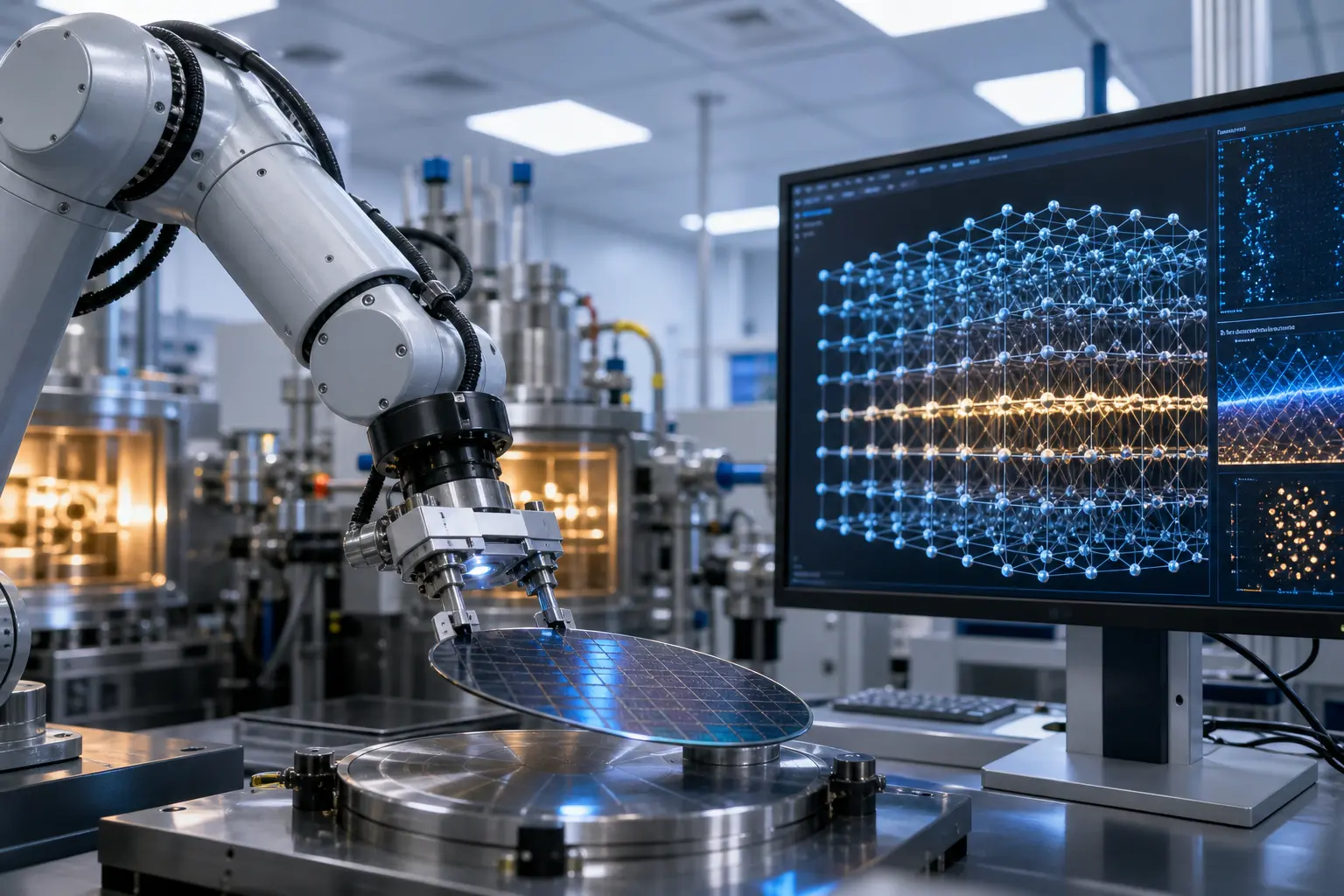
READINESS stands for Revolutionizing AI-Driven Autonomous Experimentation for Next-Generation Semiconductor Synthesis. It integrates automated synthesis gear, robotic handlers, characterization tools and a digital twin, a virtual replica of the physical lab. Users will first test ideas inside the twin, then move approved runs onto real equipment.
David Sholl, Rice’s executive vice president for research, said the project will give researchers access to capabilities that have traditionally been available only in a handful of laboratories. By lowering those barriers, he added, READINESS can accelerate discovery and expand who can participate in cutting-edge materials research.
The lab sits inside Rice’s Ralph S. O’Connor Building for Engineering and Science, drawing on existing shared facilities plus new dedicated space. Partner sites add equipment, expertise and training programs. The Astera Institute supplies philanthropic backing aimed at open science, reusable methods and faster data release.
Why the Materials Bottleneck Matters Right Now
Making electronic and quantum materials means tuning temperature, pressure, gas flow and chemistry. Tiny shifts change the final properties. Traditional trial-and-error eats years and dollars, and most universities, startups and midsize firms lack the multimillion-dollar tools and specialist staff.
That scarcity hits just as the United States pours resources into semiconductor supply chains and quantum technologies. Demand for next-generation chips already shows up in AI memory chip shortage pressures that ripple into consumer hardware. Materials that enable faster electronics, lower-power computing and quantum devices sit upstream of those squeezes.
READINESS starts with three classes that carry high potential: two-dimensional materials, oxide semiconductors and diamond thin films. These can underpin better transistors, power electronics and quantum sensors.
| Material Class | Target Properties | Potential Uses |
|---|---|---|
| Two-dimensional materials | Atomic-scale thickness, high carrier mobility | Faster, denser electronics |
| Oxide semiconductors | Wide bandgap, stability | Lower-power devices, displays |
| Diamond thin films | Thermal conductivity, hardness, quantum defects | Power electronics, quantum sensors |
The platform gathers data at every step so researchers can map process conditions directly to structure and performance.
How the Autonomous Loop Runs
An AI agent recommends the next experiment after studying both successes and failures. It stays inside safety limits and flags uncertain cases for human review. Luay Nakhleh, dean of Rice’s George R. Brown School of Engineering and Computing, put the principle plainly: responsible AI should complement researchers’ capabilities rather than replace their judgment. READINESS pairs automation with transparency, safeguards and human oversight at critical points.
Researchers log in through a cloud interface, submit a proposal, run it first in the digital twin, then execute on hardware if approved. The system logs every parameter and outcome, feeding a growing knowledge base that improves later suggestions.
- Automated synthesis equipment handles precise deposition and growth.
- Robotic systems move samples between tools without human handling delays.
- Characterization instruments feed real-time structural and electrical data back to the AI.
- The digital twin lets teams explore parameter space virtually before burning physical resources.
Lou described the goal as a laboratory that researchers from across the country can use to produce advanced electronic and quantum materials on demand. Integrating robotics, AI and digital twins, he said, lets the team learn from every experiment and shorten the path from discovery to practical technology.
Startups and Smaller Labs Suddenly Get a Seat
Emerging research institutions, startups and small-to-midsize companies form the clearest beneficiaries. They rarely own the cleanrooms or specialist staff needed for high-end synthesis. Remote access removes that gate.
Users propose experiments, simulate them, then run approved projects on the physical gear. Data from every cycle becomes part of a shared record that links process to performance. Over time that record itself becomes a strategic asset.
The model mirrors how cloud computing shifted compute power from on-premises clusters to on-demand services. Here the scarce resource is not GPUs but controlled atmospheres, precise precursors and metrology. Similar cloud AI spending and chip constraints already force hard choices about who gets advanced silicon; materials access could follow the same pattern of concentration or diffusion depending on how open the platforms stay.
This project will give researchers access to capabilities that have traditionally been available only in a handful of laboratories.
David Sholl made that case when the award was announced. The second-order effect is that IP and know-how may start accruing to the teams that run the most cycles, not only those that own the buildings.
Training Pipelines Stretch From K-12 to the Fab Floor
READINESS funds graduate research, undergraduate projects, teacher training, K-12 outreach and professional education. Students will work directly with materials science, robotics, data management and AI systems.
SUNY Polytechnic Institute will develop short courses and stackable credentials aimed at workers in semiconductor manufacturing, laboratory automation and related fields. The University of Texas at Austin brings depth in digital twins, autonomous experimentation and AI training. Rice’s Ken Kennedy Institute, Advanced Materials Institute, AI and Machine Learning Initiative and several departments supply additional muscle.
Amy Dittmar, Rice’s provost, said the award highlights the university’s ability to combine engineering and computing on problems of national significance. READINESS will let researchers move from ideas to discoveries faster while preparing students for careers in AI, advanced materials and manufacturing.
Those credentials matter because autonomous labs still need people who understand both the chemistry and the code. The workforce layer turns a one-time capital grant into a lasting supply of operators who can staff future nodes or industry deployments.
One Node Inside a $380 Million National Test Bed
READINESS is one of 20 projects chosen for the NSF’s Programmable Cloud Laboratories Test Bed program. The broader initiative puts $380 million into a nationwide network of AI-enabled automated laboratories, with up to $20 million more in matching funds from the Astera Institute. Astera focuses on open science, reusable methods, AI-ready data and rapid publication of results.
Nodes span biology, chemistry, soft materials, 2D materials, metals, characterization and electronics. Several include Department of Energy national labs. Carnegie Mellon, Northwestern and others received parallel awards for their own science domains, creating a distributed system that can share standards and software.
The effort lines up with the Department of Energy’s Genesis Mission. DOE recently announced the first Genesis Mission projects selected, nearly 300 efforts that will use AI agents, advanced models and high-performance computing to speed discovery in energy, science and security. Two Rice teams already hold Phase I Genesis awards for quantum computing challenges and microbial production of fuels and materials.
Erwin Gianchandani, NSF assistant director for Technology, Innovation and Partnerships, said the programmable cloud labs will create a virtuous cycle of automated hypothesis generation, autonomous experimentation and high-quality data that drives the next hypotheses, with researchers and students alongside the systems at every step.
Over four years the network will test whether open, remote, AI-guided labs can raise the speed, reliability and reproducibility of U.S. experimentation. If the data standards and access rules hold, the second-order payoff is a durable national capability in materials that no single university or company could build alone.
Seemay Chou, president of the Astera Institute, noted the program’s chance to update publishing practices so that fuller scientific outputs reach the community faster and in more usable forms. That openness is the quiet mechanism that turns one lab’s runs into everyone’s training data.
Frequently Asked Questions
What exactly will the READINESS lab synthesize first?
Initial campaigns target two-dimensional materials, oxide semiconductors and diamond thin films. These classes support faster electronics, lower-power computing and quantum devices; later campaigns can expand once the AI agent and digital twin prove reliable on the starter set.
How do remote researchers actually control the equipment?
They submit proposals through a cloud interface, run full simulations inside the digital twin, then receive approval to execute on the physical robots and reactors at Rice. Safety limits and human review gates stay in place for uncertain or high-risk steps.
Is the $19.9 million the full cost of the national network?
No. NSF is investing $380 million across 20 nodes, each eligible for up to $20 million over four years, plus up to $20 million in Astera matching funds focused on open data and reusable methods. Rice’s award is one of those nodes.
Will industry companies be allowed to use the platform?
Yes. The PCL Test Bed is open to academic researchers and industry users, including current and former SBIR/STTR awardees. Startups and midsize firms that lack their own advanced synthesis tools are explicit targets for remote access.
How does this connect to the CHIPS Act or semiconductor manufacturing?
READINESS focuses on the materials that go into next-generation devices rather than fab tooling itself. Faster, more reproducible synthesis of 2D films, oxides and diamond layers feeds the upstream supply of advanced electronic and quantum materials that domestic manufacturing needs.


D&D Bets Big on WoW and Star Wars to Grow Its Tables

Game Pass Drops Celeste and Crusader Kings on First Net-Loss Day

Gemini Breaks Basic Calls on Foldable Phones in Android Auto

Citadel Clears AI Fund Overhang While Crypto Stays Flat

Morgan Stanley Staking ETPs Crack Open Crypto Yield for Wealth Clients

Snapdragon Price Hike Forces Premium Buyers Toward Last Year’s Phones

Croc 2 Remaster Unlocks Argonaut’s Full Revival Path

Scale AI Names Google Cloud Veteran deSouza CEO for Enterprise Push

Epic Store Hits Brazilian iPhones Amid Apple’s Familiar Friction Play

LORDNINE Helena Server Races Players Toward Real USDT Rewards

Fable 5 and Mythos 5 Return as US Lifts Anthropic Export Controls

SpaceX’s Google Deal Turns a Rocket Company Into a Cloud Landlord

Oracle Cuts 21,000 Jobs in a Year, Cites AI in 10-K Filing

CD Projekt Red Co-CEO: Redemption Arc Isn’t Done, Witcher 4 in 2027

XPL Rallies 30% Ahead of Plasma One Card Tier Launch

DGO App Brings Rs 549 Mobile Pass for FIFA World Cup 2026 in Nepal

Google Search Profiles Build a Follow Graph Inside Discover

Moonshot AI Targets $30 Billion in China’s Fastest AI Funding Sprint

Microsoft Xbox Layoffs Start in July as Sharma Slams 3% Margin

Oppo’s ColorOS 17 Eligibility List Leaves A-Series Buyers Behind
-
 AI1 month ago
Fable 5 and Mythos 5 Return as US Lifts Anthropic Export Controls
-
 AI2 months ago
SpaceX’s Google Deal Turns a Rocket Company Into a Cloud Landlord
-
 AI1 month ago
Oracle Cuts 21,000 Jobs in a Year, Cites AI in 10-K Filing
-
 GAMING1 month ago
CD Projekt Red Co-CEO: Redemption Arc Isn’t Done, Witcher 4 in 2027
-
 CRYPTO2 months ago
XPL Rallies 30% Ahead of Plasma One Card Tier Launch
-
 APPS2 months ago
DGO App Brings Rs 549 Mobile Pass for FIFA World Cup 2026 in Nepal
-
 NEWS2 months ago
Google Search Profiles Build a Follow Graph Inside Discover
-
 AI2 months ago
Moonshot AI Targets $30 Billion in China’s Fastest AI Funding Sprint