
COMPUTERS
NVIDIA RTX Spark Breaks x86 and Qualcomm’s Grip on Windows

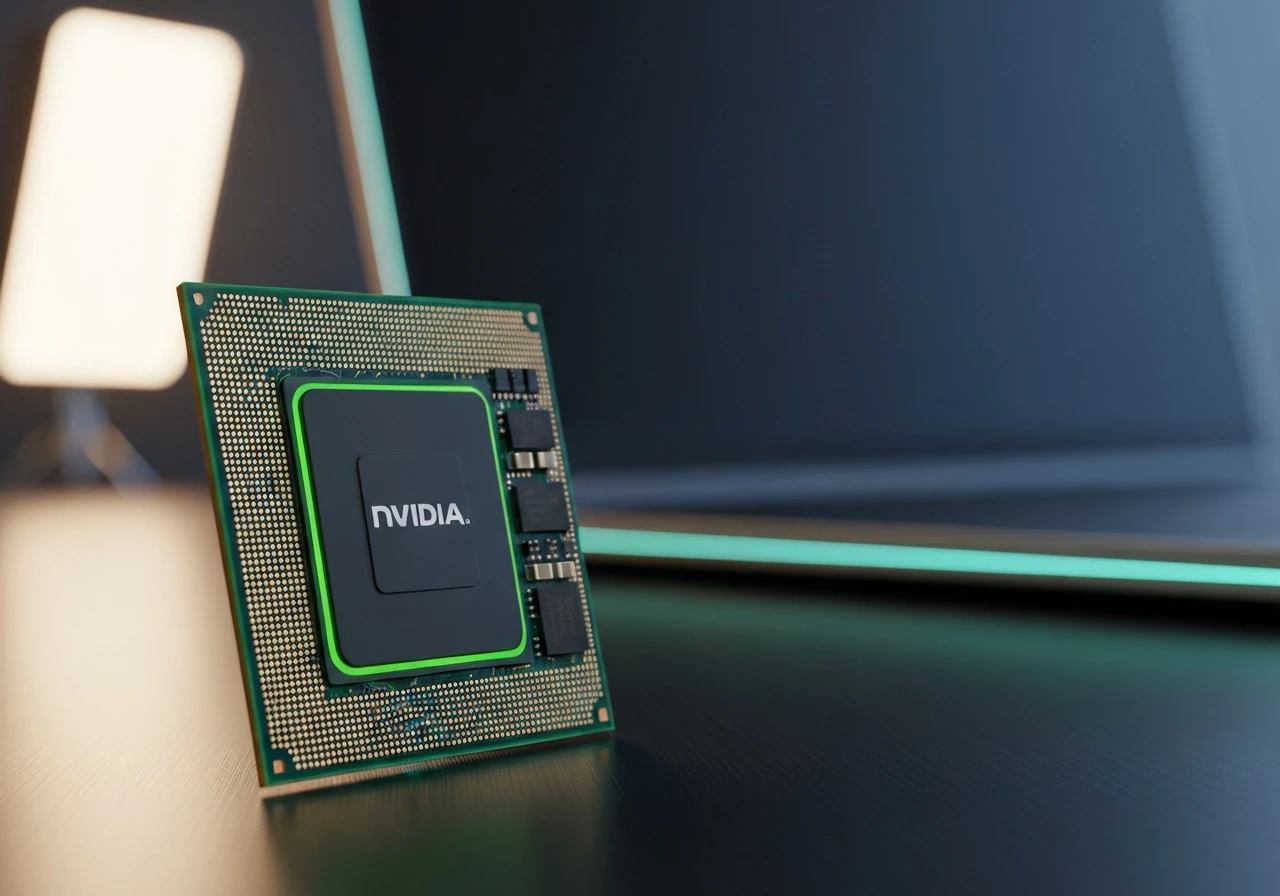
NVIDIA RTX Spark, the superchip NVIDIA unveiled at GTC Taipei during Computex, is the company’s first real swing at the Windows laptop, and it arrives swinging hard. The chip pairs an NVIDIA Blackwell graphics processor with a 20-core Arm-based Grace CPU, delivers up to 1 petaflop of AI performance, and carries up to 128GB of unified memory in a chassis as slim as 14 millimeters. Laptops and compact desktops built on it land this fall from ASUS, Dell, HP, Lenovo, Microsoft Surface and MSI.
What makes this more than another AI-PC press cycle is where the silicon sits. For the first time, NVIDIA’s full graphics and compute stack, CUDA included, is running on a Windows machine that does not use an Intel or AMD x86 processor. That puts two long-standing barriers under pressure at once: the x86 grip on premium Windows PCs, and Qualcomm’s roughly three-year run as the only serious Arm chip inside Windows.
What the Spark Superchip Puts on the Table
The hardware reads like a desktop workstation folded into a notebook. At its center is an NVIDIA Blackwell RTX graphics processor with 6,144 CUDA (Compute Unified Device Architecture, NVIDIA’s platform for running general computing on its GPUs) cores and fifth-generation Tensor Cores that support FP4 (4-bit floating point, a low-precision format that lets large models run faster). A high-speed NVLink-C2C link ties that GPU to a 20-core Grace CPU, and the whole package shares a single pool of memory rather than splitting it between processor and graphics.
That shared pool is the headline. With up to 128GB of unified memory, NVIDIA says the chip can hold a 120-billion-parameter language model with a one-million-token context window in local memory, render 90GB 3D scenes, edit 12K video, and still play AAA games at 1440p above 100 frames per second with ray tracing and DLSS (Deep Learning Super Sampling, NVIDIA’s AI upscaling). The architecture is the mobile cousin of the GB10 part inside the GB10 Grace Blackwell desktop supercomputer NVIDIA already ships to developers.
Set against the current Arm-on-Windows field, the gap NVIDIA is claiming is mostly about the GPU and the memory ceiling, not the CPU alone.
| Attribute (vendor-stated) | NVIDIA RTX Spark | Qualcomm Snapdragon X2 Elite | Typical x86 thin-and-light |
|---|---|---|---|
| CPU architecture | 20-core Arm (Grace) | Arm (Oryon) | x86 (Intel/AMD) |
| Graphics | Blackwell RTX, 6,144 CUDA cores | Integrated Adreno | Integrated, optional discrete |
| Peak AI compute | 1 petaflop (FP4) | ~80 TOPS NPU | 40 to 50 TOPS NPU class |
| Unified memory ceiling | Up to 128GB | Up to 48GB | 16 to 64GB |
| RTX gaming + DLSS | Yes, native | No | Only with discrete NVIDIA GPU |
The Two Moats Beginning to Crack
Disruption stories usually hinge on a moat that looked permanent right up until it did not. Here there are two, and they belong to different companies.
Why x86 Held the Line
For decades the premium Windows laptop meant an Intel or AMD processor, because that was where the software ran and where the discrete graphics lived. Arm chips were efficient but graphically thin, fine for browsing and video calls, weak for the creative and gaming workloads that justify a high-end price tag. RTX Spark attacks that exact seam by putting a real RTX GPU on an Arm system, the same playbook NVIDIA is running in the data center, where its in-house processor is already taking direct aim at the x86 server moat.
Qualcomm’s Three-Year Lead
The second moat belongs to Qualcomm, which had Windows on Arm largely to itself since the 2024 Snapdragon X launch and followed it with the X2 Elite generation. The company has said its chips power about one in ten US Windows laptops priced above $800, even as Arm overall remains a low-single-digit slice of the global PC base. That lead bought Qualcomm developer relationships and OEM (original equipment manufacturers, the brands that build laptops) design wins. NVIDIA is now contesting it with a partner the whole industry watched coming.
- 2024: Qualcomm ships Snapdragon X, the first credible Arm chip for Windows laptops.
- Early 2026: Qualcomm follows with Snapdragon X2 Elite, pushing single-core gains and an 80-TOPS class neural engine.
- This spring: NVIDIA announces RTX Spark, the long-rumored Arm chip co-designed with MediaTek, bringing CUDA and RTX gaming to the platform.
MediaTek’s Path Into Premium PC Silicon
The company with the most to gain that almost nobody is naming is MediaTek. NVIDIA credited the Taiwanese chipmaker, best known for phone and television processors, with co-designing the custom CPU and tuning its power efficiency and connectivity. That collaboration is the vehicle for MediaTek’s first move into premium Windows silicon, a tier it has never sold into before.
The fit matters beyond bragging rights. MediaTek has built its business undercutting rivals on cost, and pairing that instinct with NVIDIA’s graphics brand could push capable Arm laptops below the price band where Snapdragon machines cluster today. If RTX Spark devices arrive cheaper than expected this fall, MediaTek’s manufacturing discipline will be a big reason why.
The Agent Layer NVIDIA Built With Microsoft
Hardware is only half the pitch. NVIDIA and Microsoft framed the chip as the home for personal AI agents that run on your own machine instead of a cloud server, and they built a software floor to make that safe.
The PC is being reinvented. For forty years, you launched apps. Click. Type. With RTX Spark and Microsoft Windows, you ask, and the PC does the work.
That was Jensen Huang, NVIDIA’s founder and chief executive, at the launch. The mechanics behind the slogan are new Windows security primitives plus a runtime called NVIDIA OpenShell, which lets a user set rules for what an agent may touch, route private queries to a local model, and mask personal details in anything sent to the cloud. Microsoft, whose own breakdown sits on the Windows Experience blog post on RTX Spark, says the layer is meant to keep agents under full user control. On a Spark machine, NVIDIA says, an agent could:
- Execute tasks inside Windows applications and reason across several apps at once
- Generate images and video, and write small plug-ins or apps
- Search local files by meaning rather than filename
- Run frontier-scale models on device without sending data off the laptop
It is the same agent push reshaping consumer software elsewhere, from productivity suites to the AI shopping agents pressuring payments companies to rebuild the checkout. NVIDIA’s bet is that the most sensitive of those agents will want to live on the device, not the data center.
Adobe and the Creative Workload Pitch
To sell creators on an Arm machine, NVIDIA needed the apps creators actually open. Adobe is the anchor, and the company is rearchitecting Photoshop and Premiere from the ground up for the chip.
- 2x faster AI, editing, coloring and effects across creative workflows, per Adobe’s stated targets
- 128GB of unified memory feeding a new Premiere video pipeline built on TensorRT for real-time color correction
- 3D natively: Substance 3D Painter and Stager running on the platform for texturing and scene work
Shantanu Narayen, Adobe’s chair and chief executive, said the partnership would build “AI-native creative experiences for RTX Spark that deliver the performance, intelligence and responsiveness” professionals need. Beyond Adobe, more than 100 Windows software makers and studios, among them Blackmagic Design, Blender, ComfyUI, KRAFTON, Remedy Entertainment and Xbox, signed on to support the platform.
The Emulation Tax Riding Along
Here is where the mixed verdict comes in. RTX Spark is an Arm chip, and a large share of the Windows software library was compiled for x86. That code does not vanish, but it runs through a translation layer, and translation is never free.
Where Prism Helps
Microsoft’s Prism emulator runs 32-bit and 64-bit x86 apps on Arm, and Microsoft says it has been tuned for the Spark microarchitecture. For everyday work the experience is good: by Microsoft’s own accounting, the vast majority of time users spend is in apps that already run natively, and the rest is handled by the emulator. Microsoft documents the behavior in its guidance on running apps on Arm.
Where Things Still Break
The cracks show under load. Emulated x86 apps tend to draw roughly 15% to 20% more battery than native Arm equivalents because of translation overhead, and some software refuses to launch at all. The worst offenders are programs that hook deep into the kernel, including the anti-cheat drivers that gate many competitive games and certain legacy security tools. A laptop sold partly on gaming that cannot run a chunk of the multiplayer catalog is a real asterisk on the pitch.
That tension is the whole story in miniature. If the native-app list grows fast through the fall and the headline games clear their anti-cheat hurdles, RTX Spark turns NVIDIA into a genuine third force in Windows silicon and forces Qualcomm, Intel and AMD to answer. If the emulation gaps linger past launch, the chip lands as a powerful tool for AI and creative buyers and a harder sell for everyone else.
Frequently Asked Questions
When do RTX Spark laptops go on sale?
This fall. NVIDIA says laptops and compact desktops will ship from ASUS, Dell, HP, Lenovo, Microsoft Surface and MSI first, with Acer and GIGABYTE models to follow. NVIDIA has not published pricing.
Can RTX Spark run normal Windows games and apps?
Yes, with a caveat. Apps built for Arm run natively, and x86 titles run through Microsoft’s Prism emulator. Most everyday software works, but games and tools that rely on kernel-level anti-cheat or legacy drivers may not launch.
How is RTX Spark different from a Snapdragon laptop?
Both are Arm chips for Windows, but RTX Spark adds a full Blackwell RTX GPU with CUDA and DLSS plus a far higher memory ceiling, up to 128GB versus 48GB on Qualcomm’s current top part. That targets gaming, 3D and large local AI models that integrated Arm graphics cannot handle.
What is NVIDIA OpenShell?
OpenShell is a runtime that lets you set rules for on-device AI agents: what they can access, when queries go to a local model instead of the cloud, and how personal details get masked in anything sent off the device. It works alongside new Windows security primitives.
Who designed the RTX Spark CPU?
NVIDIA designed the Grace-based 20-core CPU with MediaTek, which contributed to the power efficiency, performance and connectivity. It is MediaTek’s entry into premium Windows PC processors.


Epomaker GX1 Open Back Headset Trades Isolation for Cheap Spatial Audio

Claude Code Auto Mode Defaults Because Humans Missed Too Many Risks

Zhongji InnoLight’s $6.8 Billion IPO Funds AI Optics Lead Amid US Risk

OpenAI Buys NextSlide and Steps Onto Microsoft’s Lawn

Gamescom Opening Night Live 2026 Already Locks Big Premieres for UK Fans

RTX 5080 Cloud Power Puts AAA Games on Any Screen in 2026

Moto G Max Puts Three-Day Battery Ahead of Specs Race

XRP Hovers Near $1 as XRPL Builds Institutional Rails Quietly

iOS 27 Beta 5 Puts AI Right in the Camera Viewfinder

Whatnot Hits $20 Billion as Live Auctions Fuel Boom and Debt

Fable 5 and Mythos 5 Return as US Lifts Anthropic Export Controls

Oracle Cuts 21,000 Jobs in a Year, Cites AI in 10-K Filing

SpaceX’s Google Deal Turns a Rocket Company Into a Cloud Landlord

CD Projekt Red Co-CEO: Redemption Arc Isn’t Done, Witcher 4 in 2027

XPL Rallies 30% Ahead of Plasma One Card Tier Launch

DGO App Brings Rs 549 Mobile Pass for FIFA World Cup 2026 in Nepal

Google Search Profiles Build a Follow Graph Inside Discover

Moonshot AI Targets $30 Billion in China’s Fastest AI Funding Sprint

Microsoft Xbox Layoffs Start in July as Sharma Slams 3% Margin

Oppo’s ColorOS 17 Eligibility List Leaves A-Series Buyers Behind
-
 AI1 month ago
Fable 5 and Mythos 5 Return as US Lifts Anthropic Export Controls
-
 AI2 months ago
Oracle Cuts 21,000 Jobs in a Year, Cites AI in 10-K Filing
-
 AI2 months ago
SpaceX’s Google Deal Turns a Rocket Company Into a Cloud Landlord
-
 GAMING2 months ago
CD Projekt Red Co-CEO: Redemption Arc Isn’t Done, Witcher 4 in 2027
-
 CRYPTO2 months ago
XPL Rallies 30% Ahead of Plasma One Card Tier Launch
-
 APPS2 months ago
DGO App Brings Rs 549 Mobile Pass for FIFA World Cup 2026 in Nepal
-
 NEWS2 months ago
Google Search Profiles Build a Follow Graph Inside Discover
-
 AI2 months ago
Moonshot AI Targets $30 Billion in China’s Fastest AI Funding Sprint