
GADGETS
Apple’s OpenAI Suit Now Turns on a Circuit File
Apple’s trade-secret suit against OpenAI now turns on a circuit file and an October 1 injunction hearing that could slow OpenAI’s hardware plans.

Apple told a San Jose federal judge on August 31 that a confidential power-converter circuit was run in an OpenAI lab simulation. That claim now sits at the center of a hardware trade-secret fight filed on July 10, 2026, and set for hearing on October 1.
The July complaint named two former Apple employees, OpenAI, and Jony Ive’s device studio. The live question is whether Judge Edward J. Davila will freeze work on OpenAI’s consumer hardware before any trial.
A Power-Converter File Appears in OpenAI Work
Apple’s follow-up brief, filed August 31 in Apple Inc. v. Liu, case 5:26-cv-07078, is the first filing that tries to put an Apple schematic inside OpenAI engineering. Apple says lawyers for Chang Liu, a former senior system electrical engineer, handed back an Apple MacBook on August 21, and that a first forensic pass landed on August 26.
On Apple’s account, a secret power-converter file was downloaded on March 7, used in an LTspice run on a Mac Mini on March 18, and synced with the simulation output to the MacBook on April 11. Apple reads that chain as Liu using Apple material on OpenAI time. OpenAI disputes the use and has described the case as a mess of Apple’s own making.
Apple also points to June messages between Liu and OpenAI colleague Yu-Ting “Alyssa” Peng about restoring and reusing devices after they learned of an internal Apple probe. Apple treats those notes as a plan to wipe data. The messages, on the face of the brief, do not prove a wipe took place.
The defense forensic story is different. OpenAI says an exam of the Mac Mini found some disputed files as zero-byte placeholders, and that Apple was still seeking a look at that machine in early September. Until a judge sorts those accounts, the March 18 LTspice run is an allegation with a date, not a finding.
THE FORENSIC CLOCK APPLE PUT ON FILE
- January 22, 2026: Liu leaves Apple after eight years and, Apple says, keeps a company MacBook.
- March 7, 2026: Apple says a confidential power-converter circuit is downloaded.
- March 18, 2026: Apple says the file is used in an LTspice simulation on a Mac Mini.
- April 11, 2026: Apple says simulation output is synced back to the MacBook.
- August 21, 2026: Liu’s lawyers deliver the MacBook.
- August 31, 2026: Apple files a sealed-and-redacted follow-up brief and asks for faster discovery.
That sequence is why the suit no longer reads as a hiring spat. A schematic that entered a simulator is harder to treat as a stray file on a laptop, which is the point Apple wants Judge Davila to take from the brief.
What Apple’s July Complaint Laid Out
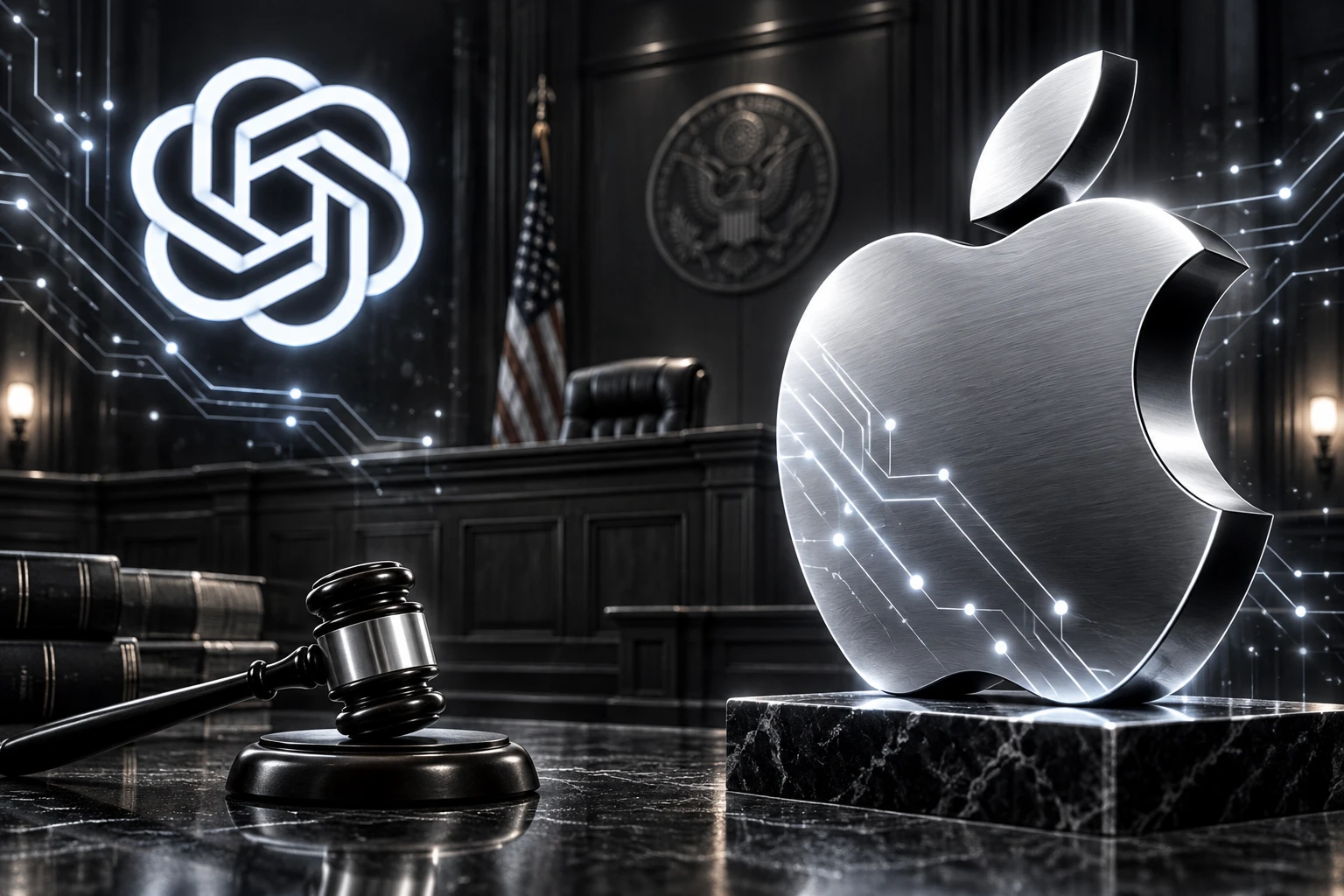
The 41-page complaint, filed July 10, opens with a blunt line: this case is about former Apple staff taking trade secrets for OpenAI’s benefit. Apple asked for a jury. Defendants are Liu; Tang Yew Tan, OpenAI’s chief hardware officer; OpenAI Foundation, formerly OpenAI, Inc.; OpenAI Group PBC; and io Products, LLC, the hardware studio OpenAI bought in 2025.
Liu, Apple says, did not answer exit requests, kept a work laptop already logged into Apple’s network, and then used a rare login bug to reach shared folders. He did not report the bug. He left a note on a colleague’s machine that said “LOL” and called the access “so funny,” then, Apple says, pulled dozens of hardware files on unreleased products, board manufacturing, and test methods while building devices for OpenAI.
Tan spent 24 years at Apple, most recently as vice president of product design for iPhone and Apple Watch. Apple says he mailed himself supplier notes before he left in 2024, used internal project code names in OpenAI interviews, and passed around a managers’ “Need to Know” memo on how Apple walks people out the door. The complaint also says OpenAI now employs more than 400 former Apple workers. Jony Ive is not a defendant.
WHO APPLE NAMED
| Defendant | Role | Apple’s core claim |
|---|---|---|
| Chang Liu | Former senior system electrical engineer; OpenAI technical staff | Kept a laptop, used a login bug, and downloaded hardware files |
| Tang Yew Tan | Former iPhone and Watch design VP; OpenAI chief hardware officer | Used Apple code names and parts in hiring, and shared an exit-security memo |
| OpenAI Foundation and OpenAI Group PBC | Corporate defendants | Ran a hiring and supplier effort that used Apple secrets |
| io Products, LLC | Hardware studio bought in 2025 | Used Apple metal-finishing know-how through a shared partner |
Apple’s lawyers also filed Apple’s first account of the hardware claims as a pattern, not a pair of rogue exits, and asked the court to stop use of the material, preserve devices, and return what was taken.
Job Interviews Became Hardware Show-and-Tell
The hiring allegations are the part of the complaint that reads like a raid on a lab, not a talent market. Apple says OpenAI told Apple staff to bring CAD files, design artifacts, and prototypes to interviews, and to talk through subsystem choices, simulation tools, and vendor contacts.
Tan, in Apple’s telling, went further. He asked candidates still on Apple’s payroll for “Actual parts” and ran “show and tell” sessions. One candidate, Apple says, wrote that he “didn’t even know we could take those from the office.”
Apple’s August 19 opposition, filed to keep the case alive, lists the parts Tan wanted in the room.
PARTS APPLE SAYS CANDIDATES WERE TOLD TO BRING
- Batteries: Physical cells from Apple programs, not photos or spec sheets.
- SIP modules: Systems-in-package that hide how Apple stacks chips.
- Main logic boards: Boards tagged in messages as “mlb.”
- Shields: Metal cans and covers that show how Apple walls off radios and power.
Apple also says Tan told recruits not to notify Apple that they had accepted OpenAI jobs, so they could stay inside longer, and that he previewed Apple’s exit checks with the “Need to Know” memo. Departing staff, Apple adds, skipped two-week notices and dodged security reviews. OpenAI’s answer is that Tan kept the memo so new hires would follow Apple’s rules, not dodge them.
The Wrong Inbox and a Five-Month Gap
OpenAI’s public line arrived on August 3, the same day Apple asked for a preliminary injunction. In OpenAI’s public response to Apple, the company called the suit “careless, aggressive and oddly personal,” and said it does not have, and does not want, Apple’s secrets.
This careless, aggressive and oddly personal lawsuit sadly doesn’t live up to that reputation.
OpenAI, public statement, August 3, 2026
Apple’s complaint said it raised the issue in February and got silence. OpenAI says Apple’s outside counsel emailed the wrong person after mixing up two Asian last names, later admitted the mix-up, and then went quiet. “We then heard nothing for five months until they sued,” the company wrote. A motion to dismiss filed August 5 adds that a note meant for a Mr. Wang reached general counsel Che Chang.
On Liu, OpenAI says Apple now admits former colleagues asked him for help finding files, and it posted messages it says show those requests. On Tan, it says he told the hardware group not to use other companies’ confidential material. The August 5 motion, signed for the corporate defendants and Tan by Andrew H. Schapiro of Quinn Emanuel, argues Apple never named a protectable secret with enough detail, never tied OpenAI or io to a taking, and never showed ongoing harm.
OpenAI’s nascent hardware business now rests on the shakiest of foundations, rotten to its core by its illegal reliance on misappropriated trade secrets.
Apple Inc., complaint, Northern District of California, July 10, 2026
Apple’s August 19 opposition answers that the complaint already names specific files, processes, and acts, including Liu’s downloads and Tan’s interview lists, and that harm continues while OpenAI builds devices. Defendants replied on August 26 and asked that the complaint be thrown out with prejudice. Briefing on dismissal is done. The facts are not.
Judge Davila Hears Both Motions on October 1
Davila, sitting in San Jose, has both the dismissal motion and Apple’s injunction request on calendar for October 1, 2026, at 9:00 a.m. in Courtroom 4. That date is 83 days after the July 10 filing. A case-management statement is due October 6, with an initial conference set for October 13 at 1:30 p.m. by video. The Northern District of California docket last showed a filing on September 11.
Apple’s August 3 injunction papers, backed by a stack of sealed exhibits and a declaration from Parin Patel, ask the court to bar Liu, Tan, OpenAI, and io from using or sharing the disputed material, to preserve devices and accounts, and to force a return of Apple property. Federal law already gives owners of stolen secrets a path to that kind of order. The Defend Trade Secrets Act lets courts hear civil actions for misappropriated trade secrets and grant injunctions to stop actual or threatened use, or, in a narrow set of cases, seize property to stop a secret from spreading.
OpenAI told the court an injunction would interrupt staff, cost time and money, and rattle partners, and that delay is the outcome Apple wants. Apple has not had to prove motive. It only has to persuade Davila that the work should stop while the evidence is sorted. Rutgers Law professor Camilla Hrdy has noted that earlier AI suits leaned on software, not physical manufacturing. Stanford Law professor Mark Lemley has said that if the document-theft claims hold, OpenAI faces real exposure even in a state that lets people change jobs.
CASE SNAPSHOT
- Hearing: October 1, 2026, 9:00 a.m., San Jose Courtroom 4, Judge Edward J. Davila.
- io deal: OpenAI bought the studio in 2025 in a transaction valued at $6.5 billion.
- Staff claim: Apple says more than 400 of its former employees now work at OpenAI.
- Status: No ruling on dismissal or an injunction; last known docket entry September 11, 2026.
September 9 disclosures listed OpenAI OpCo LLC as io’s corporate parent and named SoftBank Group Corporation among OpenAI affiliates. That filing does not decide the secrets fight. It does show how large the hardware bet has become relative to two named engineers.
Siri Already Runs on a Different Model
The courtroom fight is running beside a product split that started in software. Apple put ChatGPT into Siri in June 2024 and let iPhone users buy a ChatGPT plan in settings. OpenAI later said that placement was hard to find and that subscription growth lagged what it expected, and by spring 2026 it had looked at a contract fight over the deal.
At WWDC in June 2026, Apple showed a rebuilt Siri on a custom Gemini model and a standalone Siri app, with iOS 27 also built to let users pick a third-party assistant, including ChatGPT, as a default. The old exclusive lane is gone. Apple is suing the same company whose model still sits behind a settings toggle, while OpenAI tries to put ChatGPT on hardware that does not need iOS.
OpenAI has not posted a public ship date for a flagship device. Company notes on the io team’s merger with OpenAI keep Ive and LoveFrom on design and say nothing about a store date. Apple’s injunction papers treat that vacuum as a reason to move now, before a product hardens around disputed files. OpenAI treats the same vacuum as proof that there is no emergency.
Apple’s Unnamed Metal-Finishing Partner
The quietest claim in the complaint may be the one that most worries a hardware shop. Apple says OpenAI and io went at its partner network directly. One partner, which works with Apple on industrial design and metal finishing, was led to run a secret multi-step finish for OpenAI after being told Apple had signed off. A second partner, on power and batteries, got questions that used Apple’s internal terms, the kind of phrasing, Apple says, that only an insider would know to ask.
Those partners are not named in the public papers, and they are not in the caption. If Apple later ties a finish, a battery pack, or a board layout on an OpenAI device to those shops, the case moves from two employees to a supply chain. If it cannot, OpenAI will argue that hiring Apple people and calling Apple vendors is legal in California, and that the rest is atmosphere.
Davila has not credited either story. On October 1 he will hear why Apple says a power-converter file ran at OpenAI, and why OpenAI says the suit should die before discovery reaches the rest of the hardware group. The device Ive’s studio is designing is still unannounced. The hearing is not.
Disclaimer: This article is news reporting and analysis of a pending federal lawsuit, written from court filings and company statements, and it is for information only. It is not legal advice, a forecast of any ruling, or a finding that any defendant took or used Apple trade secrets. Anyone with a legal interest in trade-secret, employment, or intellectual-property issues should consult a licensed attorney in the relevant jurisdiction before acting on these claims. Hearing dates, docket entries, and the parties’ accusations reflect the sources named above and can change as the case moves.

Instagram Plus Tests a Read-Only Mode That Cuts Stories

Altman Asks the Public to Accept Some AI Harm

Google Freezes OSS VRP Product Reports After AI Flood

AI Agents Make Payment Rails the Scarce Prize

Turkey’s Crypto Boom Now Runs Through Three Banks

Fable 5 Came Back Under a Commerce On-Off Switch

Google’s SpaceX GPU Lease Has a Sept. 30 Deadline

Plasma One’s XPL Locks Face a 1.81 Billion Cliff

DGO’s Rs 549 World Cup Pass Cost Fans Sleep and Data

Moonshot AI’s $30 Billion Ask Became a $35 Billion Close
-
 AI4 months ago
Fable 5 Came Back Under a Commerce On-Off Switch
-
 AI5 months ago
Google’s SpaceX GPU Lease Has a Sept. 30 Deadline
-
 CRYPTO4 months ago
Plasma One’s XPL Locks Face a 1.81 Billion Cliff
-
 APPS5 months ago
DGO’s Rs 549 World Cup Pass Cost Fans Sleep and Data
-
 AI5 months ago
Moonshot AI’s $30 Billion Ask Became a $35 Billion Close
-
 NEWS5 months ago
ColorOS 17 Device List Spans Oppo, OnePlus and Realme
-
 GAMING4 months ago
The RTX 4050 Under Rs 70,000 Hides a Wattage Gap
-
 AI4 months ago
Boris Cherny’s Loops Still Demand a Higher Production Bar