
NEWS
BSNL’s Satellite Phone Price Jumps to Rs 1.34 Lakh, Above the iPhone
BSNL’s Inmarsat IsatPhone 2 now costs Rs 1,34,166, up nearly 50% from 2025, in India’s single-operator satellite phone market.

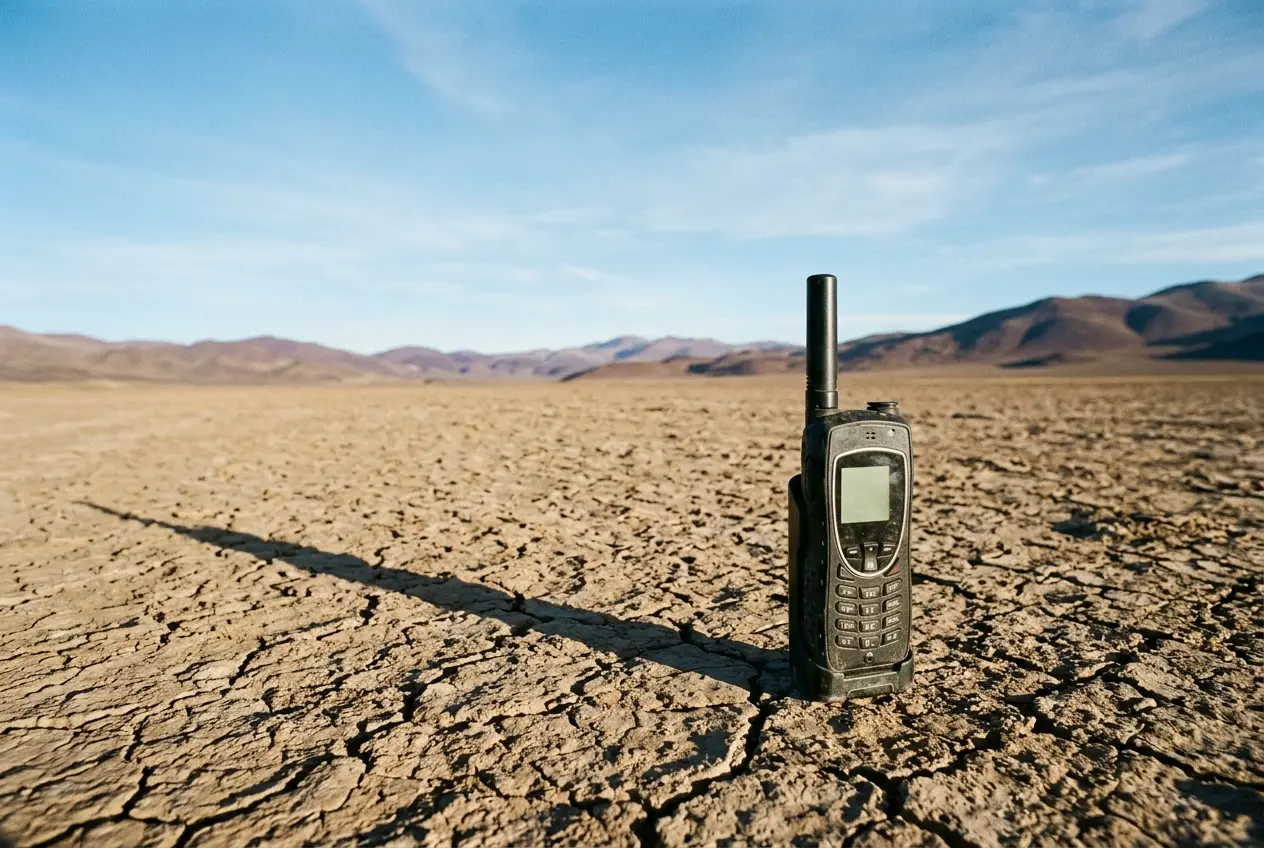
BSNL now charges Rs 1,34,166 (roughly $1,560) for its Inmarsat IsatPhone 2, pricier than Apple’s latest iPhones and close to 50% above last year’s price. The state carrier confirmed the figure through its official X account on July 9, calling the handset a lifeline for places where regular towers never reach.
Most coverage this week credits the jump to satellite hardware and small production runs. Less discussed: BSNL is the only legal seller of this device in India, and nothing forces it to compete on price.
The Price Jumped Nearly 50 Percent Overnight
BSNL confirmed the new figure this week: Rs 1,34,166, inclusive of all taxes, for the Inmarsat IsatPhone 2. The update came from the official BSNL India handle on social media, framing the device as a communication lifeline for regions regular towers cannot reach.
This is not a new product. The IsatPhone 2 has sold in India through BSNL for several years under the Global Satellite Phone Service, or GSPS, and BSNL is its exclusive retail and institutional channel. What changed is the price, which had held at roughly Rs 90,000 to Rs 91,500 through most of 2025.
The Indian tech outlet Beebom noted the new price tops what buyers pay for Apple’s iPhone 17 Pro. BSNL first cleared the civilian version of this service through a public notice authorizing the civilian rollout, tracing back to a June 2017 department letter, with commercial sales opening on January 1, 2018.
Where the Money Goes
BSNL’s own pitch for the price rests on hardware. The handset carries high gain antennas and specialised satellite receivers built to talk to a satellite parked thousands of kilometres above the equator, components far pricier than the modem inside a normal smartphone.
It also has to survive conditions a flagship phone never sees: extreme heat, dust, humidity and rough handling in the field. Domestically, satellite handsets in India range from about Rs 45,500 on the low end to Rs 2.5 lakh at the premium end, with the IsatPhone 2 previously sitting mid-pack around Rs 90,000 before this increase.
Satellite handsets also sell in a sliver of the volume Apple and Samsung move every year. Manufacturers building for a few thousand institutional buyers cannot spread tooling and component costs the way a company shipping tens of millions of units can.
One Government Channel Sets the Price
Here is the part most write-ups skip. India’s telecom regulator keeps satellite phone permits permits restricted largely to Inmarsat handsets, sold through BSNL’s own licensed gateway. There is no second legal retailer to undercut the price.
Restricting services to a state-backed model gives the government total control over interception and licensing.
Aditya Khaitan, a partner at Deloitte India, made that point to Forbes India this week. He added that limited competition can also push device costs higher, narrow consumer access and slow off-grid innovation.
The contrast with other democracies is stark. The United States, Canada, Australia and the United Kingdom let ordinary consumers buy satellite phones and subscriptions with relatively few hurdles. China licenses the service through approved operators, and Russia requires registration. India sits toward the restrictive end of that list, per Forbes India’s review of global rules this week.
Nearly All Its Customers Wear a Government Badge
The last public subscriber count for GSPS dates to November 30, 2018: 3,927 connections in total. Of those, 3,647 belonged to government agencies, 112 to public sector undertakings and just 168 to private companies and individuals. New Delhi has not published an update since.
Owning the handset is only the entry fee. Buyers must also subscribe to a monthly or annual plan, priced differently for government and commercial customers.
| Plan | User Type | Cost | Included Talktime or SMS | Overage Rate |
|---|---|---|---|---|
| G1 | Government | Rs 3,500 per month | 16 minutes | Rs 18 per minute |
| G2 | Government | Rs 5,835 per month | 30 minutes | Rs 18 per minute |
| C1 | Commercial | Rs 5,835 per month | 30 minutes | Rs 25 per minute |
| CA (annual) | Commercial | Rs 64,185 per year | 360 minutes | Rs 25 per minute |
BSNL’s broader mobile business looks nothing like this tiny niche. The carrier added 1.4 million mobile users in a single month last August, more than Bharti Airtel’s addition that same month. Its satellite phone arm, by comparison, has disclosed fewer than 4,000 customers total across eight years.
The Legal Path Runs Through the Home Ministry
Buying the handset does not end with a payment. Indian law treats satellite communication as a security matter first and a retail product second.
- Contact a BSNL circle office or its dedicated satellite helpline, since the handset is not sold through retail stores or e-commerce platforms
- Submit a Consumer Acquisition Form with identity documents, plus the intended location, duration and purpose of use
- Wait while BSNL routes the request to the Ministry of Home Affairs and other security agencies for review
- Receive a No Objection Certificate before the handset or SIM can be activated
- Pay for the device and the chosen tariff plan, then complete know-your-customer checks before the satellite SIM goes live
That sequence exists because current law treats satellite phones as restricted equipment, legal only with a license or an NOC issued by the Department of Telecommunications, or DoT.
Do the 2008 Mumbai Attacks Still Set the Rules?
Yes. The restrictions written after 2008 remain the core of India’s satellite phone law today. Terrorists behind the Mumbai attacks used Thuraya handsets to coordinate with handlers in Pakistan, and authorities have since expanded surveillance and licensing requirements every few years rather than easing them.
The concern is straightforward. A satellite phone talks directly to a satellite, skipping the ground networks Indian law enforcement can tap. That makes it a blind spot for agencies watching sensitive regions such as Jammu and Kashmir.
Foreign visitors face real consequences for ignoring this. Customs officers can seize an undeclared unit on arrival, and unauthorised possession can lead to prosecution under India’s wireless telegraphy law.
A Cheaper Satellite Text Could Replace This Handset
BSNL is already building the thing that could shrink this market. Its direct-to-device satellite push, built with Viasat and sometimes described elsewhere as Satellite-to-Device connectivity, aims to route basic messaging straight to ordinary phones without any dedicated satellite hardware at all.
Analysts are split on how fast that changes the picture.
- Vinish Bawa (partner and telecom sector leader, PwC India) – expects demand for satellite phones to stay niche, concentrated in defence, maritime, mining and disaster response rather than going mass market
- Aditya Khaitan (partner, Deloitte India) – argues the single-channel model trades higher prices and slower innovation for tighter security control
- Analysts cited by Forbes India – foresee direct-to-device satellite technology eventually making dedicated handsets like the IsatPhone 2 unnecessary for many users
For now, the IsatPhone 2 remains BSNL’s only option for actual voice calls over satellite, not just short text bursts. Viasat’s network still handles messaging alone.
Frequently Asked Questions
What does the BSNL satellite phone actually cost in year one?
The handset alone runs Rs 1,34,166. Add BSNL’s annual commercial plan at Rs 64,185, which bundles 360 minutes of calls or texts, and a commercial buyer is looking at close to Rs 1.98 lakh before a single extra minute or message gets used.
Can any private citizen simply walk into a store and buy one?
Not over the counter. The handset is not sold through retail chains or e-commerce sites. Interested buyers contact a BSNL circle office or its dedicated helpline, reported by Oneindia as 9465101323, and go through the same verification used for a normal SIM plus extra details on where and why the phone will be used.
What happens if a tourist brings a personal satellite phone into India?
Customs can seize it on the spot. Devices running on networks other than BSNL’s authorised gateway, including Iridium and Thuraya handsets, have been confiscated from travellers who failed to declare them, and unauthorised possession can carry criminal penalties under Indian wireless telegraphy law.
How is this different from the SOS feature on my smartphone?
Emergency satellite features on select premium phones only send short SOS alerts or share a location, and only in specific regions. They do not support routine two-way calls or texting. The IsatPhone 2 behaves like an ordinary phone over a satellite link, placing and receiving calls and SMS on demand.
Why did BSNL raise the price now?
BSNL has not issued a public explanation tied specifically to this increase. The jump lands as satellite communication draws more attention in India generally, including BSNL’s own push into direct-to-device connectivity for ordinary phones, which may be reshaping how the company positions its dedicated hardware line.
Could this device become obsolete?
Possibly, over the long run. BSNL’s direct-to-device project with Viasat uses geostationary satellites orbiting a little over 36,000 kilometres above Earth to reach ordinary phones, and Forbes India reports that industry analysts expect this kind of technology to eventually replace dedicated satellite handsets for many use cases.


AMD’s Data Center Revenue Jumps 57% as Its Stock Bets on Execution

Microsoft Loses an Xbox Lawsuit Just as Sony Kills Physical Discs

Bethesda Union Says HR Tore Down Its Memorial for Laid-Off Staff

Google Pixel 11 Pro Fold Price Leaks Point Toward a $2,000 Foldable

Smart Scales Promise Lab-Grade Body Fat Numbers, and the Science Pushes Back

Amap’s Ride-Hailing Hits 1,000 Cities Amid Security Warnings

Ulys’s Automatic Toll Billing Draws Scammers to 7 Million Drivers

Google’s Veo AI Video Tools Threaten VFX Jobs Far Beyond Hollywood

Music Industry Unveils AI Labels, but Streaming Giants Haven’t Signed On

Apple Sues OpenAI and Two Ex-Employees Over Stolen Trade Secrets

Microsoft Xbox Layoffs Start in July as Sharma Slams 3% Margin

Google Search Profiles Build a Follow Graph Inside Discover

Oppo’s ColorOS 17 Eligibility List Leaves A-Series Buyers Behind

Oracle Cuts 21,000 Jobs in a Year, Cites AI in 10-K Filing

Google DeepMind and A24 Sign $75 Million AI Partnership Deal

OCC Issues AML Consent Order Against Wise and Crypto.com Sponsor Bank

DGO App Brings Rs 549 Mobile Pass for FIFA World Cup 2026 in Nepal

Anthropic Tells Senators Alibaba Ran the Largest Claude Distillation Attack

Apple Strikes Preliminary Deal For Intel To Make iPhone And Mac Chips

Google Home Spring Update Adds Gemini 3.1 And Old Nest Cam AI
-
 GAMING1 month ago
Microsoft Xbox Layoffs Start in July as Sharma Slams 3% Margin
-
 NEWS1 month ago
Google Search Profiles Build a Follow Graph Inside Discover
-
 NEWS1 month ago
Oppo’s ColorOS 17 Eligibility List Leaves A-Series Buyers Behind
-
 AI3 weeks ago
Oracle Cuts 21,000 Jobs in a Year, Cites AI in 10-K Filing
-
 AI3 weeks ago
Google DeepMind and A24 Sign $75 Million AI Partnership Deal
-
 CRYPTO2 months ago
OCC Issues AML Consent Order Against Wise and Crypto.com Sponsor Bank
-
 APPS1 month ago
DGO App Brings Rs 549 Mobile Pass for FIFA World Cup 2026 in Nepal
-
 AI3 weeks ago
Anthropic Tells Senators Alibaba Ran the Largest Claude Distillation Attack