
GAMING
PlayStation AI Used in Horizon Remaster Opens a Trust Test

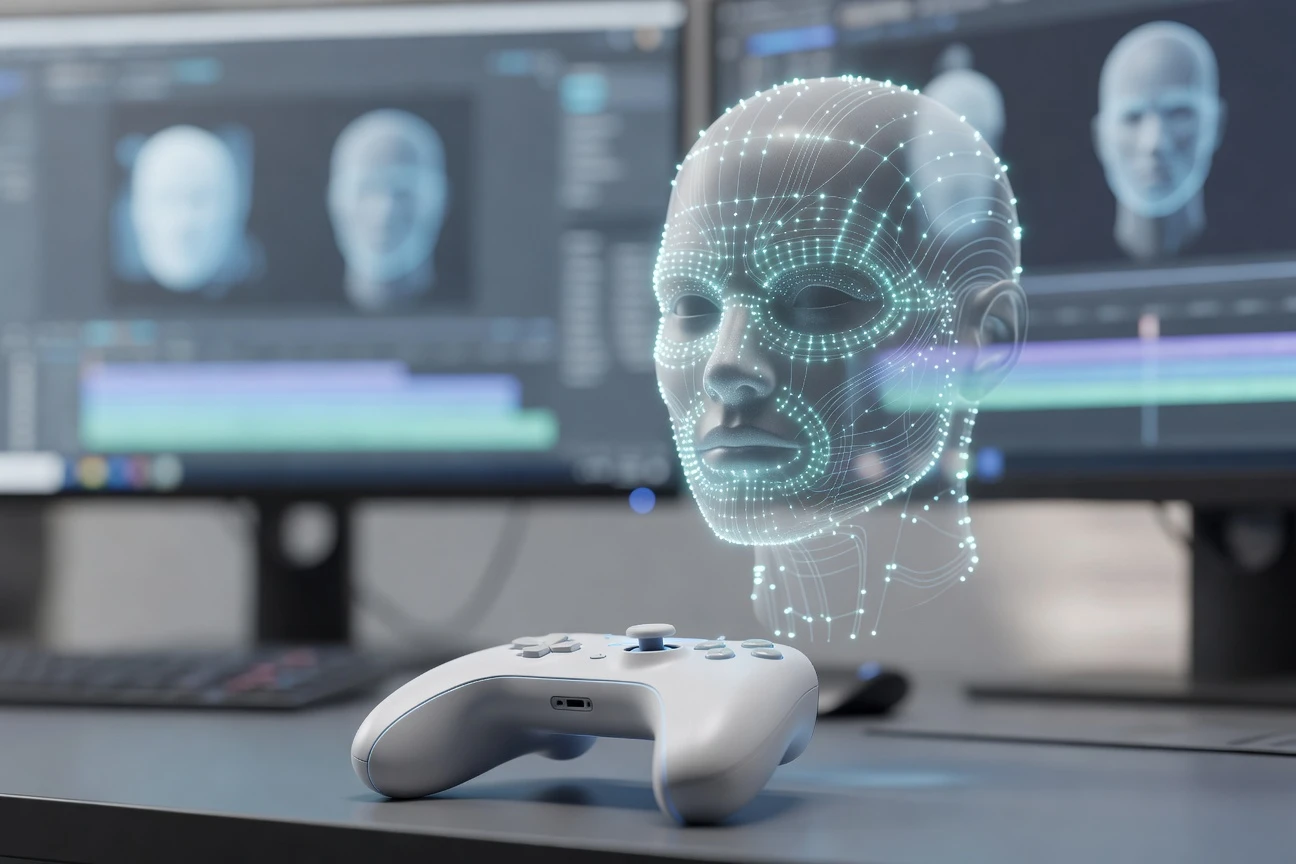
The May 8 corporate strategy transcript gave PlayStation AI (artificial intelligence, software trained to perform tasks usually associated with human judgment) a shipped showcase: Sony said Mockingbird was used in Horizon Zero Dawn Remastered, turning performance-capture data into 3D facial animation and cutting work from hours to a fraction of a second. The gain is clear, but the remaster also tests how far fans will accept hidden production AI in premium games.
That tension matters because Horizon Zero Dawn Remastered was sold as a polished technical restoration, not a public AI demo. Sony’s admission moves the argument away from a vague fear of machine-made games and toward a narrower question: which parts of a game can be accelerated without making players, performers or developers feel cut out of the work?
Sony Put Mockingbird in a Finished Game
Hideaki Nishino, president and chief executive of Sony Interactive Entertainment, used Sony’s Game & Network Services (G&NS, Sony’s PlayStation operating segment) presentation to name Mockingbird directly. He described it as an internal tool that quickly animates three-dimensional facial models from performance captures, with the old workload compressed from hours into a fraction of a second.
- May 8, 2026: Sony held the corporate strategy and earnings presentation that put AI across its entertainment plan.
- hours to a fraction of a second: Nishino’s claimed production gain for facial animation work handled by Mockingbird.
- two named studios: Naughty Dog, the PlayStation studio behind The Last of Us, and San Diego Studio, the MLB The Show maker, were cited alongside other teams adopting the tool.
The important word is adopting. Sony did not describe a laboratory experiment or a future prototype. It tied the tool to a released game, then placed that example beside a broader platform plan for personalization, commerce, upscaling and studio productivity. For readers who followed Sony’s wider PlayStation AI push, Horizon is the receipt.
Horizon’s Remaster Was Already an Animation Project
The reveal lands differently once the remaster’s production work is put back on the table. Nixxes, the Dutch studio Sony acquired to strengthen its PC and remaster pipeline, and Guerrilla, the Amsterdam studio that created Horizon, had already described a heavy animation and tooling job in the Horizon remaster production deep dive.
- over 10 hours: Guerrilla directed and captured new motion-capture data for conversation scenes at its Amsterdam stage.
- almost 300 conversations and more than 3,100 dialogue options had to be integrated into the updated game.
- almost 2,500 mocap files were processed with custom tooling, including Python scripts, Maya, Autodesk’s 3D animation software, and Decima, Guerrilla’s internal game engine.
- camera layout artists and lighting artists still performed manual passes because broader new body motion could push characters out of frame.
That production record lowers the temperature. Mockingbird sat among scripts, editors and manual reviews, so the strongest case for it is practical: get facial capture onto usable models faster, then leave artists time to fix eyes, shoulders, camera blocking and lighting. The risk is that fans rarely see that chain. They see a finished face, then hear the word AI later.
The AI Boundary Runs Through the Pipeline
Sony did not present one tool. In Sony’s corporate strategy release, the company said AI was being used across studio workflows, platform services and visual quality work. That mix is why the Horizon example is more sensitive than a simple upscaling feature or store recommendation system.
| AI Use | Where Sony Placed It | Player Visibility | Main Trust Question |
|---|---|---|---|
| Mockingbird | Facial animation from performance capture | High, because faces carry acting | Was the performer and animator still central? |
| Hair animation tool | Videos of real hairstyles turned into models with hundreds of strands | Medium, visible as character detail | Is this asset support or style substitution? |
| Gran Turismo Sophy | AI racing agent trained through deep reinforcement learning | High, part of gameplay | Does it make the game fairer and more fun? |
| PlayStation Spectral Super Resolution | Machine-learning image reconstruction on PS5 Pro | High, visible in clarity and frame rate | Are players getting better output without artifacts? |
| Payment routing AI | Platform transactions routed over payment networks | Low, mostly invisible to players | Does personalization turn into pressure to spend? |
The table shows why blanket reactions miss the point. A tool that routes a payment, a tool that sharpens a frame and a tool that touches a character’s face create different obligations. Mockingbird sits closest to performance, so Sony’s promise that human performers are not being replaced will need more than a slide to stay credible.
Players See the Result, Workers See the Precedent
The industry mood around generative AI is already sour. The State of the Game Industry report, based on more than 2,300 professionals surveyed with Omdia and the Game Developer editorial team, found that 36% of game industry professionals use generative AI tools at work. It also found 52% said the tools were being used at their company or department.
The sharper number is sentiment: 52% said generative AI has a negative impact on the game industry, compared with 7% who called it positive. The most unfavorable groups included visual and technical artists, game design and narrative workers, and programmers. Those are the same crafts that sit closest to a tool like Mockingbird.
That does not mean Sony’s use case matches the nightmare version of AI art. A facial animation pipeline built on live performance capture is a long way from dumping prompts into a text-to-video model and shipping the output. But workers tend to judge tools by the path they open, not only by the first job they do. A speed tool can become a staffing argument fast if budgets tighten.
Sony’s Scale Turns Workflow Into Platform Strategy
Scale is the second reason this story carries weight. Sony’s presentation said PlayStation had more than 125 million monthly active users at the end of March, while Sony’s FY25 supplemental data listed 317.9 million PlayStation 4 and PlayStation 5 full-game software units sold during the fiscal year. A tool adopted inside PlayStation Studios is not a niche production choice.
The platform section went even wider. Nishino said AI-routed transactions over payment networks generated more than $700 million of incremental revenue across the prior three years. He also tied machine learning to recommendations, player personalization and PlayStation Spectral Super Resolution (PSSR, Sony’s machine-learning upscaler for PS5 Pro that reconstructs higher-resolution images from lower-resolution frames).
For Sony, this is tidy. AI helps studios make richer assets, helps the store sell more efficiently, helps hardware push sharper images and helps players find the next thing to buy or play. For players, those pieces do not feel equally harmless. A sharper frame is easy to cheer. A recommendation engine that knows when to sell a subscription, accessory or item tied to a favorite series deserves more scrutiny.
The Disclosure Gap Matters More Than the Demo
The PlayStation Blog was clear about what buyers could see when the remaster launched. The Horizon launch post listed the $9.99 upgrade path for existing owners, the $49.99 price for new buyers, PC requirements, accessibility additions, DualSense support and the inclusion of The Frozen Wilds expansion. It did not need to sell Mockingbird because Sony had not yet made that tool part of the public pitch.
That is the gap. Behind-the-scenes tools are common in game production, and most players do not expect a store page to list every script, renderer or editor used by a studio. AI changes the bargain because the label carries labor, rights and quality baggage. If a tool touches a performance, fans will ask who approved it. If it touches a face, animators will ask where the saved hours went.
Sony has a credible argument when it keeps the human chain visible: actor, capture, animator, editor, camera artist, lighting pass, final review. It has a weaker one if AI becomes a black box that appears only when management talks to investors. The Horizon remaster may age well as a smart use of production automation. It may also become the first clear marker of the disclosure standard PlayStation now has to write for itself.
If Sony keeps Mockingbird in the assistive lane and says plainly where it appears, players may treat it like another studio tool. If the company lets the details surface only after release, the next remaster will inherit the argument before the first trailer ends.


Workers Still Trust Judgment Over the AI Tools They Use

DigitalOcean’s $894 Million Backlog Rewrites the Old Cloud

Companies Froze Job Design and Called AI a People Problem

AI Capex Looks Unique Because the Chips Wear Out

Samsung Medison’s HERA Z10 Aims at the Sonographer Shortage

GPT-6 Astra Ships as OpenAI’s First Critical Cyber Model

Palms Sells Clean Air Without Ending Casino Smoking

OnlyFans Promo Bots on X Now Pass the Humanity Tests

Datamaran Drops the ESG Label After Winning the Argument

Xiaomi’s Own Chip Lands While Apple Argues Over Color

Oracle Cuts 21,000 Jobs in a Year, Cites AI in 10-K Filing

Fable 5 and Mythos 5 Return as US Lifts Anthropic Export Controls

SpaceX’s Google Deal Turns a Rocket Company Into a Cloud Landlord

CD Projekt Red Co-CEO: Redemption Arc Isn’t Done, Witcher 4 in 2027

XPL Rallies 30% Ahead of Plasma One Card Tier Launch

Google Search Profiles Build a Follow Graph Inside Discover

DGO App Brings Rs 549 Mobile Pass for FIFA World Cup 2026 in Nepal

Moonshot AI Targets $30 Billion in China’s Fastest AI Funding Sprint

Oppo’s ColorOS 17 Eligibility List Leaves A-Series Buyers Behind

Microsoft Xbox Layoffs Start in July as Sharma Slams 3% Margin
-
 AI3 months ago
Oracle Cuts 21,000 Jobs in a Year, Cites AI in 10-K Filing
-
 AI2 months ago
Fable 5 and Mythos 5 Return as US Lifts Anthropic Export Controls
-
 AI3 months ago
SpaceX’s Google Deal Turns a Rocket Company Into a Cloud Landlord
-
 GAMING3 months ago
CD Projekt Red Co-CEO: Redemption Arc Isn’t Done, Witcher 4 in 2027
-
 CRYPTO3 months ago
XPL Rallies 30% Ahead of Plasma One Card Tier Launch
-
 NEWS3 months ago
Google Search Profiles Build a Follow Graph Inside Discover
-
 APPS3 months ago
DGO App Brings Rs 549 Mobile Pass for FIFA World Cup 2026 in Nepal
-
 AI3 months ago
Moonshot AI Targets $30 Billion in China’s Fastest AI Funding Sprint