
NEWS
Resmed Sells MatrixCare to Frazier for $490 Million
Resmed has agreed to sell MatrixCare to Frazier Healthcare Partners for $490 million, 34 per cent less than its 2018 price, to sharpen its sleep-health focus.

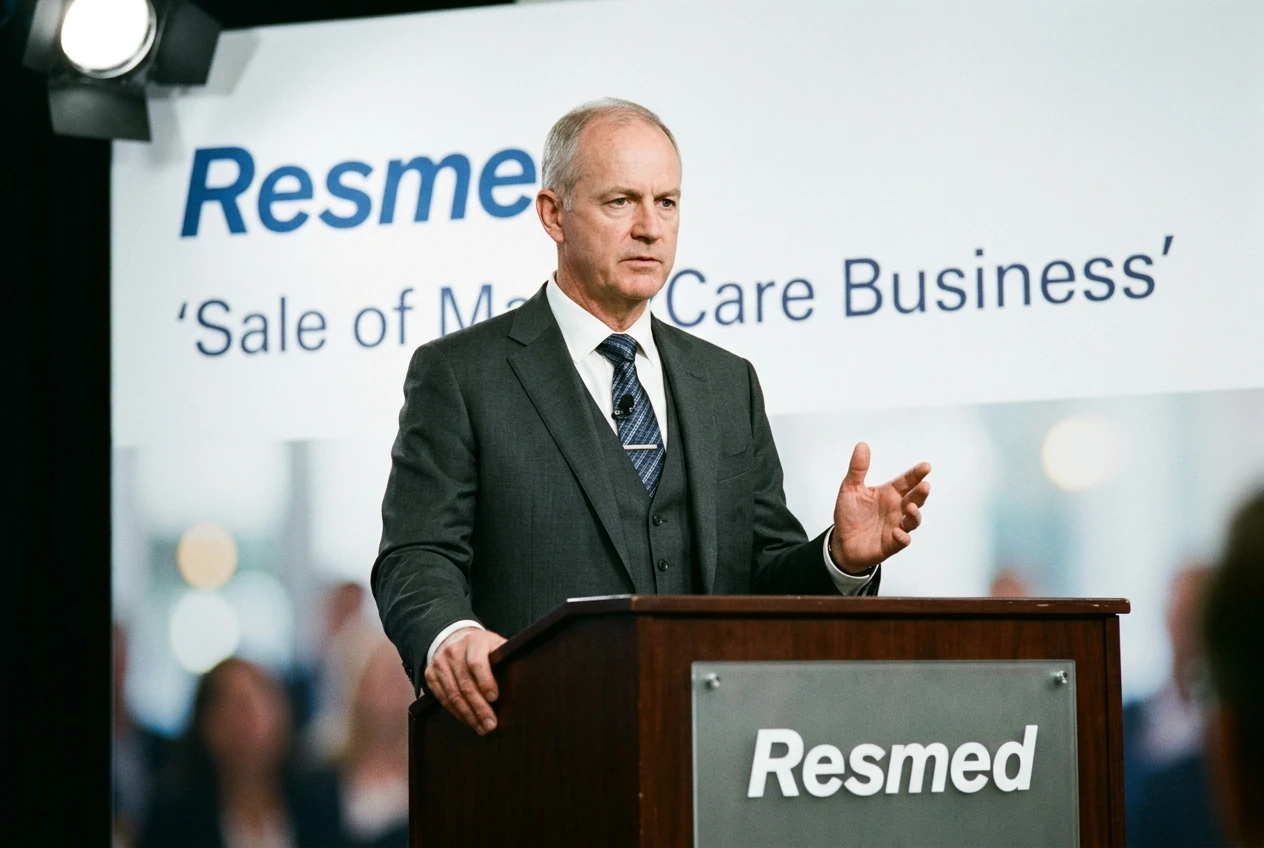
Resmed has agreed to sell its MatrixCare aged-care software business to Frazier Healthcare Partners for US$490 million in cash, ending an eight-year ownership that cost the company US$750 million to enter in November 2018. The price is 34 per cent less than what Resmed paid for the same business in 2018, according to The West Australian, and the gap between those two numbers sits at the centre of the announcement made on July 7, 2026.
Resmed plans to route the net proceeds through an accelerated share repurchase program and use the balance for general corporate purposes. Shares in the sleep-device maker were trading 0.6 per cent lower at A$31.26 after the news, per Proactive Investors. The deal is expected to close in the first quarter of Resmed’s fiscal year 2027, subject to required regulatory approvals and customary closing conditions.
The Deal and the Gap
Resmed disclosed the agreement on July 7, 2026 in a press release posted to its investor relations site, describing the divestiture as a step that “reflects Resmed’s 2030 strategy by focusing on high-growth, scalable opportunities in sleep health, breathing health and connected home-based healthcare.” The buyer is Frazier Healthcare Partners, a Seattle-based private equity firm that invests exclusively in healthcare. The cash component is US$490 million, and the company’s Australian-listed investor materials frame the headline figure as A$707 million.
| Term | 2018 Acquisition | 2026 Divestiture |
|---|---|---|
| Headline price | US$750 million | US$490 million in cash |
| Buyer / seller | Resmed acquires from OMERS Private Equity | Frazier Healthcare Partners acquires from Resmed |
| Announcement date | November 5, 2018 | July 7, 2026 |
| Expected close | End of Q2 of Resmed’s fiscal year 2019 | Q1 of Resmed’s fiscal year 2027 |
| Stated strategic purpose | Expand out-of-hospital SaaS portfolio into long-term care | Sharpen focus on sleep, breathing and connected home health |
| Business scope | MatrixCare, “Best in KLAS” long-term post-acute care software | MatrixCare plus Healthcare First, Citus and home health and hospice solutions |
The transaction includes MatrixCare and the related software offerings historically sold under the MatrixCare brand, including Healthcare First, Citus and home health and hospice solutions. It excludes Resmed’s other software businesses, Brightree in the United States and MEDIFOX DAN in Germany, both of which remain in the portfolio.
Until closing, MatrixCare will continue to operate as part of Resmed with no changes to customer service or support. Transition services agreements with Frazier are expected to help ensure continuity across systems and operations and to largely offset stranded costs in the first year after closing, per a Reuters wire on the deal.
What MatrixCare Actually Does
MatrixCare provides software to more than 15,000 providers across skilled nursing, senior living, long-term care, life plan communities and home health and hospice care. Its electronic health record solution supports point-of-care delivery, lead and referral management, claims processing, payroll and nutrition management. In 2017 and 2018, MatrixCare was named “Best in KLAS” for long-term post-acute care software, an industry award the business has held across multiple years.
For fiscal year 2026, MatrixCare generated about $220 million in revenue and about $55 million in adjusted operating profit, according to preliminary results filed by Resmed and reported in the Reuters report on the MatrixCare sale and its financials. Those numbers tell a different story than the headline price gap, and they are the figures Resmed will hand over to Frazier when the deal closes.
Why Resmed Is Walking Away
The divestiture lines up with what Resmed now calls its 2030 strategy, a plan centred on sleep, breathing and care delivered in the home. Selling MatrixCare frees up capital that Resmed says it can redeploy into innovation, operational scale and what its July 7, 2026 release describes as “long-term value creation across its connected, home-based care ecosystem.”
Today’s announcement is about our disciplined approach to portfolio management and our commitment to driving long-term growth. By focusing on areas where we see the greatest opportunity for sleep health innovation and impact, we are strengthening our ability to deliver life-changing health technologies, improve patient outcomes and create value for our stakeholders.
That is Resmed Chairman and CEO Mick Farrell, in Resmed’s July 7, 2026 announcement of the MatrixCare sale. The release goes on to say Resmed is “confident MatrixCare and its affiliated businesses will continue to support team members and drive growth under new ownership with a dedicated focus on the long-term care market.” Proceeds from the divestiture will flow to an accelerated share repurchase program and general corporate purposes, consistent with the capital-return framework Resmed laid out on its third quarter fiscal year 2026 earnings call on April 30, 2026.
The MatrixCare exit lands alongside a separate, smaller move. Resmed recently completed its Noctrix acquisition, which the company expects to add about $30 million in revenue in fiscal 2027 while reducing adjusted profit per share by about 20 cents. Resmed is keeping its Brightree and MEDIFOX DAN software units, which suggests the strategic narrowing is specific to aged care, not to out-of-hospital software as a whole.
Frazier Steps In
Frazier Healthcare Partners is a Seattle-based private equity firm that has focused exclusively on healthcare since it was founded in 1991. The firm has raised more than US$11 billion across its funds and co-investment vehicles and has invested in more than 200 companies over 35 years. It operates out of Seattle and New York and invests across the United States, Canada and Europe.
“Frazier has spent several years evaluating the post-acute care technology sector and believes MatrixCare has established itself as a leading platform serving skilled nursing, senior living and home health and hospice providers,” Ryan Lucero, General Partner at Frazier Healthcare Partners, said in the Resmed release. “We are thrilled to partner with the MatrixCare team and plan to invest aggressively in product innovation to help providers deliver better outcomes as the post-acute care landscape continues to evolve.” Lucero’s framing positions MatrixCare as a long-cycle software platform rather than a quick-turnaround asset, and the “invest aggressively” language hints at further product development rather than a cost-cut playbook.
Resmed and Frazier have signed transition services agreements designed to keep MatrixCare’s systems and operations running smoothly through the handover. The same Reuters wire notes that those agreements are expected to “largely offset stranded costs in the first year after closing,” which matters for the optical impact on Resmed’s near-term operating margins while the rest of the business absorbs the change.
The Eight-Year Run and the $260 Million Shorthand
When Resmed announced the original deal in Resmed’s November 2018 announcement of the MatrixCare acquisition, the company framed MatrixCare as “an excellent addition to the out-of-hospital software portfolio.” The price tag was $750 million, funded primarily from Resmed’s credit facility, and the deal was positioned as immediately accretive to non-GAAP gross margin and non-GAAP diluted earnings per share. MatrixCare’s 2018 pro forma net revenue was around $122 million and pro forma EBITDA around $30 million at the time of the announcement.
- 2018 purchase price: US$750 million
- 2018 pro forma revenue: about US$122 million
- 2018 pro forma EBITDA: about US$30 million
- FY2026 revenue (per preliminary Resmed results): about US$220 million
- FY2026 adjusted operating profit: about US$55 million
- 2026 sale price: US$490 million
By 2026 the business is larger on both the top line and the operating line. The issue for Resmed is not that MatrixCare shrank; it is that the price the company is willing to take for it now is 34 per cent less than it paid in 2018, per The West Australian’s report on the 34 per cent discount to the 2018 price. Put the two prices side by side and the shorthand for the gap is US$260 million in cash Resmed is not collecting this time around.
Analysts who follow the name have a different framing for what the same eight years produced. Morgans analyst Derek Jellinek, quoted in Proactive Investors’ coverage of the announcement, argues that MatrixCare “has created value over the past 8 years (that is, recurring SaaS revenue; cash generation; enabled Brightree integration across the out-of-hospital care ecosystem).” On that read, the headline loss and the underlying value are both true, and they sit alongside each other rather than cancel out.
What the Analysts Are Saying
The first named-analyst reaction is from Morgans. Derek Jellinek framed the announcement in positive terms, calling the disposal a simplification of the investment case.
“The disposal simplifies the investment case by increasing exposure to core franchises (sleep devices; masks; residential care software (RCS)) while exiting a somewhat peripheral vertical (aged care),” Jellinek said in the note covered by Proactive Investors’ account of analyst and market reaction. Jellinek described MatrixCare’s eight-year contribution as a combination of recurring SaaS revenue, cash generation and integration work that helped Brightree reach further into the out-of-hospital care ecosystem. He characterised the divestment as a way of monetising a mature asset while sharpening Resmed’s focus on its core growth drivers and recycling capital into higher-return opportunities and shareholder buybacks.
The market response on the day was muted. Proactive Investors reported Resmed shares trading 0.6 per cent lower at A$31.26 following the announcement, suggesting investors had largely already priced the divestment narrative, or had small questions about how the proceeds would land on the bottom line.
What the Sale Reshapes
Closing is expected during the first quarter of Resmed’s fiscal year 2027. Once it does, Resmed’s software footprint will narrow to Brightree in the United States and MEDIFOX DAN in Germany. The Motley Fool’s coverage of the announcement notes that Resmed expects its Residential Care Software segment to accelerate to high single-digit revenue growth in fiscal 2027 with improved operating leverage, and that the company will provide a detailed fiscal 2027 outlook during its next quarterly results in August 2026.
For investors, the practical shape of the post-deal Resmed is a company with a tighter software perimeter, a buyback funded by US$490 million of cash, and a recently closed Noctrix acquisition expected to add about US$30 million in revenue but to dilute fiscal 2027 adjusted earnings per share by around US$0.20. The MatrixCare cash arrives, the aged-care vertical exits, and the rest of the strategy has to carry the rest of the year. Morgans’ Jellinek believes it can.
Frequently Asked Questions
How much did Resmed sell MatrixCare for?
Resmed agreed to sell MatrixCare for US$490 million in cash, with the deal announced on July 7, 2026.
Who bought MatrixCare from Resmed?
Frazier Healthcare Partners, a Seattle-based private equity firm that has invested exclusively in healthcare since its founding in 1991.
When will the MatrixCare deal close?
The transaction is expected to close during the first quarter of Resmed’s fiscal year 2027, subject to required regulatory approvals and customary closing conditions.
How does the $490 million price compare to what Resmed paid in 2018?
Resmed paid US$750 million to acquire MatrixCare in November 2018, so the 2026 price is 34 per cent less than the original purchase price, per The West Australian’s coverage of the announcement.
Which businesses are included in the MatrixCare sale?
The transaction covers MatrixCare plus the related software offerings historically sold under the MatrixCare brand, including Healthcare First, Citus and home health and hospice solutions. It excludes Resmed’s Brightree business in the United States and MEDIFOX DAN in Germany.


South Korea Retail Investors Face Reckoning After KOSPI AI Rally Collapses

Surrey AI Maps Three Heart Attack Paths and Their Molecular Roots

Germany Locks Neutral Apple ATT Prompts Across Most of Europe

Apple’s 5% EU Fee Quietly Rewrites Alternative App Store Math

Apple’s EU Fee Truce Cuts Complexity but Leaves Rivals Fuming

Pixel 11 Pro Fold Trades Thinness for Durability and Seven-Year Stay

Mayo AI Flags HCM Obstruction From Everyday Ultrasound Videos

Indian Brands Quietly Scale Landmark Screens and Home Tech

Navin Vatsa Turns Grief Into a Lifetime of Quiet Seeing

Google Bets Pixel 11 Agentic AI Will Redefine Phones

Oracle Cuts 21,000 Jobs in a Year, Cites AI in 10-K Filing

Fable 5 and Mythos 5 Return as US Lifts Anthropic Export Controls

SpaceX’s Google Deal Turns a Rocket Company Into a Cloud Landlord

CD Projekt Red Co-CEO: Redemption Arc Isn’t Done, Witcher 4 in 2027

XPL Rallies 30% Ahead of Plasma One Card Tier Launch

Google Search Profiles Build a Follow Graph Inside Discover

DGO App Brings Rs 549 Mobile Pass for FIFA World Cup 2026 in Nepal

Moonshot AI Targets $30 Billion in China’s Fastest AI Funding Sprint

Oppo’s ColorOS 17 Eligibility List Leaves A-Series Buyers Behind

Microsoft Xbox Layoffs Start in July as Sharma Slams 3% Margin
-
 AI2 months ago
Oracle Cuts 21,000 Jobs in a Year, Cites AI in 10-K Filing
-
 AI2 months ago
Fable 5 and Mythos 5 Return as US Lifts Anthropic Export Controls
-
 AI3 months ago
SpaceX’s Google Deal Turns a Rocket Company Into a Cloud Landlord
-
 GAMING2 months ago
CD Projekt Red Co-CEO: Redemption Arc Isn’t Done, Witcher 4 in 2027
-
 CRYPTO2 months ago
XPL Rallies 30% Ahead of Plasma One Card Tier Launch
-
 NEWS3 months ago
Google Search Profiles Build a Follow Graph Inside Discover
-
 APPS2 months ago
DGO App Brings Rs 549 Mobile Pass for FIFA World Cup 2026 in Nepal
-
 AI3 months ago
Moonshot AI Targets $30 Billion in China’s Fastest AI Funding Sprint