
CRYPTO
SEC Outlines 2026 Crypto Rule Plan on Tokens, Custody, Brokers
The SEC’s 2026 crypto rulemaking agenda packages token offerings, custody, and broker-dealer proposals, building on the March 2026 SEC-CFTC interpretation.

The US Securities and Exchange Commission has positioned four crypto proposals at the proposed rule stage of its 2026 regulatory agenda, packages that target how tokens are sold, how brokers and advisers hold digital assets, and how crypto trades on alternative trading systems.
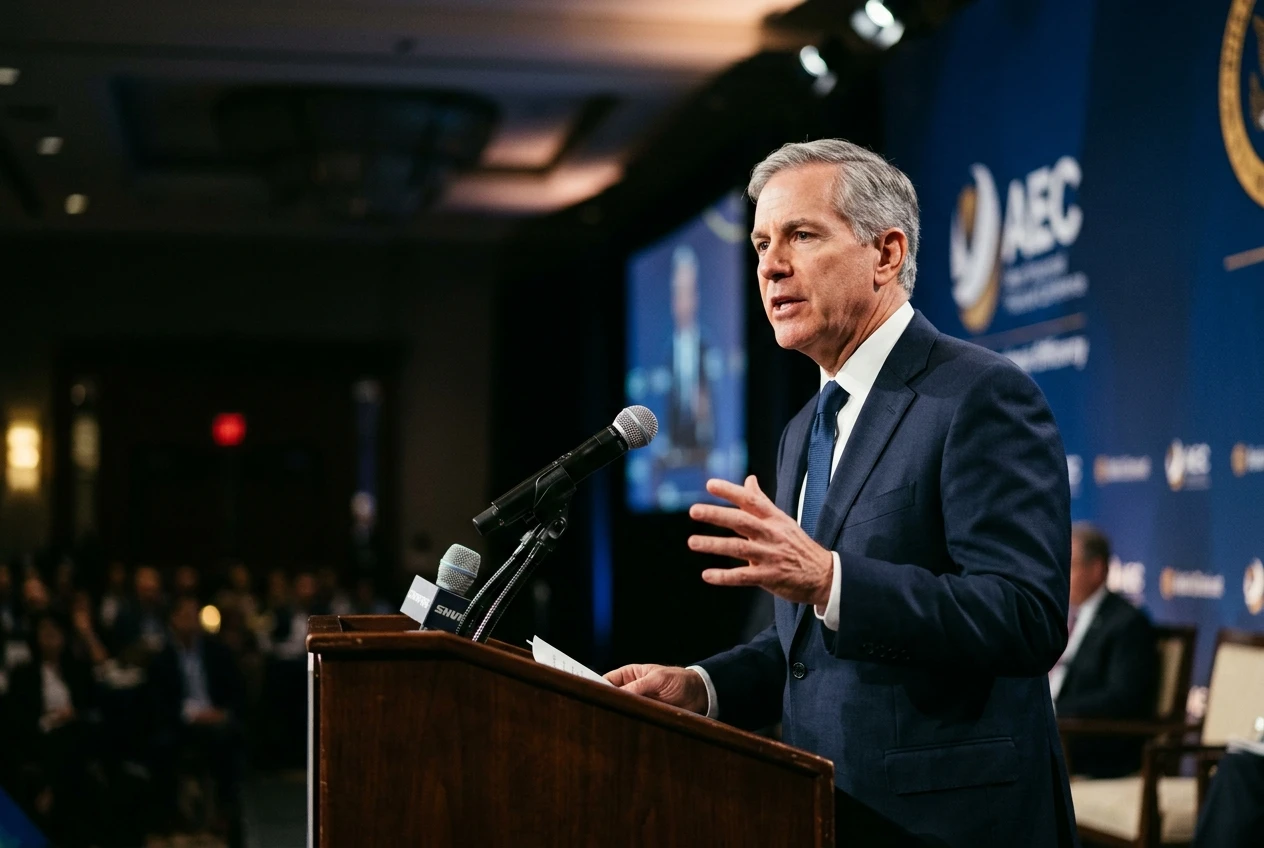
SEC Chairman Paul S. Atkins first sketched the rule’s framework at The Digital Chamber’s 2026 Blockchain Summit on March 17, 2026, the same day the SEC and the Commodity Futures Trading Commission jointly classified most crypto assets as non-securities. Atkins framed that joint release as the opening move in a broader rulemaking push.
The 2026 Crypto Regulatory Agenda
According to the SEC’s 2026 active rule list, four crypto items sit at the proposed rule stage, with token-issuance rules at the center. They sit alongside three adjacent proposals: amendments to broker-dealer financial responsibility and recordkeeping rules for crypto assets, amendments to the custody rules for broker-dealers and advisers, and Crypto Market Structure Amendments covering the trading of crypto assets on alternative trading systems. All four are designated as economically significant under the unified-agenda framework. The first, formally titled Crypto Assets (RIN 3235-AN38), carries the broadest scope, with the Division of Corporation Finance considering rules on the offer and sale of crypto assets, including potential exemptions and safe harbors.
| Item | RIN | Scope |
|---|---|---|
| Crypto Assets | 3235-AN38 | Offer and sale rules, exemptions, safe harbors for crypto assets |
| Amendments to the Custody Rules | 3235-AN46 | Custody standards for broker-dealers and advisers |
| Amendments to Broker-Dealer Financial Responsibility and Recordkeeping Rules Regarding Crypto Assets | 3235-AN48 | Capital, books, and records for broker-dealers handling crypto assets |
| Crypto Market Structure Amendments | 3235-AN49 | Exchange Act updates for crypto trading on alternative trading systems |
The agenda plugs into a longer policy machinery the agency has been building since January 2025, when Acting Chair Mark T. Uyeda launched the Crypto Task Force on the first full day of the new Trump administration and designated Commissioner Hester M. Peirce to lead it. Project Crypto, which Atkins announced in mid-2025, set the working goal of “modernizing rules and regulations under the Federal securities laws in accordance with the President’s Working Group’s recommendations to enable America’s financial markets to move onchain,” according to the program’s framing language. The two efforts now feed the same rule pipeline focused on issuance, custody, and trading.
In 2026, Atkins tagged Regulation Crypto as the first major crypto-specific rulemaking of his tenure and placed it among the agency’s top near-term priorities. Per Bankless’s 2026 reporting, the rule “is still under White House review,” even as Atkins first said in March it would arrive within weeks.
What Atkins Wants the Rule to Look Like
Atkins used his March 17, 2026 Digital Chamber speech to preview the regulation’s three pillars. A startup exemption would give early-stage crypto projects a time-limited runway to raise capital under a fit-for-purpose disclosure regime modeled on Commission white papers. A fundraising exemption would let later-stage issuers raise up to a defined amount annually while keeping the option to use other registration carve-outs. An investment-contract safe harbor would set a rule-based standard for when an issuer can step back from a project’s managerial efforts without re-entering securities classification. Atkins framed the package as a “head start” on the bipartisan House framework.
While this interpretation provides long-needed clarity, I should like to assure this audience that today’s announcement amounts to a beginning, not an end. Today, I will discuss how the SEC and CFTC plan to work together to implement this interpretation.
At The Digital Chamber’s 2026 Blockchain Summit, Atkins framed the rule as drawing “heavily from Congressional work over recent years, particularly the CLARITY Act.” H.R. 3633, the Digital Asset Market Clarity Act of 2025, passed the House on July 17, 2025, and still awaits action in the Senate Committee on Banking, Housing, and Urban Affairs. The agenda item carries no published NPRM date yet, and the rule is queued under the unified-agenda framework, not on the Federal Register.
The Five Taxonomic Buckets
The joint digital asset interpretation from March 17, 2026 organizes tokens into five categories under the federal securities laws. Four are not securities: digital commodities, digital collectibles, digital tools, and GENIUS Act-compliant payment stablecoins. The fifth, digital securities, captures traditional securities formatted as or represented by a crypto asset. Both Bitcoin and Ether are expressly classified as digital commodities under the new taxonomy, ending an ambiguity that dated back to the SEC’s 2017 DAO Report and a 2018 Hinman speech.
| Category | Securities Status | Examples |
|---|---|---|
| Digital Commodities | NOT a Security | Programmatic assets including governance tokens, value driven by supply and demand rather than managerial efforts |
| Digital Collectibles | NOT a Security | Artwork, music, trading cards, memecoins, in-game items |
| Digital Tools | NOT a Security | Memberships, tickets, credentials, title instruments, identity badges |
| Stablecoins | NOT a Security | Payment stablecoins issued by a GENIUS Act-permitted issuer |
| Digital Securities | IS a Security | Traditional securities formatted as or represented by a crypto asset |
Even a non-security crypto asset can become subject to securities law if it is offered and sold as part of an investment contract, the interpretation says. That contract can end: when an issuer fulfills its core promises, or when it fails to, the underlying asset can revert to non-security status. Proof-of-work mining, proof-of-stake staking, liquid staking, the wrapping of a non-security crypto asset, and airdrops are generally not investment contracts under the interpretation.
The interpretive release complements, not replaces, the formal rules the agenda queues. For tokenized securities, the SEC’s January 28, 2026 statement holds the line that instruments which look like securities are securities even when wrapped or tokenized. In practice, issuers that put traditional equities on blockchain rails fall under SEC broker-dealer and exchange oversight rather than the lighter stablecoin track. A live test sits at this boundary: Securitize’s SECZ day-one tokenized equity debut shows the same common stock now living on NYSE rails and on Avalanche and Solana simultaneously. Digital collectibles such as memecoins are explicitly outside securities law under the new taxonomy.
The interpretation takes effect upon Federal Register publication and remains subject to potential judicial challenge. Atkins framed the formal rule as the way to let crypto projects reach network maturity without relying on individualized no-action letters.
Where the Compliance Burden Now Lands
Broker-dealers and advisers face the most concrete near-term compliance changes. Amendments to the custody rules, paired with the broker-dealer financial responsibility package, will require firms handling crypto assets to recalibrate capital treatments, books and records, and the conditions under which they may take physical possession of customer tokens. Crypto Market Structure Amendments will update Exchange Act rules for the trading of crypto assets on alternative trading systems.
Three concrete caps from Atkins’s March 17 speech size the proposed framework.
- $5 million proposed cap on founder fundraising under the startup exemption (Atkins, March 17, 2026)
- $75 million proposed cap on fundraising under the 12-month fundraising exemption (Atkins, March 17, 2026)
- Up to four years proposed runway before a project must register or exit the startup exemption (Atkins, March 17, 2026)
Registration isn’t the only path the agenda contemplates. The proposed Crypto Assets rule is intended to provide exemptions and safe harbors that lower the friction of capital formation while clarifying obligations, in the agenda’s stated framing. Public comment will run before any final rule, and the framework can be widened or narrowed based on what the SEC hears from issuers, brokers, and trading platforms. Interagency work continues, since the SEC’s Project Crypto and the CFTC Crypto Sprint, jointly announced in September 2025, share staff work on spot crypto product approvals and tokenized collateral.
Wall Street’s Counterweight at the SEC
Wall Street has not waited for the proposal to push back. On January 28, 2026, representatives from the Securities Industry and Financial Markets Association, Cahill Gordon & Reindel LLP, Citadel LLC, and JPMorgan Chase & Co. met with the SEC’s Crypto Task Force to argue that tokenized securities should be regulated under existing federal securities laws, not a separate regime, per the Wall Street firms’ January 28 SEC meeting memo. They urged the SEC to rely on formal rulemaking rather than broad exemptive relief, warning that short-cuts could let tokenized equities bypass longstanding investor-protection requirements. Citadel had filed a 13-page letter about a month earlier pressing for tighter DeFi and tokenization oversight. Parts of the crypto industry responded with their own correspondence.
The split runs along traditional industry lines, with bank-affiliated broker-dealers and institutional tokenization platforms on one side and crypto-native issuers on the other. Wall Street firms agree that innovation in digital markets should advance within existing guardrails, the meeting’s framing language shows. Where the line lands will shape whether the formal rule leans on safe harbors and exemptions, or on registration pathways and disclosure regimes. When the proposal is published, the agency will have to pick which side carries more weight.
The Stakes Around the Calendar
With the CLARITY Act still parked in the Senate Banking Committee since passing the House on July 17, 2025, the SEC is the de facto rulemaker for US crypto in 2026. Bankless’s 2026 status check on Regulation Crypto put it plainly: with market structure legislation stalled in Congress, the SEC is currently crypto’s fastest-moving policy venue. Atkins framed the rule as a “head start” that aligns with the bipartisan House language.
Two July 2026 deadlines are already locked in by other rulemakers.
- January 21, 2025 – Acting Chair Mark T. Uyeda launches the Crypto Task Force; Commissioner Hester M. Peirce designated to lead it.
- September 4, 2025 – Atkins releases the statement on the Spring 2025 Unified Agenda, putting crypto on the rulemaking map.
- July 17, 2025 – House passes H.R. 3633, the Digital Asset Market Clarity Act, which then awaits Senate Banking Committee action.
- March 17, 2026 – SEC and CFTC publish the joint interpretive release; Atkins outlines Regulation Crypto Assets at the Digital Chamber Summit.
- May 27, 2026 – SEC grants Paxos Securities Settlement Company temporary clearing-agency registration.
- July 1, 2026 – California’s Digital Financial Assets Law takes effect, requiring state licensing for digital-asset activity.
- July 18, 2026 – GENIUS Act directs federal and state regulators to issue additional regulations on stablecoin issuer licensing, capital, custody, and anti-money laundering by this date.
Atkins’s “coming weeks” has stretched into months. The NPRM has not appeared in the Federal Register as of publication. When it does, public comment will test which side of the Wall Street divide carries more weight with the new rule.
Disclaimer: This article is for informational purposes only and does not constitute financial, investment, or legal advice. Crypto regulation is changing rapidly; figures and rulemaking status are accurate as of publication. Consult a qualified professional before making investment or compliance decisions.


South Korea Retail Investors Face Reckoning After KOSPI AI Rally Collapses

Surrey AI Maps Three Heart Attack Paths and Their Molecular Roots

Germany Locks Neutral Apple ATT Prompts Across Most of Europe

Apple’s 5% EU Fee Quietly Rewrites Alternative App Store Math

Apple’s EU Fee Truce Cuts Complexity but Leaves Rivals Fuming

Pixel 11 Pro Fold Trades Thinness for Durability and Seven-Year Stay

Mayo AI Flags HCM Obstruction From Everyday Ultrasound Videos

Indian Brands Quietly Scale Landmark Screens and Home Tech

Navin Vatsa Turns Grief Into a Lifetime of Quiet Seeing

Google Bets Pixel 11 Agentic AI Will Redefine Phones

Oracle Cuts 21,000 Jobs in a Year, Cites AI in 10-K Filing

Fable 5 and Mythos 5 Return as US Lifts Anthropic Export Controls

SpaceX’s Google Deal Turns a Rocket Company Into a Cloud Landlord

CD Projekt Red Co-CEO: Redemption Arc Isn’t Done, Witcher 4 in 2027

XPL Rallies 30% Ahead of Plasma One Card Tier Launch

Google Search Profiles Build a Follow Graph Inside Discover

DGO App Brings Rs 549 Mobile Pass for FIFA World Cup 2026 in Nepal

Moonshot AI Targets $30 Billion in China’s Fastest AI Funding Sprint

Oppo’s ColorOS 17 Eligibility List Leaves A-Series Buyers Behind

Microsoft Xbox Layoffs Start in July as Sharma Slams 3% Margin
-
 AI2 months ago
Oracle Cuts 21,000 Jobs in a Year, Cites AI in 10-K Filing
-
 AI2 months ago
Fable 5 and Mythos 5 Return as US Lifts Anthropic Export Controls
-
 AI2 months ago
SpaceX’s Google Deal Turns a Rocket Company Into a Cloud Landlord
-
 GAMING2 months ago
CD Projekt Red Co-CEO: Redemption Arc Isn’t Done, Witcher 4 in 2027
-
 CRYPTO2 months ago
XPL Rallies 30% Ahead of Plasma One Card Tier Launch
-
 NEWS2 months ago
Google Search Profiles Build a Follow Graph Inside Discover
-
 APPS2 months ago
DGO App Brings Rs 549 Mobile Pass for FIFA World Cup 2026 in Nepal
-
 AI2 months ago
Moonshot AI Targets $30 Billion in China’s Fastest AI Funding Sprint