
APPS
South Africa Drops Draft Rules for MyMzansi Smartphone Digital ID
South Africa moved its identity system out of the wallet and into the phone this week. Home Affairs Minister Leon Schreiber published draft regulations on May 4, 2026 authorising a smartphone digital ID delivered through an app called MyMzansi, with public comment open until June 6. Citizens aged 16 and older can enrol at Home Affairs offices, embassies, ports of entry, or accredited bank branches, get fingerprinted and face-scanned, then verify themselves later by QR code, Bluetooth, or near-field communication. The smart ID card stays. The app is optional.
The draft amends the Identification Act of 1997 and forms the legal scaffolding for the wider MyMzansi roadmap’s functional digital identity initiative, which has been running ahead of its rulebook for the past year. Schreiber’s office is asking everyday South Africans, banks, civil society groups and telecoms operators to file written comments before the window closes.
Schreiber said the system will combat identity theft, financial crimes, corruption and illegal immigration, while delivering services to citizens at home and improving privacy protections. Critics say the privacy half of that promise is the thinnest part of the draft.
What MyMzansi Will Actually Do on a Phone
The app holds verified versions of the documents most South Africans already carry: the national ID, birth certificates and marriage certificates. Once enrolled, a user can prove who they are without showing the plastic card.
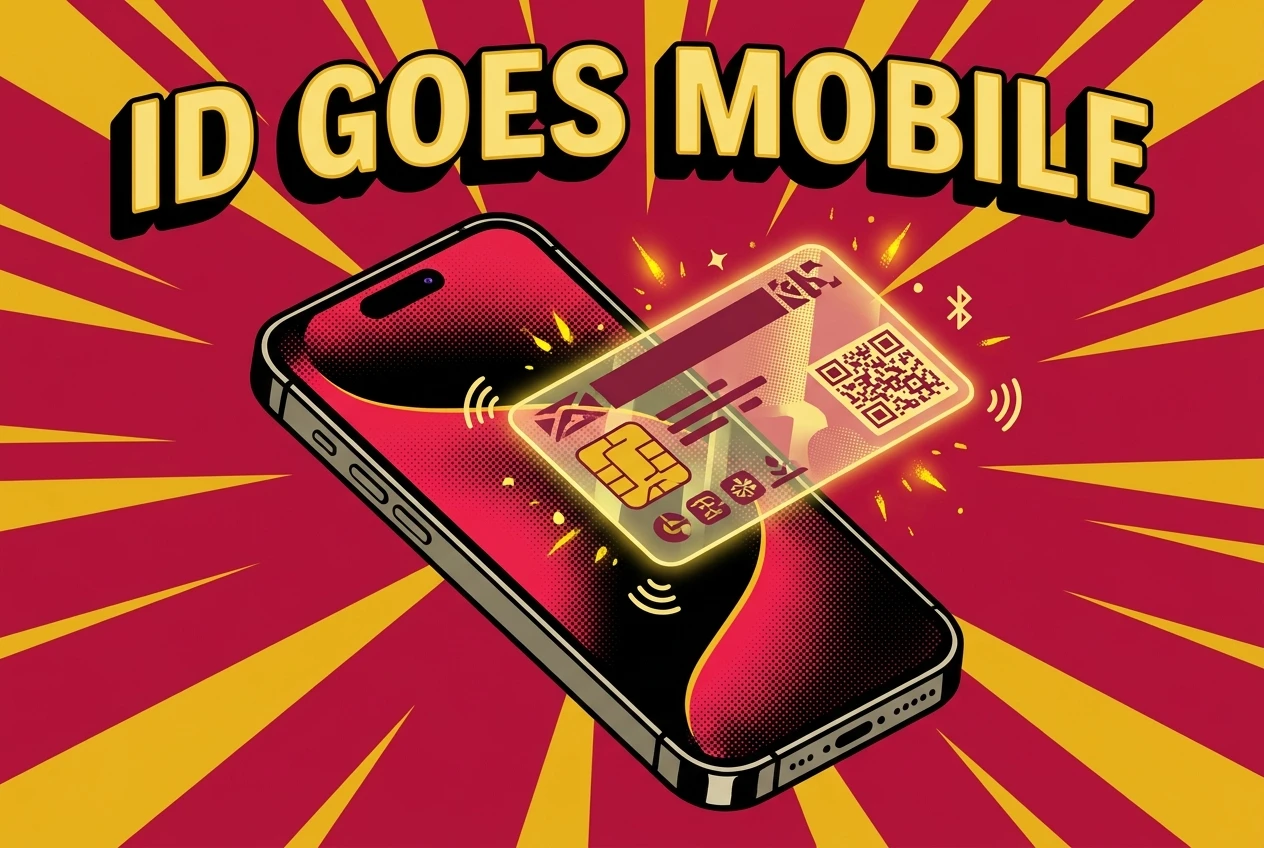
Verification works three ways. The phone can throw a QR code on screen for a counter scanner. It can hand off the credential by Bluetooth to a nearby device. Or it can tap a reader using NFC, the same chip your contactless bank card uses.
Behind the scenes, the credential is cryptographically signed by the Department of Home Affairs and checked against the national population register in real time. That is the part that turns a phone screen into a legally meaningful document. A screenshot of an ID is worthless. A signed credential is not.
The draft regulations spell out the user-side feature set:
- Optional digital wallet for ID, birth and marriage certificates.
- QR, Bluetooth and NFC presentment, all three live.
- Facial recognition for renewal, no Home Affairs visit required.
- Liveness detection to block deepfake or photo spoofing.
- Bank and telco lookups against the population register, with consent.
Where to Sign Up, and Who Qualifies
Enrolment is open to South African citizens aged 16 and older. The draft lists four eligible enrolment points so the rollout doesn’t choke at Home Affairs counters alone.
The on-site process runs in a fixed order:
- Document check, where staff confirm an existing ID, birth certificate or passport.
- Biometric capture, fingerprints first, then a facial scan with liveness detection.
- Contact verification, a working phone number and email tied to the applicant.
- Device binding, the credential is provisioned to a single named smartphone.
One Phone, One ID, Five Years
The credential is locked to a specific device. Lose the phone, and you can’t simply move the ID to a new handset by signing into a cloud account. You re-enrol, or you renew, depending on the path the regulations finalise.
Validity runs for five years. Renewal happens entirely inside the MyMzansi app using facial recognition, with no in-person visit required if the system can match the live face to the file. That is the design that turns the catchphrase Schreiber has used since February, Home Affairs at home, into a working flow rather than a slogan.
Device-binding also acts as a fraud control. If the credential cannot be exported or copied between phones, a stolen handset’s value to an identity thief drops sharply. The trade-off is friction. People upgrade phones every two or three years on average, and the draft is currently silent on a smooth handset-to-handset transfer.
Why Banks and Telcos Get a Direct Line to the Population Register
The most consequential part of the draft is buried in the section on trusted entities. Banks and mobile operators that meet the accreditation bar can verify a person’s identity directly against the national population register and receive automatic updates if a name, address or marital status changes.
That ends a long-running annoyance. Today, when a customer changes address, they tell their bank, their phone company, their insurer, and Home Affairs separately. Under the new rules, an update at Home Affairs propagates to every accredited entity holding that customer’s record, with consent.
The fraud math is the bigger driver. South Africa’s Department of Home Affairs estimates that the legacy green barcoded ID book is about 500% more vulnerable to fraud than the smart ID card, and roughly 16 million South Africans still rely on the green book. The Special Investigating Unit reported that more than 630,000 residency permits and marriage certificates linked to sham processes were sold in some cases for as little as R500 a document.
The numbers behind the rollout so far:
- 4,002,964 smart ID cards issued in 2025, the highest annual figure on record.
- 17% jump on the 3.43 million issued in 2024.
- 21 million smart ID cards in circulation by the end of 2023.
- 9 banks accredited for in-branch smart ID applications, starting with Capitec and Standard Bank, with a stretch goal of 1,000 branches by 2029.
That bank channel is what makes the digital ID rollout feasible at scale. There aren’t enough Home Affairs offices to absorb the demand. Capitec branches alone outnumber Home Affairs service points several times over, and the Thales South African ID card case study documents how the smart card chip and biometric back end were architected for exactly this kind of distributed enrolment.
The Two-Year Prison Clause Almost Nobody Reads
Most coverage of the draft skipped past its punitive section. The regulations attach criminal penalties to three specific abuses, and they are sharper than the current Smart ID rules.
| Offence | Maximum Penalty |
|---|---|
| Enrolling under a false identity | Fine or up to 2 years in prison |
| Presenting another person’s digital credential | Fine or up to 2 years in prison |
| Bypassing or spoofing the liveness-detection system | Fine or up to 2 years in prison |
| Trusted-entity profiling or commercial misuse of register data | Civil and administrative sanctions |
| Unlogged access to the population register | Mandatory audit-log retention, minimum 7 years |
The POPIA Question Critics Want Answered Before Launch
The draft sits on top of the Protection of Personal Information Act, the country’s main data-protection law, but POPIA was written in 2013 for a slower world of paper forms and quarterly batch updates. Real-time, cross-sector identity lookups are not what the law was designed for.
Murray Hunter, a senior associate at ALT Advisory and a long-time Right2Know researcher, has been blunt about the framing. He has questioned whether the answer to identity fraud is to clean up corrupt officials or to build a centralised biometric database covering every newborn in the country.
If the solution to identity theft is not to root out corrupt officials but to create a massive biometrics database of all newborns, that is a policy choice the country should debate openly, not adopt by regulation.
Hunter’s broader point, echoed by the Polity policy analysis on citizen data control published May 4, 2026, is that the draft answers the technical question and ducks the governance one. Who audits the auditors. Where does a citizen go when an automatic update is wrong. Can a person revoke a trusted entity’s access without losing the bank account or SIM tied to it.
The draft does forbid trusted entities from using register data for profiling, commercial enrichment, or open-ended intelligence gathering. Law enforcement can pull data only through warrants and court orders, not direct queries. Audit logs run a minimum of seven years. Those are real guardrails. They are also the easiest to write.
Joseph Atick, executive chairman of ID4Africa and one of the most-quoted analysts on continental digital ID, has argued for years that data-protection law should harden before biometric systems scale, not after. South Africa is doing both at once.
The bigger structural critique, surfaced by The Conversation’s academic analysis of South Africa’s digital immigration turn, is that putting biometrics at the centre of identity verification raises the consequence of a single breach. A leaked password resets. A leaked face does not.
A Roadmap That Has Already Slipped
This draft is the second attempt to nail down the legal text. The government missed an April 2025 deadline to get a digital ID legal framework through cabinet, and the original target of a working national digital ID by end-2025 also slid.
Where the schedule stands now:
- May 4, 2026: Draft regulations gazetted under the Identification Act 1997.
- June 6, 2026: Public comment window closes.
- March 31, 2027: Hosting infrastructure deadline, with the South African Revenue Service running the back end.
- 2027 to 2028: Verifiable digital credentials issued to citizens via the secure mobile wallet.
- Q4 2028: Department target of 90% smart ID uptake among citizens, per the MyMzansi roadmap.
The hosting choice matters. SARS already operates one of the most mature data environments inside the South African state, which is why Home Affairs is renting capacity rather than building from scratch. The SAnews briefing on the Home Affairs digital ID rollout confirmed that the public-key infrastructure and certificate authority sit on SARS-managed servers.
What Happens If You Don’t Own a Smartphone
The regulations contain a sentence that civil society groups asked for and the minister included. The system must be inclusive, with enrolment points in every municipality and parallel access for citizens without smartphones or reliable internet.
That is not a small carve-out. Smart ID cards remain valid. So do green ID books, for now. The MyMzansi app is an addition, not a replacement, and a citizen can choose to never download it without losing access to a bank account, a passport, or a grant.
Frequently Asked Questions
Do I Have to Use the MyMzansi App?
No. The draft regulations are explicit that the digital ID is optional. Your smart ID card and even the older green ID book remain valid for identification, banking, voting, and travel within the rules each service already follows. The minister has framed MyMzansi as a convenience layer on top of the existing system, not a replacement, and there is no proposed deadline that forces you onto the app.
How Do I Get a Digital ID Once the Rules Are Final?
Visit one of four enrolment points: a Home Affairs office, a South African embassy abroad, a port of entry, or an accredited bank branch from the nine-bank list led by Capitec and Standard Bank. Bring an existing ID. Staff capture fingerprints and a facial scan, confirm your phone number and email, then provision the credential to your phone. The minimum age is 16.
What Happens If I Lose My Phone?
The credential is bound to that specific device, so a thief cannot move it to another handset. Report the loss to Home Affairs and your accredited bank to flag the credential, then re-enrol on a replacement device. The draft is currently silent on a same-day handset transfer, which is one of the items industry submissions are expected to push back on before the June 6 deadline.
Can the Police Pull My Data Through MyMzansi?
Not directly. Law enforcement access to the national population register still requires a warrant or court order, the same standard that applies to today’s records. Trusted entities like banks and telcos cannot share register data with police outside that legal channel, and every access has to be logged for a minimum of seven years. Misuse can lead to civil sanctions and, for the worst breaches, criminal charges.
How Do I File a Comment Before June 6, 2026?
Submissions go to the Department of Home Affairs by email at Moses.Malakate@dha.gov.za or by physical delivery to the department’s Pretoria office listed in the gazette. Comments can flag specific clauses, propose alternative wording, or raise practical concerns about enrolment, device transfer, or trusted-entity oversight. Civil society groups including Right2Know and ALT Advisory are expected to coordinate joint submissions in the final week of May.
The draft is the first time South Africa has put concrete legal text under a phone-based identity system that has been talked about politically since the 2024 State of the Nation address. The shape of the final regulations, and the strength of the privacy clauses that survive the public comment process, will decide whether the country is building a useful digital convenience or a centralised biometric chokepoint that future governments inherit. Both are still on the table.
APPS
Massachusetts Certifies First Ride-Hailing Union, But Antitrust Risk Looms
Massachusetts certified the first state-level ride-hailing drivers’ union in U.S. history on Friday, a milestone labor organizers are calling the largest private-sector organizing win since Ford autoworkers unionized in 1941. Nearly 70,000 Uber and Lyft drivers across the state now have collective bargaining rights while remaining classified as independent contractors, a framework made possible by a 2024 ballot measure but one that legal scholars warn could face federal antitrust scrutiny.
Jean Fredo, who has driven for Uber for more than seven years, stood outside the Massachusetts State House on Tuesday and described the stress of working longer hours for shrinking pay as gas and maintenance costs climbed. “I live with stress, always scared to lose my app. This is not a way to live,” he said in French through a translator, holding up a photo of his four children. Drivers hope the union will bring relief on wages, sudden deactivations, and the opacity of app algorithms that determine their earnings.
What the 2024 Ballot Measure Changed
The certification became possible after Massachusetts voters approved a 2024 ballot measure creating a first-in-the-nation framework allowing ride-hailing drivers to unionize and bargain collectively while remaining independent contractors. The model sidesteps federal labor law, which generally excludes independent contractors from collective bargaining protections under the National Labor Relations Act (NLRA, the 1935 statute governing private-sector union rights).
Under the Massachusetts framework, drivers retain the flexibility to set their own schedules and use their own vehicles, but gain the ability to negotiate collectively over pay rates, deactivation policies, and other terms. The ballot measure passed with 53.9% support in November 2024, overcoming opposition from business groups that argued the hybrid model could expose companies to antitrust liability under the Sherman Act, which prohibits agreements among independent businesses that restrain trade.
Victoria Acosta, a mother who drives for both Uber and Lyft, said in Spanish through a translator that she hopes the victory inspires drivers in other states. “Without the support of the drivers, we wouldn’t be here,” she said. Labor organizers are already targeting similar campaigns in California and Illinois, where app-based gig workers face the same classification dilemma.
Why Independent Contractors Cannot Unionize Under Federal Law
Ride-hailing drivers are generally classified as independent contractors rather than employees, a distinction that excludes them from many traditional labor protections. The NLRA covers only employees, not independent contractors, meaning drivers cannot form unions recognized under federal law. Independent contractors are also excluded from minimum wage and overtime protections under the Fair Labor Standards Act (FLSA, the 1938 federal wage law).
The classification turns on control. Employees work under an employer’s direction and control; independent contractors operate their own businesses and set their own terms. Uber and Lyft have long argued that drivers fit the latter category because they choose when and how long to work, use their own vehicles, and pay their own expenses. Courts and regulators have split on the question, with some states and agencies finding drivers are misclassified employees, while others have upheld the contractor designation.
Massachusetts’ ballot measure does not reclassify drivers as employees. Instead, it creates a state-level carve-out allowing independent contractors in the ride-hailing industry to bargain collectively, a structure that exists nowhere else in the U.S. The legal risk is that collective bargaining among independent contractors could be construed as price-fixing or market allocation under federal antitrust law, which treats independent businesses negotiating together as potential cartels.
The Antitrust Challenge Looming Over the Model
Business groups and some legal scholars have warned that the Massachusetts framework could violate the Sherman Act, the 1890 federal antitrust statute that prohibits agreements among competitors that restrain trade. When independent contractors negotiate collectively over prices or terms, they are technically competitors agreeing to set rates, a practice the Federal Trade Commission (FTC, the federal antitrust enforcement agency) and the Department of Justice have historically treated as per se illegal.
The concern is not hypothetical. In 2015, the FTC blocked a proposed rule in Seattle that would have allowed ride-hailing drivers to unionize, arguing that collective bargaining among independent contractors would constitute illegal price-fixing. The Seattle rule was never implemented. Massachusetts’ ballot measure attempts to avoid that outcome by framing the bargaining framework as a state labor regulation rather than a private agreement among competitors, but whether that distinction will survive federal scrutiny remains untested.
Autumn Weintraub, executive director of the App Drivers Union, said drivers across the country regularly communicate with one another about changing conditions in the industry. “Drivers now have an official organization and can speak with one voice about what’s happening in this industry,” she said. “We cannot let billions of dollars leave Massachusetts and go to Silicon Valley. That money feeds people’s families, that money pays the rent.”
How Other States Are Watching
California and Illinois labor organizers are closely tracking the Massachusetts certification. California’s Proposition 22, approved by voters in 2020, classified app-based drivers as independent contractors and provided limited benefits but did not grant collective bargaining rights. Illinois lawmakers introduced a bill in early 2025 that would create a similar framework to Massachusetts, allowing drivers to unionize while remaining contractors. The bill has not yet advanced out of committee.
What Uber and Lyft Said
Uber said in a statement that it would work with the union and regulators while preserving “driver flexibility and hard-won benefits.” Lyft said it was committed to “engaging in good faith” and “helping drivers succeed while keeping rideshare affordable and dependable for everyone who counts on it.” Neither company indicated it would challenge the certification in court, though both have historically opposed efforts to reclassify drivers as employees or impose collective bargaining frameworks.
What Drivers Hope the Union Will Deliver
Drivers who signed union cards cited three primary grievances: declining pay, sudden deactivations, and the opacity of app algorithms that determine earnings. Fredo said when he started driving for Uber he appreciated the flexibility and the ability to make his own schedule while still being present for his family. But over time, he found himself working longer hours while earning less as gas and maintenance costs climbed.
Deactivations are a particular source of anxiety. Drivers can lose access to the apps with little warning, often after a customer complaint or a drop in their rating below a platform-set threshold. The apps do not disclose the specific algorithms that calculate ratings or determine which drivers receive which ride requests, leaving drivers with limited visibility into how their earnings are set.
The union’s first bargaining priorities are expected to include minimum per-mile and per-minute rates, a transparent appeals process for deactivations, and disclosure of the factors that determine ride assignments. Massachusetts regulators are separately considering new ride-hailing rules involving safety standards and driver oversight. Days before the union certification, Uber warned in a blog post that some of the proposals could raise costs and reduce flexibility for drivers, while supporters said the changes are intended to strengthen safety and accountability.
The Autonomous Vehicle Shadow Over the Victory
The organizing effort has unfolded alongside the rapid expansion of autonomous vehicle technology. Waymo, the self-driving subsidiary of Alphabet, has expanded driverless taxi operations in cities including San Francisco, Los Angeles, and Phoenix, heightening anxiety among some ride-hailing drivers about the future of their jobs. Massachusetts still requires a licensed human operator inside autonomous vehicles tested on public roads, but that rule could change as the technology matures.
Weintraub said drivers regularly communicate about the expansion of autonomous vehicles and the threat they pose to driver livelihoods. “Drivers now have an official organization and can speak with one voice about what’s happening in this industry,” she said. The union has not yet announced a formal position on autonomous vehicles, but labor organizers in other states have called for policies that would require human drivers in autonomous taxis or impose fees on driverless operations to fund retraining programs for displaced workers.
Fredo said his dream is to save and send his four children to college. “I’m fighting for a better life for them, just like everyone else is fighting for their families,” he said. “I believe we will get there.”
How the Model Compares to Traditional Union Structures
| Attribute | Traditional Employee Union (NLRA) | Massachusetts Ride-Hailing Union |
|---|---|---|
| Worker classification | Employees | Independent contractors |
| Bargaining scope | Wages, hours, working conditions | Pay rates, deactivation policies, algorithm transparency |
| Federal protection | NLRA coverage, NLRB enforcement | State-level framework, no NLRA coverage |
| Antitrust risk | None (employees exempt from Sherman Act) | Potential Sherman Act liability (contractors negotiating collectively) |
| Flexibility | Employer sets schedule | Driver sets own schedule |
| Benefits | Employer-provided health, retirement, unemployment | Driver pays own expenses, limited benefits |
What Comes Next for the 70,000 Drivers
The union will now begin the bargaining process with Uber and Lyft. Massachusetts law does not set a timeline for reaching a first contract, and neither company has indicated how long negotiations might take. The union has not yet disclosed its full bargaining team or the specific proposals it will bring to the table, though organizers have said minimum pay rates and deactivation appeals will be early priorities.
The certification also sets up a test case for whether the Massachusetts model can survive federal legal challenges. If the FTC or the Department of Justice concludes that the framework violates the Sherman Act, the union could be dissolved or forced to restructure its bargaining approach. No federal agency has yet announced an investigation, but business groups have signaled they may file complaints or lawsuits challenging the ballot measure’s constitutionality.
For now, drivers are celebrating. Fredo said he hopes the union will bring better pay, stronger protections against sudden deactivations, and more stability. “With the union, it will not feel like we’re working for nothing,” he said. “Now the money will not only stay in the billionaire’s pockets. The money will actually come to the workers who work very hard.”
Frequently Asked Questions
Are Uber and Lyft drivers in Massachusetts now employees?
No. The Massachusetts ballot measure allows drivers to unionize and bargain collectively while remaining classified as independent contractors. Drivers still use their own vehicles, pay their own expenses, and set their own schedules.
Can drivers in other states form similar unions?
Not yet. Massachusetts is the only state with a legal framework allowing independent contractors in the ride-hailing industry to unionize. California and Illinois labor organizers are pursuing similar campaigns, but no other state has passed enabling legislation.
What will the union negotiate over?
The union is expected to bargain over minimum pay rates, deactivation policies, algorithm transparency, and other terms that affect driver earnings and job security. The scope of bargaining is defined by the 2024 ballot measure and Massachusetts state law.
Could the union be challenged in court?
Yes. Business groups and legal scholars have warned that collective bargaining among independent contractors could violate federal antitrust law, which prohibits agreements among competitors that restrain trade. No federal agency has yet announced an investigation, but challenges are possible.
How many drivers does the union represent?
The union will ultimately represent nearly 70,000 Uber and Lyft drivers across Massachusetts, according to organizers. The certification was completed on Friday, May 23, 2026.
Will the union affect ride prices?
Uber and Lyft have not said whether they will raise prices in response to the union. The companies have historically argued that higher driver costs could lead to higher fares, but the union has countered that the companies can afford to pay drivers more without raising prices.
What happens if autonomous vehicles replace human drivers?
The union has not yet announced a formal position on autonomous vehicles. Labor organizers in other states have called for policies that would require human drivers in autonomous taxis or impose fees on driverless operations to fund retraining programs for displaced workers.
APPS
Trump Accounts App Launches Thursday With BNY, Robinhood Infrastructure
The Trump Accounts mobile app goes live Thursday, giving millions of American families instant access to manage their children’s federally seeded investment accounts. Built by Bank of New York Mellon and Robinhood Markets Inc., the app arrives on Apple and Google app stores as the delivery mechanism for the administration’s 530A program, which deposits $1,000 into accounts for every child born between January 1, 2025, and December 31, 2028.
Families who enrolled early can activate accounts immediately. Federal contributions hit on July 4, after the official rollout. Account holders get financial literacy materials baked into the interface.
What the 530A Program Actually Delivers
The 530A accounts hand eligible U.S. citizens with Social Security numbers a $1,000 federal stake. Parents, relatives, employers, and charities can add up to $5,000 annually on top of that. The default investment at launch is an S&P 500 exchange-traded fund.
Treasury Department projections estimate the initial $1,000 alone could grow to roughly $5,800 by age 18 and nearly $200,000 by age 55 without additional contributions, assuming historical market returns. President Trump framed the program in January as a birthright:
APPS
Massachusetts Rideshare Union Wins, Now Faces a Driverless Clock
Massachusetts certified the App Drivers Union on Friday, May 22, making roughly 70,000 Uber and Lyft drivers the first statewide rideshare workforce in the United States to win union recognition. Labor leaders gathered outside the gold dome of the State House this Tuesday called it the largest private-sector organizing victory since Ford’s autoworkers unionized in 1941.
The harder math sits in the timing. The same season Massachusetts cleared the legal path for drivers to bargain collectively, Waymo asked the legislature to clear a different path: full driverless operation on public roads. The union just won the right to negotiate over pay, deactivation rules and benefits for a job that two of its largest competitors openly plan to automate.
The Certification by the Numbers
The state’s Department of Labor Relations issued the certification on May 22 after the App Drivers Union, an affiliate of 32BJ SEIU and the International Association of Machinists and Aerospace Workers (IAM, a 600,000-member industrial union), cleared the membership thresholds set by ballot Question 3. Governor Maura Healey, addressing drivers outside the State House, called the moment a turning point for gig labor in the country.
The headline figures land hard:
- 70,000 drivers potentially covered by the App Drivers Union’s bargaining authority
- 53.9% of Massachusetts voters approved Question 3 in November 2024, creating the legal framework
- 5% active-driver membership floor and a 25% threshold to be confirmed as exclusive bargaining representative
- 1941 the last comparable private-sector certification, when Ford’s autoworkers joined the United Auto Workers
Jean Fredo, who has driven for Uber for more than seven years, told the rally through a translator that the union would change what the job felt like day to day. “With the union, it will not feel like we’re working for nothing,” he said. “Now the money will not only stay in the billionaire’s pockets.”
How Question 3 Changed the Rulebook
Massachusetts is not pretending drivers are employees. That is the structural innovation here, and the reason Uber and Lyft did not fight the certification the way they fought California’s AB 5 a half decade ago. Drivers stay independent contractors. They gain collective bargaining rights anyway, through a state-supervised framework that exists outside federal labor law.
The ballot text approved by voters in 2024 set up the architecture:
- Active drivers, defined as those completing more than the median number of rides over the prior six months, can vote on union formation
- A driver organization needs at least 5% of active drivers as members to start the process
- It must reach 25% to be certified as the exclusive bargaining representative
- Transportation network companies can form multi-company associations for the bargaining table
- The state approves or rejects the final negotiated recommendations on pay, benefits and terms
That last clause matters. The state holds a sign-off, which is part of what made the model passable politically and what Oton Technology flagged earlier this week as a potential antitrust pressure point if federal regulators ever decide collective bargaining among independent contractors looks too much like price-fixing. For now, state supervision is the legal shield.
Voters in the official Question 3 ballot text from the Massachusetts Secretary of the Commonwealth approved this carve-out by an 8-point margin. The companies spent against it and lost.
Waymo, Tesla and the Clock the Union Just Started
Behind every contract clause being drafted in Boston sits one number that nobody at Tuesday’s rally said out loud: Waymo is currently running about 500,000 paid trips a week across 11 American cities, a figure the company shared in its first-quarter operations update. The autonomous fleet is small next to Uber’s 13.5 billion trips in 2025, but the curve is exponential and the geographic spread is widening fast.
Why Boston Sits at the Center
Waymo announced in early February that it was returning to Boston to test its sixth-generation Driver platform against cobblestones, narrow alleyways and rotaries. The test cars still need a human safety operator. Massachusetts statute requires one. But Waymo is simultaneously lobbying Beacon Hill to legalize full driverless commercial operation, with sponsorship from State Senator William Driscoll and Representatives Daniel Cahill and Natalie Blais.
If that bill passes in the same session that the App Drivers Union sits down for its first contract talks, the union will be bargaining against a counter-offer the companies do not yet need to make: replace humans with software.
The Cash Behind the Substitution
Waymo raised $16 billion at a $126 billion valuation in early 2026, the largest single round ever closed by an autonomous vehicle company, with proceeds earmarked for fleet build-out and city expansion. Tesla’s robotaxi service in Austin is in a smaller, supervised pilot, but Elon Musk has flagged Massachusetts as a candidate market for the next phase.
Julie Blust of the App Drivers Union told the rally that organizers across the country now share notes daily on automation rollouts.
We cannot let billions of dollars leave Massachusetts and go to Silicon Valley. That money feeds people’s families, that money pays the rent. That money goes into small businesses.
That framing is the second-order story. The union’s first economic case is not really pay. It is the stickiness of the human driver inside a business model that has every financial incentive to remove him.
What Drivers Want at the Table
Conversations with rally attendees, plus position papers circulated by the App Drivers Union since Friday, point to a small, concrete set of opening demands. None of them require employee reclassification. All of them target the operational pressure points drivers feel today.
- Floor on net per-mile earnings after gas, insurance and vehicle maintenance, indexed to a metric the state can audit
- Due-process for deactivations, with written reasons, a right to appeal and a maximum response window from the company
- Insurance cost-sharing, particularly for the underinsured-motorist coverage gap that California legislators traded down to $300,000 per incident in last year’s SEIU deal
- Algorithmic transparency, meaning drivers see how the dispatch and pay engine ranks them and what they need to do to move up
- A bargained position on automation, including notice rules and severance triggers if driverless operations launch inside Massachusetts
Driver Victoria Acosta, who works for both Uber and Lyft and spent months organizing across the Boston area, said the substitution clause is the one members talk about most when they are alone with each other. The deactivation clause is the one they talk about at rallies. Both, she said, come back to the same fear: that an app account can disappear overnight.
California and Illinois Are Watching the Template
Massachusetts is not the only state with a rideshare union framework moving through procedure. California passed an SEIU-backed bill in September that gives roughly 800,000 drivers union rights starting this year, in a deal that traded reduced minimum insurance requirements for collective bargaining access. Illinois lawmakers have a comparable bill in committee. The structure looks different in each state, but the political logic is the same: keep drivers as contractors, give them a bargaining vehicle, let the state referee.
A side-by-side helps:
| State | Status | Drivers Covered | Worker Classification | Distinct Feature |
|---|---|---|---|---|
| Massachusetts | Union certified, May 22, 2026 | ~70,000 | Independent contractor | 5% / 25% threshold, state approves final terms |
| California | SB pending implementation, 2026 | ~800,000 | Independent contractor (Prop 22) | Insurance trade-off for union access |
| Illinois | Legislation in committee | ~120,000 est. | Independent contractor | SEIU-led, modeled on Massachusetts framework |
| New York | Minimum-pay rule, no union framework yet | ~80,000 | Independent contractor | City-level wage floor, separate path |
The Massachusetts certification gives organizers in those other states a working precedent and a working contract template to copy. It also gives Uber and Lyft a road-tested playbook for staying at the table without conceding employee status. Both Uber’s corporate newsroom statement and Lyft’s investor commentary after the certification stressed that flexibility remains the foundation. Neither company is treating this as a defeat.
The Bargaining Calendar
The hard work begins now. The App Drivers Union, the companies and the state Department of Labor Relations have to walk through scoping meetings, an exchange of opening positions and an eventual round of state-supervised negotiations. There is no fixed deadline in the framework, but organizers have signaled they want a first contract proposal on the table before the legislature reconvenes for its full 2027 session.
Two outside variables will move faster than the bargaining will. The Massachusetts legislature’s autonomous-vehicle docket shows multiple bills queued for hearings this summer, including the Driscoll-Cahill-Blais measure Waymo is pushing. And Waymo’s published rollout cadence implies a commercial Boston launch is possible inside 18 months if state law clears.
If the union signs a first contract before driverless service goes live in Massachusetts, the App Drivers Union will set the terms on which automation arrives. If the law clears first and Waymo enters as a permitted operator, the union will be bargaining for compensation in a workforce already shrinking. Same 70,000 drivers, two completely different negotiating tables.
The certification on Friday made history. The calendar that follows will decide what kind.
-
CRYPTO3 weeks agoAndreessen Horowitz Bets $2.2B on Crypto’s Quiet Cycle
-
CRYPTO3 weeks agoCathie Wood Calls SpaceX IPO Demand ‘Voracious’ Ahead Of $1.75T Debut
-
NEWS3 weeks agoGhana CSA Plants Office In Ho As Volta Cybercrime Climbs
-
APPS3 weeks agoGoogle’s Buried Page Reveals 500 Niche Websites Still Making Cash
-
NEWS3 weeks agoHormuud Bets $19 Down Will Finally Pull Somalia Online
-
NEWS3 weeks agoApple Strikes Preliminary Deal For Intel To Make iPhone And Mac Chips
-
NEWS3 weeks agoMetalenz Polar ID Hides Face Unlock Under OLED Smartphone Screens
-
AI3 weeks agoGoogle AI Overviews Adds Subscribed Label, Reddit Quotes Inline





