
AI
SLB Ties Nvidia on an AI Score Microsoft Does Not Lead
AIDE’s company score puts SLB with Nvidia at 100 and Microsoft 17th behind Halliburton, while Energy’s sector median still lags as an Emerging Adopter.

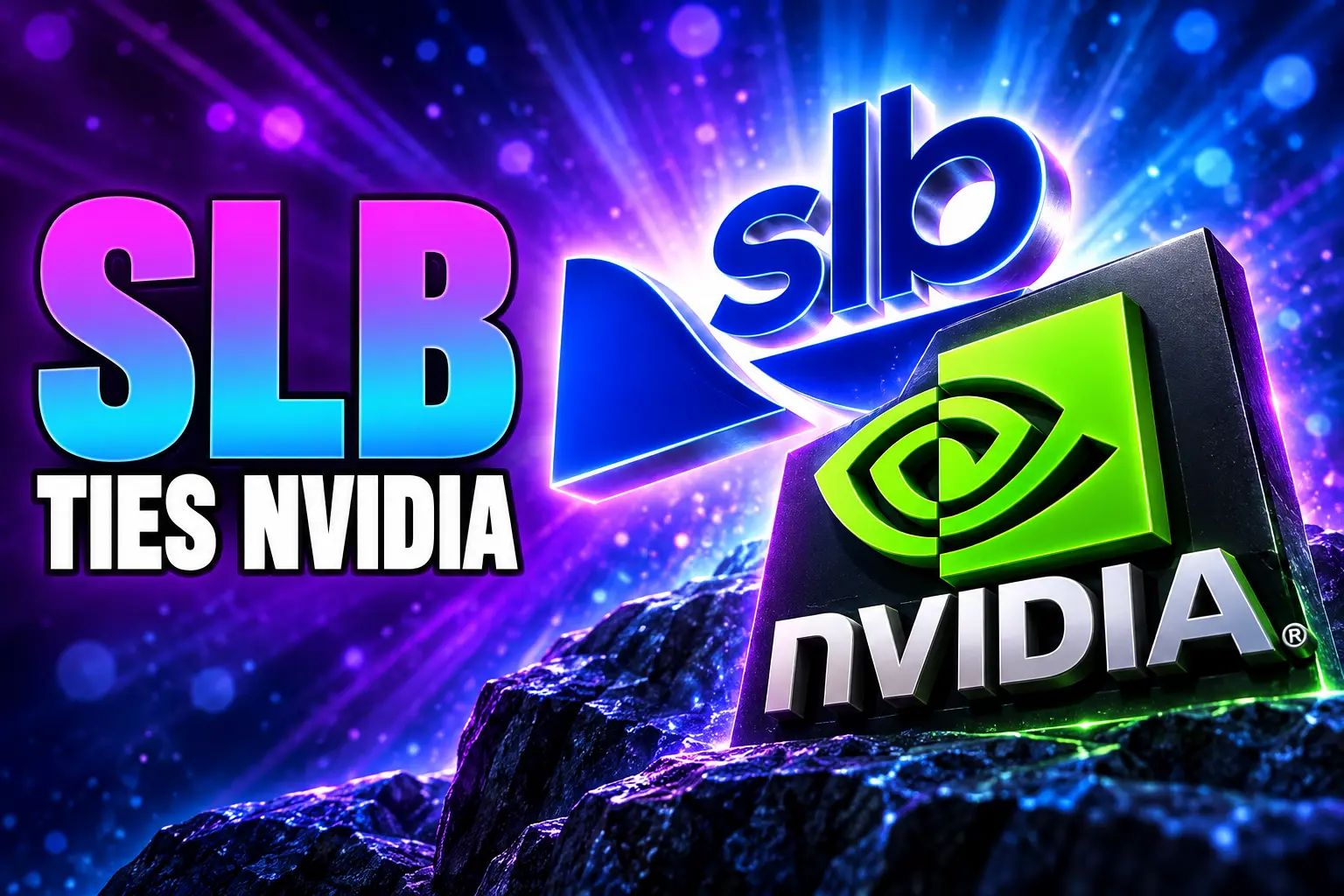
SLB, Nvidia, Amazon and Meta each scored 100 on a June 1, 2026 ranking of S&P 500 AI company scores. The AI-Driven Enterprise Institute, or AIDE, averaged two of its four pillars, orientation and implementation, to produce that company score.
Microsoft, which leads information technology on AIDE’s fuller sector index, landed 17th on the list people passed around, at 91.37, behind Halliburton at 92.83.
The Score Everyone Repeated Is Only Half the Index
AIDE, a Boston research shop led by chief executive Paul Cheek, a senior lecturer at MIT, scored every S&P 500 company on four pillars: literacy, advocacy, orientation and implementation. Literacy and advocacy describe the board and the top team. Orientation and implementation describe the company itself, the hiring, the patents, the products, the filings.
The company score that put four names at 100 is the second pair only. Cheek has said the index does not measure whether AI is lifting profit. It exists so a board can ask a chief executive how the firm compares with its peer group without taking a survey as gospel.
WHAT AIDE COUNTED
- Source documents: 518,779 filings, transcripts, postings and pages, with no survey answers in the mix.
- Words read: 271.9 million, including earnings-call language AIDE treats as lawyered, not casual.
- AI patent families: 36,944 tracked as build evidence rather than slogans.
- Leaders profiled: 10,563 board members and top managers scored on skills and public talk.
On June 1 the institute posted that the benchmark was live, then pointed readers to the rankings rather than to a self-grade.
The AIDE Index is live.
It's the definitive benchmark of corporate AI Maturity.
See where you rank: https://t.co/7ZDOMmyafR pic.twitter.com/AnjYdgLTJ7
— AIDE Institute (@aideinstitute) June 1, 2026
Four Perfect 100s and Microsoft in 17th
Nvidia is the only information technology name at 100 on the company score. Amazon sits in consumer discretionary. Meta sits in communication services. SLB, the oilfield company once called Schlumberger, is the only energy name in that four-way tie.
Walmart is next at 95.84. Then come two utilities, AES at 95.46 and NextEra Energy at 95.44. Digital Realty and Equinix, both real-estate landlords for data halls, land at 94.74 and 94.59. The list that traveled is full of chip, cloud, feed, power and rack companies, and it is not a profit ranking.
TOP 20 COMPANY SCORES, JUNE 2026
| Rank | Company | Company score | S&P sector |
|---|---|---|---|
| 1 | Nvidia | 100 | Information Technology |
| 2 | SLB | 100 | Energy |
| 3 | Amazon | 100 | Consumer Discretionary |
| 4 | Meta | 100 | Communication Services |
| 5 | Walmart | 95.84 | Consumer Staples |
| 6 | AES | 95.46 | Utilities |
| 7 | NextEra Energy | 95.44 | Utilities |
| 8 | Ecolab | 95 | Materials |
| 9 | Digital Realty | 94.74 | Real Estate |
| 10 | Chevron | 94.74 | Energy |
| 11 | Alphabet | 94.72 | Communication Services |
| 12 | Equinix | 94.59 | Real Estate |
| 13 | IQVIA | 93.75 | Health Care |
| 14 | Dow | 93.34 | Materials |
| 15 | Halliburton | 92.83 | Energy |
| 16 | Broadridge Financial Solutions | 91.66 | Financials |
| 17 | Microsoft | 91.37 | Information Technology |
| 18 | Block | 90.91 | Financials |
| 19 | Duke Energy | 90.91 | Utilities |
| 20 | PepsiCo | 90.62 | Consumer Staples |
Microsoft still leads its own sector on the four-pillar AIDE Index, at 93.86, with Salesforce at 88.69 and ServiceNow at 84.78. That sector mark is a different meter from the 91.37 company score, and the second number is the one that put the software giant behind an oilfield contractor.
AIDE also names a sector leader on the fuller index: Alphabet in communication services, Amazon in consumer discretionary, Walmart in staples, SLB in energy, Block in financials, Johnson & Johnson in health care, Axon Enterprise in industrials, Microsoft in information technology, Ecolab in materials, Equinix in real estate, AES in utilities.
Energy’s Median Still Sits With the Laggards
The irony is in the sector math, not the four 100s. On AIDE’s sector-by-sector AIDE league tables, Energy’s median index is 42.0 across 22 companies, with only two Stealth Adopters and two Visionaries. Information technology, with 70 companies, has a 55.0 median and 30 Trailblazers.
When AIDE normalizes those same sectors against the whole S&P 500, so a reader can compare oil with software, Energy’s median falls to 26.24 and the sector is tagged Emerging Adopters. Information technology is 63.78 and a Trailblazer group. Materials, at 22.19, is last.
SECTOR MEDIANS, S&P 500 COHORT
| Sector | Companies | Median AIDE | Leadership median | Company median | Quadrant |
|---|---|---|---|---|---|
| Information Technology | 70 | 63.78 | 65.84 | 60.59 | AI Trailblazers |
| Communication Services | 20 | 49.47 | 50.05 | 51.02 | AI Trailblazers |
| Financials | 76 | 46.07 | 40.27 | 50.00 | AI Trailblazers |
| Health Care | 59 | 43.47 | 38.12 | 46.78 | AI Trailblazers |
| Industrials | 80 | 40.95 | 33.50 | 45.00 | Emerging Adopters |
| Consumer Discretionary | 48 | 39.39 | 34.00 | 43.22 | Emerging Adopters |
| Consumer Staples | 37 | 35.84 | 33.26 | 40.00 | Emerging Adopters |
| Utilities | 31 | 29.32 | 22.66 | 38.09 | Emerging Adopters |
| Energy | 22 | 26.24 | 19.96 | 33.57 | Emerging Adopters |
| Real Estate | 31 | 24.85 | 20.23 | 31.20 | Emerging Adopters |
| Materials | 26 | 22.19 | 14.19 | 33.62 | Emerging Adopters |
Look at the last two score columns. In Energy, Utilities, Real Estate and Materials, the company median runs ahead of the leadership median. Boards and top teams in those groups talk and credential less than the shop floor’s patents, postings and products would imply. A few operators still punch through: SLB, Chevron at 94.74, Halliburton at 92.83, plus AES, NextEra Energy and Duke Energy on the power side.
That is why energy names already beside Nvidia can top a build list while their sector still reads as late. SLB also spent March 25, 2026, making the build easier to see, saying it would be the modular design partner for Nvidia DSX AI factories and would help stand up an AI Factory for Energy on its own digital platforms.
Vladimir Troy, vice president of AI infrastructure at Nvidia, said the work is about turning energy data into usable insight. SLB has also been writing about bounded agentic AI in energy operations, a path from prediction tools toward governed autonomy rather than a blank claim of transformation.
Nvidia Builds Quietly While Apple Ranks 34th
AIDE’s own launch note said the surprise is who is missing from the top of each sector, not who leads it. Alphabet’s sector index is 97.36 and Meta’s is 91.78 in communication services. Amazon’s consumer discretionary sector index is 98.79. Those are four-pillar, sector-normalized marks, and they sit beside, not on, the company-score table above.
The same note flags Nvidia as a Stealth Adopter in information technology: high on implementation and orientation, solid on literacy, quieter on advocacy. The chipmaker can post a 100 company score and still look reserved on the talk axis that boards watch.
NAMES AIDE SAYS THE TOP OF THE LIST HIDES
- Apple: 34th of 70 in information technology, a Stealth Adopter whose build record, AIDE says, runs ahead of the story its leaders tell.
- Texas Instruments: 60th of 70 in information technology, even though its parts sit under a lot of AI hardware.
- Disney: 11th of 20 in communication services, despite archives, streaming data and big physical parks.
- Quiet builders elsewhere: Goldman Sachs in financials, Huntington Ingalls in industrials, American Electric Power in utilities, each high on operations and low on the public narrative.
AIDE maps every company onto a matrix of strategic intent versus operational integration, then stamps Trailblazers, Visionaries, Stealth Adopters or Emerging Adopters. Visionaries, the high-talk, lower-build group, show an average gap of 82 against 28 on those two axes, a 54-point hole between what leaders say and what the organization leaves in public view.
What the Four Pillars Count
Literacy asks whether directors and the top team have measurable AI credentials, not a title. Advocacy asks whether those same people champion AI in posts, talks and investor remarks. Orientation pulls hiring, partnership notices and earnings-call commitments. Implementation counts patents, site content, customer-facing tools, deployments and infrastructure that already exist.
Felipe Ost Scherer, AIDE’s co-founder and chief research officer, wrote the companion guide that tells readers a score of 80 in health care is not the same as a score of 80 in information technology, because most marks are first compared with sector peers. Cross-sector reads, he says, should follow archetypes and pillar patterns, not raw totals.
Cheek walked through that structure in a June 1 briefing video, including the split between the leadership pair and the company pair that later got flattened into a single 100-club graphic.
Job postings are one of the orientation channels. In a separate June 11, 2026 hiring note, AIDE said 71% of AI-related postings at S&P 500 companies were senior roles, a seniority stack that matches a market buying experienced operators faster than it is growing junior benches.
Cheek Built This Scoreboard for Boards
Cheek has been blunt about the buyer. He wants a chief executive to walk into a board meeting with a peer comparison that is not a vibe. He has also said there is significant room for boards and executives to raise their own AI literacy, especially as it touches risk and the bets that are supposed to create value.
When a board asks a CEO, ‘How are we doing compared to our peer group?’, I don’t want it to be speculative. I want there to be some data that they can use to back up what they have to share.
Paul Cheek, CEO, AI-Driven Enterprise Institute
On July 6, 2026, AIDE’s own account put the same point in six words of framing: a ranking of every S&P 500 company on AI execution, not AI talk, with the gap now measurable. The institute sells private briefings and custom assessments on the back of that claim. The public tables remain the part a director can open without a contract.
The index is updated as new public data lands, with major releases annual. A 100 on the June 2026 company score is a snapshot of orientation and implementation, not a certificate that the models pay. SLB can share a perfect build mark with Nvidia and still sit in a sector whose median leadership score is 19.96. Microsoft can lead information technology on the four-pillar index and still show up 17th on the table that got copied. Both facts can be true because they are not the same score.
Frequently Asked Questions
What Is the AIDE Index?
The AIDE Index is an independent, four-pillar AI maturity ranking of all 500 S&P 500 companies, published by the AI-Driven Enterprise Institute and built only from public evidence. Co-founders include Paul Cheek as chief executive, Felipe Ost Scherer as chief research officer, and Kate Reed as head of insights, and each of the four pillars carries equal weight in the composite.
How Does the AIDE Index Score Companies?
Channels such as filings, calls, jobs, patents, sites and executive posts are scored on a 0-5 calibrated scale, then multiplied into 0-100 channel scores before pillars are combined and run through cohort min-max normalization. Independent models check the non-deterministic steps, with humans in the loop, and AIDE says every final mark can be traced back through those layers.
Does the AIDE Index Measure Whether AI Makes Money?
No. Cheek has said the ranking does not measure financial returns from AI. It is a peer benchmark of observed behavior, and AIDE argues that job postings and patents are harder to fake than survey answers because earnings language and SEC filings are lawyered.
Why Did SLB Score 100 If Energy Lags as a Sector?
The 100 is the June 2026 company score, an average of orientation and implementation, not the four-pillar sector composite and not the S&P-wide median. Energy’s company median on that cohort table is 33.57 while its leadership median is 19.96, so a single operator can max the build pair while the sector still carries an Emerging Adopters tag.
What Is a Stealth Adopter on the AIDE Index?
A Stealth Adopter scores high on operational integration and lower on leadership intent, meaning patents, hiring and deployments outrun the public talk. AIDE’s launch examples include Nvidia in information technology, Goldman Sachs in financials, Huntington Ingalls in industrials and American Electric Power in utilities, a pattern the institute calls information asymmetry for investors who only listen to earnings chatter.
AIDE says major releases stay annual even as the underlying files refresh. Until the next one, the June 2026 company score is the graphic that traveled, and it still does not say which of those 100s is earning a return.

Instagram Plus Tests a Read-Only Mode That Cuts Stories

Altman Asks the Public to Accept Some AI Harm

Google Freezes OSS VRP Product Reports After AI Flood

AI Agents Make Payment Rails the Scarce Prize

Turkey’s Crypto Boom Now Runs Through Three Banks

Fable 5 Came Back Under a Commerce On-Off Switch

Google’s SpaceX GPU Lease Has a Sept. 30 Deadline

Plasma One’s XPL Locks Face a 1.81 Billion Cliff

DGO’s Rs 549 World Cup Pass Cost Fans Sleep and Data

Moonshot AI’s $30 Billion Ask Became a $35 Billion Close
-
 AI4 months ago
Fable 5 Came Back Under a Commerce On-Off Switch
-
 AI4 months ago
Google’s SpaceX GPU Lease Has a Sept. 30 Deadline
-
 CRYPTO4 months ago
Plasma One’s XPL Locks Face a 1.81 Billion Cliff
-
 APPS4 months ago
DGO’s Rs 549 World Cup Pass Cost Fans Sleep and Data
-
 AI4 months ago
Moonshot AI’s $30 Billion Ask Became a $35 Billion Close
-

 NEWS4 months ago
ColorOS 17 Device List Spans Oppo, OnePlus and Realme
-
 GAMING4 months ago
Xbox Cuts 3,200 Jobs After Five Years of Thin Returns
-
 GAMING4 months ago
The RTX 4050 Under Rs 70,000 Hides a Wattage Gap