
NEWS
Victoria’s Anti-LGBTIQA+ Hate Crime Inquiry Opens Public Hearings
Victoria’s parliamentary inquiry into anti-LGBTIQA+ hate crimes opens two days of public hearings this week. Here are the witnesses and the nine questions.

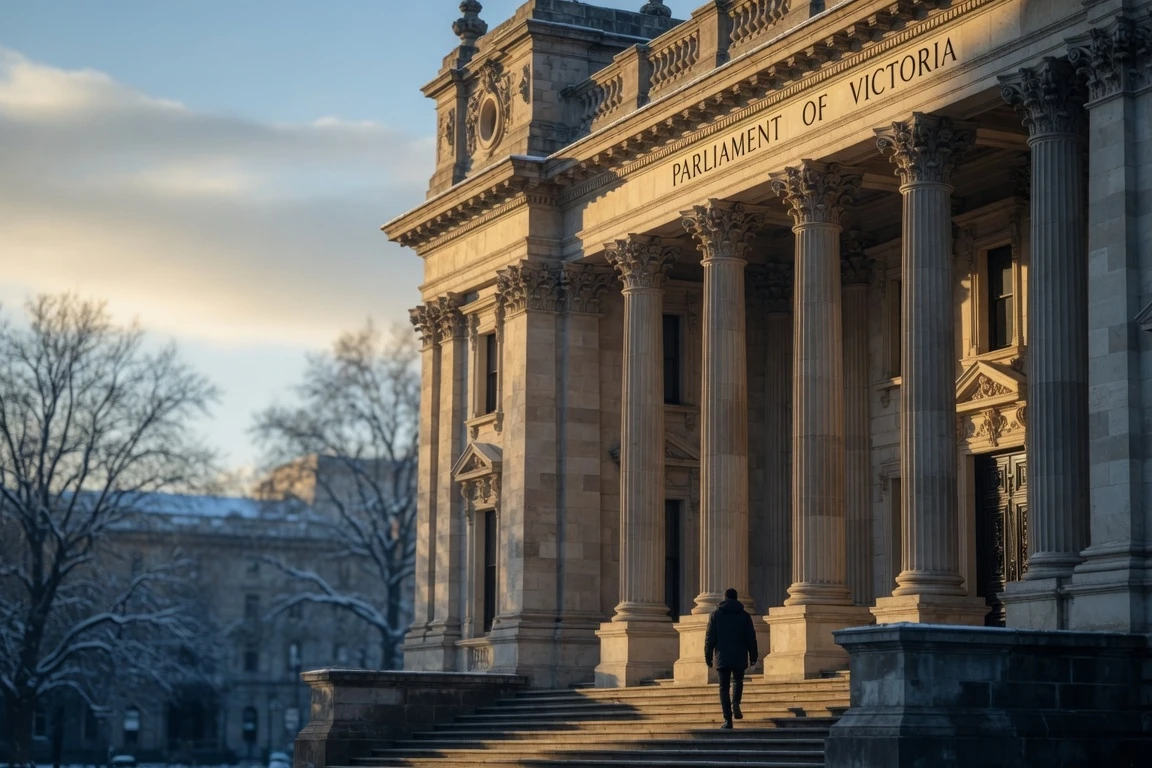
Victoria’s Legislative Council Legal and Social Issues Committee opens public hearings on Wednesday 24 June into anti-LGBTIQA+ hate crimes, the first of two days of testimony at the Victorian Parliament in East Melbourne. The committee is set to hear from Switchboard Victoria, Thorne Harbour Health, dating platform Grindr, Victoria Police and the Commissioner for LGBTIQA+ Communities, among others, on a brief that runs from fake-dating-app luring to the far-right “manosphere” the terms of reference name as an upstream driver. The hearings begin at 10:00 am in Committee Hearing Room 3 and are open to the public.
The inquiry was ordered by the Legislative Council on 18 February 2026 and is required to deliver a final report by 1 September 2026. It will examine the scale of anti-LGBTIQA+ hate crimes in Victoria, the recruitment methods of anti-LGBTIQA+ influencers, the responsibilities of social media and digital platform owners, and the adequacy of current prevention and support services. The Greens proposed the inquiry, the Allan Labor government supported it, and the Victorian Liberal Party voted against it. The committee’s final report will be tabled in the Legislative Council.
The terms of reference name social media and dating platforms as part of the problem the committee is asked to address. The hearings this week are the first public step in a process that closes with a final report on 1 September 2026.
What the Inquiry Will Examine
The committee’s brief is set out in a nine-point terms-of-reference motion agreed by the Legislative Council on 18 February 2026. The motion is unusually broad for a Victorian hate-crime review, and it names the digital pipeline by which the attacks are organised and broadcast. It does not stop at counting incidents or auditing existing laws.
The first term points at the recruitment machinery. The committee is asked to look into “the communication and recruitment methods of anti-LGBTIQA+ influencers and hate groups that endorse anti-LGBTIQA+ hate crimes, including those creating and sharing online content steeped in racism, misogyny, transphobia, homophobia, far-right ideology and unhealthy masculinities.” A separate term targets “the role and responsibilities of social media and digital platform owners in preventing and responding to anti-LGBTIQA+ hate crimes.” A third asks for an empirical picture of “the prevalence and trends of anti-LGBTIQA+ hate crimes Australia-wide.” The remaining terms cover prevention strategies aimed at young people, support for victim-survivors, the impact on diverse communities, cross-border responses, and the work of the Commissioner for LGBTIQA+ Communities and advisory groups.
The nine terms of reference, as listed on the inquiry’s parliamentary page, are:
- The communication and recruitment methods of anti-LGBTIQA+ influencers and hate groups that endorse anti-LGBTIQA+ hate crimes, including those creating and sharing online content steeped in racism, misogyny, transphobia, homophobia, far-right ideology and unhealthy masculinities
- Current strategies to counter anti-LGBTIQA+ hate crimes, particularly among young people, and how these could be strengthened
- Current anti-LGBTIQA+ hate crime prevention initiatives, and how these could be strengthened
- Existing public and online safety initiatives supporting LGBTIQA+ community members who have experienced hate crimes, including how these supports could be strengthened
- The role and responsibilities of social media and digital platform owners in preventing and responding to anti-LGBTIQA+ hate crimes
- Existing empirical data regarding the prevalence and trends of anti-LGBTIQA+ hate crimes Australia-wide
- The impact of anti-LGBTIQA+ hate crimes on diverse LGBTIQA+ communities, including Rainbow Mob, people with disability, and multifaith and multicultural community members
- Interjurisdictional strategies and methods to combat anti-LGBTIQA+ hate crimes across borders
- The relevant work of the Commissioner for LGBTIQA+ Communities and relevant government advisory groups
Sixteen Organisations Across Two Days of Hearings
The full two-day witness schedule is built around the pipeline the terms of reference describe. Day one on Wednesday 24 June opens with the peer-support and policy organisations that work directly with victim-survivors. Day two on Thursday 25 June is where the inquiry’s questions about platform responsibility land, with dating platform Grindr and Victoria Police on the stand in the morning.
| Wednesday 24 June (Day 1) | Thursday 25 June (Day 2) |
|---|---|
| 10:00 AM – Switchboard Victoria (Jenna Tuke, CEO; Maya Ellazam, Senior Policy, Advocacy and Communications Lead) | 10:00 AM – Grindr (Priyanka Purkayastha, Director for Customer Experience; Joe Hack, Head of Global Government Affairs) |
| 10:00 AM – Thorne Harbour Health (Chad Hughes, CEO; Caleb Hawk, Deputy Director) | 11:00 AM – Jarryd Bartle, RMIT; Dr Justin Ellis, University of Newcastle; Adjunct Professor Nicole Asquith, Queensland University of Technology |
| 11:00 AM – Australian Research Centre in Sex, Health and Society (Professor Adam Bourne, Director) | 12:00 PM – Victoria Police (Assistant Commissioner Brett Curran; Jeremy Oliver, LGBTIQA+ Communities Portfolio Manager) |
| 12:00 PM – Q+Law (Cassandra Martin, Managing Lawyer; Sebastian Sharp, Senior Policy and Education Lead) | 2:00 PM – Commissioner for LGBTIQA+ Communities (Joe Ball, Commissioner); Victims of Crime Commissioner (Elizabeth Langdon) |
| 12:00 PM – Equality Australia (Savanh Tanhchareun, Senior Advisor; Heather Corkhill, Legal Director) | 3:00 PM – Jesuit Social Services’ The Men’s Project (Melanie Thomson, Acting General Manager; Mischa Barr, Policy & Advocacy Lead) |
| 2:00 PM – Individual witnesses: Merrin Wake, Daniel Powell, David Brown, Matthew Roberts | 4:00 PM – Respect Victoria (Helen Bolton, CEO) |
| 3:00 PM – Municipal Association of Victoria (Kath Brackett, Director Community and Sector Development); Victorian Pride Lobby (Dr Sean Mulcahy, Policy Advisor); Rainbow Local Government (Jan Farrell, Campaign Co-Lead); Tony Briffa, former Mayor of Hobsons Bay | |
| 4:00 PM – Dr Josh Roose; Geoffrey Steer |
Day one’s morning brings the legal and policy advocates. Switchboard Victoria, led by chief executive Jenna Tuke and senior policy lead Maya Ellazam, sits alongside Thorne Harbour Health, whose chief executive Chad Hughes appears with deputy director Caleb Hawk. The Australian Research Centre in Sex, Health and Society is represented by director Professor Adam Bourne, with Q+Law (managing lawyer Cassandra Martin and senior policy lead Sebastian Sharp) and Equality Australia (senior advisor Savanh Tanhchareun and legal director Heather Corkhill) completing the morning.
Day one afternoon is the individual testimony block. Merrin Wake, Daniel Powell, David Brown and Matthew Roberts appear from 2:00 pm, followed by the Municipal Association of Victoria’s Kath Brackett, Victorian Pride Lobby’s Dr Sean Mulcahy, Rainbow Local Government’s Jan Farrell and former Hobsons Bay mayor Tony Briffa, with academics Dr Josh Roose and Geoffrey Steer closing the day.
Day two is the day the dating platforms answer questions. Grindr’s Priyanka Purkayastha, director for customer experience, and Joe Hack, head of global government affairs, appear first, followed by criminologists Jarryd Bartle from RMIT, Dr Justin Ellis from the University of Newcastle and Adjunct Professor Nicole Asquith from Queensland University of Technology. Victoria Police appears at midday with assistant commissioner Brett Curran and LGBTIQA+ portfolio manager Jeremy Oliver, and the Commissioner for LGBTIQA+ Communities, Joe Ball, and Victims of Crime Commissioner Elizabeth Langdon appear from 2:00 pm. Jesuit Social Services’ The Men’s Project sends acting general manager Melanie Thomson and policy lead Mischa Barr, and Respect Victoria closes the hearings with chief executive Helen Bolton, all in Committee Hearing Room 3, 55 St Andrews Place, East Melbourne.
Both days are broadcast live on the Parliament of Victoria website, and the public gallery is open. The committee’s hearings page is the canonical source for the schedule and any changes.
Fake Dating Profiles, Public Beatings, and the Pattern Under Scrutiny
The inquiry is the parliamentary response to a pattern of attacks in which gay and bisexual men have been lured to public places through fake profiles on dating apps, then assaulted. Victorian Greens equality spokesperson Aiv Puglielli described the pattern when the inquiry was first announced in February. “No one should have to fear for their safety because of who they love,” he said.
“We are seeing gay and bi+ men being lured to public places through fake online dating profiles and violently attacked just for being who they are,” Puglielli said. He named the attacks as a “terrifying escalation of violence towards my community.” Reporting at the time noted that the inquiry’s instigation followed “an outbreak of violent assaults targeting gay and bisexual men, an increase in graffiti attacks on LGBTIQA+ venues, and an uptick in online hate comments” in Victoria.
This is a significant and welcome development. The inquiry signals that anti-LGBTIQA+ hate is not episodic or fringe, but a systemic issue requiring coordinated legal, social and institutional responses.
That quote comes from Dr Jeremie Bracka, a human-rights lawyer and academic at RMIT University’s School of Law whose work sits at the intersection of transitional justice, constitutional law and international human rights. Bracka said the inquiry is an opportunity to read the present against a longer Victorian history. Events such as the Black Rock arrests and the Tasty nightclub raid, he argued, were not aberrations but harms enabled by law and public authority, and their legacy continues to shape trust in institutions today.
Tracing the Pipeline Upstream to the ‘Manosphere’
The first term of reference asks the committee to look past the assaults and into the online environment that produces them. The Greens’ Aiv Puglielli was direct about that framing when the inquiry was established in February.
This doesn’t come out of nowhere. We know there’s a ‘manosphere’ of anti-queer influences and far-right ‘alpha-male’ networks that are grooming and radicalising young men online, building these hate networks and fuelling this very real hatred, and people are being seriously harmed.
The committee will hear testimony from researchers and frontline organisations working on the recruitment end of the pipeline across both hearing days. Jesuit Social Services’ The Men’s Project, the Australian Research Centre in Sex, Health and Society, and academics Dr Josh Roose, Geoffrey Steer, Jarryd Bartle and Dr Justin Ellis are all on the list. A separate term of reference asks the committee to look at “the role and responsibilities of social media and digital platform owners in preventing and responding to anti-LGBTIQA+ hate crimes,” which is why Grindr’s Joe Hack and Priyanka Purkayastha appear on day two.
The political support for the inquiry was not unanimous. The Greens proposed it, the Allan Labor government backed it, and the Victorian Liberal Party voted against establishing the inquiry in the Legislative Council. Minister for Equality Vicki Ward accused the opposition of “bowing to internal pressure” and “using LGBTIQA+ lives as a political bargaining chip.” The committee’s inquiry page sets out the full terms of reference and links to the witness submissions.
The committee will hear from a major dating platform, in a public forum, on what it is doing to keep its users safe. The Greens pushed the inquiry on the basis that the violence is part of a coordinated pipeline, and the committee is now hearing evidence on that question. The final report’s findings will land before the next state election, due later this year.
How to Watch, and When the Report Is Due
The hearings begin at 10:00 am on Wednesday 24 June in Committee Hearing Room 3, 55 St Andrews Place, East Melbourne, and continue on Thursday 25 June. Both days are open to public viewing in the gallery, and both are broadcast live on the Parliament of Victoria’s website. People attending are warned that the testimony will describe confronting incidents of homophobia, transphobia and abuse. The committee’s published guidance asks readers and viewers to engage with care.
The committee is required to table its final report by 1 September 2026. The deadline leaves room for a second round of hearings, written responses from government and a final vote in the Legislative Council. The report must address all nine terms of reference, including the question of what role social media and dating platforms should be asked to play in preventing the violence the committee is hearing about.
Frequently Asked Questions
When do the Victorian LGBTIQA+ hate crime inquiry hearings begin?
The first of two public hearing days opens at 10:00 am on Wednesday 24 June 2026 at the Victorian Parliament, 55 St Andrews Place, East Melbourne. The second day follows on Thursday 25 June 2026.
What does the inquiry cover?
Under a nine-point terms-of-reference motion passed by the Legislative Council on 18 February 2026, the Legal and Social Issues Committee will examine the scale of anti-LGBTIQA+ hate crimes in Victoria, the recruitment methods of anti-LGBTIQA+ influencers and hate groups, current prevention strategies, the responsibilities of social media and digital platform owners, the impact on diverse LGBTIQA+ communities, and interjurisdictional strategies across Australia.
Who proposed the inquiry, and who supports it?
The inquiry was proposed by the Victorian Greens and supported by the Allan Labor government, according to reporting at the time. The Victorian Liberal Party voted against the inquiry in the Legislative Council, drawing a sharp rebuke from Minister for Equality Vicki Ward.
Who is testifying at the hearings?
Day one (24 June) features Switchboard Victoria, Thorne Harbour Health, the Australian Research Centre in Sex, Health and Society, Q+Law, Equality Australia, the Municipal Association of Victoria, Victorian Pride Lobby and Rainbow Local Government, and individual witnesses Merrin Wake, Daniel Powell, David Brown and Matthew Roberts. Day two (25 June) features Grindr, Victoria Police, the Commissioner for LGBTIQA+ Communities, the Victims of Crime Commissioner, Jesuit Social Services’ The Men’s Project, and Respect Victoria.
How can the public watch the hearings?
Both hearing days are broadcast live on the Parliament of Victoria website, and the public gallery at 55 St Andrews Place is open for in-person viewing. Content warnings apply; testimony will describe confronting incidents of abuse.
When is the final report due?
The Legal and Social Issues Committee is required to table its final report on the inquiry by 1 September 2026.


Lenovo Prices the IdeaPad Vibe Against Apple’s $699 Neo

Xbox Caps Game Pass Cloud Gaming at 15 Hours

GTA 6 DualSense Controllers Follow Sony’s Usual $84.99 Script

South Korea Retail Investors Face Reckoning After KOSPI AI Rally Collapses

Surrey AI Maps Three Heart Attack Paths and Their Molecular Roots

Germany Locks Neutral Apple ATT Prompts Across Most of Europe

Apple’s 5% EU Fee Quietly Rewrites Alternative App Store Math

Apple’s EU Fee Truce Cuts Complexity but Leaves Rivals Fuming

Pixel 11 Pro Fold Trades Thinness for Durability and Seven-Year Stay

Mayo AI Flags HCM Obstruction From Everyday Ultrasound Videos

Oracle Cuts 21,000 Jobs in a Year, Cites AI in 10-K Filing

Fable 5 and Mythos 5 Return as US Lifts Anthropic Export Controls

SpaceX’s Google Deal Turns a Rocket Company Into a Cloud Landlord

CD Projekt Red Co-CEO: Redemption Arc Isn’t Done, Witcher 4 in 2027

XPL Rallies 30% Ahead of Plasma One Card Tier Launch

Google Search Profiles Build a Follow Graph Inside Discover

DGO App Brings Rs 549 Mobile Pass for FIFA World Cup 2026 in Nepal

Moonshot AI Targets $30 Billion in China’s Fastest AI Funding Sprint

Oppo’s ColorOS 17 Eligibility List Leaves A-Series Buyers Behind

Microsoft Xbox Layoffs Start in July as Sharma Slams 3% Margin
-
 AI2 months ago
Oracle Cuts 21,000 Jobs in a Year, Cites AI in 10-K Filing
-
 AI2 months ago
Fable 5 and Mythos 5 Return as US Lifts Anthropic Export Controls
-
 AI3 months ago
SpaceX’s Google Deal Turns a Rocket Company Into a Cloud Landlord
-
 GAMING2 months ago
CD Projekt Red Co-CEO: Redemption Arc Isn’t Done, Witcher 4 in 2027
-
 CRYPTO3 months ago
XPL Rallies 30% Ahead of Plasma One Card Tier Launch
-
 NEWS3 months ago
Google Search Profiles Build a Follow Graph Inside Discover
-
 APPS3 months ago
DGO App Brings Rs 549 Mobile Pass for FIFA World Cup 2026 in Nepal
-
 AI3 months ago
Moonshot AI Targets $30 Billion in China’s Fastest AI Funding Sprint