
AI
Nuvama’s AI Boom Warning: Chip Prices Up 2.5x in a Year
Nuvama says chip prices up 2.5x year-on-year and a hawkish Fed could trigger an AI boom turning point, with hardware P/B at 10x versus 2-4x pre-AI.

The AI boom is ‘not shock-proof,’ Nuvama Institutional Equities told clients on July 3, and a chip shortage with semiconductor prices up about 2.5x year-on-year is the supply-side risk the rally has not yet absorbed. The Indian brokerage’s note lands at a moment when US IPOs are running at their fastest pace since 2021 and hardware stocks trade at around 10x price-to-book against a 2-4x pre-AI norm.
Nuvama frames the risk in supply terms. AI adoption is still in its early innings, the demand picture remains intact, and corporate cash flows are strong enough to fund another leg of capex. The risk is that a single component shortage could inflate the capex bill faster than the monetisation can catch up, and that the Federal Reserve’s policy stance could pull the rug under the discount rate the rally runs on.
Nuvama’s Verdict in One Sentence
While the AI boom is supported by strong cash flows, it is not immune to shocks, with chip shortages posing a major risk to the rally.
That single clause is the spine of the Nuvama report on AI boom supply and Fed risks. The brokerage frames the risk as supply-driven, with AI adoption still in its early innings and corporate cash flows strong enough to fund another leg of capex. A supply shock or a sharp rise in US Federal Reserve interest rates ‘could trigger a turning point in the AI boom, as rising chip costs and stretched valuations expose early signs of excess in the rally,’ the report says.
The supply-side framing narrows the watchlist to two specific pressure points: hardware prices and the policy rate. A demand-side bust would show up in enterprise AI contract volumes and consumer subscription growth, both still climbing. A supply-side bust would show up first in the wafer-to-chip pipeline, in DRAM and NAND pricing, and in the gap between what hyperscalers pay for hardware and what they can pass through to the customers using AI products. The Fed is the second pressure point and the one whose timing is hardest to call.
Nuvama’s note arrives as US IPOs are running at their fastest pace since 2021, hardware stocks trade at around 10x price-to-book against a 2-4x pre-AI norm, and chip supply growth is well below historical levels. Each is sourced separately, and each is the kind of indicator that turns quickly when the cycle starts to break. The brokerage’s argument is that the next move in the AI trade is now a supply-side call, not a demand-side call. Chip prices up about 2.5x year-on-year are already doing the work the bear case needed them to do. The buildout that produced those capex commitments was underwritten before the supply side moved.
The Signs of Excess Already in the Tape
Nuvama’s list of ‘early signs of excess’ is specific. Hardware and chip stocks now trade at around 10x P/B, against a 2-4x range in the pre-AI era, while the hyperscalers that buy the chips have stagnated. Retail sentiment is showing ‘euphoria’ patterns last seen at the 2000, 2007, and 2021 market peaks. A renewed IPO boom has put a fresh wave of AI-adjacent companies in front of public-market investors.
The rally is concentrating in the picks-and-shovels names rather than the platforms that monetise AI products, and the gap between the two groups has widened. Hardware trades at multiples that require the AI capex cycle to keep accelerating, while hyperscaler earnings depend on monetisation that Nuvama describes as ‘limited.’
- Hardware and chip P/B around 10x, against a 2-4x pre-AI norm
- Hardware tech stocks rising while the largest hyperscalers stagnate
- Retail sentiment patterns echoing the 2000, 2007, and 2021 peaks
- A renewed IPO boom in AI-adjacent companies
- AI monetisation described as ‘limited’ relative to capex commitments
Goldman Sachs’s own bubble-metric work, comparing today’s market to the 2000 and 2021 peaks, places the median percentile rank of nine indicators at the 86th percentile today, against 95th in 2021 and 100th in 2000. Speculative trading and AAII investor sentiment are still well below those prior peaks, per the five-metric bubble comparison to 2000 and 2021.
Chip Prices Have Already Done the Work
This is where the supply side has begun to bite.
Nuvama’s specific claim is that semiconductor prices have more than doubled in the past year and now sit at ‘about 2.5x year-on-year.’ The driver is the same one IDC flagged in late 2025: hyperscaler AI builds are consuming a disproportionate share of global memory capacity, and the wafer reallocation is squeezing the rest of the chip ecosystem. IDC expects 2026 DRAM and NAND supply growth to land at 16% and 17% year-on-year, respectively, both well below the rates the industry has run at in past cycles, per the 2026 memory chip outlook for smartphones and PCs.
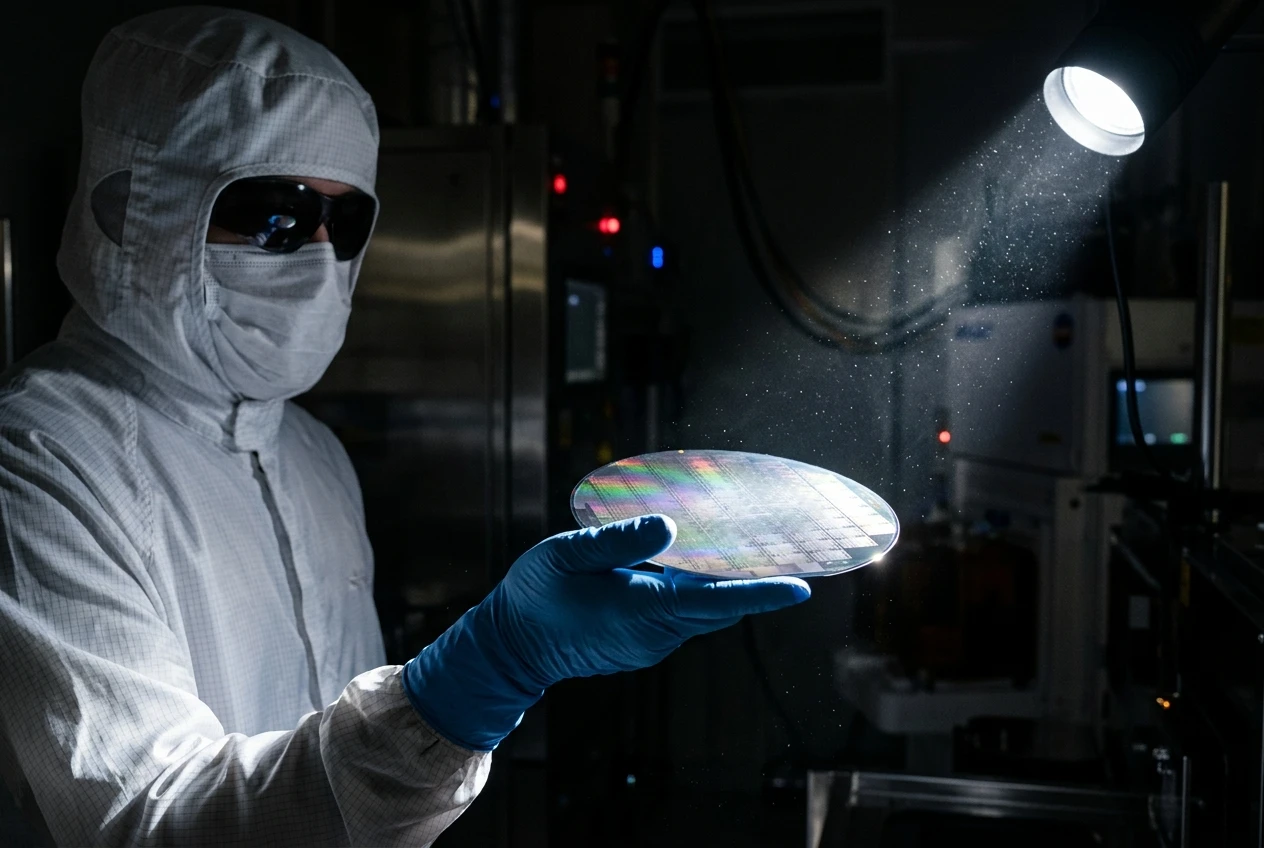
The capacity missing from consumer electronics has gone into high-bandwidth memory stacks for AI accelerators. AI servers and enterprise environments require far more memory per system than consumer devices, and the three biggest memory manufacturers, Samsung Electronics, SK Hynix, and Micron Technology, have shifted their limited cleanroom space and capital expenditure toward higher-margin enterprise-grade components. Every wafer allocated to an HBM stack for an Nvidia GPU is a wafer denied to the LPDDR5X module of a mid-range smartphone, and the consumer device industry is already pushing back. Apple lobbying to clear a blacklisted Chinese memory supplier is one sign of how thin the buffer has become.
Where the Pass-Through Breaks
The pass-through argument is where Nuvama’s logic differs from a generic bear case.
If hyperscalers could lift prices on their AI services to match the 2.5x chip cost increase, the capex bill would not break them. Nuvama’s view is that ‘scope for pass-through is limited.’ AI is in its early stages of adoption, and enterprise customers still sign contracts at fixed unit prices. The cost lands inside the hyperscalers’ operating margin instead of being passed down the chain.
IDC’s device-market scenarios put numbers on the consumer side of that limit. Lenovo, Dell, HP, Acer, and ASUS have warned clients of 15-20% price hikes and contract resets as memory costs pass through to finished PCs. PC vendors with larger shipment volumes are positioned to capture share from smaller assemblers, while white-box and lower-tier vendors, including DIY gaming systems, will bear the greatest burden of the shortage. Apple and Samsung are structurally hedged through cash reserves and supply agreements of 12-24 months in advance, but new flagship models are likely to skip the usual RAM upgrades in 2026, with Pro models sticking to 12GB rather than moving to 16GB.
| Market | Moderate downside | Pessimistic downside |
|---|---|---|
| Smartphone shipments | -2.9% | -5.2% |
| Smartphone ASPs | +3% to +5% | +6% to +8% |
| PC shipments | -4.9% | -8.9% |
| PC ASPs | +4% to +6% | +6% to +8% |
Source: IDC downside scenarios for 2026. The hyperscaler free-cash-flow math depends on enterprise contract pricing Nuvama calls ‘limited.’
The Fed Is the Other Trigger
Nuvama’s second trigger is the Fed, and the brokerage appears to give it more weight than the chip angle. The report notes that ‘the US Federal Reserve remains hawkish and focused on price stability and its 2 per cent inflation target,’ and that the timing of an AI mania rollover ’emanates from a further supply-side easing in oil and other commodity prices.’ That cuts both ways: a supply-driven easing of energy costs would relieve the inflation pressure that justifies a hawkish stance, but it would also remove one of the macro tailwinds that has helped the AI rally extend. The disinflation the Fed wants is coming from the wrong side of the AI trade.
AI capex is funded in part by debt, and the longer the Fed holds the policy rate at a level intended to compress inflation, the higher the discount rate applied to the multi-year cash flows that justify current hardware valuations. A ‘sharp rise in US Federal Reserve interest rates’ would, in Nuvama’s framing, expose the gap between the 10x P/B that hardware currently trades at and the 2-4x range that prevailed before the AI capex cycle started. The vulnerability is amplified by what Nuvama calls ‘non-AI growth,’ which it says remains weak in the US and globally. If the rest of the economy is not growing fast enough to absorb the capex commitment, the AI rally becomes the single point of failure for the broader market multiple.
The IPO Boom Is Echoing 2021
The IPO boom Nuvama lists as a sign of excess has a measurable shape. Goldman Sachs’s chief US equity strategist, Ben Snider, said in a June 22 episode of Goldman Sachs Exchanges that US IPO activity is on pace for just shy of 50 US IPOs at the midpoint of 2026, double the count at the same point in 2025 and the largest since 2021. In dollar terms, issuance is already ‘basically tied with 2021 for a record year of about $120 billion.’ The IPO Barometer that Goldman tracks, which combines interest rates, CEO confidence, and equity valuations, sits at 140 against a long-run average of 100, ‘not as high as we got in 2021, but otherwise at the top of the range,’ Snider said, per the 2026 US IPO boom and AI-driven issuance outlook.
Deal breadth tells a different story from deal size. The 25-year average is about 100 US IPOs per year; 2021 had over 250, and 1999 had nearly 400. 2026’s count is the highest since 2021 but well below those peaks. The dollar volume is record-setting because the average deal is large, with AI-adjacent issuers dominating the pipeline.
Goldman Sachs Research is forecasting about $700 billion in combined IPO and follow-on issuance in 2026, scaling to about 1% of the equity market and remaining below the long-term average. Buybacks are projected to exceed a trillion dollars this year, so corporate demand still outweighs corporate supply. Snider warned that ‘the math does get harder in 2027,’ as IPO floats grow and lock-ups expire.
What Nuvama Thinks Happens Next
However, we firmly believe that it is post a bust in the capex mania that AI adoption will explode as costs drop dramatically. This is how it has played out in the internet era and we believe this time will be no different.
Nuvama’s forecast is a turning point followed by an adoption wave. The brokerage believes the AI capex cycle will bust, with the Fed or chip costs as the proximate triggers, and the resulting drop in hardware prices will make the broader rollout cheaper to fund. The internet-era analogy is the load-bearing claim: the dotcom bust destroyed telecom overcapacity, crashed component prices, and made the broadband and e-commerce buildout that followed cheaper to build. Alphabet’s AI capex story for long-term holders is the kind of trade that has to absorb whatever supply-side reset is coming first.
For the next several quarters, the implication is that investors should watch the supply-side numbers, specifically DRAM and NAND contract prices, hyperscaler capex revisions, and Fed language on the 2% inflation target, more carefully than the demand-side AI revenue numbers. The brokerage is betting the bust is a feature of the adoption story, not the end of it.
Frequently Asked Questions
What did Nuvama say about the AI boom?
Nuvama Institutional Equities told clients on July 3 that the AI rally is ‘not shock-proof’ and that chip shortages pose a major risk. The brokerage flagged two specific triggers for a turning point: a supply shock in semiconductors, with chip prices already up about 2.5x year-on-year, or a sharp rise in US Federal Reserve interest rates.
Why is the chip shortage the central risk?
AI servers and enterprise environments require far more memory per system than consumer devices, and the three biggest memory manufacturers have shifted cleanroom space and capital expenditure toward higher-margin enterprise-grade components. IDC expects 2026 DRAM and NAND supply growth to come in at 16% and 17% year-on-year, both well below historical norms, which is the supply-side bottleneck Nuvama is pointing at.
How high have chip prices gone?
Semiconductor prices have more than doubled in the past year, with Nuvama putting the year-on-year increase at about 2.5x. TrendForce separately revised its Q1 2026 conventional DRAM contract-price forecast from a 55-60% QoQ rise to a 90-95% rise, and its Q2 2026 NAND contract-price forecast to a 70-75% QoQ rise.
What is the Fed’s role in the warning?
Nuvama’s report says the US Federal Reserve ‘remains hawkish and focused on price stability and its 2 per cent inflation target.’ A sharp rise in interest rates would compress the multi-year cash flows that justify current hardware valuations, which sit at around 10x P/B against a 2-4x pre-AI norm, and the Fed does not need to target AI specifically to expose that gap.
What is Nuvama’s longer-term forecast?
Nuvama believes AI adoption will ‘explode’ after the current capex cycle busts and hardware costs drop, drawing the same parallel to the late-1990s telecom overbuild. The argument is that the bust destroys the supply constraints that limit adoption today, making the wider rollout cheaper to fund, not that the AI trade ends.
Disclaimer: This article is for informational purposes only and does not constitute investment advice. AI-related stock valuations and chip prices are subject to rapid change. Figures are accurate as of publication. Consult a qualified financial professional before making investment decisions.


South Korea Retail Investors Face Reckoning After KOSPI AI Rally Collapses

Surrey AI Maps Three Heart Attack Paths and Their Molecular Roots

Germany Locks Neutral Apple ATT Prompts Across Most of Europe

Apple’s 5% EU Fee Quietly Rewrites Alternative App Store Math

Apple’s EU Fee Truce Cuts Complexity but Leaves Rivals Fuming

Pixel 11 Pro Fold Trades Thinness for Durability and Seven-Year Stay

Mayo AI Flags HCM Obstruction From Everyday Ultrasound Videos

Indian Brands Quietly Scale Landmark Screens and Home Tech

Navin Vatsa Turns Grief Into a Lifetime of Quiet Seeing

Google Bets Pixel 11 Agentic AI Will Redefine Phones

Oracle Cuts 21,000 Jobs in a Year, Cites AI in 10-K Filing

Fable 5 and Mythos 5 Return as US Lifts Anthropic Export Controls

SpaceX’s Google Deal Turns a Rocket Company Into a Cloud Landlord

CD Projekt Red Co-CEO: Redemption Arc Isn’t Done, Witcher 4 in 2027

XPL Rallies 30% Ahead of Plasma One Card Tier Launch

Google Search Profiles Build a Follow Graph Inside Discover

DGO App Brings Rs 549 Mobile Pass for FIFA World Cup 2026 in Nepal

Moonshot AI Targets $30 Billion in China’s Fastest AI Funding Sprint

Oppo’s ColorOS 17 Eligibility List Leaves A-Series Buyers Behind

Microsoft Xbox Layoffs Start in July as Sharma Slams 3% Margin
-
 AI2 months ago
Oracle Cuts 21,000 Jobs in a Year, Cites AI in 10-K Filing
-
 AI2 months ago
Fable 5 and Mythos 5 Return as US Lifts Anthropic Export Controls
-
 AI3 months ago
SpaceX’s Google Deal Turns a Rocket Company Into a Cloud Landlord
-
 GAMING2 months ago
CD Projekt Red Co-CEO: Redemption Arc Isn’t Done, Witcher 4 in 2027
-
 CRYPTO2 months ago
XPL Rallies 30% Ahead of Plasma One Card Tier Launch
-
 NEWS3 months ago
Google Search Profiles Build a Follow Graph Inside Discover
-
 APPS2 months ago
DGO App Brings Rs 549 Mobile Pass for FIFA World Cup 2026 in Nepal
-
 AI3 months ago
Moonshot AI Targets $30 Billion in China’s Fastest AI Funding Sprint