
AI
Stratosphere Expands AI Visibility Services for Service Businesses
On July 3, 2026, Stratosphere added AI Visibility services for service businesses, betting AI citation work is now a measurable marketing function.

Stratosphere has expanded its digital growth practice to include AI Visibility services aimed at service-based businesses. The agency, which says it has spent more than 13 years working with service operators on customer acquisition, announced the new offerings on July 3, 2026. The package is built around a specific gap: how often a business gets cited when prospective customers ask AI chatbots for a recommendation.
The expansion lands against a backdrop that has reshaped how customers find services. Gartner has forecast that traditional search engine volume will drop 25% by 2026, with search marketing losing market share to AI chatbots and other virtual agents. ChatGPT alone processed 2.5 billion queries per day by July 2025 and reached 900 million weekly active users by February 2026.
What Stratosphere Is Adding
The expanded offering folds AI Visibility strategy and opportunity generation into Stratosphere’s existing digital growth stack, which already spanned marketing automation, workflow optimization, and technology integration. A spokesperson for the agency said the move responds to how prospective customers now research service providers through AI tools. The new package is framed as practical, with each offering tied to measurable pipeline outcomes.
Stratosphere says it works from client commercial objectives outward, then maps technology and channel choices to those goals. The agency pairs digital strategy with technical execution under a single team, a model it argues reduces the handoff friction that splits marketing firms and systems integrators. Clients receive plain-language recommendations, the announcement said. New client engagements begin with a shared commercial goal before any specific channel or tool is chosen.
The agency has supported organizations across automotive repair, healthcare providers, professional services, consultants, and business advisory firms. The release also positions marketing and technical execution as the same discipline inside Stratosphere’s own practice. AI Visibility, in its framing, sits next to marketing automation and workflow optimization as one connected revenue system.
- AI Visibility strategy
- Opportunity generation
- Marketing automation
- Workflow optimization
- Digital growth consulting
- Technology integration

The Forecast Behind the Pivot
One Gartner forecast anchors nearly every AI Visibility pitch in 2026, and Stratosphere’s announcement leans into it. “By 2026, traditional search engine volume will drop 25%, with search marketing losing market share to AI chatbots and other virtual agents,” the firm said in a February 2024 release, a widely-cited shift in search marketing.
The headlines tracking AI search growth have sharpened since that forecast. Adobe Digital Insights recorded a 693% year-over-year jump in AI-driven referral traffic to US retail sites during the 2025 holiday season. OpenAI said ChatGPT processed 2.5 billion queries per day by July 2025, a figure included in a 2026 compilation of AI search statistics. Perplexity, through CEO Aravind Srinivas, disclosed 780 million queries in May 2025.
The traffic that leaves AI chatbots converts differently than the organic search traffic it is replacing. Adobe found AI-referred visits converted 31% better than non-AI traffic during the 2025 holiday season. SE Ranking measured visitors arriving through AI search tools spend 68% more time on-site than those landing via traditional organic results.
The shift has thinned the standard Google results page. Semrush recorded a 93% zero-click rate inside Google AI Mode. Ahrefs found AI Overviews reduce clicks to websites listed beneath them by 34.5%. Conductor tracked AI Overviews appearing in 25.11% of Google searches by 2026, up from 13.14% in March 2025.
- 25%: Forecast drop in traditional search engine volume by 2026 (Gartner, February 2024)
- 900 million: ChatGPT weekly active users as of February 2026, up from 400 million a year earlier (OpenAI)
- 693%: Year-over-year rise in AI-driven referral traffic to US retail sites during the 2025 holiday season (Adobe Digital Insights, January 2026)
- 31%: Higher conversion rate for AI-referred visits versus non-AI traffic during the 2025 holiday season (Adobe Digital Insights, January 2026)
- 25.11%: Share of Google searches now showing AI Overviews, up from 13.14% in March 2025 (Conductor, 2026 Benchmarks)
What AI Visibility Actually Covers
The phrase itself has spilled out of marketing decks into broader use. AI Visibility refers to how often a brand is cited inside AI-generated answers across platforms such as ChatGPT, Perplexity, Claude, and Google’s AI Overviews. Marketers sometimes call the practice Generative Engine Optimization, or GEO.
The tools built to monitor this are new and uneven. Neil Patel’s 2026 review of AI visibility tools catalogued the dedicated platforms, with Ubersuggest, Writesonic, Profound, Semrush, Ahrefs, and ScrunchAI each tracking citations across a slightly different slice of the AI search market. Most of these platforms launched within the past year or two and continue patching tracking bugs. Established SEO suites have begun to bolt on AI tracking without replacing their organic keyword dashboards with AI citation scores.
The measurement gap is what most service businesses are paying agencies to close. Adobe’s data suggests AI-referred visitors carry stronger intent than traditional organic traffic, since they arrive having already done their research through a chatbot. Stratosphere’s announcement leans on this point, framing AI Visibility as a pipeline problem tied to measurable revenue outcomes.
Why Service Businesses Are the Target
The agency is not pitching software developers or direct-to-consumer brands. Its announcement names automotive repair, healthcare providers, professional services, consultants, and business advisory firms as the core audience. Adobe Digital Insights measured AI-referred revenue per visit up 254% year-over-year during the 2025 holiday season, a figure that puts the conversion economics of an AI chatbot recommendation in clear view. Stratosphere says it has spent more than 13 years building toward this audience.
For service businesses, those economics are tied directly to phone calls and form fills. Service-business operators tend to lack the in-house tooling to track whether AI assistants cite them at all. That gap is the one Stratosphere says it intends to fill by combining AI Visibility strategy with marketing automation and workflow optimization.
The Field Stratosphere Is Walking Into
Stratosphere is not the only agency chasing this market. Dedicated AI Visibility agencies, established SEO firms adding AI tracking, and software vendors shipping citation dashboards have all laid claim to the space in 2026. Neil Patel’s review surveyed the dedicated platforms, with Ubersuggest, Writesonic, Profound, Semrush, Ahrefs, and ScrunchAI each tracking a slightly different slice of the AI search market. Each of the new entrants takes a different cut at the same underlying problem.
Most marketers have yet to make this their main line of work. Incremys measured that only 23% of marketers were investing in GEO measurement in 2025. eMarketer’s January 2026 survey found 54% of US marketers planned to implement GEO within three to six months. Stratosphere is walking into a market where demand is rising faster than supply has settled. Software vendors such as Profound have moved in alongside, selling enterprise-grade sentiment and competitive analysis on top of citation counts.
The agency’s stated pitch leans on practical execution. A spokesperson for Stratosphere laid out the case in the July 3, 2026 announcement.
Artificial intelligence is changing how businesses earn visibility and build relationships with prospective customers. Our objective is to help service based businesses adapt to that change with practical strategies that generate measurable commercial outcomes while keeping technology approachable and understandable.
The statement is from a spokesperson for Stratosphere, issued as part of the announcement of expanded AI Visibility and opportunity generation services. The release was distributed under identification number 89196813. Contact is listed as Clem Donavan via hello@stratosphere.io.
Where Service Operators Stand Today
The open question inside Stratosphere’s announcement is how the work gets measured in a market where the underlying tools are still shifting. The agency ties its services to measurable pipeline outcomes. Adobe’s data on AI-referred traffic quality backs that framing. A small service operator has no comparable benchmark today without an outside dashboard. eMarketer’s January 2026 survey reported 54% of US marketers planned to implement GEO within three to six months.
The platform landscape itself is uneven across the major AI assistants. OpenAI’s February 2026 figure put ChatGPT at 900 million weekly active users, up from 400 million a year earlier. Perplexity counted 45 million monthly active users by the second half of 2025, per Business of Apps. Gemini reached 1.1 billion monthly visits by March 2026 after 157% growth between April and September 2025, per Similarweb.
Each platform carries a different reach and a different citation pattern. An optimization plan tuned for ChatGPT citations does not always transfer cleanly to Perplexity or to Google’s AI Overviews. Most of the dashboards sold in 2026 are still being refined to account for those differences.
The data published across 2025 and 2026 also carries noise. Perplexity disclosed its query count through media interviews, not filings. Several of the leading AI Visibility software vendors launched within the past year or two and continue patching their tracking algorithms. Buyers of AI Visibility services are buying a moving target, and the agencies selling access are still building the maps.
For Stratosphere’s service-business audience, the practical question is whether an outside partner can move faster than the underlying platforms. The agency’s pitch leans on its 13-year tenure in service-industry digital marketing.
| AI search platform | Latest size measure | As of | Source |
|---|---|---|---|
| ChatGPT | 900 million weekly active users | February 2026 | OpenAI |
| Gemini | 1.1 billion monthly visits | March 2026 | Similarweb |
| Perplexity | 45 million monthly active users | H2 2025 | Business of Apps |
Frequently Asked Questions
What is AI Visibility?
AI Visibility tracks how often a brand gets cited inside AI-generated answers from platforms such as ChatGPT, Perplexity, Claude, and Google’s AI Overviews. The practice is sometimes called Generative Engine Optimization, or GEO. It is the citation-tracking counterpart to traditional SEO.
What did Stratosphere announce on July 3, 2026?
Stratosphere announced expanded AI Visibility and opportunity generation services aimed at service-based businesses. The announcement adds AI Visibility strategy and opportunity generation to an existing stack that already covers marketing automation, workflow optimization, digital growth consulting, and technology integration. The release was distributed under identification number 89196813.
What kind of service business is this aimed at?
The agency is targeting automotive repair, healthcare providers, professional services, consultants, and business advisory firms. Each of those sectors shares a common buyer pattern: AI chatbots collapse the buying journey into a short list of citations. Citation inside that list is what agencies like Stratosphere are now selling.
How big is AI search in 2026?
OpenAI said ChatGPT had reached 900 million weekly active users by February 2026, up from 400 million a year earlier. Adobe Digital Insights tracked a 693% year-over-year jump in AI-driven referral traffic to US retail sites during the 2025 holiday season. eMarketer’s January 2026 survey found 54% of US marketers planned to implement GEO within three to six months, while Incremys measured just 23% of marketers already investing in GEO measurement by 2025.


Tickeron AI Trading Agents Post Up to 232% Annualized Return

Germany’s HMI Systems Market Will Grow 4-6% Through 2035

UK School Phone Ban: Smartwatches Out, Uniform Caps from September

Revvity’s Signals MCP Connector Joins Claude, but RVTY Stays a Sleeper

Apple’s Foldable iPhone Arrives at $2,000, Years After Samsung

Free Fire MAX Redeem Codes for July 4, 2026: Claim Diamonds and Skins

Hotel Won’t Fix Wrong DoorDash Address, Guests’ Food Lands Elsewhere

Tardigrade Genome Sequencing Is the Small Step Toward Mapping All Life

Apple’s iPhone Air 2 Adds a Second Camera for Spring 2027

Anthropic’s Drug Push Begins With Claude Science in San Francisco

Google Search Profiles Build a Follow Graph Inside Discover

Microsoft Xbox Layoffs Start in July as Sharma Slams 3% Margin

Google DeepMind and A24 Sign $75 Million AI Partnership Deal

DGO App Brings Rs 549 Mobile Pass for FIFA World Cup 2026 in Nepal

Anthropic Tells Senators Alibaba Ran the Largest Claude Distillation Attack

Oracle Cuts 21,000 Jobs in a Year, Cites AI in 10-K Filing

Apple Strikes Preliminary Deal For Intel To Make iPhone And Mac Chips

Oppo’s ColorOS 17 Eligibility List Leaves A-Series Buyers Behind

Andreessen Horowitz Bets $2.2B on Crypto’s Quiet Cycle

VinRobotics’ VR-H3 Debuts at Vienna, VinFast Is Next
-
 NEWS4 weeks ago
Google Search Profiles Build a Follow Graph Inside Discover
-
 GAMING4 weeks ago
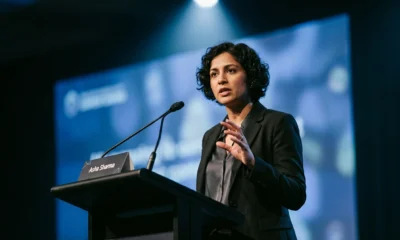
Microsoft Xbox Layoffs Start in July as Sharma Slams 3% Margin
-
 AI2 weeks ago
Google DeepMind and A24 Sign $75 Million AI Partnership Deal
-
 APPS4 weeks ago
DGO App Brings Rs 549 Mobile Pass for FIFA World Cup 2026 in Nepal
-
 AI2 weeks ago
Anthropic Tells Senators Alibaba Ran the Largest Claude Distillation Attack
-
 AI2 weeks ago
Oracle Cuts 21,000 Jobs in a Year, Cites AI in 10-K Filing
-
 NEWS2 months ago
Apple Strikes Preliminary Deal For Intel To Make iPhone And Mac Chips
-
 NEWS1 month ago
Oppo’s ColorOS 17 Eligibility List Leaves A-Series Buyers Behind