
NEWS
Samsung Boxes In Apple’s Foldable While Building Its Screens
Samsung’s new Ultra-branded foldable claims the name first, but Samsung Display is already manufacturing the OLED screens for Apple’s rumored foldable iPhone.

Samsung put the word Ultra on a foldable phone for the first time this week. The Galaxy Z Fold8 Ultra went up for pre-order in London on July 22 at $2,099, one of three new foldables Samsung introduced at Galaxy Unpacked. Apple’s own foldable iPhone is still weeks from its rumored September debut.
Samsung Display, a separate division of the same company, is already manufacturing the screens for that Apple phone. The naming fight getting most of the attention this week runs alongside a supply arrangement that gets almost none.
Samsung Splits Its Foldable Line in Two at London Unpacked
Samsung Electronics unveiled the Galaxy Z Fold8 Ultra, Galaxy Z Fold8 and Galaxy Z Flip8 on July 22, its most complete foldable lineup to date. The event itself was a break from tradition, held in London rather than Samsung’s usual Seoul or New York venues.
The Z Fold8 Ultra is the direct successor to last year’s Z Fold7, keeping the familiar tall book shape. It starts at $2,099 for 12GB of RAM and 256GB of storage, with 512GB and 1TB versions running $2,299 and $2,699. That is $100 more than the Z Fold7 cost at launch. It packs a 200 megapixel main camera across a triple lens system, an 8 inch main display, a 5,000mAh battery and Qualcomm’s Snapdragon 8 Elite Gen 5 for Galaxy chip. At 4.1 millimeters unfolded and 215 grams, Samsung calls it the thinnest Z Fold yet.
The Z Fold8 is the more unusual device. It starts at $1,899 and trades the tall shape for a wider one, unfolding into a 4:3 display measuring 7.6 inches next to a 5.5 inch cover screen. Both new Folds get Samsung’s new Flex Titanium hinge, a titanium structure built to cut down on crease visibility as the phones age. Pre-orders opened alongside the announcement, with general sales beginning August 7.
“By setting a new standard for foldables, we are once again advancing the premium mobile experience,” said TM Roh, president and CEO of Samsung’s Device eXperience Division, at the London event.
| Phone | Starting Price (US) | Main Display Unfolded | Status |
|---|---|---|---|
| Galaxy Z Fold8 Ultra | $2,099 | 8.0 inch | Ships August 7, 2026 |
| Galaxy Z Fold8 | $1,899 | 7.6 inch, 4:3 ratio | Ships August 7, 2026 |
| Apple foldable iPhone (rumored) | Around $1,999 and up | About 7.8 inch (rumored) | Expected September 2026, unconfirmed |
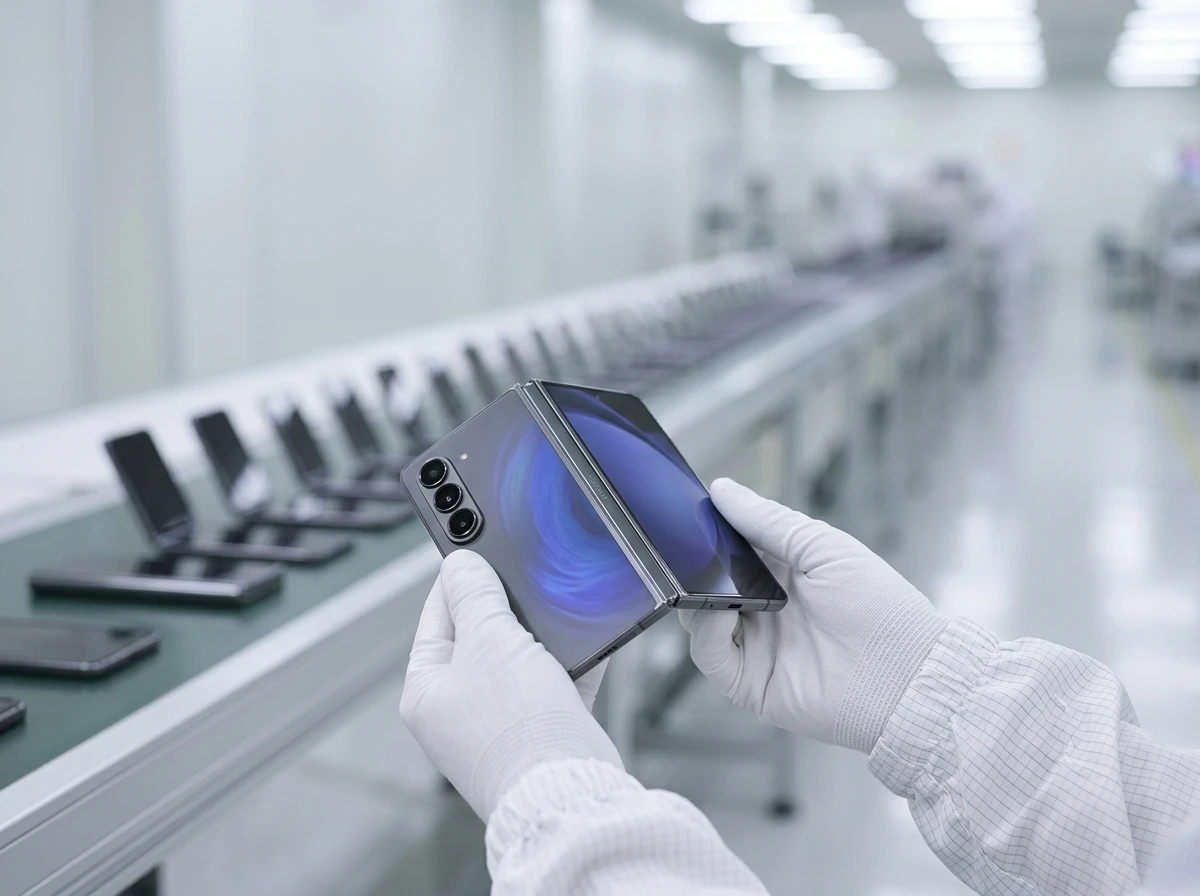
Ultra Now Means Something Very Specific at Samsung
Samsung didn’t just launch a bigger phone. It attached a name that carries weight across its entire catalog.
Within the Galaxy lineup, the ‘Ultra’ name represents Samsung’s highest level of performance and user experience.
Samsung wrote that in its first look at the new lineup, describing the Z Fold8 Ultra as the first Ultra model in the Galaxy foldable portfolio. That timing matters because Apple’s rumored foldable has been floated under two different names in recent reporting: iPhone Fold and iPhone Ultra, with outlets genuinely split on which one Apple will use.
If Apple does go with Ultra, it now has to explain why its version is smaller. Rumors point to a roughly 7.8 inch inner display against Samsung’s 8 inch, and a dual 48 megapixel rear camera against Samsung’s triple, 200 megapixel setup. Samsung’s Ultra badge now sits on the bigger, more heavily equipped phone, whichever name Apple eventually picks.
The Screens Inside Apple’s Foldable Already Have a Samsung Label
Here is what the naming story leaves out. Samsung Display, Samsung’s screen manufacturing arm, has reportedly signed a three-year exclusive agreement to supply the foldable OLED panels going into Apple’s device, according to Korean outlet The Elec. Apple has already approved the panels for production.
Initial shipments are modest, around 3 million panels this year, down from earlier industry estimates near 10 million, reflecting a cautious rollout after Apple’s expensive Vision Pro headset ran into weak demand. Panel production is running at Samsung Display’s Asan hub in Korea, with module assembly handled at a Vietnam facility operating roughly 50 of its 80 available lines.
- BOE – the Chinese supplier behind Huawei’s foldables, reportedly falls short of Apple’s durability and yield requirements.
- LG Display – has no track record producing foldable panels for smartphones at all.
- Samsung Display – reportedly cleared yields above 80%, beating the roughly 70% threshold Apple typically demands of suppliers.
That leaves Samsung as Apple’s only realistic option for foldable screens until the exclusivity window ends, likely sometime around 2029.
Why Would Samsung Want Its Own Rival to Succeed?
Samsung Electronics competes directly with Apple for foldable phone buyers, yet Samsung Display profits whether Apple’s foldable outsells the Z Fold8 or barely registers. One arm of the company is trying to box Apple out. Another arm is building the product Apple needs to compete.
AppleInsider described the arrangement as “particularly profitable as reportedly the firm had to justify supplying screens to a rival to Samsung’s own smartphones.” The company’s display unit reportedly proposed the exclusivity terms itself, and Apple accepted them, largely because no other supplier could meet the bar.
That split is not new to Samsung. Its chip and display businesses have long sold components to competitors while its mobile division fights those same companies for market share. What is new is how directly this particular deal touches the exact product line at the center of the naming dispute.
Counterpoint Hands Apple a Quarter of the Category
Global foldable phone shipments are projected to climb 21% this year, after totaling 19.6 million units in 2025, according to Counterpoint Research’s foldable smartphone forecast. Apple’s expected entry is a major reason why.
| Vendor | 2025 Share | 2026 Forecast Share |
|---|---|---|
| Samsung | 40% | 32% |
| Apple | Not yet in market | 25% |
| Huawei | 30% | 24% |
| Motorola | 12% | 8% |
| HONOR | 7% | 3% |
Samsung stays on top even as its share slides. Apple is projected to step directly into second place in its debut year, ahead of Huawei. “2026 will mark a new phase for the foldable smartphone market,” said Liz Lee, associate director at Counterpoint Research, adding that Apple’s arrival should lift consumer awareness of foldables broadly even as Samsung keeps an edge in product maturity and retail reach.
CCS Insight analyst Wood, discussing the pricing gap between Samsung’s two new Folds, said Samsung will have to have a very strong sales proposition for this device to convince buyers to pick the Z Fold8 over an Ultra model that costs only $200 more. The same pressure will apply to Apple once its foldable has a real price tag attached.
Memory Chips Are the Quiet Force Behind the Price Tags
Samsung raised prices across its entire new foldable lineup this year, and it points to the same cause driving costs up industrywide: memory chips. Those components go into nearly every modern smartphone, and Samsung’s own chip division just posted record results as prices climbed.
The squeeze isn’t unique to Samsung’s phones. A memory shortage already pushing iPhone prices higher in some markets suggests Apple’s foldable will land into the same cost environment, whatever name ends up on the box.
Apple has not said how it plans to price its foldable against that backdrop. But the memory market setting Samsung’s prices this month is the same one Apple will be buying from in September.
Frequently Asked Questions
When will Apple’s foldable iPhone actually launch?
Most reporting still points to September 2026, alongside the iPhone 18 Pro line. Apple supply chain analyst Ming-Chi Kuo has warned the launch could slip toward October because of manufacturing constraints on the device.
Will Apple call it the iPhone Fold or the iPhone Ultra?
Reporting remains genuinely split. Some outlets describe iPhone Fold as the working name Apple’s teams use internally, while others cite sources pointing to iPhone Ultra. Neither has been confirmed by Apple.
How many foldable iPhones does Apple expect to sell in the first year?
Kuo has projected Apple will ship somewhere between 3 million and 5 million units in year one, with volumes potentially climbing toward 20 million by 2027 if the first generation sells well.
Could Samsung lose its exclusive deal to supply Apple’s foldable screens?
The exclusivity window is reported to run three years from the start of production, putting an end date around 2029. After that, BOE or LG Display could compete for the business if they meet Apple’s durability and yield standards by then.


Sony’s 10 Percent Disc Drop Leaves the 2028 Cutoff Intact

Chip Allocation Sidelines the Base iPhone 18 This Fall

Miami-Dade Fights the Vice City Brand It Already Wears

IFA 2026 Awards Put Tecno Ahead of Flagship Phones

USB-C Gadgets Made the Junk Drawer Rechargeable

Pixel 11 Pro Asks $1,099 for a Light Google Locked

The iPhone Ultra Sells Two Retired Minis as One Foldable

Google Opens Gmail to Voice and Gates Docs Live

Lenovo Prices the IdeaPad Vibe Against Apple’s $699 Neo

Xbox Caps Game Pass Cloud Gaming at 15 Hours

Oracle Cuts 21,000 Jobs in a Year, Cites AI in 10-K Filing

Fable 5 and Mythos 5 Return as US Lifts Anthropic Export Controls

SpaceX’s Google Deal Turns a Rocket Company Into a Cloud Landlord

CD Projekt Red Co-CEO: Redemption Arc Isn’t Done, Witcher 4 in 2027

XPL Rallies 30% Ahead of Plasma One Card Tier Launch

Google Search Profiles Build a Follow Graph Inside Discover

DGO App Brings Rs 549 Mobile Pass for FIFA World Cup 2026 in Nepal

Moonshot AI Targets $30 Billion in China’s Fastest AI Funding Sprint

Oppo’s ColorOS 17 Eligibility List Leaves A-Series Buyers Behind

Microsoft Xbox Layoffs Start in July as Sharma Slams 3% Margin
-
 AI3 months ago
Oracle Cuts 21,000 Jobs in a Year, Cites AI in 10-K Filing
-
 AI2 months ago
Fable 5 and Mythos 5 Return as US Lifts Anthropic Export Controls
-
 AI3 months ago
SpaceX’s Google Deal Turns a Rocket Company Into a Cloud Landlord
-
 GAMING3 months ago
CD Projekt Red Co-CEO: Redemption Arc Isn’t Done, Witcher 4 in 2027
-
 CRYPTO3 months ago
XPL Rallies 30% Ahead of Plasma One Card Tier Launch
-
 NEWS3 months ago
Google Search Profiles Build a Follow Graph Inside Discover
-
 APPS3 months ago
DGO App Brings Rs 549 Mobile Pass for FIFA World Cup 2026 in Nepal
-
 AI3 months ago
Moonshot AI Targets $30 Billion in China’s Fastest AI Funding Sprint