
NEWS
Samsung’s Foldables Get Pricier as Its Chip Unit Hits a Record
Samsung’s July 22 Unpacked event brings pricier Galaxy foldables, driven by a memory chip shortage fueling record profit at its own semiconductor unit.

Samsung will unveil three new foldable phones in London this Wednesday, and every one of them is expected to cost more than the model it replaces. The Galaxy Unpacked livestream starts at 9 a.m. ET on July 22, and weeks of leaks have already outlined most of what is coming.
A global memory chip shortage is behind the price bump, and Samsung’s own semiconductor division is one of that shortage’s biggest winners. That division just posted the most profitable quarter any technology company has ever reported, a fact Samsung will confirm in full eight days after it asks customers to pay more for a folding phone.
Three Foldables, Two New Names to Learn
Samsung’s foldable lineup gets more complicated before it gets clearer. Three devices are expected on stage: the Galaxy Z Flip 8, the Galaxy Z Fold 8, and the Galaxy Z Fold 8 Ultra.
The naming trips people up. The Z Fold 8 Ultra, not the Z Fold 8, is the true successor to last year’s Z Fold 7. The Z Fold 8 is a new device, a wider book style foldable that spent months in the rumor mill under the working name Z Fold Wide, built to go up against Apple’s still unannounced folding iPhone.
| Device | Leaked Starting Price | Change | Headline Upgrade |
|---|---|---|---|
| Galaxy Z Fold 8 Ultra | $2,099 | $100 more than the Fold 7 | 200MP main camera, Flex Titanium hinge |
| Galaxy Z Fold 8 | $1,899 | New model, no direct predecessor | Wider 4:3 book design aimed at the rumored foldable iPhone |
| Galaxy Z Flip 8 | $1,199 | $100 more than the Flip 7 | Rumored Exynos 2600 chip, slimmer crease |
Samsung confirmed this month that its next foldables will use a Flex Titanium structure, pairing a titanium alloy film with a titanium plate under the flexible display. The company says the change makes the hinge more durable and the crease less visible, though it has not said which models get it until Wednesday.
A Korean report also indicated the Z Fold 8 Ultra will be slightly lighter than the Z Fold 7, a phone that was already unusually thin for its category.
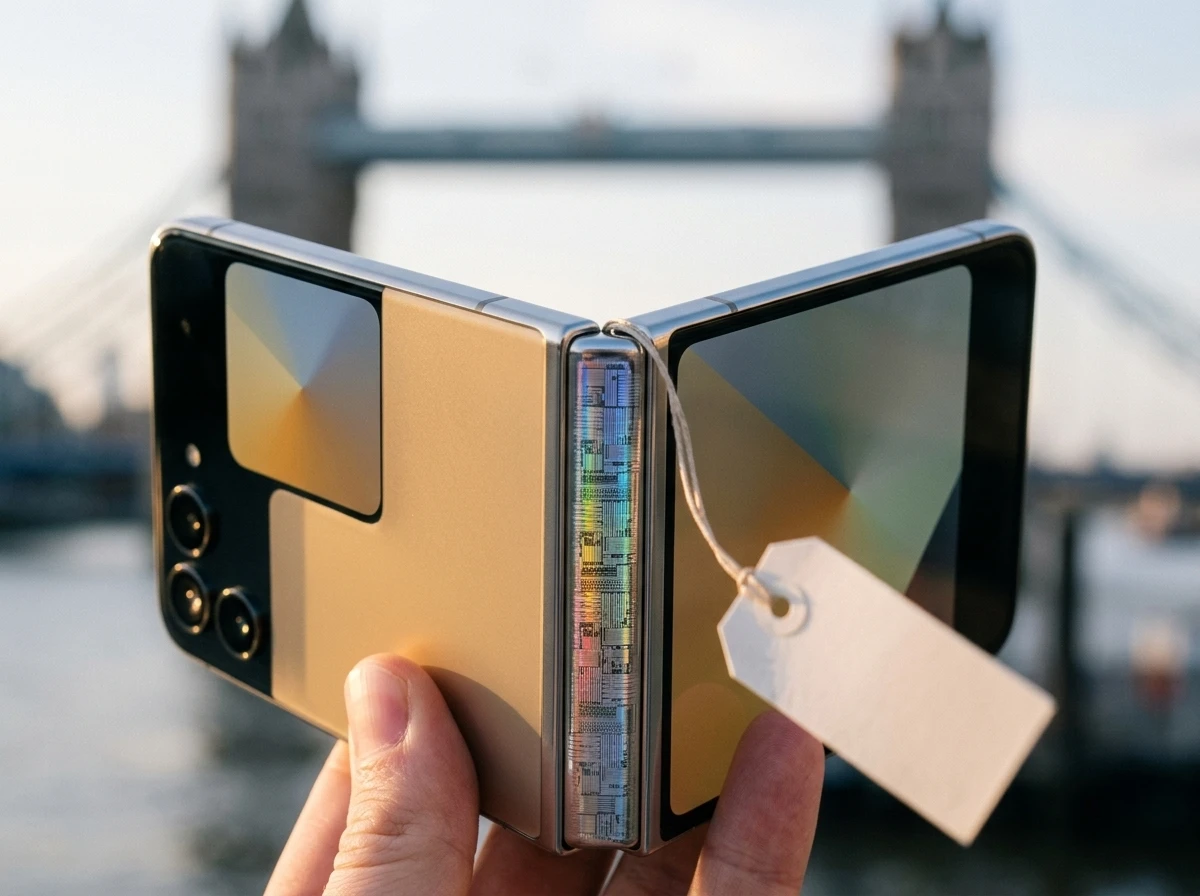
The Price Tags Are Already Climbing
Samsung has not confirmed a single price for any of the three foldables. But leaks from multiple markets all point the same direction: up.
In the US, industry sources cited by Korean outlet SE Daily put the Z Fold 8 Ultra at $2,099, a $100 jump from the Z Fold 7’s $1,999 launch price, an increase of about 5%. The new Z Fold 8 is expected to start at $1,899, though it has no direct predecessor to compare against. Leaks point to the Z Flip 8 starting at $1,199, also $100 more than the Z Flip 7.
European pricing tells a similar story: 2,199 euros for the Z Fold 8 Ultra and 1,999 euros for the Z Fold 8, both up roughly 100 euros from last year. In South Korea, domestic distribution data reported by Korea Herald suggests the Z Flip 8 could rise as much as 13.3% at home, the steepest jump of any model in any market so far.
What we know:
- Samsung has confirmed a new Flex Titanium hinge structure is coming to its next foldables, without saying which models get it.
- Three foldables, the Z Flip 8, Z Fold 8, and Z Fold 8 Ultra, have been consistently named across Korean, German, and US leaks for weeks.
- Global DRAM and NAND contract prices are verifiably higher in 2026, confirmed by Samsung’s own earnings and by independent research firms.
What’s still unconfirmed:
- Final retail prices in every market, since Samsung is reportedly still reviewing its overall pricing strategy.
- Whether Samsung’s preorder storage upgrade promotion survives this cycle in its current form.
- Whether Galaxy Glasses gets any stage time at all on July 22.
Multiple reports say Samsung is still reviewing that broader pricing strategy days before the show, which means the numbers above could still move before Wednesday.
Why Is Every New Phone Suddenly More Expensive?
Memory chips, the RAM and storage inside every smartphone, have gotten dramatically more expensive because data centers building AI infrastructure are buying up the same DRAM and NAND that factories use to supply phone makers. Contract prices nearly doubled in the first quarter of 2026 alone, and phone brands are now passing that cost straight to buyers.
Research firm TrendForce says conventional DRAM contract prices climbed roughly 93% to 98% quarter over quarter in the first three months of 2026, and the increases have not stopped since.
- 26% of the bill: memory’s share of total component costs in premium smartphones rose from 11% to 26% between the third quarter of 2025 and the first quarter of 2026, according to research firm Omdia.
- $291 in memory alone: Counterpoint Research found memory now makes up roughly 40% of the bill of materials on an $800 smartphone, up from 14% in early 2025, with DRAM and NAND costs on a single device rising close to 4.6 times to about $291.
- 38.5% market share: Samsung’s own DRAM revenue jumped 93% in one quarter, to $37.32 billion, giving it the largest slice of the global DRAM market of any supplier.
- 13 to 18% more: TrendForce’s newest outlook still has DRAM contract prices climbing that much quarter over quarter into the back half of 2026, even as the pace cools from a roughly 60% jump the quarter before.
TrendForce also expects phone brands broadly to raise retail prices this quarter specifically to offset persistently high mobile memory costs, even though the firm expects those higher prices to cut into handset sales. Samsung sits on both sides of that math, as a phone brand absorbing the cost and as the chip supplier collecting it.
Samsung’s Chip Arm Just Posted the Best Quarter in Tech History
Samsung Electronics said on July 7 that its preliminary second quarter operating profit reached 89.4 trillion won, about $58.4 billion. That is a 19-fold jump from the 4.7 trillion won it earned in the same quarter last year, and the largest single quarter operating profit any technology company has ever reported, ahead of both Nvidia and Apple.
It is Samsung’s third consecutive record quarter. It followed a first quarter in which profit already jumped 756% year over year. Revenue for the second quarter reached 171 trillion won, more than double the 74.57 trillion won Samsung made a year earlier, and the result beat analyst estimates by a wide margin.
Almost none of that money came from phones. In the first quarter of 2026, Samsung’s Device Solutions division, the unit that makes memory chips, system chips, and foundry services, generated over 93% of the company’s entire operating profit, with revenue up 86% quarter over quarter to 81.7 trillion won. Analysts expect a similar split when Samsung reports full second quarter results, including a division by division breakdown, on July 30, eight days after Unpacked.
This has everything to do with the AI boom as memory companies continue to ride a tidal wave driven by limited supply and unprecedented demand.
Marc Einstein, an analyst at Counterpoint Research, said that after Samsung’s July 7 guidance landed, calling the results one of “the best quarterly performances ever.”
Samsung’s own investor materials acknowledge the imbalance. In its first quarter earnings release, the company said its Mobile Experience division, the one responsible for Galaxy phones, would pursue efficiency initiatives to mitigate rising cost pressures on profitability, while promising to keep strengthening foldable development.
Wall Street’s reaction was mixed despite the record. Samsung shares fell 7% after the earnings guidance landed, as a Morgan Stanley note flagged concerns that big cloud companies could soon tighten AI spending. A wage deal that ties 10.5% of the chip division’s annual profit to employee bonuses also shaved the headline number; strip that out, and the quarter would have topped 100 trillion won.
Apple Faces the Same Math on Its Own Foldable
Apple is under the identical pressure. Early estimates put the iPhone 18 Pro at $50 to $300 more than the iPhone 17 Pro, as much as 18% higher, according to reports.
One widely cited industry estimate pegs Apple’s still unannounced foldable iPhone at around $2,500 to start, a price that would put it well above Samsung’s new Fold 8 line.
That gap is exactly why the new Z Fold 8 exists. Rumors describe a 5.4 inch cover display and a 7.8 inch inner display in a 4:3 aspect ratio, dimensions that closely track leaked specs for Apple’s own foldable. Samsung wants a book style rival on shelves, and priced below Apple, before Apple ships anything.
Watches and Smart Glasses Round Out the Show
Foldables will not be the only hardware on stage. Samsung is expected to introduce two new smartwatches, the Galaxy Watch 9 and the Galaxy Watch Ultra 2, both carrying incremental hardware updates alongside new AI powered health tracking inside the Samsung Health app. Leaks suggest Samsung is skipping a new Watch Classic model entirely this year, leaving just the standard and Ultra tiers.
Samsung’s long rumored smart glasses could also get a moment on stage. The company has been developing the eyewear, likely to be called Galaxy Glasses, with fashion partners Gentle Monster and Warby Parker, and a preview of the underlying software surfaced earlier this year at Google’s developer conference.
Samsung has given no indication yet whether July 22 brings a full introduction or just a teaser.
Frequently Asked Questions
Will Samsung’s Free Storage Upgrade Promotion Survive the Price Hikes?
Samsung has long offered a free storage bump at preorder, moving 256GB buyers up to 512GB at no extra cost. Reports citing social posts suggest that perk could shrink this cycle, with buyers covering half the upgrade cost instead of getting it free. Samsung has not confirmed the change.
How Long Will Memory Chip Prices Stay This High?
SK hynix chairman Chey Tae-won warned the shortage could last until 2030, since new factory capacity takes years to build. Other analysts are more optimistic, expecting supply and demand to rebalance by the end of 2027.
Will the Galaxy Glasses Have a Screen or AR Display?
No. The first generation of Galaxy Glasses is expected to skip any built in display or heads up projection. Instead, the glasses rely on onboard cameras and a built in AI assistant powered by Google Gemini that can answer questions about whatever the wearer is looking at.
What’s New on the Galaxy Watch Ultra 2?
Leaks point to classic watch face numbering returning, a thinner bezel, and improved side buttons, on top of AI driven health tracking upgrades running through the Samsung Health app.


Sony’s 10 Percent Disc Drop Leaves the 2028 Cutoff Intact

Chip Allocation Sidelines the Base iPhone 18 This Fall

Miami-Dade Fights the Vice City Brand It Already Wears

IFA 2026 Awards Put Tecno Ahead of Flagship Phones

USB-C Gadgets Made the Junk Drawer Rechargeable

Pixel 11 Pro Asks $1,099 for a Light Google Locked

The iPhone Ultra Sells Two Retired Minis as One Foldable

Google Opens Gmail to Voice and Gates Docs Live

Lenovo Prices the IdeaPad Vibe Against Apple’s $699 Neo

Xbox Caps Game Pass Cloud Gaming at 15 Hours

Oracle Cuts 21,000 Jobs in a Year, Cites AI in 10-K Filing

Fable 5 and Mythos 5 Return as US Lifts Anthropic Export Controls

SpaceX’s Google Deal Turns a Rocket Company Into a Cloud Landlord

CD Projekt Red Co-CEO: Redemption Arc Isn’t Done, Witcher 4 in 2027

XPL Rallies 30% Ahead of Plasma One Card Tier Launch

Google Search Profiles Build a Follow Graph Inside Discover

DGO App Brings Rs 549 Mobile Pass for FIFA World Cup 2026 in Nepal

Moonshot AI Targets $30 Billion in China’s Fastest AI Funding Sprint

Oppo’s ColorOS 17 Eligibility List Leaves A-Series Buyers Behind

Microsoft Xbox Layoffs Start in July as Sharma Slams 3% Margin
-
 AI3 months ago
Oracle Cuts 21,000 Jobs in a Year, Cites AI in 10-K Filing
-
 AI2 months ago
Fable 5 and Mythos 5 Return as US Lifts Anthropic Export Controls
-
 AI3 months ago
SpaceX’s Google Deal Turns a Rocket Company Into a Cloud Landlord
-
 GAMING3 months ago
CD Projekt Red Co-CEO: Redemption Arc Isn’t Done, Witcher 4 in 2027
-
 CRYPTO3 months ago
XPL Rallies 30% Ahead of Plasma One Card Tier Launch
-
 NEWS3 months ago
Google Search Profiles Build a Follow Graph Inside Discover
-
 APPS3 months ago
DGO App Brings Rs 549 Mobile Pass for FIFA World Cup 2026 in Nepal
-
 AI3 months ago
Moonshot AI Targets $30 Billion in China’s Fastest AI Funding Sprint