
NEWS
Google’s Pixel 11 Leaks New Colors as Its TSMC Chip Bet Pays Off
Leaked Pixel 11 colors and prices surface as Tensor G6 reportedly beats Apple’s A20 to TSMC’s 2nm process, the payoff of Google’s break from Samsung.

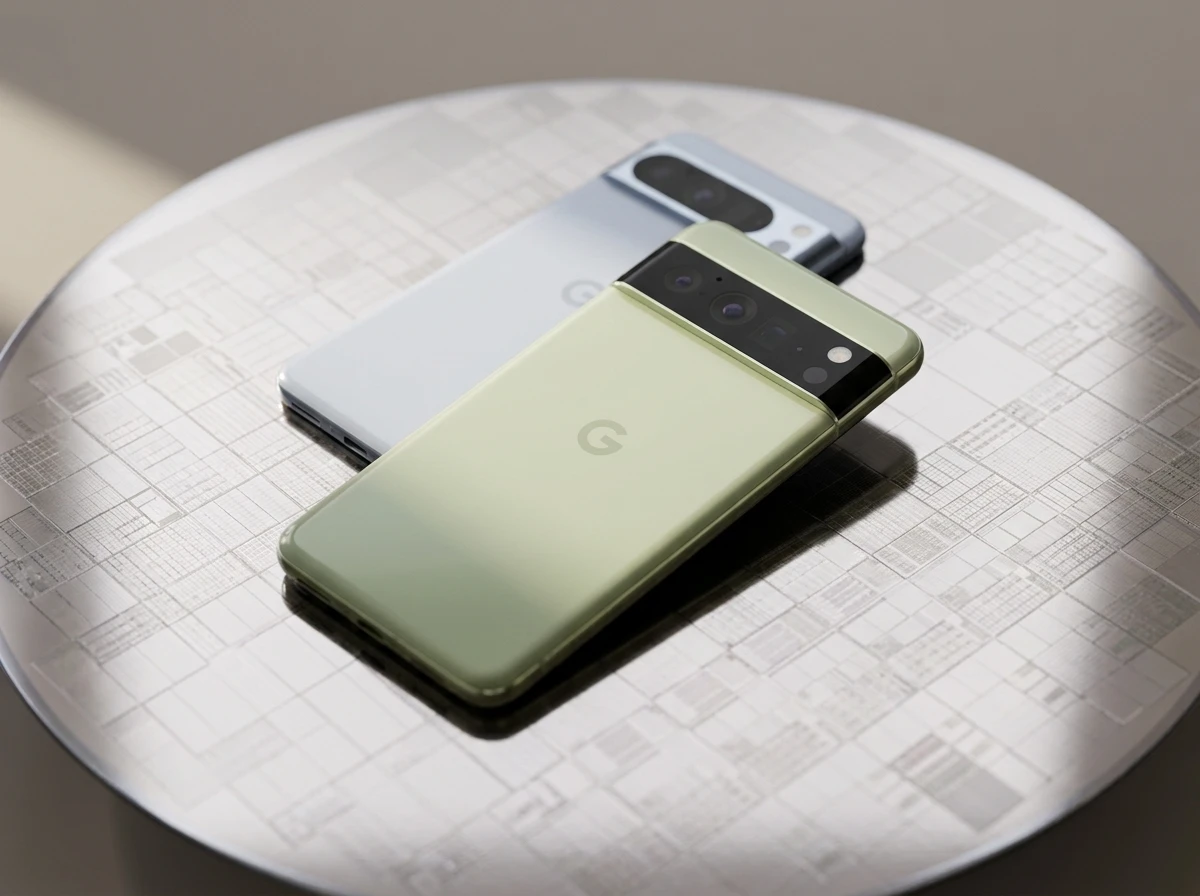
Google’s Pixel 11 has turned up online in two soft new colors called Frost and Pistachio, weeks ahead of the phone’s official unveiling. A newer batch of leaked Amazon listings fills in the rest of the lineup, including two more colors, storage tiers and prices Google has not yet confirmed.
Tensor G6, the chip built for all four new phones, is reportedly on track to become the first in any smartphone made on TSMC’s 2 nanometer process, according to Taiwan’s Economic Daily News. That would put Google’s silicon ahead of Apple’s for the first time in years, the payoff of a bet Google placed when it walked away from Samsung’s foundry business.
Frost and Pistachio Get Fresh Company
The first renders to leak showed just two colors. The newest batch shows four, at least on the base model.
Amazon briefly listed the entire Pixel 11 series under Google’s own storefront before the pages came down, according to reporting from Android Authority and Android Central. The listings put the standard Pixel 11 in four finishes: Frost, Pistachio, Hibiscus and Obsidian.
The details differ between leaks though. Tom’s Guide and MobileSyrup spotted an earlier version of the same listings with only three colors on the base phone, where product descriptions used different internal names, Midnight, Fuchsia and Moss, for what appear to be the same shades. Google has not explained the mismatch, and the images that started this whole cycle first circulated in renders shared in an early Instagram leak post.
The Pro line gets its own palette. Listings reviewed by GSMArena describe the Pixel 11 Pro and Pro XL in Dune, Light Fog, Pine and either Midnight or Sterling, depending on which leak you read, while the Pixel 11 Pro Fold is limited to Midnight and Pine.
| Model | Leaked Colors | Starting Price (256GB) | Change From Last Year |
|---|---|---|---|
| Pixel 11 | Frost, Pistachio, Hibiscus, Obsidian | $899 | Up $100; 128GB tier dropped |
| Pixel 11 Pro | Dune, Light Fog, Pine, Sterling/Midnight | $1,099 | Up $100 (reported) |
| Pixel 11 Pro XL | Dune, Light Fog, Pine, Sterling/Midnight | $1,299 | Up $100 (reported) |
| Pixel 11 Pro Fold | Midnight, Pine | $1,899 | Up $100 from $1,799 |
Pistachio is not a brand new idea for Google either. Last year’s Pixel 10 Pro line included a color called Jade, described by reviewers as a light green with gold accents, essentially the same family of hue Pistachio now brings to the cheaper phone. Frost made a similar jump, last seen as a brighter option on the base Pixel 10 before resurfacing this year across the lineup.
Tensor G6 Beats Apple to Two Nanometers
Google is expected to unveil the Pixel 11 series on August 12 in New York City, and leaked chip details are drawing more attention than the paint job.
Multiple outlets, citing Taiwan’s Economic Daily News, report that Tensor G6 will use TSMC’s N2 node, the chipmaker’s first 2 nanometer manufacturing process. Apple’s A20 chip, expected in the iPhone 18 lineup this September, would arrive on the same node about a month later. TSMC’s own stated targets for N2 promise 10 to 15 percent faster speeds at the same power draw compared with the prior N3E node, or 25 to 30 percent lower power use at the same speed, alongside a chip density increase of more than 15 percent.
Leaked specifications point to a 7-core Arm C1 CPU, a PowerVR graphics unit, and a MediaTek-built modem replacing Samsung’s Exynos radio, a detail reinforced by FCC filings that reference MediaTek algorithms in a radio test. The chip reportedly carries the internal codename Malibu. Not all the leaked news is flattering: several outlets describe the GPU as an older PowerVR architecture, which would make the graphics silicon the one part of Tensor G6 not getting a generational leap.
Leaked planning documents reviewed by Android Authority in 2024 show Tensor G6 was originally mapped to TSMC’s N3P node, a 3 nanometer process, before this year’s reports moved the target to the more advanced 2 nanometer node. PhoneArena’s Anam Hamid was less convinced the silicon win changes much for buyers, writing that despite the new chip, “it likely won’t be long before it’s forgotten in a sea of new releases” once rivals ship phones with stronger cameras and batteries.
What Happened Between Google and Samsung?
Google’s Pixel 11 chip win traces back to 2024, when Google moved its custom processor business away from Samsung Foundry to TSMC, a switch that left Samsung publicly trying to figure out what went wrong.
The break started with last year’s Pixel 10. Its Tensor G5 chip was Google’s first to be built by TSMC, on the company’s 3 nanometer N3E process, a jump that Google’s own announcements credited with making the G5’s CPU 34 percent faster on average than the prior generation, with TPU performance up by as much as 60 percent. Notebookcheck reported as early as September 2024 that Google had plans for a multiyear TSMC partnership that would carry through the Tensor G6 as well.
Samsung did not take the loss quietly. According to TweakTown’s reporting on Korean outlet The Bell, Samsung Foundry held a strategic meeting internally titled Why We Lost Google, and one semiconductor industry official offered a blunt assessment of what the departure exposed.
Losing Google is a case that instantly revealed Samsung Foundry’s complex problems. I understand that a lot of internal discussions and contemplation are going on.
The comment came from an unnamed semiconductor industry official cited in Korean trade reporting and picked up by TweakTown shortly after Google’s foundry switch became public. Market data backs up the scale of the shift. TrendForce figures for the first quarter of 2025 showed Samsung’s global foundry share slipping to 7.7 percent from 8.1 percent the prior quarter, while TSMC climbed from 67.1 percent to 67.6 percent over the same stretch.
Prices Climb While RAM Shrinks
Winning the chip race does not mean the Pixel 11 gets cheaper. Leaked Amazon listings, first reported by Android Authority and Android Central, show the base Pixel 11 starting at $899 for 256GB, up $100 from the outgoing model, with Google dropping the long-running 128GB entry tier entirely. A 512GB option is listed at $1,019.
The Pro models follow the same pattern. Pixel 11 Pro pricing reportedly starts at $1,099 and rises to $1,449 for 1TB, while the Pro XL starts at $1,299 and tops out at $1,649. The Pro Fold starts at $1,899, up from the outgoing Pixel 10 Pro Fold’s $1,799. Android Police separately reported leaked European pricing showing an effective 100 euro increase across the range, suggesting the hike is not a US only story.
Some of that money is not buying more hardware. Several generational changes point the other way:
- Storage floor rises – the 128GB entry tier disappears, replaced by 256GB as the new starting point across every model.
- RAM tightens at entry level – 256GB configurations of the base and Pro models reportedly ship with 12GB instead of last year’s 16GB, with the larger storage tiers keeping 16GB.
- The Fold’s battery shrinks – the Pro Fold is listed with a roughly 4,750mAh battery, down from about 5,000mAh in last year’s model.
- The modem supplier changes again – Samsung’s Exynos radio reportedly gives way to a MediaTek modem this generation.
Android Authority and MobileSyrup both attribute the RAM squeeze to a broader memory pricing crunch hitting the entire phone industry this year, not a Pixel specific decision.
What Google Has Confirmed for August 12
Google has officially set the date. The Made by Google event is scheduled for August 12 in New York City at 6 p.m. ET, and Android Authority reports the company will use the same stage to launch the Pixel Watch 5 alongside the phones.
Beyond the date, Google has confirmed almost nothing about the leaked details. That gap between official confirmation and leaked specifics is worth laying out plainly.
What We Know
- Google has officially confirmed the August 12 New York event for Pixel 11 and Pixel Watch 5.
- Multiple outlets, citing Taiwan’s Economic Daily News, report Tensor G6 is built on TSMC’s 2 nanometer process.
- Leaked Amazon listings independently show roughly $100 price increases across every model.
What’s Unconfirmed
- Exact color names and counts vary between leaks, with some showing four base colors and others three.
- Whether the reported 12GB RAM figure on entry tiers is accurate or a listing placeholder.
- The precise Pro Fold battery capacity, which Android Authority itself flagged as possibly unfinished listing data.
One leak detail hints at a new accessory rather than a phone. Yanko Design spotted a reference to a


Sony’s 10 Percent Disc Drop Leaves the 2028 Cutoff Intact

Chip Allocation Sidelines the Base iPhone 18 This Fall

Miami-Dade Fights the Vice City Brand It Already Wears

IFA 2026 Awards Put Tecno Ahead of Flagship Phones

USB-C Gadgets Made the Junk Drawer Rechargeable

Pixel 11 Pro Asks $1,099 for a Light Google Locked

The iPhone Ultra Sells Two Retired Minis as One Foldable

Google Opens Gmail to Voice and Gates Docs Live

Lenovo Prices the IdeaPad Vibe Against Apple’s $699 Neo

Xbox Caps Game Pass Cloud Gaming at 15 Hours

Oracle Cuts 21,000 Jobs in a Year, Cites AI in 10-K Filing

Fable 5 and Mythos 5 Return as US Lifts Anthropic Export Controls

SpaceX’s Google Deal Turns a Rocket Company Into a Cloud Landlord

CD Projekt Red Co-CEO: Redemption Arc Isn’t Done, Witcher 4 in 2027

XPL Rallies 30% Ahead of Plasma One Card Tier Launch

Google Search Profiles Build a Follow Graph Inside Discover

DGO App Brings Rs 549 Mobile Pass for FIFA World Cup 2026 in Nepal

Moonshot AI Targets $30 Billion in China’s Fastest AI Funding Sprint

Oppo’s ColorOS 17 Eligibility List Leaves A-Series Buyers Behind

Microsoft Xbox Layoffs Start in July as Sharma Slams 3% Margin
-
 AI3 months ago
Oracle Cuts 21,000 Jobs in a Year, Cites AI in 10-K Filing
-
 AI2 months ago
Fable 5 and Mythos 5 Return as US Lifts Anthropic Export Controls
-
 AI3 months ago
SpaceX’s Google Deal Turns a Rocket Company Into a Cloud Landlord
-
 GAMING3 months ago
CD Projekt Red Co-CEO: Redemption Arc Isn’t Done, Witcher 4 in 2027
-
 CRYPTO3 months ago
XPL Rallies 30% Ahead of Plasma One Card Tier Launch
-
 NEWS3 months ago
Google Search Profiles Build a Follow Graph Inside Discover
-
 APPS3 months ago
DGO App Brings Rs 549 Mobile Pass for FIFA World Cup 2026 in Nepal
-
 AI3 months ago
Moonshot AI Targets $30 Billion in China’s Fastest AI Funding Sprint