
GADGETS
Samsung’s Smart Glasses Replay Android’s Old Playbook Against Meta
Samsung unveiled AI smart glasses with Gentle Monster and Warby Parker at Unpacked in London, entering a market Meta already controls with 69% share.

Samsung showed the world its first smart glasses on July 22 at Galaxy Unpacked in London, built with Gentle Monster and Warby Parker and running Google’s Gemini AI. It still will not say what they cost or exactly when they ship.
Samsung is walking into a market where Meta already claims most of the map. The plan Samsung and Google are using to catch up, an open platform licensed across rival eyewear brands and hardware makers, is the same one that turned Android into the world’s most used phone operating system.
Two Frames, No Price, No Launch Date
What Samsung actually confirmed on stage was hardware, not a business plan. Samsung’s glasses are equipped with Qualcomm’s Snapdragon AR1 Gen1 chip and must be tethered to a smartphone to do most of their work. Leaks point to Galaxy Glasses using Qualcomm’s Snapdragon AR1, the same smart glasses platform as Ray-Ban Meta, so the two rivals are, at the silicon level, starting from near-identical ground.
There is no screen. The first-generation Galaxy Glasses are a display-free design, with no screen and no AR overlay; all output is audio, including voice responses, notification readouts, real-time translation and navigation directions. Battery life runs up to nine hours per charge, with the charging case able to deliver up to seven additional full charges. A built-in camera reads whiteboards and presentations and turns them into notes, and the glasses can summarize incoming messages through their speakers.
Samsung is treating this launch as one piece of a bigger day. It also used the same London stage to detail its broader personal AI strategy across the Galaxy lineup, and it picked the date deliberately: the event was scheduled as a July calendar slot ahead of Apple’s own autumn event. The glasses were the newest piece, not the headline act.
| Attribute | Samsung Intelligent Eyewear | Ray-Ban Meta (entry model) | Ray-Ban Meta Display |
|---|---|---|---|
| Price | Not disclosed; analyst estimate $600 to $700 | $299 | $799 |
| Chip platform | Snapdragon AR1 Gen 1 | Snapdragon AR1 | Snapdragon AR1 |
| Display | None in this generation | None | Built-in heads-up display |
| Eyewear partner | Gentle Monster and Warby Parker | EssilorLuxottica (Ray-Ban) | EssilorLuxottica (Ray-Ban) |
The gap in the table is the story. Samsung has specs. It does not yet have a price, and pricing is exactly where this category gets decided.
Google Has Been Building This Coalition Since 2024
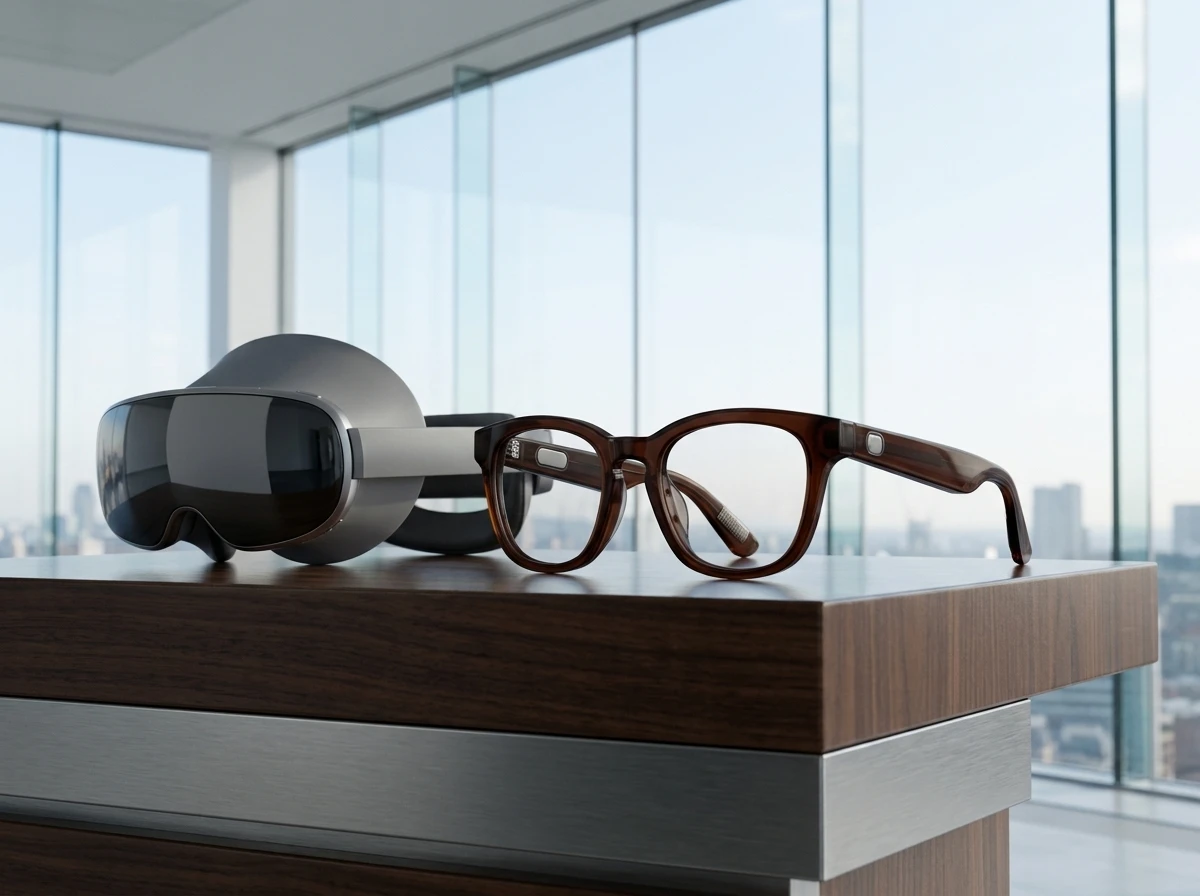
Google first announced Android XR in late 2024 as a dedicated operating system for devices combining augmented reality, virtual reality and Gemini AI experiences into one platform. Samsung was the first hardware partner. The Galaxy XR headset went up for preorder at $1,799.99 in the U.S. and Korea, shipping to buyers on October 31, 2025, becoming the platform’s first shipping device.
Google took on Meta’s Ray-Ban Meta glasses by announcing new partnerships at Google I/O 2025 with Gentle Monster and Warby Parker to create smart glasses based on Android XR. A year later, at Google I/O 2026, Samsung and Google showed working prototypes publicly for the first time. Android XR’s own product page describes the platform as an AI-powered operating system that blends digital information with the real world, available now on headsets and coming soon to glasses, and its roadmap already spans headsets and multiple glasses partners, including XREAL’s Project Aura hardware.
That is the Android parallel in plain terms. Google supplies the software and the AI layer, Samsung and XREAL supply competing hardware, and Gentle Monster and Warby Parker supply two different fashion identities aimed at two different customers. It is the same fan-out strategy that let Android out-ship a closed iPhone worldwide within a few years of launch, except this time the closed rival got to the category first.
Meta Still Owns Most of the Map
Meta and its manufacturing partner, EssilorLuxottica, the Ray-Ban parent, built their head start the old-fashioned way: by shipping in volume while Samsung was still teasing renders. Since the launch of the first smart glasses in 2021, Meta and EssilorLuxottica have strengthened their collaboration, notably through Meta taking a stake in its partner. That is a deeper bond than anything Google has with Warby Parker or Gentle Monster so far, an equity link layered on top of the product deal.
- 69.2%: Meta’s share of the global smart glasses market in Q1 2026, supported by its EssilorLuxottica partnership and the Ray-Ban Meta lineup, according to IDC.
- Over 7 million: Smart glasses Meta and EssilorLuxottica sold in 2025, making them the dominant driver of the Ray-Ban owner’s wholesale growth in the back half of the year.
- 13.6 million: IDC’s forecast for total smart glasses shipments industry-wide in 2026, growing to 27.3 million by 2030.
- 20 to 30 million: The annual production capacity Meta and EssilorLuxottica were reportedly discussing for as soon as this year, according to Bloomberg.
Meta has kept pricing aggressive while Samsung stayed quiet. Meta last month launched a $299 entry-level set of smart glasses built with EssilorLuxottica, undercutting its own Ray-Ban Meta line. The company also unveiled the $799 Meta Ray-Ban Display glasses, which include a built-in display, in 2025. IDC’s own research notes the pressure is starting to build anyway: despite its lead, Meta faces mounting pressure from Google’s Android XR ecosystem, which enters with deep Gemini integration across email, photos and search. The spending behind that pressure is not small either; Meta’s parent has committed to a $145 billion artificial intelligence investment push across its products, glasses included.
Two Eyewear Brands Now Carry the Tech Risk
Samsung did not build a fashion house. It rented two of them, and the split is deliberate. Galaxy Glasses will ship in two design configurations, one developed with Gentle Monster, the Korean fashion eyewear label known for avant-garde aesthetics, and one with Warby Parker, the American brand that built its reputation selling prescription glasses online at a fraction of traditional retail prices; the Gentle Monster version offers a slim black frame with a straight upper rim and rounded lower edges, while the Warby Parker version goes for a brown frame with an upswept brow line and a more conventional everyday look.
Samsung and Google leaned on that split themselves. “Intelligent eyewear represents a powerful step forward in our shared vision with Samsung to make AI more helpful and accessible in everyday life,” said Shahram Izadi, Vice President and GM of Android XR at Google. He added that combining Samsung’s hardware with premium eyewear design was meant to keep users connected without looking like they are wearing a gadget. Gentle Monster’s own founder framed it in emotional terms rather than spec terms.
Intelligent eyewear should feel as emotionally expressive as it is technologically advanced.
Hankook Kim, Founder and CEO of Gentle Monster, made that comment as part of Samsung’s own announcement. For Gentle Monster and Warby Parker, the arrangement hands them relevance in a category neither built alone, in exchange for carrying real inventory and retail risk once the glasses actually ship through their own stores.
Why Is Samsung Playing Down Its Own Launch?
Samsung’s own executive spent more time managing expectations than selling the product. James Choi, an executive vice president at Samsung who heads the glasses’ research and development division, told reporters the category will stay small for now and declined to put a number on Samsung’s ambitions.
We want to make it reasonable, but as I mentioned … the quality of the product itself, we want to position as premium. It doesn’t mean that it’s crazy expensive.
Choi said the company has “just started” in the smart glass category and expects it to be a “niche market” that will not reach 100 million units in sales in the early days of Samsung’s entry, and he declined to provide sales targets. On the sensitive question of price, Francisco Jeronimo, an IDC analyst, told CNBC he would not be surprised by a $600 to $700 range meant to reinforce Samsung’s premium positioning, while warning that pricing well above Meta’s current lineup without a clear feature edge would be a hard sell.
What Samsung confirmed:
- Hardware: Snapdragon AR1 Gen 1 chip, a built-in camera, open-ear directional audio and a nine-hour battery with a recharging case.
- Design: Two frame styles, one with Gentle Monster and one with Warby Parker, both display-free in this generation.
- Distribution: Sold through the eyewear partners’ own retail channels, positioned as a premium product, not a budget one.
What’s still unconfirmed:
- Price: No figure given at Unpacked; estimates range from analyst guesses to pre-launch leaks.
- Release date: Only “fall 2026” has been committed to publicly.
- Product name: “Galaxy Glasses” is the name used across most press coverage, but Samsung has not confirmed it as final.
Frequently Asked Questions
When Will Samsung’s Smart Glasses Go on Sale?
Samsung has committed only to a fall 2026 window, without a specific date. The company also has not confirmed a final consumer product name; “Galaxy Glasses” is the label most outlets use, borrowed from leaks rather than an official Samsung announcement.
How Much Will They Cost?
Samsung declined to give a price at Unpacked. Francisco Jeronimo of IDC told CNBC a $600 to $700 range would not surprise him given the premium positioning Choi described, while earlier leaks had pointed toward a lower $379 to $499 range before the event.
Will Samsung’s Glasses Work With an iPhone?
Yes. Reporting around the Google I/O 2026 preview indicated the glasses pair with both Android and iOS devices over Bluetooth and Wi-Fi for basic functions, though deeper features like gesture control are tied to Samsung’s own Galaxy Watch hardware.
Does the First Generation Have a Display?
No. The debut model, reportedly codenamed Jinju, is audio-only. A second generation reportedly codenamed Haean is expected in 2027 with a micro-LED display, with early rumors pointing to a $600 to $900 price band for that later version.
Who Else Is Building Android XR Glasses Besides Samsung?
Google is working with partners including Samsung, XREAL, Warby Parker and Gentle Monster to build Android XR-powered smart glasses. XREAL’s contribution, Project Aura, is a separate wired glasses product built on the same underlying platform rather than a Samsung device.


Sony’s 10 Percent Disc Drop Leaves the 2028 Cutoff Intact

Chip Allocation Sidelines the Base iPhone 18 This Fall

Miami-Dade Fights the Vice City Brand It Already Wears

IFA 2026 Awards Put Tecno Ahead of Flagship Phones

USB-C Gadgets Made the Junk Drawer Rechargeable

Pixel 11 Pro Asks $1,099 for a Light Google Locked

The iPhone Ultra Sells Two Retired Minis as One Foldable

Google Opens Gmail to Voice and Gates Docs Live

Lenovo Prices the IdeaPad Vibe Against Apple’s $699 Neo

Xbox Caps Game Pass Cloud Gaming at 15 Hours

Oracle Cuts 21,000 Jobs in a Year, Cites AI in 10-K Filing

Fable 5 and Mythos 5 Return as US Lifts Anthropic Export Controls

SpaceX’s Google Deal Turns a Rocket Company Into a Cloud Landlord

CD Projekt Red Co-CEO: Redemption Arc Isn’t Done, Witcher 4 in 2027

XPL Rallies 30% Ahead of Plasma One Card Tier Launch

Google Search Profiles Build a Follow Graph Inside Discover

DGO App Brings Rs 549 Mobile Pass for FIFA World Cup 2026 in Nepal

Moonshot AI Targets $30 Billion in China’s Fastest AI Funding Sprint

Oppo’s ColorOS 17 Eligibility List Leaves A-Series Buyers Behind

Microsoft Xbox Layoffs Start in July as Sharma Slams 3% Margin
-
 AI2 months ago
Oracle Cuts 21,000 Jobs in a Year, Cites AI in 10-K Filing
-
 AI2 months ago
Fable 5 and Mythos 5 Return as US Lifts Anthropic Export Controls
-
 AI3 months ago
SpaceX’s Google Deal Turns a Rocket Company Into a Cloud Landlord
-
 GAMING3 months ago
CD Projekt Red Co-CEO: Redemption Arc Isn’t Done, Witcher 4 in 2027
-
 CRYPTO3 months ago
XPL Rallies 30% Ahead of Plasma One Card Tier Launch
-
 NEWS3 months ago
Google Search Profiles Build a Follow Graph Inside Discover
-
 APPS3 months ago
DGO App Brings Rs 549 Mobile Pass for FIFA World Cup 2026 in Nepal
-
 AI3 months ago
Moonshot AI Targets $30 Billion in China’s Fastest AI Funding Sprint