
GAMING
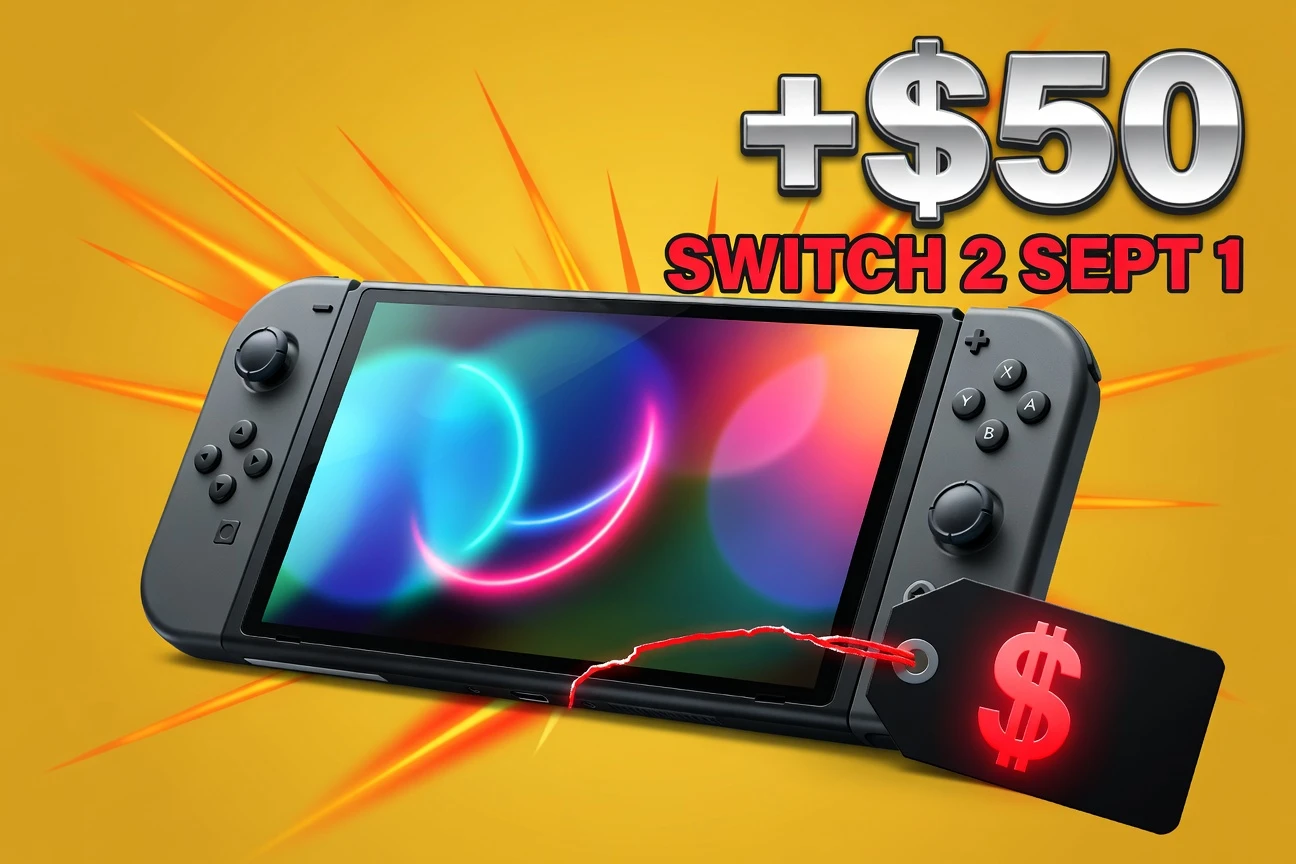
Nintendo Switch 2 Jumps To $499 On September 1 In Global Hike

Nintendo just sold a record 19.86 million Switch 2 consoles in 12 months. Then it raised the price by $50.
The Kyoto company confirmed on May 8, 2026 that the U.S. MSRP of the Switch 2 jumps from $449.99 to $499.99 on September 1. Canada moves from CA$629.99 to CA$679.99. Europe goes from €469.99 to €499.99 on the My Nintendo Store. Japan’s Japanese-language model gets the steepest hike, ¥49,980 to ¥59,980, and the increase there lands much earlier, on May 25. President Shuntaro Furukawa apologized in writing.
That’s the news. The bigger story is what Nintendo’s own forecast says about the next 12 months.
The $50 Decision That Shouldn’t Have Happened This Year
Console makers do not normally raise prices on a product still in its first 12 months of life. Sony broke that rule in March. Nintendo just broke it harder. The Nintendo Co., Ltd. global pricing notice dated May 8, 2026 confirmed the move applies across the U.S., Canada, Europe, and Japan, with Latin America to follow.
Nintendo of America’s separate statement was tighter and gentler. The Nintendo of America price revision notice blamed “various changes in market conditions, which are expected to extend over the medium to long term.” That is corporate speak for memory chips, tariffs, and a yen that won’t stop sliding.
The console launched on June 5, 2025 at $449.99. It will be 15 months old when the new tag arrives.
What’s Going Up, Where, And When
Five regions, two effective dates, one console family. The Japanese rollout starts first because Nintendo’s home market is also where the yen pain is heaviest.
| Region | Old Price | New Price | Effective |
|---|---|---|---|
| United States | $449.99 | $499.99 | September 1, 2026 |
| Canada | CA$629.99 | CA$679.99 | September 1, 2026 |
| Europe (My Nintendo Store) | €469.99 | €499.99 | September 1, 2026 |
| Japan (Japanese-language unit) | ¥49,980 | ¥59,980 | May 25, 2026 |
| Japan (Multi-language unit) | Unchanged | Unchanged | n/a |
The Multi-Language version sold through My Nintendo Store in Japan is the only Switch 2 SKU left untouched, a quirk that may matter to importers. Original Switch hardware in Japan is also going up on May 25, with the OLED model jumping ¥10,000 and the Switch Lite climbing roughly 36 percent.
Two Numbers That Refuse To Reconcile
Nintendo sold 19.86 million Switch 2 units in the fiscal year ended March 31, 2026. The company’s official forecast for the year ending March 31, 2027 is 16.50 million units. That is a 17 percent year-over-year contraction baked into the plan.
Second-year sales for a hit console almost always rise. The original Switch did 14.86 million in year one and 17.79 million in year two. The PS4 grew. The Wii grew. Nintendo is forecasting a Switch 2 that shrinks instead, by roughly 3.36 million units, while it raises the sticker.
The clock was ticking for Nintendo for months now. The impact is quite dramatic, as console sales usually go up in the second year, and not down as Nintendo predicts this time.
Those words came from Serkan Toto, chief executive of Tokyo-based consultancy Kantan Games, in remarks to CNBC after the earnings drop. Nintendo is the first major console maker in the modern era to deliberately price for less volume in year two of a hit platform.
The financial cost is on the books. Net sales for FY2027 are forecast at 2.05 trillion yen, an 11.4 percent decline. Net profit is guided to 310 billion yen, a 27 percent drop, with roughly 100 billion yen of that hit attributed by Nintendo to memory pricing and tariffs.
Why Memory Chips Are Doing Most Of The Damage
The Switch 2 ships with LPDDR5X system memory and UFS storage, both of which sit in the worst pocket of the current chip market. AI data centers in the United States are pulling DRAM and NAND wafer output toward server-grade products, leaving consumer hardware to fight over what’s left at much higher prices.
TrendForce’s first-quarter 2026 memory contract pricing analysis put the pressure into specific numbers. Conventional DRAM contract prices were forecast to rise 55 to 60 percent quarter over quarter in Q1 2026 alone. NAND Flash contracts climbed 33 to 38 percent. Server DRAM jumped more than 60 percent. Nintendo competes for the same pool of wafers Microsoft, Amazon, and Google are buying for AI inference.
The stat block below makes the squeeze plain.
- 55 to 60%: forecast quarterly increase in conventional DRAM contract prices in Q1 2026
- 33 to 38%: forecast quarterly increase in NAND Flash contract prices in Q1 2026
- 40%+: client SSD price increase, the largest among NAND categories
- 100 billion yen: Nintendo’s stated FY2027 profit hit from components and tariffs combined
The Tariff Subplot Furukawa Won’t Soften
The Switch 2 is assembled mostly in Vietnam and Cambodia, two countries that spent 2025 inside President Donald Trump’s tariff carousel. Nintendo paused U.S. pre-orders in April 2025 after a sudden tariff escalation, then resumed them once the U.S. Trade Representative’s October 2025 Vietnam framework deal brought rates back to a workable band. Workable, not free.
Furukawa was unusually direct about how Nintendo handles the bill. “Our basic policy is to recognize tariffs as a cost and pass them on to prices as much as possible, not just in the US,” the president said in his post-earnings briefing, comments first transcribed by Tom’s Guide. He paired that with a warning that the company is procuring memory under medium and long-term plans into a market he called “very volatile.”
Translation: customers fund the squeeze.
Sony Already Walked This Road
Nintendo’s price hike does not exist in isolation. Sony has hiked the PlayStation 5 twice in twelve months, the second time pushing the standard PS5 to $649.99 in April 2026. The PS5 Pro now sits at $899.99. Microsoft moved Xbox prices up too. Our coverage of the 46% PS5 sales drop tied to back-to-back hikes and the memory shortage showed what happens when the bill lands on the consumer.
Sony also flagged that the PS6 launch is now hostage to the same chip economics. Hiroki Totoki told investors he could not commit to a date or a price, a stance our story on Sony’s undecided PS6 pricing during the DRAM crisis covered in detail. The platform-holder script for late 2026 is now the same in Tokyo, Kyoto, and Redmond.
- PS5 standard: $649.99 after April 2026 hike, up from $499.99 at U.S. launch
- PS5 Pro: $899.99, the most expensive standard home console on the market
- Switch 2: $499.99 from September 1, 2026, up 11.1 percent from launch
- Original Switch (Japan only): ¥32,978 to ¥43,980, a 33 percent jump effective May 25
What This Means If You’re Buying One
The buying calendar is the most concrete part of this story. Customers in the U.S., Canada, and Europe have until August 31, 2026 to buy at the old MSRP. Customers in Japan have until May 24. After that, the increase is structural. Nintendo’s language about “medium to long-term” market conditions is not a hint that prices come back down in 2027.
Bundle math matters too. The Mario Kart World hardware bundle and any retailer-specific Switch 2 packs sold before September 1 lock in the lower base price plus whatever software discount the bundle carries. Standalone consoles will be the same hardware on September 2 with a $50 worse receipt.
The accessory layer was already revised. Nintendo bumped the Joy-Con 2 (L/R) set on Nintendo’s official store to $99.99 in the August 2025 round, and the Pro Controller climbed in the same wave. The September 2026 hike is the console catching up to its own peripherals.
If your household needs two consoles, buy them now. If you have any reason to delay until October, you will pay roughly 10 to 12 percent more, depending on region and tax. Resale values for sealed launch-window stock will likely firm up the moment the new MSRP takes effect, the same pattern that played out in Japan after Sony’s PS5 hikes.
The Switch 2 game library, by contrast, is not getting a price revision in this round. Software is the relief valve Nintendo plans to use to keep momentum. Yoshi and the Mysterious Book ships in May, Star Fox arrives June 25, and Splatoon Raiders lands in July, with Pokémon titles in 2027. None of those carry an announced premium over standard Switch 2 software pricing.
Frequently Asked Questions
Will My Pre-Order At The Old Price Still Ship For $449.99?
Yes, if it was placed and confirmed before September 1, 2026 in the U.S., Canada, and Europe, or before May 25 in Japan. Nintendo’s price revision applies to MSRP from those effective dates forward, not to in-flight orders that have already cleared payment. Confirm the price line on your order summary now and screenshot it. Retailers like GameStop, Best Buy, and Amazon honor the captured price barring stock cancellation.
Are Switch 2 Game Prices Also Going Up On September 1?
No. The May 8 price revision covers hardware (Switch 2 system, Switch family in Japan) and Nintendo Switch Online subscriptions in Japan and South Korea. First-party software MSRPs were not revised. Star Fox stays at $49.99 digital and $59.99 physical for its June 25 launch. Third-party publishers set their own pricing and could move independently, but Nintendo’s catalog has not been repriced in this round.
Does The Hike Apply To Switch 2 Bundles And The OLED Successor?
The hike applies to standalone Switch 2 hardware MSRP. Bundles tracked at retail will reprice from September 1 to reflect the new console floor, though some retailers may run promo pricing into the holiday window. Nintendo has not announced a Switch 2 OLED. The original Switch OLED is repricing in Japan only, jumping from ¥37,980 to ¥47,980 on May 25, a 26 percent increase that signals where any future Switch 2 OLED tag would land.
Why Is Japan Getting Hit Earlier Than The U.S.?
Japan moves on May 25 because the yen has weakened against the dollar to roughly the 150-yen level Nintendo is using as its FY2027 planning rate, and because component costs are billed in dollars while domestic revenue is in yen. The U.S., Canada, and Europe transition on September 1 to give North American and European retailers a normal buying window through summer. The earlier Japan date concentrates the FX hit faster in the home market.
The Switch 2 is still the fastest-selling Nintendo console ever, with software attach rates that suggest the install base is engaged rather than parked. The price hike is a confession about the supply chain, not the product. The next four months will tell us whether buyers reward the apology with one last rush at $449.99, or whether the volume decline Nintendo has already written into its forecast turns out to be conservative.


D&D Bets Big on WoW and Star Wars to Grow Its Tables

Game Pass Drops Celeste and Crusader Kings on First Net-Loss Day

Gemini Breaks Basic Calls on Foldable Phones in Android Auto

Citadel Clears AI Fund Overhang While Crypto Stays Flat

Morgan Stanley Staking ETPs Crack Open Crypto Yield for Wealth Clients

Snapdragon Price Hike Forces Premium Buyers Toward Last Year’s Phones

Croc 2 Remaster Unlocks Argonaut’s Full Revival Path

Scale AI Names Google Cloud Veteran deSouza CEO for Enterprise Push

Epic Store Hits Brazilian iPhones Amid Apple’s Familiar Friction Play

LORDNINE Helena Server Races Players Toward Real USDT Rewards

Fable 5 and Mythos 5 Return as US Lifts Anthropic Export Controls

SpaceX’s Google Deal Turns a Rocket Company Into a Cloud Landlord

Oracle Cuts 21,000 Jobs in a Year, Cites AI in 10-K Filing

CD Projekt Red Co-CEO: Redemption Arc Isn’t Done, Witcher 4 in 2027

XPL Rallies 30% Ahead of Plasma One Card Tier Launch

DGO App Brings Rs 549 Mobile Pass for FIFA World Cup 2026 in Nepal

Google Search Profiles Build a Follow Graph Inside Discover

Moonshot AI Targets $30 Billion in China’s Fastest AI Funding Sprint

Microsoft Xbox Layoffs Start in July as Sharma Slams 3% Margin

Oppo’s ColorOS 17 Eligibility List Leaves A-Series Buyers Behind
-
 AI1 month ago
Fable 5 and Mythos 5 Return as US Lifts Anthropic Export Controls
-
 AI2 months ago
SpaceX’s Google Deal Turns a Rocket Company Into a Cloud Landlord
-
 AI1 month ago
Oracle Cuts 21,000 Jobs in a Year, Cites AI in 10-K Filing
-
 GAMING1 month ago
CD Projekt Red Co-CEO: Redemption Arc Isn’t Done, Witcher 4 in 2027
-
 CRYPTO2 months ago
XPL Rallies 30% Ahead of Plasma One Card Tier Launch
-
 APPS2 months ago
DGO App Brings Rs 549 Mobile Pass for FIFA World Cup 2026 in Nepal
-
 NEWS2 months ago
Google Search Profiles Build a Follow Graph Inside Discover
-
 AI2 months ago
Moonshot AI Targets $30 Billion in China’s Fastest AI Funding Sprint