
NEWS
iPhone 18 Pro Price Freeze Leaves Budget Buyers Waiting

The iPhone 18 Pro price is the number Apple, the Cupertino phone maker, has to make look boring. GF Securities analyst Jeff Pu expects the U.S. starting point to stay near $1,099 even as mobile memory prices surge, which would protect the headline price while turning the Pro model into Apple’s holiday floor.
That would not make the fall iPhone lineup cheaper. If the launch split reported by Bloomberg journalist Mark Gurman holds, the standard iPhone 18 and iPhone 18e wait until spring 2027, leaving shoppers who want a brand-new iPhone before the holidays with Pro models or the first foldable.
The $1,099 Line Apple Wants to Hold
The current reference point is public. On Apple’s live iPhone 17 Pro store page, the 6.3-inch 256GB model starts at $1,099, and that price has become the benchmark for Pu’s reported call.
The comparison shoppers will see is awkward. Samsung Electronics, the South Korean phone maker, already lists the 256GB Galaxy S26 at $899.99 and the Galaxy S26+ at $1,099.99, while the Ultra begins at $1,299.99 on Samsung’s Galaxy S26 launch sheet.
| Device | Entry Price Signal | Memory Or Storage Context | Buyer Meaning |
|---|---|---|---|
| iPhone 17 Pro | Confirmed from $1,099 | 256GB base storage | Apple’s current Pro benchmark |
| iPhone 18 Pro | Rumored near $1,099 if Pu is right | Expected to keep a premium memory load | Flat sticker, margin pressure elsewhere |
| Galaxy S26 | Confirmed $899.99 for 256GB | Base flagship tier | Android price pressure is already visible |
| Galaxy S26 Ultra | Confirmed from $1,299.99 | 256GB, 512GB, and 1TB options | Premium buyers remain the protected group |
Memory Became the New Phone Tax
Contract Prices
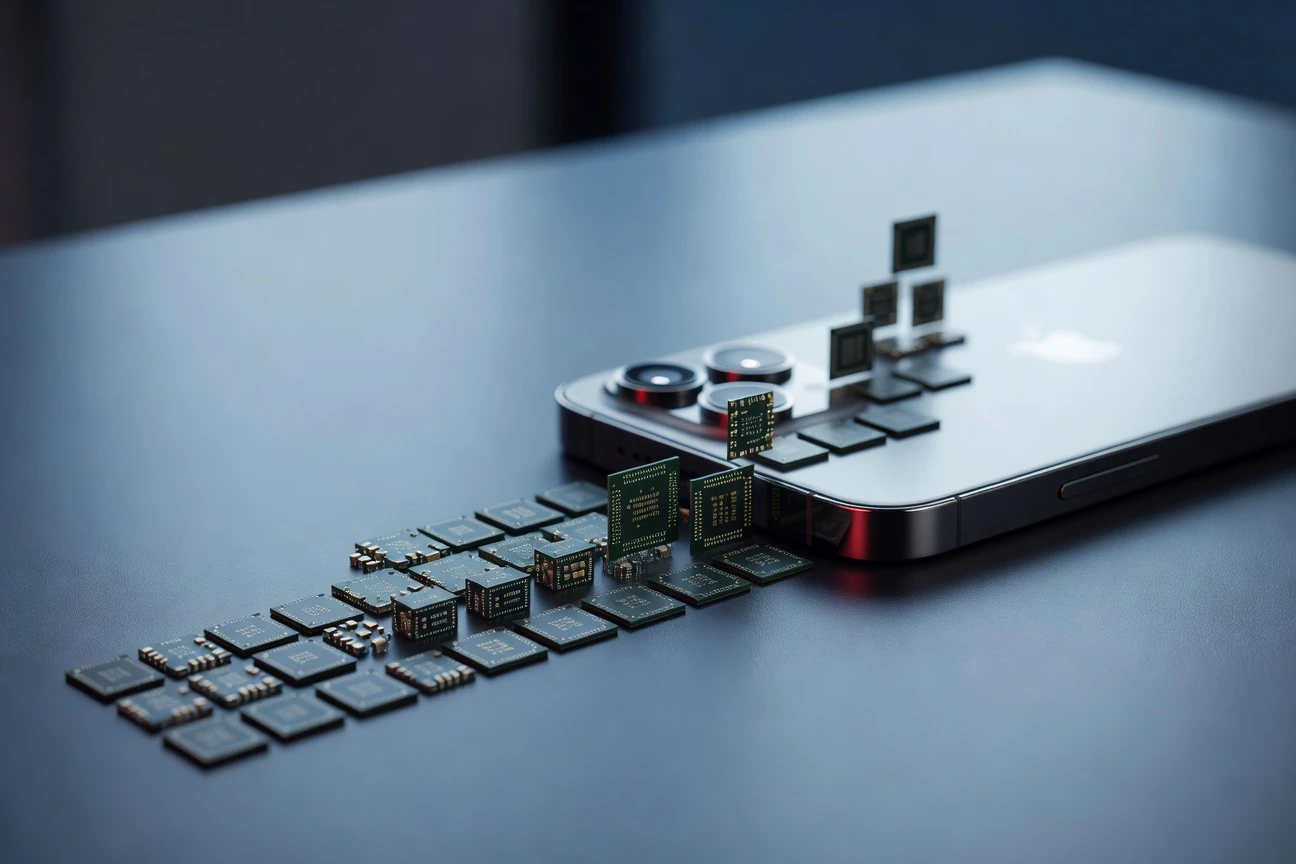
The squeeze is centered on Dynamic Random Access Memory (DRAM, the working memory chips phones need while apps and AI features run) and NAND Flash (storage chips that keep photos, apps, and system files after power is off). TrendForce, the Taiwan-based market researcher, said mobile DRAM contract prices in the second quarter are still climbing hard, with low-power double data rate 5X (LPDDR5X, the mobile DRAM used in premium phones) up an estimated 78% to 83% quarter over quarter.
Shipment Pressure
International Data Corporation, the market intelligence firm, has already seen the hit in shipments. Its first-quarter smartphone tracker put global shipments at 293.8 million units, down 2.9% from a year earlier, with IDC saying limited memory supply is pushing brands toward shipment cuts and price increases.
Premium Shelter
Gartner, the business research firm, is blunter about the consumer bill. Its memory cost device forecast projects smartphone prices rising 13% from 2025 levels as memory and solid-state drive (SSD, storage hardware used in phones and PCs) prices surge.
- 78% to 83% estimated second-quarter LPDDR5X price increase, according to TrendForce.
- 293.8 million smartphones shipped worldwide in the first quarter, according to IDC.
- 13% projected smartphone price increase from 2025 levels, according to Gartner.
The Holiday Shelf Gets More Expensive
The launch calendar matters as much as the sticker. A normal September iPhone event lets buyers step down from Pro to the standard model if the top tier feels too expensive.
This cycle may not offer that escape hatch. The reported split would put the Pro phones and foldable on shelves first, with the lower-priced models following months later.
Hardware choices also point upward. Prior Oton Technology coverage of iPhone 18 Pro LTPO+ display suppliers showed Samsung Display and LG Display, the Korean panel suppliers, winning the premium screen work while BOE, the Chinese display maker, sat out that tier.
Low-temperature polycrystalline oxide plus (LTPO+, a display backplane that helps manage refresh rates) is not the part a company uses to build a cheap phone. It fits a Pro-only holiday shelf where Apple can defend the first price and still sell the upgrade story.
- Holiday buyers who want the newest device may face Pro pricing by default.
- Budget buyers may need to choose an older iPhone, a carrier deal, or a longer wait.
- Apple can keep the entry Pro price familiar while letting timing do some of the upselling.
Apple’s Cushion Starts With Pro Demand
Apple has more room to absorb a memory shock than most phone brands because its demand has shifted toward expensive models. In its fiscal second-quarter Form 10-Q filing, the company said iPhone net sales rose 22% to $56.994 billion for the quarter and 23% for the first six months.
The filing added the line that matters for pricing: the increase came from higher net sales of Pro models. Product gross margin also improved to 38.7% from 35.9% a year earlier, even though Apple warned in the same filing that future margins face volatility and downward pressure.
Tim Cook, Apple’s chief executive, had a strong backdrop for the price decision. In its March-quarter earnings release, Apple posted $111.2 billion in revenue and said iPhone revenue set a March-quarter record.
The Parts Bill Can Move Around
A steady front price does not require a steady parts bill. It requires enough flexibility to move pain among storage tiers, promotions, supplier terms, and component choices.
Taiwan Semiconductor Manufacturing Co. (TSMC, Apple’s key chip foundry partner) said in its annual meeting business report that its 2-nanometer technology entered high volume manufacturing in the fourth quarter of 2025 and should ramp quickly this year. If Apple’s next A-series Pro chip uses that node, the silicon story gets stronger, but the cost base stays heavy.
The memory shock is also crossing categories. Sony’s console planning has run into the same problem, as Oton Technology noted in its coverage of Sony’s DRAM-linked PS6 pricing caution.
Buyers Should Read Beyond the First Price
For shoppers, the trick is separating the headline from the checkout page. A flat 256GB Pro price would be good news only if the 512GB and 1TB jumps stay close to the old pattern.
Carrier offers can hide the move. A higher device price can look painless when bill credits run for 24 or 36 months, but those credits often require a specific plan, a trade-in, and staying with the carrier for the full term.
The delayed cheaper models create another trap. Waiting until spring 2027 may save money, but only if Apple does not pass more memory cost into the standard model when it arrives.
Before pre-ordering, buyers should check four lines instead of one:
- The 256GB price, because that is the number Apple will market.
- The storage upgrade gap, because that is where cost can quietly move.
- The carrier credit terms, because discounts can disappear if service changes.
- The price of remaining iPhone 17 Pro stock, because older inventory may become the better deal.
The Price Freeze Carries a Timing Bet
For Apple, a steady Pro entry price would keep the upgrade story simple while the supply chain is noisy. For shoppers, September becomes a timing question: pay Pro money now, wait for the standard model, or buy last year’s hardware while discounts still exist.
If Apple keeps the 256GB Pro tier steady and resists storage-tier hikes, the next Pro iPhone will look like the rare flagship that dodged the memory tax. If the higher tiers climb or the delayed models arrive more expensive in spring 2027, the freeze will have been a price gate, not a discount.


AMD’s Data Center Revenue Jumps 57% as Its Stock Bets on Execution

Microsoft Loses an Xbox Lawsuit Just as Sony Kills Physical Discs

Bethesda Union Says HR Tore Down Its Memorial for Laid-Off Staff

Google Pixel 11 Pro Fold Price Leaks Point Toward a $2,000 Foldable

Smart Scales Promise Lab-Grade Body Fat Numbers, and the Science Pushes Back

Amap’s Ride-Hailing Hits 1,000 Cities Amid Security Warnings

Ulys’s Automatic Toll Billing Draws Scammers to 7 Million Drivers

Google’s Veo AI Video Tools Threaten VFX Jobs Far Beyond Hollywood

Music Industry Unveils AI Labels, but Streaming Giants Haven’t Signed On

Apple Sues OpenAI and Two Ex-Employees Over Stolen Trade Secrets

Microsoft Xbox Layoffs Start in July as Sharma Slams 3% Margin

Google Search Profiles Build a Follow Graph Inside Discover

Oppo’s ColorOS 17 Eligibility List Leaves A-Series Buyers Behind

Oracle Cuts 21,000 Jobs in a Year, Cites AI in 10-K Filing

Google DeepMind and A24 Sign $75 Million AI Partnership Deal

OCC Issues AML Consent Order Against Wise and Crypto.com Sponsor Bank

DGO App Brings Rs 549 Mobile Pass for FIFA World Cup 2026 in Nepal

Anthropic Tells Senators Alibaba Ran the Largest Claude Distillation Attack

Apple Strikes Preliminary Deal For Intel To Make iPhone And Mac Chips

Google Home Spring Update Adds Gemini 3.1 And Old Nest Cam AI
-
 GAMING1 month ago
Microsoft Xbox Layoffs Start in July as Sharma Slams 3% Margin
-
 NEWS1 month ago
Google Search Profiles Build a Follow Graph Inside Discover
-
 NEWS1 month ago
Oppo’s ColorOS 17 Eligibility List Leaves A-Series Buyers Behind
-
 AI3 weeks ago
Oracle Cuts 21,000 Jobs in a Year, Cites AI in 10-K Filing
-
 AI3 weeks ago
Google DeepMind and A24 Sign $75 Million AI Partnership Deal
-
 CRYPTO2 months ago
OCC Issues AML Consent Order Against Wise and Crypto.com Sponsor Bank
-
 APPS1 month ago
DGO App Brings Rs 549 Mobile Pass for FIFA World Cup 2026 in Nepal
-
 AI3 weeks ago
Anthropic Tells Senators Alibaba Ran the Largest Claude Distillation Attack