
GAMING
Roblox Facial Recognition Rollout in June Follows $12M Nevada Settlement

Roblox is rolling out facial recognition age verification and chat restrictions worldwide starting June 2026, the direct consequence of a $12 million settlement with Nevada’s Attorney General in April. The platform’s 88 million daily users under age 13 will face new content gates and communication limits, but parents and security researchers question whether the technical controls can outpace determined predators who have spent years mapping the platform’s social architecture.
The settlement marks the first time a U.S. state has extracted both financial penalties and binding operational changes from a major gaming platform over child safety. Nevada’s agreement serves as the template Roblox will deploy globally, turning a regional enforcement action into a worldwide policy shift that affects every one of the platform’s 380 million monthly active users.
What the June Rollout Actually Changes
Roblox is splitting its user base into two age-gated tiers. Roblox Kids, for users 5 to 8 years old, restricts access to experiences rated “minimal or mild” in the platform’s content maturity system. Chat is disabled by default unless a parent explicitly enables it through the new parental control dashboard. Roblox Select, for ages 9 to 15, allows “moderate” content and introduces chat gradually with automated moderation filters that flag attempts to share personal information or move conversations off-platform.
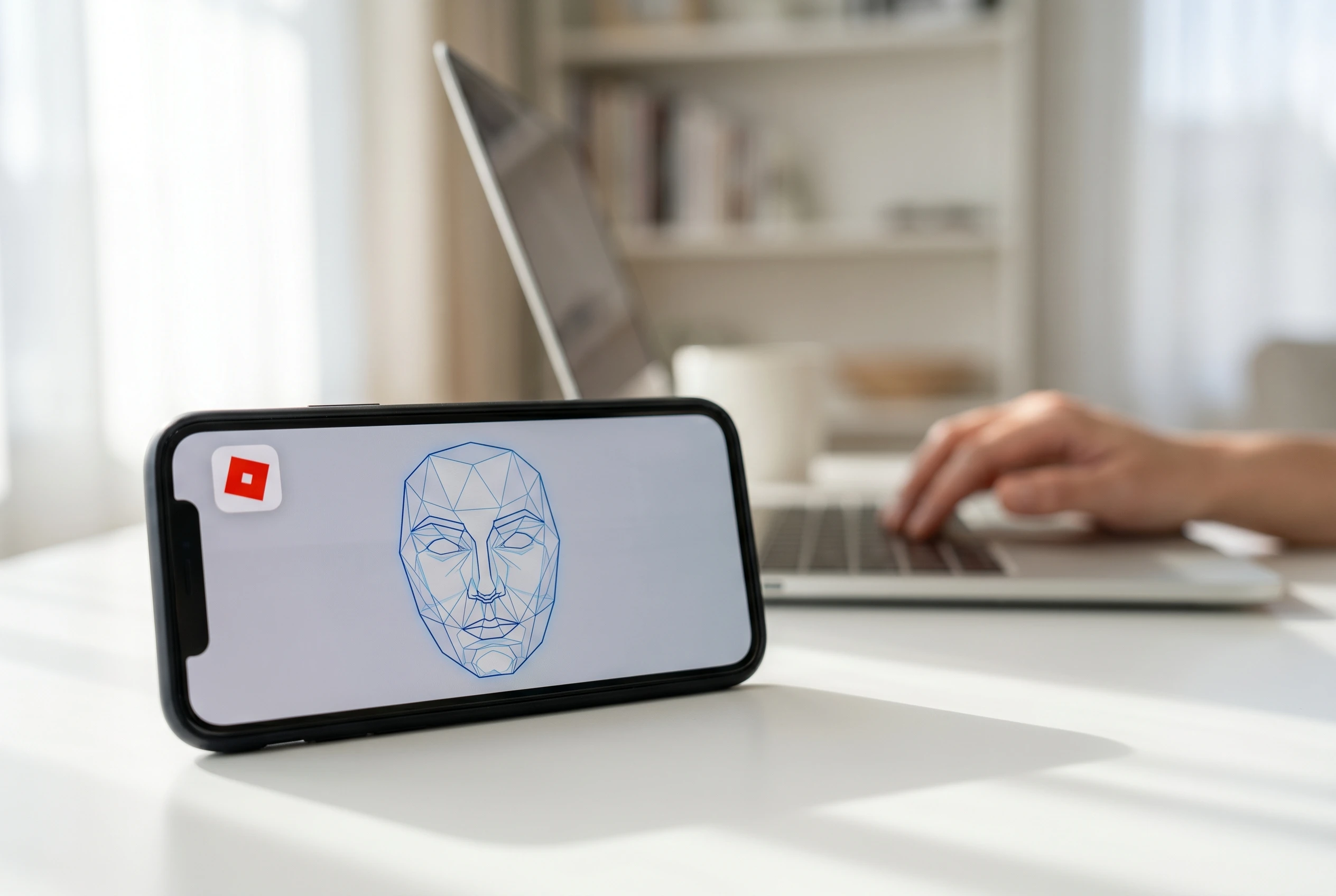
The age verification mechanism relies on facial recognition technology provided by Yoti, a UK-based identity verification firm Roblox has used since 2023 for adult age checks. Eliza Jacobs, Roblox’s Vice President of Safety, explained the liveness detection layer in a May 27 interview with Las Vegas station KLAS: “You have to move your head left and right. That is really to show that there’s a real person on the other end of it. You’re not holding up a photo. It’s actually really hard to fake ears and where your ears are. That’s part of our fraud checks.”
Existing accounts created before June will be prompted to verify their age when they next log in. Users who decline verification will default to the most restrictive tier, Roblox Kids, regardless of the birthdate on file. The company has not disclosed what happens to accounts that fail the facial scan multiple times, though internal documentation reviewed by Bloomberg in April indicated a three-strike system before manual review.
The Nevada Settlement That Forced the Issue
Nevada Attorney General Aaron Ford filed a consumer protection complaint against Roblox Corporation in February 2026, alleging the platform had violated the state’s Unfair and Deceptive Trade Practices Act by marketing itself as safe for children while failing to prevent grooming, sexual solicitation, and exposure to adult content. The complaint cited 47 documented cases between 2022 and 2025 in which Nevada minors were contacted by adults on Roblox, with 11 cases escalating to off-platform contact and three resulting in physical meetings.
The $12 million settlement, finalized April 18, splits the penalty into two tranches. $7 million goes directly to Nevada’s general fund, while $5 million funds youth safety programs administered by the Boys & Girls Clubs of Southern Nevada and the Nevada Coalition to End Domestic and Sexual Violence. The agreement also requires Roblox to submit quarterly compliance reports to the AG’s office through April 2029, detailing the number of accounts flagged for suspicious adult-child interactions, the response time for moderator review, and the percentage of flagged accounts that result in permanent bans.
Ford’s office framed the settlement as a national model. “Our hope for this agreement with Nevada is it can serve as a model, not just for us, but really for the rest of the internet as well,” Jacobs said, echoing language from the AG’s press release. Texas and Kentucky have since filed similar complaints, both citing Nevada’s settlement terms as the baseline for their demands.
Why Parents Remain Skeptical
Kehaulani Oue, a Las Vegas mother interviewed by KLAS on May 27, does not allow her daughter to play Roblox or any online multiplayer game. “They can get around it,” she said, referring to the new age verification system. “I don’t think it’s going to help because of AI. You won’t know. How are they going to protect these kids?”
Oue’s concern reflects a broader distrust of technical safeguards among parents who have watched platforms promise and fail to deliver child safety for over a decade. The facial recognition system Roblox is deploying has known failure modes. A 2023 audit by the UK’s Information Commissioner’s Office found that Yoti’s age estimation model, which Roblox uses, had a 3.2% false acceptance rate for users attempting to verify as adults when they were actually minors. The inverse error rate, falsely rejecting legitimate adult users, was 8.7%. Roblox has not published accuracy data for the child-tier verification it will deploy in June.
Natasha Peavey, another Las Vegas parent with three sons, takes a graduated approach. Her 5-year-old is banned from Roblox entirely. Her nearly 11-year-old plays under supervision. “With AI, I think that there’s always the possibility of getting around that,” Peavey told KLAS. “Someone that’s going to be a predator on Roblox will find ways around it, but I think it’s a good start.”
The “good start” framing is common among parents who feel they have no better alternative. Roblox’s network effects are so strong that opting out means social isolation for children whose peer groups organize playdates and school projects inside the platform. A February 2026 survey by Common Sense Media found that 68% of U.S. parents with children ages 9 to 12 felt “somewhat or very uncomfortable” with their child’s Roblox use, but 71% of those same parents allowed access anyway because “my child’s friends all use it.”
The Predator Playbook Roblox Is Trying to Disrupt
Court filings from the Nevada case and similar litigation in Texas reveal a consistent grooming pattern. Predators create accounts with child-friendly usernames and avatars, join popular experiences like “Adopt Me!” or “Brookhaven,” and initiate contact through in-game proximity chat or the platform’s direct messaging system. Early conversations stay within Roblox’s moderation boundaries, discussing in-game items or offering to help with quests.
The pivot happens when the predator suggests moving to a platform with less moderation. Discord is the most common destination, mentioned in 34 of the 47 Nevada cases. Snapchat and Instagram follow. The predator offers a compelling reason to switch: “Roblox chat is laggy, add me on Discord so we can voice chat during raids,” or “I’m giving away Robux codes on my Instagram, follow me.” Once off-platform, the predator has access to a child’s real name, location metadata from photos, and a communication channel Roblox cannot monitor.
Roblox’s June changes target this funnel at two points. The chat restrictions for Roblox Kids eliminate the initial contact vector entirely. For Roblox Select users, the automated filters flag messages containing common platform names (Discord, Snap, Insta, TikTok) and phrases associated with off-platform migration (“add me,” “DM me,” “follow me”). Flagged conversations trigger a 15-minute chat suspension for the sender and a notification to the recipient’s parent if parental controls are enabled.
The system’s effectiveness depends on how quickly predators adapt their language. A March 2026 analysis by the Stanford Internet Observatory found that moderation filters on platforms like Roblox and Fortnite typically achieve 70% to 80% accuracy in the first 90 days after deployment, then drop to 50% to 60% as users develop evasion techniques. Common workarounds include character substitution (“D1sc0rd”), phonetic spelling (“diss cord”), and coded phrases (“add me on the purple app”).
Facial Recognition’s Privacy Trade-Off
The facial recognition requirement introduces a new risk: biometric data collection from millions of children. Roblox’s privacy policy, updated May 1, states that facial scans are “processed in real time and not stored” by Roblox itself. Yoti, the verification provider, retains a mathematical representation of the face (a “template”) for fraud prevention but claims it deletes the original image within 60 seconds of capture.
Privacy advocates have challenged both claims. The Electronic Frontier Foundation filed a comment with the Federal Trade Commission in April arguing that “real-time processing” is a distinction without a difference if the scan is transmitted to a third party’s servers, even briefly. The template Yoti retains, while not a photograph, can be reverse-engineered with sufficient computing power to produce a recognizable face, according to a 2024 paper by researchers at the University of Toronto.
Illinois, Texas, and Washington have biometric privacy laws that require explicit parental consent before collecting a child’s facial data. Roblox’s updated terms of service include a consent checkbox for parents, but the consent is bundled with the broader terms of service, not presented as a separate decision. A class-action lawsuit filed in Illinois state court on May 15 alleges this bundling violates the state’s Biometric Information Privacy Act, which requires “separate written release” for biometric data.
What Happens When the Lockup Expires
The Nevada settlement includes a three-year monitoring period that ends in April 2029. After that date, Roblox is no longer required to submit compliance reports or maintain the specific moderation staffing levels the agreement mandates (one human moderator for every 50,000 daily active users under age 13, a ratio that currently requires Roblox to employ approximately 1,760 moderators).
Roblox’s public statements emphasize that the June changes are “permanent commitments, not settlement-driven minimums.” The company’s 2025 annual report, filed with the SEC in March, allocated $210 million for trust and safety operations in 2026, a 34% increase over 2025. But the report also noted that “regulatory compliance costs may decrease materially after 2029 as certain settlement obligations expire.”
The financial incentive to scale back is real. Roblox’s moderation cost per user is approximately $2.38 annually, according to a February analysis by Bernstein Research. The company’s average revenue per daily active user is $4.12. Moderation consumes 58% of the revenue each user generates, a ratio that makes Roblox one of the least profitable major social platforms on a per-user basis. Meta’s moderation cost per user, by comparison, is $0.87.
If Roblox reduces moderation staffing after 2029 to match industry averages, the response time for flagged accounts would increase from the current 12-minute median to an estimated 45 minutes, based on staffing models used by Discord and Snapchat. That gap is long enough for a predator to complete the off-platform migration pitch and delete the evidence before a moderator reviews the conversation.
The Litigation Pipeline That Could Force More Changes
Texas Attorney General Ken Paxton filed a complaint against Roblox on May 20, alleging violations of the state’s Securing Children Online through Parental Empowerment (SCOPE) Act, which took effect in September 2024. The Texas complaint goes further than Nevada’s, demanding that Roblox implement “default-off” social features for all users under 16, meaning no chat, no friend requests, and no user-generated content uploads unless a parent explicitly enables each feature through a verified parental account.
Kentucky’s lawsuit, filed May 22, focuses on Roblox’s in-game economy. The complaint alleges that the platform’s virtual currency, Robux, is used to facilitate child exploitation by allowing predators to send children gifts (in-game items purchased with Robux) as grooming tools. Kentucky is demanding that Roblox disable Robux gifting between users who are not mutual friends and implement a 72-hour waiting period for new friendships before gifting is enabled, similar to restrictions Steam uses for its trading system.
Both cases are in early procedural stages, but if either state wins, the remedies would require technical changes that go beyond what Nevada extracted. Roblox’s June rollout does not address gifting restrictions or default-off social features. The company’s legal strategy appears to be implementing the Nevada baseline globally while fighting the more aggressive demands in Texas and Kentucky, betting that courts will view the June changes as evidence of good-faith compliance.
Frequently Asked Questions
When exactly do the new Roblox safety features go live?
Roblox begins the global rollout in early June 2026. The company has not specified an exact date, but the Nevada settlement requires full deployment by June 30. Existing users will see prompts to verify their age when they log in after the rollout begins.
Can my child still play Roblox if I don’t want to use facial recognition?
Yes, but the account will default to the most restrictive tier, Roblox Kids, which limits access to minimal-content experiences and disables chat by default. Users who decline facial verification cannot access moderate or mature-rated experiences, even if their account birthdate indicates they are old enough.
What happens to the facial scan data Roblox collects?
Roblox states that facial images are processed in real time by its verification partner, Yoti, and are not stored by Roblox. Yoti retains a mathematical template of the face for fraud prevention but claims it deletes the original image within 60 seconds. Privacy advocates have raised concerns about whether the template can be reverse-engineered.
Does the $12 million settlement money go to affected families?
No. $7 million goes to Nevada’s general fund, and $5 million funds youth safety programs run by the Boys & Girls Clubs of Southern Nevada and the Nevada Coalition to End Domestic and Sexual Violence. The settlement does not include direct compensation for families whose children were harmed on the platform.
Are other states pursuing similar cases against Roblox?
Yes. Texas filed a complaint on May 20, 2026, demanding stricter default-off social features for users under 16. Kentucky filed on May 22, focusing on restrictions for Roblox’s in-game currency gifting system. Both cases are in early stages.
Can predators bypass the new chat filters?
Likely, over time. Moderation filters on gaming platforms typically achieve 70% to 80% accuracy in the first 90 days, then drop to 50% to 60% as users develop evasion techniques like character substitution and coded phrases. Roblox will need to continuously update its filters to maintain effectiveness.
What is the difference between Roblox Kids and Roblox Select?
Roblox Kids is for users 5 to 8 years old, restricts content to minimal or mild ratings, and disables chat by default. Roblox Select is for users 9 to 15, allows moderate-rated content, and enables chat with automated moderation filters that flag attempts to share personal information or move conversations off-platform.


AMD’s Data Center Revenue Jumps 57% as Its Stock Bets on Execution

Microsoft Loses an Xbox Lawsuit Just as Sony Kills Physical Discs

Bethesda Union Says HR Tore Down Its Memorial for Laid-Off Staff

Google Pixel 11 Pro Fold Price Leaks Point Toward a $2,000 Foldable

Smart Scales Promise Lab-Grade Body Fat Numbers, and the Science Pushes Back

Amap’s Ride-Hailing Hits 1,000 Cities Amid Security Warnings

Ulys’s Automatic Toll Billing Draws Scammers to 7 Million Drivers

Google’s Veo AI Video Tools Threaten VFX Jobs Far Beyond Hollywood

Music Industry Unveils AI Labels, but Streaming Giants Haven’t Signed On

Apple Sues OpenAI and Two Ex-Employees Over Stolen Trade Secrets

Microsoft Xbox Layoffs Start in July as Sharma Slams 3% Margin

Google Search Profiles Build a Follow Graph Inside Discover

Oppo’s ColorOS 17 Eligibility List Leaves A-Series Buyers Behind

Oracle Cuts 21,000 Jobs in a Year, Cites AI in 10-K Filing

Google DeepMind and A24 Sign $75 Million AI Partnership Deal

OCC Issues AML Consent Order Against Wise and Crypto.com Sponsor Bank

DGO App Brings Rs 549 Mobile Pass for FIFA World Cup 2026 in Nepal

Anthropic Tells Senators Alibaba Ran the Largest Claude Distillation Attack

Meta’s Iris AI Chip Enters Production in September, Tests Clean

Apple Strikes Preliminary Deal For Intel To Make iPhone And Mac Chips
-
 GAMING1 month ago
Microsoft Xbox Layoffs Start in July as Sharma Slams 3% Margin
-
 NEWS1 month ago
Google Search Profiles Build a Follow Graph Inside Discover
-
 NEWS1 month ago
Oppo’s ColorOS 17 Eligibility List Leaves A-Series Buyers Behind
-
 AI3 weeks ago
Oracle Cuts 21,000 Jobs in a Year, Cites AI in 10-K Filing
-
 AI3 weeks ago
Google DeepMind and A24 Sign $75 Million AI Partnership Deal
-
 CRYPTO2 months ago
OCC Issues AML Consent Order Against Wise and Crypto.com Sponsor Bank
-
 APPS1 month ago
DGO App Brings Rs 549 Mobile Pass for FIFA World Cup 2026 in Nepal
-
 AI3 weeks ago
Anthropic Tells Senators Alibaba Ran the Largest Claude Distillation Attack