
NEWS
Russia’s Stolen Starlink Edge Gave Ukraine 400 Square Kilometers

When SpaceX, the aerospace company founded by Elon Musk, and Ukraine’s Ministry of Digital Affairs coordinated a mass deactivation of unauthorized satellite terminals in early February 2026, thousands of Russian-operated Starlink devices went dark across the front simultaneously. Within five days, Ukrainian forces recaptured 200 square kilometers. By early March, the confirmed total reached roughly 400 square kilometers, per a U.S. Defense Intelligence Agency assessment prepared for Congress, confirming Kyiv’s largest territorial gain since the summer of 2023.
That number has a longer backstory than most accounts credit. Russia spent much of 2025 smuggling an American satellite system into its own front lines, built a battlefield edge around it, then lost access in a coordinated shutdown, and spent the following months scrambling for replacements. The full sequence explains what happened in the Zaporizhzhia sector in February and why the summer of 2026 is being treated as the conflict’s next decisive communications window.
How Stolen Terminals Changed the Battlefield
Russia’s public position on Starlink was clear: commercial satellites supporting Ukraine were legitimate military targets. Electronic warfare units deployed across occupied territory to jam the service’s signals. The private reality was different.
Beginning in 2024, Russian companies started importing Starlink terminals through intermediaries in third countries, routed through markets including Dubai and Kazakhstan, then registered to front men and shipped to occupied Ukraine. SpaceX had geofenced its coverage to prevent connectivity inside Russian territory and had not sold terminals to Russia directly, but the system’s commercial architecture contained a gap. Ukraine’s Ministry of Digital Affairs confirmed the unauthorized terminal proliferation after Russian drones equipped with Starlink connections struck civilian infrastructure in late January, including an attack on a passenger train in Kharkiv Oblast that killed six people.
By the end of 2025, the terminals were doing more than providing connectivity. Starlink antennas had been integrated into Molniya-2 and BM-35 strike drones capable of hitting targets up to 80 kilometers behind Ukrainian defensive lines. The connections gave operators real-time high-definition video that existing Ukrainian electronic warfare systems could not reliably disrupt. Starlink’s Ka and Ku band transmissions use narrow beams requiring a jammer to be physically close or precisely aimed at the antenna. Drone strike accuracy improved. The volume of Russian strike activity grew with it.
- 80 km: the maximum strike range of Russian drones using Starlink-enabled satellite guidance, per Ukrainian defense reporting
- 11x: reduction in Russian military drone-feed streaming in the days immediately after the February cutoff, per Mykhailo Fedorov, Ukraine’s defense minister
- 400 sq km: Ukrainian territory recaptured following the Starlink shutdown, per the U.S. Defense Intelligence Agency
- 70,000+: Starlink terminals currently operated by Ukrainian forces, per SpaceNews
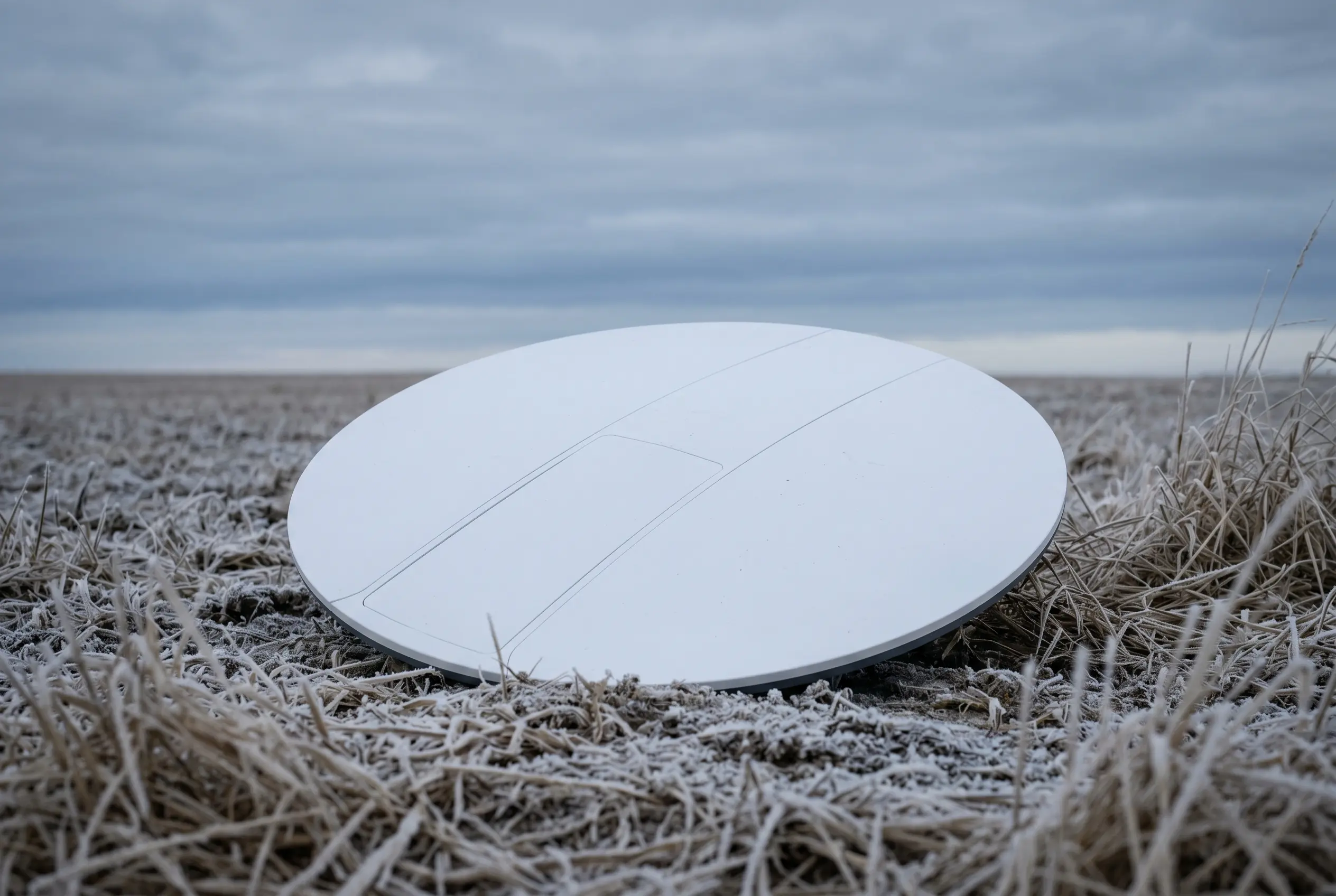
The Whitelist That Ended Russian Drone Dominance
Five Days in February
Ukraine asked SpaceX to act after the Kharkiv train strike. Mykhailo Fedorov, appointed Ukraine’s defense minister in January 2026, contacted SpaceX directly and the company moved. Serhii “Flash” Beskrestnov, a Ukrainian military radio technology expert serving as technology adviser to Fedorov, had been publicly tracking the proliferation for months, warning that Starlink-equipped Russian drones were becoming a communications catastrophe for Ukrainian defenses.
The solution was a registration whitelist rather than a geographic block. Ukraine’s Cabinet of Ministers adopted a resolution requiring all terminals on Ukrainian-controlled territory to be registered through one of two verified systems: DELTA, Ukraine’s military communications platform, or Diia, the civilian government portal. SpaceX deactivated every unregistered terminal. Adapt Institute’s March 2026 analysis of the counteroffensive placed the enforcement wave in early February, simultaneous across multiple front sectors.
Command Collapse on the Southern Front
Between February 11 and 15, Ukrainian forces recaptured 200 square kilometers in the fastest five-day advance the army had logged since June 2023. The largest gains came roughly 80 kilometers east of Zaporizhzhia city, where Russia had deployed undertrained reserve units after initial pressure near Huliaipole. Russian forces in that sector were operating on battlefield maps that no longer reflected current positions, having simultaneously lost their drone-observation layer and the ability to guide artillery accurately.
Without Starlink, they were essentially pushed back to Cold War-era communications.
That assessment came from a serviceman with the call sign Konosh, from Ukraine’s Tymur special unit of military intelligence. It matched what intercepted Russian communications showed: soldiers calling to abandon positions because they believed larger Ukrainian forces had broken through, when small groups were exploiting the gap with targeted rear strikes.
Russian troops who improvised workarounds made their situation worse. Satellite dishes repurposed as Wi-Fi bridges between units created radio signatures that Ukrainian surveillance could fix and pass to strike units. Andrey Medvedev, deputy chairman of the Moscow City Duma, acknowledged publicly that planned Russian strikes on Ukrainian targets had been aborted when terminal shutdowns disrupted the coordination required to execute them. By early March, confirmed Ukrainian territorial gains stood at 257 square kilometers, with the DIA’s later Congressional assessment placing the broader counteroffensive total at roughly 400 square kilometers after accounting for subsequent advances.
The Crypto Sting That Exposed Russian Positions
Desperate Soldiers, Fake Support
Once Starlink terminals went dark, Russian soldiers made a predictable choice under battlefield stress: they searched for Ukrainians willing to register a terminal through the new whitelist in exchange for cryptocurrency. That search opened an attack surface that Ukraine’s cyber units had already prepared for.
Ukraine’s 256th Cyber Assault Division, working alongside open-source intelligence groups InformNapalm and MILITANT, built a set of fake Telegram channels and AI-driven chatbots posing as legitimate Starlink activation services. The design was deliberately convincing: communication flowed through Telegram and X, mimicked standard IT troubleshooting language, and promised a device could be added to a special registration pathway that bypassed SpaceX restrictions. SpaceX’s geofencing, which blocked unregistered terminals even when they functioned technically, made the promise of a secret workaround more credible to soldiers already cut off from the network.
Coordinates for Cryptocurrency
To complete the fake registration, Russian soldiers were asked to submit their terminal’s serial number, device identifier, and GPS coordinates. Many complied. Within one week, the operation had collected:
- More than 2,400 data packages containing terminal identifiers and precise GPS locations
- Location intelligence on Russian command posts, drone operator positions, and field headquarters
- Contacts from dozens of individuals flagged as potential collaborators or informants
- Nearly $6,000 in cryptocurrency from Russian soldiers paying for a service that did not exist
The coordinates went to Ukraine’s Ministry of Defense and to front-line brigades. Targeted strikes against exposed positions followed. Ukrainian military sources noted that many Russian soldiers stayed in the positions they had disclosed, either too afraid to report the error to superior officers or unable to safely relocate while under near-continuous drone surveillance.
The Psychological Residue
The tactical intelligence mattered. The trust damage may have persisted longer. Soldiers who had been stung by the fake service could not know whether any subsequent support channel on Telegram was genuine or another trap. That suspicion slowed coordination at a moment when Russian communications were already operating well below their pre-February baseline.
The improvised satellite dishes units deployed to replace Starlink connections added a further complication. Rather than restoring command links invisibly, the dishes created fresh radio signatures that Ukrainian reconnaissance could locate and pass to strike units. Each workaround designed to reduce exposure ended up adding a new vulnerability, a pattern that repeated across every layer of Russia’s communications response in this period.
Telegram Banned, MAX Rejected
Russia’s second major communications failure of early 2026 was self-inflicted. Telegram, the messaging application used by roughly 96 million Russians, was throttled by Roskomnadzor, Russia’s internet regulator, from February onward, with a full block announced for April 1. The official justifications included Telegram’s alleged failure to cooperate with Russian law enforcement, its supposed facilitation of sabotage operations, and the 2024 arrest in France of Telegram CEO Pavel Durov, a Russian-born French passport holder whose release was widely interpreted as a negotiated arrangement with French authorities.
The timing compounded the damage from the Starlink shutdown. Carnegie Endowment for International Peace analysis of the combined Starlink and Telegram losses found that Russian units relied on Telegram to transmit battlefield coordinates, share drone footage, hold planning sessions, and coordinate air defense responses in real time. Soldiers ordered to delete the app under threat of transfer to Storm-Z penal units, drawn from former prisoners, faced a choice between punishment and losing their primary coordination tool. The pro-war milblogger channel Two Majors wrote in February that Telegram was the “ONLY” communication channel for mobile fire groups assigned to drone interception.
MAX, the state-backed replacement developed by Russian internet company VK and made mandatory on all new Russian devices from September 2025, failed its first combat test. Foundation for Defense of Democracies research on Russia’s information crackdown noted that from January 2026, all messaging services in Russia had to store user messages for three years and make them available to security agencies on demand, a condition Telegram refused. By late February, Russian military command was circulating guidance telling front-line units to stop using MAX due to critical security vulnerabilities. Russia ended the quarter with neither a reliable foreign messaging app nor a functioning domestic one.
Russia’s Race for a Sovereign Signal
Rassvet: 16 Satellites Against 10,000
Russia’s structural answer to Starlink dependency went into orbit on March 23, 2026, when a Soyuz-2.1b rocket lifted off from the Plesetsk Cosmodrome carrying 16 production-grade satellites for Bureau 1440’s Rassvet constellation. Bureau 1440, a private Russian aerospace company, is backed by 102.8 billion rubles (roughly $1.26 billion) in government funding and plans to invest an additional 329 billion rubles ($4 billion) of its own capital through 2030. The stated plan targets 900 satellites by 2035 and commercial service once 250 or more devices are in orbit, a milestone the company targets around 2027, a schedule that slipped once from an earlier 2025 target.
Starlink currently operates more than 10,000 satellites, a deployment built through serial production at a pace no other operator has matched. Analysis of three earlier Rassvet prototype satellites tracked by researchers at Militarnyi found each pass over Ukrainian territory created a communication window lasting 15 to 20 minutes. A 16-satellite initial batch expands those windows modestly but does not deliver continuous coverage. The orbital scale gap is not measured in percentage points: Starlink has deployed more than 600 times as many operational satellites as Rassvet’s initial batch.
Even the limited 15 to 20 minute windows carry practical military value. Researchers who analyzed the earlier prototypes noted those intervals are sufficient for burst communications, targeted drone coordination, and intelligence relay. Full persistent coverage requires a much larger constellation, but burst-mode tactical use of orbital timing windows is a lower threshold, and one Russia has already cleared with its prototype satellites, before the March production launch added to that count.
The Sprint-030 Stopgap
While Rassvet matures, Russia has fielded an interim option. The Sprint-030 terminal, introduced in April 2026, uses a 30-centimeter antenna to connect through existing geostationary satellites including the Express-AM7, orbiting at roughly 36,000 kilometers rather than Starlink’s low-Earth-orbit altitude of around 550 kilometers. Its compact form factor is considerably more portable than the 90-centimeter dishes geostationary communications previously required, making it easier to conceal at a front-line position.
| System | Satellites in Orbit | Typical Latency | Military Status (May 2026) |
|---|---|---|---|
| Starlink (SpaceX) | 10,000+ | Near-zero (low Earth orbit) | Operational; drone feeds and command coordination |
| Rassvet (Bureau 1440) | 16 initial batch (March 2026) | Target 70ms at full deployment | Testing phase; 15-20 min coverage windows over Ukraine per pass |
| Sprint-030 (geostationary) | Uses existing Express-AM7 and Yamal satellites | 600ms+ | Fielded from April 2026; text command links, limited video |
Sprint-030 delivers latency above 600 milliseconds against Starlink’s near-zero response time, making real-time drone piloting at anything like Starlink quality impractical. Download speeds top out around 10 megabits per second, sufficient for text-based command communications but not for the high-definition live feeds that defined Starlink’s tactical value on this front. Frequency-hopping adds some resistance to jamming, but the system remains detectable by modern electronic intelligence equipment.
Who Controls the Signal Controls the War
The pattern running through every layer of this story is that battlefield outcomes in this conflict are now shaped as much by decisions made in corporate offices as by what happens at the front. SpaceX declined to extend Starlink coverage over Russian-occupied Crimea, citing escalation concerns, a decision Ukraine criticized as blocking operations it needed to pursue. SpaceX then agreed to disable Russian terminals, directly enabling a counteroffensive. Both choices came from a private company operating under no formal military command structure, with no treaty obligation governing either decision.
Western allies have absorbed that lesson. European governments pushing for a sovereign satellite budget in the next EU funding cycle have cited Ukraine’s connectivity dependence as a central argument for expanding the IRIS2 constellation and hardening alternative communications infrastructure. The Foundation for Defense of Democracies noted that U.S. strategy has shifted toward electronic warfare, communications denial, and intelligence sharing as the domains generating the most immediate military effects in the current phase of the conflict.
Summer 2026 is the window that Western military advisers treat as decisive. Russia’s communications gaps are real but narrowing: Rassvet passes over Ukraine lengthen as more satellites reach operational orbit, Sprint-030 terminals are reaching front-line units along the southern axis, and domestic alternatives to Telegram are being re-evaluated after MAX’s failure at the front.
If Ukraine can press the February gains before Russia closes the substitution gap, the 400 square kilometers becomes a strategic foothold. If Russia’s domestic constellation and messaging workarounds reach functional parity before Ukraine consolidates, the advantage that opened with a software switch in early 2026 begins to close.


Workers Still Trust Judgment Over the AI Tools They Use

DigitalOcean’s $894 Million Backlog Rewrites the Old Cloud

Companies Froze Job Design and Called AI a People Problem

AI Capex Looks Unique Because the Chips Wear Out

Samsung Medison’s HERA Z10 Aims at the Sonographer Shortage

GPT-6 Astra Ships as OpenAI’s First Critical Cyber Model

Palms Sells Clean Air Without Ending Casino Smoking

OnlyFans Promo Bots on X Now Pass the Humanity Tests

Datamaran Drops the ESG Label After Winning the Argument

Xiaomi’s Own Chip Lands While Apple Argues Over Color

Oracle Cuts 21,000 Jobs in a Year, Cites AI in 10-K Filing

Fable 5 and Mythos 5 Return as US Lifts Anthropic Export Controls

SpaceX’s Google Deal Turns a Rocket Company Into a Cloud Landlord

CD Projekt Red Co-CEO: Redemption Arc Isn’t Done, Witcher 4 in 2027

XPL Rallies 30% Ahead of Plasma One Card Tier Launch

Google Search Profiles Build a Follow Graph Inside Discover

DGO App Brings Rs 549 Mobile Pass for FIFA World Cup 2026 in Nepal

Moonshot AI Targets $30 Billion in China’s Fastest AI Funding Sprint

Oppo’s ColorOS 17 Eligibility List Leaves A-Series Buyers Behind

Microsoft Xbox Layoffs Start in July as Sharma Slams 3% Margin
-
 AI3 months ago
Oracle Cuts 21,000 Jobs in a Year, Cites AI in 10-K Filing
-
 AI2 months ago
Fable 5 and Mythos 5 Return as US Lifts Anthropic Export Controls
-
 AI3 months ago
SpaceX’s Google Deal Turns a Rocket Company Into a Cloud Landlord
-
 GAMING3 months ago
CD Projekt Red Co-CEO: Redemption Arc Isn’t Done, Witcher 4 in 2027
-
 CRYPTO3 months ago
XPL Rallies 30% Ahead of Plasma One Card Tier Launch
-
 NEWS3 months ago
Google Search Profiles Build a Follow Graph Inside Discover
-
 APPS3 months ago
DGO App Brings Rs 549 Mobile Pass for FIFA World Cup 2026 in Nepal
-
 AI3 months ago
Moonshot AI Targets $30 Billion in China’s Fastest AI Funding Sprint